
WoW Labyrinths are large, long-form Delve-style adventures planned for Patch 12.1.5. Blizzard describes them as sprawling experiences inspired by mega-dungeons that can be explored in one long run or tackled a little at a time. They retain the central Delve idea of adventuring with a companion, but use a different structure and reward model from standard Delves.
The important limitation is that a full playable Labyrinth PTR test has not happened yet. Blizzard has not published the exact saved-progress rules, expected completion time, difficulty tiers, Labyrinth-specific party limit, lockouts or detailed loot table. This guide explains the confirmed long-term system, compares Labyrinths with ordinary Delves and Mythic+, and identifies the details that must be tested before the page is treated as a final launch guide.
WoW Labyrinths Status and Confirmed Design
Labyrinths are planned as a new content type in World of Warcraft: Midnight Patch 12.1.5. In the official State of Azeroth recap, Blizzard says the feature is aimed at players who enjoy Delves but want more than a short, self-contained adventure. The central promises are greater scale, flexible session length, exploration with a Delve companion and a reward structure distinct from normal Delves.
The term "mega-Delve" is useful community shorthand, but Labyrinth is the announced feature name. Blizzard says the design is inspired by mega-dungeons; it does not say that Labyrinths use the same five-player requirement, Mythic lockout or boss-by-boss loot rules as a traditional mega-dungeon. Treat the inspiration as a statement about scale and exploration, not as a complete mechanical template.
| Labyrinth detail | Current status | Safe interpretation |
|---|---|---|
| Patch | Confirmed for Patch 12.1.5 | Labyrinths are future Midnight content, not active in Patch 12.1 |
| Format | Large, sprawling Delve-style experience | Expect a substantially larger experience than a standard Delve |
| Session structure | Can be tackled at once or a little at a time | Some form of persistent or segmented progression is fundamental, but the exact save system is unknown |
| Player format | Delve companion confirmed; Labyrinth-specific party rules unpublished | Solo and flexible-group support are reasonable expectations from the Delve foundation, but the final party limit is not confirmed |
| Rewards | Different form and reward structure from Delves; cosmetics and some power rewards have also been discussed by developers | Do not assume a specific gear track, item level, cache or Great Vault tier |
| Difficulty | Not fully detailed | No final tier count, scaling curve or recommended item level is available |
| PTR status | No full playable Labyrinth test yet | Maps, builds, save behavior and reward routes cannot be finalized |
This status table is deliberately conservative. It gives players a reliable framework without converting roadmap language or developer discussion into nonexistent mechanics. Once the first full test opens, the highest-priority updates are entry requirements, saved-progress behavior, party rules, difficulty options, completion time and the actual reward screens.
Labyrinths Compared With Delves and Mythic+
Labyrinths are not merely longer Bountiful Delves, and Blizzard has not presented them as solo Mythic+ keys. The announced goal is a larger, more exploratory Delve experience that can be approached on a flexible schedule, in contrast to the timed structure of Mythic+. Blizzard has not formally called the mode a new gearing pillar, so its exact progression value must wait for more detailed reward information.
The comparison below separates confirmed design from the parts that remain open. It avoids item-level numbers because ordinary Delve and Mythic+ rewards change between seasons, while the structural differences are more likely to remain useful.
| Feature | Standard Delve | Labyrinth | Mythic+ |
|---|---|---|---|
| Core format | Short repeatable adventure | Large, sprawling Delve experience | Timed Keystone dungeon |
| Players | Solo or flexible group play | Labyrinth-specific party rules unconfirmed | Five-player group |
| Companion | Valeera Sanguinar in Midnight | Retains the Delve companion element | No Delve companion |
| Session length | Designed as bite-sized content | Designed to support one long run or progress across shorter sessions | One continuous timed run |
| Route pressure | Objective-focused with exploration | Large-scale exploration is a stated design goal; final objective structure is unknown | Enemy count, bosses and timer reward route efficiency |
| Difficulty model | Tiered | Final difficulty model unannounced | Scaling Keystone levels |
| Rewards | Delve and weekly progression systems | Separate reward structure with cosmetics and some power rewards discussed; details unknown | End-of-run loot, rating and weekly progression |
Standard Delves remain the best place to learn Valeera's roles and practice self-sufficient combat before Labyrinths arrive. The official Midnight Delves overview confirms that Valeera can fill all three familiar companion roles, while the Midnight Delves rewards guide covers the live tier and weekly systems separately. Players who want help with those existing objectives can use the current WoW Delves service; it should not be described as a Labyrinth service before the new mode is playable.
The practical distinction from Mythic+ is the announced emphasis on flexible pacing. No Labyrinth completion timer has been announced, while Blizzard explicitly says the activity can be tackled all at once or a little at a time. That still does not prove that the final mode cannot contain timed encounters, bonus objectives or other time-based mechanics. Until PTR confirms the rules, prepare for exploration rather than assuming either a Mythic+-style speed route or a completely timer-free activity.
Solo and Group Play in WoW Labyrinths

Labyrinths grow out of a Delve system designed around flexible, self-directed play, but Blizzard has not yet published Labyrinth-specific party-size rules. The confirmed point is that the Delve companion remains part of the experience. Solo play is therefore a reasonable expectation, and developer discussion around Delves supports that direction, but it should not yet be presented as a finalized Labyrinth rule.
How to prepare for a possible solo Labyrinth run
If solo entry is supported as expected, one player will control the route, pull size and pace through an unfamiliar large space. The tradeoff is that the character and companion must collectively cover damage, interrupts, control, recovery and movement. A build that clears ordinary enemies quickly but struggles on long rare or boss encounters may be uncomfortable during an extended run.
Prepare a balanced solo Delve loadout rather than chasing the highest theoretical damage setup. Keep reliable defensive tools, an interrupt or stop where the specialization has one, personal recovery and enough movement to disengage from a bad pull. Specific Labyrinth class rankings, defensive breakpoints and role recommendations should wait until enemy scaling and encounters are playable.
The current Midnight solo Delves tier list can show which specializations already handle live high-tier Delves comfortably. It is a preparation reference, not a Labyrinth ranking. Longer encounters, save penalties and new mechanics could change which defensive profiles are most valuable.
How group Labyrinth runs may differ
If Labyrinths support flexible groups, multiple players can distribute interrupts, dispels, healing and utility. The unanswered question is how persistent progress behaves when that group changes between sessions. Blizzard has not explained whether progress belongs to each character, the leader, the original party, a shared instance or another system, or what happens when someone joins after earlier sections are complete.
Do not assume the mode requires a tank, healer and damage composition. Standard Delves support flexible parties, but Blizzard has not yet published equivalent Labyrinth rules. A conventional composition may be comfortable for initial testing if group play is available, but mandatory roles, matchmaking and the final group-size limit remain unconfirmed.
- Possible solo advantage: complete control over route, pace and decisions about when to stop.
- Possible solo risk: combat utility, recovery and navigation depend heavily on one character and the companion.
- Possible group advantage: broader utility and more recovery options during unfamiliar encounters.
- Key group unknown: Blizzard has not explained how saved progress behaves when the roster changes between sessions.
When group testing becomes available, one of the most useful experiments will be changing the party after progress has been saved. That should reveal whether Labyrinth progression is personal, group-based or tied to another form of instance state.
Explore services related to this guide, selected from our Delves catalog.
View All Delves Services


How Labyrinth Checkpoints and Saved Progress May Work
Persistent or segmented progress is the defining unanswered mechanic. Blizzard promises that a Labyrinth can be tackled all at once or a little at a time, so the activity needs some method of preserving meaningful advancement or dividing completion into independent stages. Blizzard has not said whether this uses boss checkpoints, unlocked wings, Waystones, a personal save, a weekly instance lock or another system entirely.
What Blizzard's wording actually confirms
The official description confirms schedule flexibility, not a particular interface. A player should not be required to finish the entire sprawling experience in one continuous sitting. It is reasonable to expect some way to resume progress, but it is not safe to claim that every boss creates a checkpoint, that progress survives the weekly reset or that players can teleport freely between cleared areas.
Several implementations could satisfy the same promise. The Labyrinth might contain independent wings that retain completion, unlockable return points, or a progress state attached to each character. Until the PTR shows the actual system, guides should use neutral terms such as "saved progress," "persistent progress" or "segmented completion" instead of inventing a named checkpoint mechanic.
Checkpoint questions the first PTR must answer
The most valuable test is not simply finishing the Labyrinth. Testers should leave at different stages, log out, reset the instance where possible, change party members if group play is supported and return after a relevant reset. These actions can reveal whether the system genuinely supports flexible schedules or only allows limited breaks inside one active state.
- What action creates or preserves a return point?
- Is progress saved per character, per Warband, per party or through another system?
- Can a player resume from the entrance, a map menu or a physical location?
- Does leaving after a major encounter preserve loot and objective completion?
- Can cleared sections be replayed before the full run resets?
- What happens when the leader, difficulty or party composition changes?
- Does progress survive the daily reset, weekly reset or another reset schedule?
- Can an unfinished save affect starting a fresh run with another group?
These rules will determine whether Labyrinths work as genuinely flexible long-form content. They must be verified from the playable system rather than inferred from the phrase "a little at a time."
Labyrinth Length and Session Planning
Blizzard has not published an average clear time. In a developer interview about Labyrinths, the team discussed the fantasy of a large dungeon that could take multiple evenings to explore and described the old-school idea of a dungeon as a "weekend project." That is a design goal, not a fixed completion-time requirement. Individual duration will depend on difficulty, route knowledge, optional content, group size, deaths and how aggressively the player explores.
One-session clears versus shorter visits
A full clear in one sitting may appeal to coordinated groups and players who want to preserve route memory. Shorter visits are part of Blizzard's stated design goal, but their practical value will depend on how the save system actually works and whether stopping has any effect on rewards or objectives.
Once PTR testing begins, identify the first verified point at which progress can safely be preserved and test re-entry before planning sessions around it. If leaving reliably preserves advancement, shorter visits can reduce fatigue and make it easier to adjust talents, consumables or companion settings. If saves occur only after major milestones, players will need enough time to reach the next protected stage.
No guide should promise a 30-minute wing, a two-hour clear or a weekend-long mandatory grind before PTR timing data exists. A useful launch estimate will require several runs from different characters and group sizes, with selected difficulty and optional exploration recorded separately.
Labyrinth Difficulty, Scaling and Build Preparation
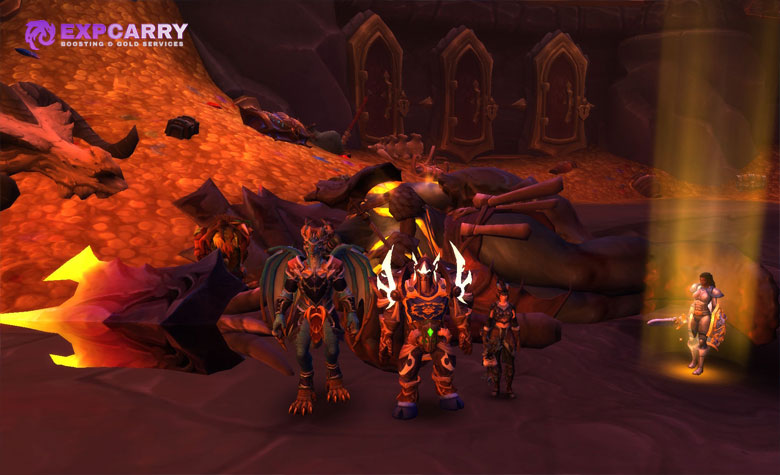
Labyrinths are meant to provide a more substantial Delve experience, but Blizzard has not revealed their final difficulty selector. There is no confirmed number of tiers, no recommended item level, no published death limit and no official statement that the hardest Labyrinth corresponds to a particular Mythic+ key or raid difficulty.
What difficulty may measure
A long-form Delve could test more than raw damage. Resource management, repeated defensive checks, recovery between pulls, optional risk and navigation may matter across a large map. If progress can be saved between sections, difficulty could also be affected by how much content players attempt between safe stopping points. These are design possibilities until the actual encounters can be tested.
The first test should compare enemy health and damage, mechanic changes, rare density, boss complexity and death consequences at every available setting. A higher difficulty is only an efficient farming option when its additional rewards compensate for slower clears and failed attempts. Without a reward table, the maximum setting should be treated as a challenge target rather than an automatic weekly recommendation.
Best builds and roles to prepare
The safest preparation is a flexible Delve build that can switch between routine clearing and durable boss combat. Bring interrupts, dispels or crowd control appropriate to the enemies, plus a defensive plan that does not rely entirely on Valeera. Keep spare talents or equipment for single-target damage if major encounters punish area-focused farming builds.
- Solo damage build: prioritize sustain, control and consistent damage over fragile burst if solo entry is supported.
- Solo tank build: maintain enough damage to keep long exploratory sections from becoming excessively slow.
- Healer solo build: test Valeera's damage output and survivability before pushing harder settings.
- Small group: if supported, distribute interrupts, dispels and emergency recovery instead of duplicating the same utility.
- Exploration setup: retain movement tools and inventory space if optional treasures and route changes prove important.
Players who want to improve a character before Patch 12.1.5 can use a defined WoW item level service for current content. It cannot establish a Labyrinth-ready item level until Blizzard publishes the entry requirements and live scaling, so avoid attaching an unverified gear number to the new mode.
WoW Labyrinth Rewards and Weekly Value
Blizzard's original announcement confirms that Labyrinths will have a different form and reward structure from normal Delves. Developers later added that players should expect cosmetics and some power rewards because Labyrinths remain closely related to Delves. That still does not establish specific item levels, upgrade tracks, currencies, mounts, Great Vault credit, weekly caches or guaranteed rewards for completing particular sections.
What a separate reward structure could mean
Blizzard has not explained how rewards are distributed across such a large activity. Loot could be tied to encounters, sections, saved milestones, optional objectives or the final completion, but those remain possibilities rather than confirmed systems. No detailed launch loot table should be published until the rewards are visible on PTR or documented by Blizzard.
The most useful implementation for flexible sessions would reward meaningful progress without forcing every player to complete the entire Labyrinth in one sitting. That is an editorial assessment based on Blizzard's stated flexibility goal, not a promise that every saved stage grants gear.
Great Vault, lockouts and repeat farming
The three largest reward questions are whether Labyrinths count toward the World row of the Great Vault, whether the strongest rewards have a weekly limit and whether completed content can be farmed repeatedly. A distinct reward structure may interact with standard Delve progression, or it may operate through a separate system. Nothing official resolves those details yet.
- No Labyrinth item levels or upgrade tracks are confirmed.
- No Great Vault requirement or reward tier is confirmed.
- No weekly lockout or reset rule is confirmed.
- No guaranteed Hero or Myth track reward is confirmed.
- Cosmetics and some power rewards have been discussed, but no complete cosmetic, mount, title, achievement or gear list is confirmed.
- No repeat-farming rule is confirmed.
When the PTR opens, record the reward at each completed stage, the selected difficulty, whether the reward can be repeated and what the Great Vault interface shows. One isolated drop cannot establish a complete loot table, particularly on a test realm where placeholder rewards and tuning changes are possible.
Navigation, Maps and Exploration
Navigation could become an important part of a system deliberately built around a sprawling dungeon. The final map design is not public yet, so questions about completed branches, return routes, vertical layers and persistent markers remain part of the first PTR test rather than confirmed Labyrinth features.
Why the Grudge Pit discussion is not a Labyrinth test
A player on the Blizzard Forums navigation thread initially described the Patch 12.1 Grudge Pit as a possible mini-Labyrinth and raised concerns about mapping a three-dimensional space. The author then corrected the Delve name and acknowledged that the area was less complex than the first run suggested. This makes the thread useful evidence of player navigation concerns, not proof of Labyrinth layout or mechanics.
Do not call Grudge Pit a prototype unless Blizzard says so. Its layout can inspire useful test questions, but the actual 12.1.5 feature may use completely different maps, vertical layers, markers and route logic.
Practical navigation habits for the first run
On the first playable build, explore systematically. Choose one branch, note recognizable landmarks, finish or mark that route and return to a known junction before switching directions. Avoid treating an early datamined route as final; learning how the map communicates locked doors, shortcuts and completed objectives will be part of understanding the system.
- Check whether the main map shows vertical layers or only the current floor.
- Look for icons that distinguish save points, bosses, optional rooms and completed objectives.
- Test whether custom map pins persist after leaving the instance.
- Record which shortcuts remain open after relogging or changing the party, if group play is available.
- Confirm whether the objective tracker directs players through required rooms or merely lists goals.
A good final guide should include a route only after distinguishing mandatory progression from optional exploration. Publishing a fastest path from an incomplete PTR build can become wrong as soon as Blizzard changes a door, objective or save point.
First PTR Test Checklist for Labyrinths
The first complete Labyrinth clear should be treated as a systems test, not a race. The goal is to learn how entry, persistence, party rules, difficulty and rewards connect. A structured test also prevents one unusual run from becoming an unsupported universal claim.
| Test | Action | Question answered |
|---|---|---|
| Entry | Record the quest, location, level and prerequisites | Who can enter and how the system unlocks |
| First save point | Leave normally and re-enter after meaningful progress | Whether ordinary exits preserve progress |
| Logout | Log out inside or after a saved stage | Whether progress survives a disconnected session |
| Party change | If group play is supported, replace the leader or one member | Who owns the saved state and whether late joining works |
| Difficulty | Repeat the same section on two settings if available | What scales and whether mechanics change |
| Rewards | Record every stage reward and repeat attempt | Which rewards are one-time, weekly or farmable |
| Map | Revisit a cleared branch after leaving | Which markers, shortcuts and discoveries persist |
| Reset | Check progress after the relevant reset | How long the Labyrinth save lasts |
If both solo and group entry are available, testers should complete at least one run in each format. Clear-time comparisons only become useful when the selected difficulty, item level, specialization, companion role, party size and amount of optional exploration are recorded with them.
Best Labyrinth Preparation Route
Preparation should focus on transferable Delve skills rather than guessed Labyrinth requirements. Level and test Valeera through current Delves, practice a self-sufficient build, organize flexible talent loadouts and learn how your class handles interrupts, dispels and recovery without relying on an assumed Labyrinth group composition.
- Complete the Midnight campaign and unlock the current Delve systems on the character you expect to use.
- Level and test Valeera in her available roles so you understand which companion setup covers weaknesses in your build.
- Progress through ordinary Delve tiers until difficult pulls and bosses are controlled rather than lucky.
- Create separate area-damage and boss-oriented talent loadouts.
- Keep consumables ready, repair before entry and leave enough inventory space for a long exploratory session.
- Wait for the first full 12.1.5 test before spending resources around a claimed Labyrinth item-level threshold.
- On PTR, begin at a manageable setting if multiple difficulties are available and verify how progress is saved before planning a full clear.
If a player prefers the established timed five-player route, the current WoW Mythic+ service remains separate from Labyrinth progression. A Mythic+ clear can help with present-day gear and group practice, but it will not unlock or complete a future Labyrinth unless Blizzard explicitly connects the systems.
The safest preparation is straightforward: improve the character, learn the companion and keep options open. Do not farm an alleged Labyrinth key, reserve an unconfirmed currency or copy a build advertised as mandatory before those systems exist on the playable PTR.
Common Labyrinth Mistakes to Avoid
Most pre-release mistakes come from filling official gaps with familiar WoW systems. Labyrinths borrow concepts from Delves and mega-dungeons, but Blizzard is creating a different format. Similarity does not confirm identical group rules, loot, difficulty or lockouts.
- Calling the feature live: Labyrinths are planned for Patch 12.1.5 and have not completed a full public test.
- Treating Grudge Pit as a prototype: the comparison comes from player speculation, not a Blizzard statement.
- Inventing boss checkpoints: flexible multi-session progression is confirmed, but the save mechanism is not.
- Publishing an exact runtime: developer discussion supports multi-session exploration, not one universal clear time.
- Assuming a specific gear track: developers have mentioned some power rewards, but no Labyrinth item level or upgrade track is confirmed.
- Assuming weekly Great Vault credit: Blizzard has not explained Vault integration.
- Calling the mode completely untimed: no main completion timer has been announced, but that does not rule out timed encounters or bonus objectives.
- Claiming a fixed solo or group format: the Delve companion is confirmed, but Labyrinth-specific party-size rules remain unpublished.
- Publishing a fastest route too early: PTR layouts and required objectives can change before launch.
A trustworthy guide should become more specific only when the evidence becomes more specific. The first playable build can confirm interface and test behavior; later PTR builds, final patch notes and live servers must still confirm reward values, reset rules and release tuning.
WoW Labyrinths FAQ
These answers cover the questions players are already asking while keeping roadmap facts separate from developer discussion, PTR expectations and community ideas.
What are Labyrinths in WoW?
Labyrinths are large Delve-style adventures planned for Midnight Patch 12.1.5. They are inspired by mega-dungeons and are designed so players can approach them in one long run or across shorter sessions.
Are WoW Labyrinths playable now?
No full playable Labyrinth PTR test has taken place. A Patch 12.1.5 PTR entry has appeared on the Battle.net launcher, but the complete Labyrinth system, encounters and rewards are not yet available for public testing.
Can Labyrinths be completed solo?
Blizzard has confirmed that Labyrinths retain the Delve companion, and the feature grows out of a system built around flexible play. However, Blizzard has not yet published Labyrinth-specific party-size rules, so solo availability should remain an expectation rather than be presented as a finalized rule.
How do Labyrinth checkpoints work?
Blizzard confirms that the activity can be approached a little at a time, but it has not explained whether this uses checkpoints, saved wings or another persistence system. Save ownership, duration, reset behavior and party restrictions remain unknown.
How long does a WoW Labyrinth take?
No exact completion time is published. Developers have discussed a sprawling experience that may take multiple sessions to explore, and actual times will depend on difficulty, route knowledge, optional content and party format.
Do Labyrinths have a timer?
Blizzard has not announced a main completion timer. That is not the same as confirming that no timed encounter, challenge or bonus objective can exist in the final version.
What rewards do Labyrinths give?
They will use a different form and reward structure from standard Delves. Developers have also said to expect cosmetics and some power rewards, but item levels, upgrade tracks, currencies, Great Vault credit, weekly limits and specific reward lists remain unconfirmed.
Are Labyrinths harder than normal Delves?
They are larger and intended as a more substantial experience, but Blizzard has not published the final difficulty tiers or a direct numerical comparison with Delves and Mythic+.
Is Grudge Pit a Labyrinth preview?
No official source identifies it as a Labyrinth prototype. Forum comparisons are player speculation, and the author of the linked navigation discussion later corrected the initial impression.
Where do Labyrinths fit between Delves and Mythic+?
They are being developed as long-form, flexible Delve content with a stronger emphasis on exploration than the timed Keystone format. Their exact gearing position cannot be established until Blizzard reveals the full reward structure.
Conclusion
WoW Labyrinths are designed to expand the short Delve concept into a much larger dungeon expedition. The confirmed foundation is clear: sprawling exploration, a Delve companion, the option to tackle the activity in one sitting or a little at a time, and a reward structure different from standard Delves. Developers have additionally discussed cosmetics and some power rewards. The exact save system, party-size rules, difficulty settings, runtime, lockouts, item levels and weekly reward integration remain unknown because the system has not received a full playable PTR test.
Prepare by improving a flexible Delve build, leveling and learning Valeera's roles and practicing controlled progression in current high-tier Delves. When the first complete test opens, verify entry requirements and saved progress before racing to the end, then compare available player formats and difficulty settings, record every reward and test what survives leaving, relogging and a reset. Only after those checks should the page add a final route, recommended difficulty or detailed loot table.