
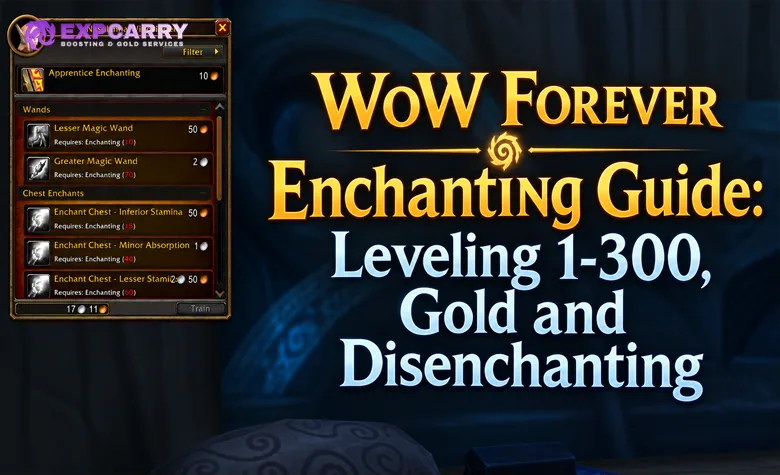
Enchanting in World of Warcraft: Forever is a primary crafting profession that improves weapons and armor, turns unwanted magical gear into profession materials through Disenchant, creates wands and temporary weapon oils, and gains new Camping utility as the profession advances. The maximum skill remains 300, while Forever expands the profession with new and reworked recipes, campsite objects, profession certification and Legacy milestones. A practical 1-300 route should not blindly copy an old Classic shopping list. Instead, combine inexpensive enchants, crafted wands, rods, oils and disenchanting, then switch whenever recipe colors or dust, essence and shard prices make another option more efficient. Because the beta is still opening progression in stages, the high-skill portions of any 1-300 route should be treated as planning based on current beta data rather than a final launch-tested shopping list.
What is the best profession to pair with Enchanting in WoW Forever?
Tailoring is the most natural partner because cloth drops from humanoid enemies without using a gathering profession slot, and Tailoring can produce equipment that may be sold, worn or disenchanted. Enchanting can also pair with any other profession because Disenchant provides an additional source of profession materials.
How do you level Enchanting from 1 to 300?
Start with the cheapest available low-level enchants, use early wands when their essence cost is competitive, prepare each required runed rod before the recipes that need it, and move through Soul Dust, Vision Dust, Dream Dust and finally Illusion Dust tiers. Disenchanting unwanted gear can reduce material costs throughout the route. The exact cheapest sequence can change with beta revisions and your realm economy, so follow current recipe colors rather than a fixed Classic-era craft count.
How does Enchanting make gold?
Compare the vendor or Auction House price of gear with the expected value of its disenchant materials, sell dust, essences and shards when raw materials are stronger than finished enchants, charge crafting fees for rare formulas, sell useful wands and oils, and target enchants that players repeatedly request after upgrades. Profit depends on your realm economy, so fixed gold-per-hour numbers are not reliable before the live market exists.
What new Camping tools does Enchanting get?
Current beta data lists Enchanted Lute at 20 skill, Arcane Salvager at 140 and Arcane Forge at 300. Enchanted Lute provides a level-scaled Armor, all-stats and resistance-style camp benefit that is exclusive with Mark of the Wild, Arcane Salvager enables more efficient disenchanting, and Arcane Forge provides a profession workspace for recipes that require it. Camping features currently share a one-hour cooldown.
Is Enchanting useful while leveling?
Yes. Crafted wands are strong leveling weapons for wand users, gear enchants can improve important upgrades, Disenchant converts unwanted magical items into materials, and Enchanted Lute adds group utility from only 20 skill. The main mistake is spending expensive materials enchanting gear that will be replaced within a few quests.
Last updated: September 21, 2026. WoW Forever is still in beta. The beta began on September 17 with a level-20 cap, with Blizzard planning to raise the cap as testing progresses, and the test is scheduled to run through October 21 before the November 4 launch. Early Enchanting can therefore be checked directly, while much of the higher-skill profession economy still depends on current beta-client and database information rather than a fully playable live market. Recheck high-level trainer access, recipe sources, reagents and prices after major beta updates and again at launch.
WoW Forever Enchanting at a Glance
Enchanting is unusual because it is both a crafting profession and a material-recovery profession. A Blacksmith needs ore and an Alchemist needs herbs, but an Enchanter can destroy eligible magical equipment and turn it into dust, essences or shards. Blizzard's WoW Forever Deep Dive confirms that Forever keeps professions recognizable while adding more than 600 recipes across professions and level ranges, profession Camping objects and advanced Blueprint recipes. Current beta-client data also contains dozens of new Enchanting recipe items. That gives Enchanting several separate progression loops: leveling the skill, improving your material supply, collecting valuable formulas, advancing Legacy and deciding whether a dropped item is worth more intact or disenchanted.
| Skill Range | Main Materials | Recommended Focus | Useful Output |
|---|---|---|---|
| 1-75 | Strange Dust, Lesser Magic Essence, Greater Magic Essence | Mote of Magic and Strange Dust enchants, early wands, first runed rod | Low-cost skill-ups, caster wands, Enchanted Lute unlock |
| 75-150 | Strange Dust, Soul Dust, Astral Essences, early shards | Runed Silver Rod, chest and bracer enchants, Greater Magic Wand | Leveling enchants, wand sales, first meaningful material trading |
| 150-225 | Soul Dust, Vision Dust, Mystic Essences, glowing and radiant shards | Runed Golden and Truesilver Rod progression, utility enchants, oils | Mid-level gear optimization, Arcane Salvager access, stronger caster products |
| 225-300 | Dream Dust, Illusion Dust, Eternal Essences, Brilliant Shards | High-level enchants, oils, rare formulas, Runed Arcanite Rod | Level-60 services, rare recipe fees, raid preparation, Arcane Forge |
The most important habit is to price materials before crafting. Enchanting materials have their own market, and they often move independently from the gear used to create them. A cheap green item can be more valuable after disenchanting, while an expensive item may be better sold to another player or even vendored. Leveling Enchanting efficiently means treating every material as gold, not as something that became free because it came from your own drop.
What Changed for Enchanting in WoW Forever
Forever keeps the core identity of Enchanting but broadens what the profession does throughout the journey. The profession still enchants gear and disenchants unwanted magical items, but current beta data adds new and reworked formulas, new equipment crafts, expanded enchant categories, Camping interaction and account-wide profession progression.
- More recipes across leveling: Blizzard announced more than 600 new recipes across all professions and level ranges, while current beta-client data contains dozens of new Enchanting recipe items in addition to changed Classic recipes.
- New Forever formulas: current beta data includes new necklace, off-hand and weapon-related formulas as well as recipes such as Formula: Enchant Weapon - Revelation, which currently requires 140 Enchanting.
- Camping starts early: Enchanted Lute unlocks at 20 Enchanting, giving the profession useful group utility long before 300.
- Disenchanting gains campsite support: Arcane Salvager is listed at 140 Enchanting and enables more efficient disenchanting while preserving the Enchanted Lute benefits.
- Legacy and certification reward profession progression: current beta data connects the 150, 225 and 300 Enchanting milestones to account-wide Legacy progression and also includes Enchanting Certification, which is associated with the account-wide “the Enchanter” title at 300.
- High-level oils and rare formulas remain economic tools: temporary weapon oils, rare enchants, reputation formulas and new Forever-specific recipes can create demand beyond simple trainer enchants.
The important distinction is between a system that is officially announced and a beta value that can still change. Camping, expanded professions and Legacy are established parts of Forever, while individual recipe thresholds, reagent counts, trainer availability, Blueprint sources and launch-market profitability should still be treated as beta-era information until the live client confirms them.
How Disenchanting Works and When You Should Use It
Disenchant is what makes Enchanting economically different from most crafting professions. Eligible magical equipment can be destroyed to produce dust, essences or shards. The exact output depends on item level and quality, so the correct decision is not “disenchant every green.” The correct decision is to compare what the intact item is worth with the expected value of its materials.
- Check whether the item is an upgrade. Do not destroy gear that your character or an alt can use immediately unless the material value is clearly more important.
- Check the Auction House value of the intact item. A desirable leveling weapon or rare stat combination can sell above its disenchant value.
- Check the vendor floor. Vendor value is guaranteed. If expected disenchant materials are worth less, vendoring is safer.
- Check which material tier you need. If you are short on Strange Dust, Soul Dust, Vision Dust, Dream Dust or Illusion Dust, disenchanting appropriate gear can reduce the amount you need to buy.
- Account for Arcane Salvager later. At 140 Enchanting, current beta data lists a campsite object that enables more efficient disenchanting. The exact economic gain should still be checked against the current beta build before assigning a fixed percentage or break-even value.
Disenchanting is not automatically profit. If an item sells for 2 gold and its expected materials average 1.5 gold, you destroyed 0.5 gold of value even if the dust itself was useful. This is especially important during launch, when leveling gear can sell at unusually high prices while material supply remains unstable.
Players who want the profession completed without managing every disenchant, trainer stop and crafting batch manually can use the WoW Forever Enchanting leveling service for selected ranges up to 300. The route below remains available for self-play.
Explore services related to this guide, selected from our Professions catalog.
View All Professions Services

Enchanting Rods You Need from 1 to 300
Enchanting rods are progression tools rather than disposable reagents. Forever retains the old-style runed rod ladder in current data, but several rod recipes have already been reworked from their Classic versions. Prepare each upgrade before you reach recipes that require it and check the current beta tooltip instead of relying on an old Classic shopping list. Blacksmithing supplies the base metal rods, while Enchanting turns them into their runed versions.
| Rod | Current Role | Important Materials | Planning Advice |
|---|---|---|---|
| Runed Copper Rod | Basic Enchanting tool | Copper Rod and Mote of Magic in the current beta recipe | Make it immediately and keep it |
| Runed Silver Rod | Required by many intermediate enchants | Silver Rod, Strange Dust, Magic Essence and Shadowgem; current beta builds have changed the reagent mix from Classic | Prepare it before moving deep into the 100-plus range |
| Runed Golden Rod | Higher mid-level Enchanting tool | Golden Rod, Iridescent Pearl, Astral Essence and Soul Dust | Have the components ready before the 150-plus progression band |
| Runed Truesilver Rod | High-level Enchanting tool | Truesilver Rod, Black Pearl, Mystic Essence and Vision Dust | Prepare it around the 200-skill transition and verify the current beta reagent count |
| Runed Arcanite Rod | Top-end 1-300 Enchanting tool | Arcanite Rod, Golden Pearl, Illusion Dust, Greater Eternal Essence, Small Brilliant Shards and Large Brilliant Shards | The current formula requires 290 Enchanting; budget for it before the final stretch |
The expensive part is not only the Enchanting materials. The base rods themselves depend on Blacksmithing, and the Arcanite tier also depends on the current Arcanite production chain. If you wait until the final stretch to buy everything during a profession rush, you can end up paying a premium to several different markets at once.
WoW Forever Enchanting Leveling 1-300
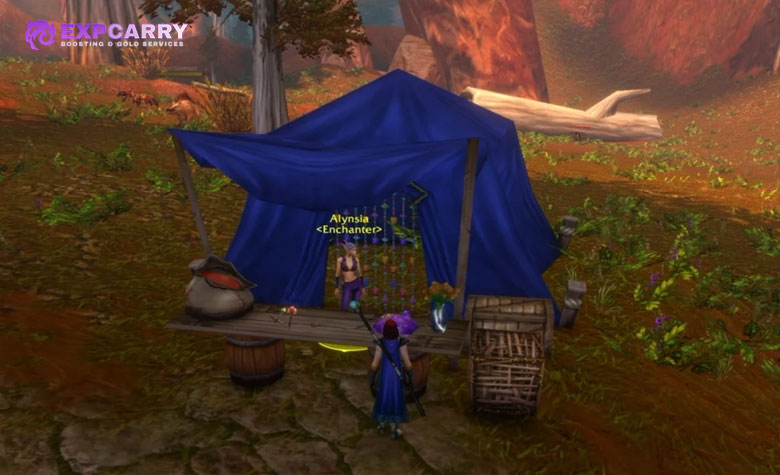
This is a beta-planning route rather than a claim that every 1-300 step has already been tested on the live progression path. It focuses on recipes with clear uses or comparatively simple material requirements. Exact shopping totals are intentionally avoided because yellow recipes can require a variable number of attempts, beta builds can alter recipes and the launch economy can change which craft is cheapest. Make smaller batches, watch the recipe color in your current profession window and change course when another material tier becomes cheaper.
Enchanting 1-75: Mote of Magic, Strange Dust and Early Wands
Start by creating your Runed Copper Rod, then use the cheapest available starter recipes. In the current Forever beta, Enchant Bracer - Inferior Stamina has replaced the old Minor Health version of this spell and uses Mote of Magic. As more recipes unlock, Strange Dust becomes the main early material. Forever also keeps the early wand path, giving you useful equipment to sell or equip instead of spending every reagent on invisible skill points.
- 1-20: begin with Mote of Magic recipes such as Inferior Stamina, then move into cheap Strange Dust options as they become available. Create the Runed Copper Rod immediately and disenchant unwanted magical gear when its expected material value is better than its sale value.
- At 20: unlock Enchanted Lute. It currently costs Simple Wood and Strange Dust, so the first Camping item does not require a large investment.
- Around the early profession levels: Lesser Magic Wand is a useful craft for Mage, Priest and Warlock characters. Current Forever item data adds +1 Spell Power to the wand.
- 20-70: continue with inexpensive bracer, chest and cloak enchants while monitoring Strange Dust and Magic Essence prices. Do not force one recipe after its skill-up chance becomes poor.
- At 70: current Forever data teaches Greater Magic Wand, which currently uses Simple Wood and two Lesser Magic Essences and provides +2 Spell Power.
- 70-75: finish the rank with the cheapest reliable orange or yellow recipe in your current trainer list rather than forcing extra wand crafts if essences are expensive.
Do not enchant every piece of leveling gear just because you can. A permanent enchant on a weapon or chest that will last several levels has more practical value than spending the same materials on equipment you expect to replace almost immediately.
Enchanting 75-150: Silver Rod, Soul Dust and Better Wands
The second bracket introduces stronger materials and requires more attention to your rod progression. Prepare the Runed Silver Rod before it becomes a hard requirement. Enchant Bracer - Lesser Stamina becomes a useful Soul Dust option around the 130-skill portion of the route, but you should compare it with chest, cloak, boot and other trainer enchants in your current beta build.
- 75-100: use remaining cheap Strange Dust and essence recipes. Sell Greater Magic Wands if the caster market supports them instead of producing more than buyers want.
- Around 100: prepare the Runed Silver Rod. Current Forever records still use it as a tool for many recipes in the next progression band.
- 100-130: finish efficient Strange Dust and essence recipes and start preparing Soul Dust for the 130-plus range. Disenchanting level-appropriate greens can reduce your dependence on the Auction House.
- 130-150: Lesser Stamina on bracers is a straightforward Soul Dust route while its skill-up chance and material price remain competitive. Switch when another recipe offers a better expected cost per point.
- Before 150: acquire the components for your Runed Golden Rod so that the next bracket is not blocked by a missing Blacksmith-made base rod or pearl.
Enchanting begins to become expensive here because one material tier can spike while another remains cheap. The answer is not to buy hundreds of Soul Dust in advance. Buy enough for the next group of skill points, then recalculate.
Enchanting 150-225: Vision Dust, Golden Rod, Truesilver Rod and Oils
The middle of the profession opens several useful markets at once. Current Forever data includes Formula: Minor Mana Oil at 150, while Formula: Lesser Wizard Oil requires 200. Oils create consumable demand because a crafted oil has multiple charges but is ultimately consumed, unlike a permanent piece of equipment.
- 150-175: make the Runed Golden Rod and use efficient Soul Dust or early Vision Dust recipes. Avoid expensive rare formulas unless you already own them or the finished product has real demand.
- At 140 or later: current beta data lists Arcane Salvager at 140 Enchanting. It enables more efficient disenchanting and keeps the Enchanted Lute benefits, although Blueprint access and other high-level beta dependencies should still be rechecked in the current build.
- 175-200: compare Vision Dust enchants with wand production. Greater Mystic Wand uses Greater Mystic Essence and Vision Dust and gives another sellable path for wand users.
- At 200: prepare the Runed Truesilver Rod and consider Lesser Wizard Oil when its Vision Dust cost is competitive.
- 200-225: use Vision Dust enchants, utility formulas and reasonably priced trainer recipes. Save valuable shards for formulas that truly need them rather than treating shards as generic leveling dust.
Blizzard's beta announcement makes clear that testing progression opens in stages. That matters here: a recipe can exist in the beta client without the entire 150-225 economy having been tested through normal character progression. Treat exact profitability, trainer access and optimal craft counts as provisional.
Enchanting 225-300: Dream Dust, Illusion Dust and Endgame Formulas
The final range is where Enchanting increasingly becomes a recipe-collection profession rather than a trainer-only profession. Dream Dust and Illusion Dust form much of the material base, while shards, Eternal Essences and rare formulas determine which premium enchants you can provide. Because the current beta has not yet exposed the full natural level-60 economy, this section is best used for preparation rather than as a claim about final launch prices.
- 225-250: use efficient Dream Dust and Vision Dust options available in your current recipe list and preserve high-value shards. Check whether direct enchant sales can offset the cost before enchanting disposable gear purely for skill points.
- 250-260: continue through Dream Dust and early Illusion Dust options. High-level wands, oils and utility formulas can become alternatives when their material spread is favorable.
- At 260: current Forever data lists Formula: Enchant Boots - Greater Stamina. Demand for broadly useful stamina enchants can make this more practical than a narrow stat recipe.
- At 265: current data includes Formula: Enchant Weapon - Fiery Weapon. Rare-formula value depends on how the recipe is obtained and how many competing Enchanters know it.
- At 275: Formula: Wizard Oil and Formula: Enchant Chest - Major Stamina are current database options. The latter is a Forever change from the Classic Major Health version and now grants +10 Stamina.
- At 285: Formula: Enchant Cloak - Superior Defense gives another high-skill route if you have the formula and Illusion Dust.
- At 290: learn the Runed Arcanite Rod formula and budget for the expensive rod materials before the final ten points.
- 295-300: use the best available high-level enchant or recipe you can support without sacrificing materials needed for future services. At 300, rare raid, reputation and Forever-specific formulas become the real long-term objective.
The final points can be expensive because many recipes compete for Illusion Dust, Eternal Essences and Brilliant Shards. If a high-end formula or material is overpriced, use another viable route rather than destroying the capital you need at 300. During beta especially, there is little value in treating one database-derived route as mandatory.
Players who want to craft everything personally but do not want to assemble every dust, essence, shard and supporting reagent one stack at a time can use the WoW Forever Profession Kits page for self-play material packages.
Enchanting Materials: Dust, Essences and Shards
Understanding the material ladder is more important than memorizing one 1-300 shopping list. Different item levels and qualities feed different reagent tiers, and those tiers do not always cost the same relative amount. If Soul Dust becomes expensive while Vision Dust is cheap, forcing an old route through Soul Dust can be a waste.
| Material Group | Examples | Main Role | Gold-Making Decision |
|---|---|---|---|
| Early dust | Strange Dust, Soul Dust | Low and mid-level enchants, rods and early Camping | Often high demand during mass profession leveling |
| Mid dust | Vision Dust, Dream Dust | Mid-high enchants, oils and profession progression | Compare finished enchants against raw dust sales |
| High dust | Illusion Dust | High-level enchants, Runed Arcanite Rod and endgame recipes | Do not waste on low-demand skill-ups |
| Essences | Magic, Astral, Mystic, Nether and Eternal Essences | Rods, wands, enchants and Camping recipes | Can be more valuable than dust when specific recipes spike |
| Shards | Glimmering, Glowing, Radiant and Brilliant Shards | Higher-value enchants, rods and endgame crafting | Preserve when rare formulas create demand |
Keep materials sorted by tier and do not convert your entire bank into enchants at once. Raw materials are liquid. A finished enchant is only valuable when someone needs that exact effect. During launch, flexibility is often worth more than squeezing one extra skill point from an expensive recipe.
Best Enchanting Products to Use and Sell
Enchanting makes money when the product solves a repeatable problem. Players constantly replace gear, casters need wands while leveling, temporary oils are consumed, and rare formulas can create service demand. The best item is therefore not always the highest-skill recipe.
- Early wands: Lesser Magic Wand and Greater Magic Wand can serve Mage, Priest and Warlock leveling markets.
- Mid-level wand: Greater Mystic Wand remains a direct equipment product rather than a service-only enchant.
- Wizard oils: Wizard Oil and Brilliant Wizard Oil create repeat consumption instead of one-time gear sales.
- Broad defensive enchants: stamina, health, resistance and armor enchants can appeal to several roles instead of one narrow build.
- Rare weapon enchants: formulas such as Spell Power, Fiery Weapon and other hard-to-obtain effects can support a crafting-fee business when demand exists.
- Forever-specific enchant formulas: Revelation and the new enchant categories found in current beta data can differentiate a Forever Enchanter from someone following only an old Classic recipe list.
Do not pre-craft a large inventory of something that can only be applied directly through trade. Enchanting's strongest high-end business can be service-based: the customer provides the gear and often the materials, while you provide access to a formula they do not know.
How to Make Gold with Enchanting in WoW Forever
Enchanting has more gold-making paths than most professions because the profession can profit before, during and after crafting. You can buy underpriced magical gear for disenchanting, sell raw reagents, make wands and oils, or charge for rare enchants. The best market can change several times during the same week.
- Flip gear into enchanting materials. Search for low-priced uncommon or rare items whose expected disenchant value exceeds their purchase price. Include Auction House fees and the opportunity cost of not reselling the intact item.
- Sell raw dust when profession rushes are stronger than enchant demand. New Enchanters often pay for Strange Dust, Soul Dust, Vision Dust and later tiers simply to reach skill milestones.
- Sell useful wands during leveling waves. Low-level caster alts create a different market from level-60 players, which helps diversify your income.
- Sell oils as consumables. Wizard and mana oils have multiple charges but are consumed over time, creating repeated demand.
- Charge for rare formulas. A customer who owns the materials may pay a fee for an enchant that only a few players on the realm know.
- Use reputation and drop recipes as barriers to competition. If everyone can train a recipe, margins usually fall faster than on formulas that require reputation, a rare drop or an advanced Blueprint.
- Batch disenchant with Arcane Salvager when practical. Current beta data explicitly says the campsite object enables more efficient disenchanting. Do not assign a fixed profit percentage until the current implementation can be measured reliably.
- Track replacement cycles. Gear-upgrade waves after dungeons, raids or PvP progression create fresh enchant demand because a permanent enchant is tied to one item.
Never use average material value as though every disenchant produces the same result. Shard and essence outputs can vary by item quality and level. Your real business needs a safety margin, not a theoretical one-copper profit based on perfect averages.
Tailoring and Enchanting: Best Pairing for Material Control
Tailoring is the classic partner because it does not require a dedicated gathering profession and converts cloth into equipment. That creates a loop where cloth from humanoid enemies can become crafted gear, then eligible unwanted magical pieces can be disenchanted into Enchanting materials. The combination is especially natural for Mage, Priest and Warlock characters that can also wear useful Tailoring gear.
The loop is not automatically profitable. If a tailored item costs more in cloth than its expected disenchant materials are worth, crafting it only to destroy it is a loss. Compare cloth value, vendor value, finished-item value and expected disenchant return before using the profession as a material factory.
Players who want to develop both sides of the pairing can compare individual profession services through the WoW Forever professions page. For self-play, level Tailoring and Enchanting together only when the materials naturally support each other rather than forcing one profession to feed the other at any cost.
Enchanting Camping: Enchanted Lute, Arcane Salvager and Arcane Forge
Camping gives Enchanting a reason to matter even when nobody needs a permanent gear enchant at that moment. The profession contributes a group buff at low skill, more efficient disenchanting in the middle and a profession workspace at 300. The WoW Forever Camping guide covers the wider rules around camp capacity, placement and shared feature cooldowns.
- Enchanted Lute - 20 Enchanting: current beta data grants a level-scaled Armor, all-stats and resistance-style benefit to players sitting nearby, exclusive with Mark of the Wild. It requires Simple Wood and Strange Dust, and current Camping data gives the feature a shared one-hour cooldown.
- Arcane Salvager - 140 Enchanting: enables more efficient disenchanting and keeps the benefits of Enchanted Lute. Its current recipe data uses Vision Dust and Lesser Nether Essence, while the advanced camp object is associated with a Blueprint.
- Arcane Forge - 300 Enchanting: creates a campsite workspace for recipes that require an Arcane Forge and keeps the Enchanted Lute benefits. Current materials include Maker's Spark, two Large Brilliant Shards and four Greater Eternal Essences.
The Arcane Salvager is the most economically interesting of the three because its stated function directly affects disenchanting efficiency. Save a meaningful batch of suitable unwanted gear before using it, but remember that all Camping features currently share a one-hour cooldown and that the exact economic advantage can still change during beta.
Enchanting and the Legacy System
Profession milestones now contribute to account progression. Current beta-client data awards a Legacy Point the first time the account completes the Enchanting milestones at 150, 225 and 300. Completing the profession therefore has account-wide value beyond the character's recipe book.
Shared Legacy profession perks can also affect later profession leveling. Working Overtime currently increases the chance to gain a profession skill point, while other profession-tree perks support broader crafting or gathering progression. Because Legacy is account-wide, later characters can benefit from progression earned by the account rather than treating every profession journey as completely isolated.
Blizzard's current Forever roadmap recap positions professions, Legacy and long-term level-60 progression as continuing systems rather than a short seasonal experiment. Current beta data also contains Enchanting Certification, which is tied to the account-wide “the Enchanter” title and requires 300 Enchanting to display. That gives full profession progression value beyond one temporary leveling route.
Rare Formulas Worth Watching at Level 60
Maximum skill does not make every Enchanter equal. Recipe access determines whether players seek you out. A rare formula can be worth more than dozens of common trainer enchants because the customer is paying for availability, not just the dust and shards.
- Formula: Enchant Weapon - Spell Power: current Forever data requires 300 Enchanting and teaches a high-end spell-damage weapon enchant.
- Formula: Brilliant Wizard Oil: current Forever data requires 300 Enchanting and Honored with the Zandalar Tribe.
- Formula: Brilliant Mana Oil: current Forever data requires 300 Enchanting and Friendly with the Zandalar Tribe.
- Formula: Enchant 2H Weapon - Agility: current Forever data requires 290 Enchanting and Friendly with Timbermaw Hold.
- Formula: Runed Arcanite Rod: requires 290 Enchanting and is needed for your own final tool progression, making access important even before profit is considered.
Do not buy every formula at any price. Estimate how often the enchant will be requested, how many competitors already know it, whether the customer normally supplies materials and how long it will take the recipe purchase to pay itself back.
Who Benefits Most from Enchanting
Every class can use permanent gear improvements, so Enchanting is one of the least class-restricted professions. The difference is whether the profession also provides direct leveling equipment or mainly economic and optimization value.
- Mage: gains early wand access, caster oils and direct value from spell-focused enchants.
- Priest: can use wands heavily during leveling and benefits from mana, healing and defensive enchant markets.
- Warlock: combines early wand strength with spell and weapon enchant utility.
- Paladin, Shaman and Druid: benefit from a wide range of melee, caster, healing and hybrid gear enchants depending on role.
- Warrior, Rogue and Hunter: gain direct value from weapon, agility, stamina and armor-oriented enchants even without using caster products.
- Economic alts: can specialize in disenchanting and rare-formula services without needing the profession to match the character's combat role.
If you change gear constantly and dislike spending materials on temporary upgrades, keep the profession but enchant selectively. Enchant a long-lived weapon, important dungeon pieces and gear you expect to keep through several levels rather than every green item that enters your bags.
Enchanting Mistakes to Avoid
Enchanting can destroy value faster than most professions because both crafting and material generation can consume items permanently. Good planning prevents the profession from becoming an unnecessary gold sink.
- Do not disenchant every magical item automatically. Compare intact sale value, vendor value and expected material value first.
- Do not forget the rod ladder. Missing a required runed rod can stop progression after you have already bought the materials for the next enchant.
- Do not over-enchant disposable leveling gear. Spend materials where the upgrade will last long enough to justify the cost.
- Do not mass-craft one enchant after its skill-up chance falls too far. Recalculate the expected cost per skill point and switch when another recipe becomes more efficient.
- Do not spend Brilliant Shards and Eternal Essences on weak skill-ups before 300 without checking alternatives. Those materials are also used by high-end formulas, the Runed Arcanite Rod and Arcane Forge.
- Do not ignore wand markets. Lesser Magic Wand, Greater Magic Wand and Greater Mystic Wand give the profession actual equipment products while leveling.
- Do not assume a rare formula is automatically profitable. Recipe cost, access requirements and customer volume matter more than rarity alone.
- Do not treat beta thresholds as permanent launch facts. Recheck recipes, trainer access, reagent counts, Camping effects and Blueprint sources after major beta patches and at launch.
The best Enchanter is not the one who crafts the largest number of items. It is the one who preserves expensive reagents, recognizes valuable drops, knows formulas other players need and changes production when the economy or beta data changes.
WoW Forever Enchanting FAQ
These answers cover the main questions around Enchanting leveling, disenchanting, rods, gold making, profession pairing and Camping.
What is the maximum Enchanting skill in WoW Forever?
300 according to current Forever profession and certification data. The familiar Apprentice, Journeyman, Expert and Artisan structure remains the reference progression, although individual trainer and character-level requirements should still be verified as beta testing expands.
What is the best way to level Enchanting 1-300?
Use the cheapest current enchants and wands through the lower ranges, prepare each runed rod before it becomes required, transition through Soul Dust, Vision Dust and Dream Dust recipes, then use Illusion Dust and high-level formulas near 300. Disenchant unwanted gear when its expected material value beats selling it. Until the beta exposes the complete progression path, treat exact craft counts as provisional.
What profession pairs best with Enchanting?
Tailoring is the easiest natural partner because cloth does not require a gathering profession and suitable crafted gear can provide additional disenchant opportunities. Enchanting can still pair effectively with any profession.
Can Enchanting make good gold?
Yes, but the best market depends on the realm and progression stage. Potential markets include disenchant materials, leveling wands, temporary oils, rare formulas and crafting fees for requested enchants.
What skill unlocks Arcane Salvager?
Current beta data lists 140 Enchanting. It enables more efficient disenchanting and preserves the Enchanted Lute benefits at a campsite. Advanced Blueprint access and final launch implementation should still be rechecked.
What skill unlocks Arcane Forge?
Current beta data requires 300 Enchanting. It is a campsite workspace for recipes requiring an Arcane Forge and also preserves the Enchanted Lute benefits.
Do I still need different Enchanting rods in Forever?
Current Forever data contains the Runed Copper, Silver, Golden, Truesilver and Arcanite rod progression, and many spell records specify higher rods as tools. Several rod reagent lists have changed from Classic, so use current Forever tooltips rather than an old Classic shopping list.
Should I disenchant quest rewards I do not need?
Only after comparing the item's vendor or player value with its expected enchanting materials. An unwanted item is not automatically worth more after disenchanting.
Does reaching 300 Enchanting help Legacy?
Yes according to current beta data. Enchanting milestones at 150, 225 and 300 contribute Legacy Points, while current certification data also ties 300 Enchanting to the profession-specific “the Enchanter” title.
Conclusion
WoW Forever Enchanting is best approached as a material-management profession rather than a fixed Classic crafting script. Build the required rod progression early, use inexpensive enchants and sellable wands through the lower ranges, let disenchanting replace part of your Auction House purchases, and protect high-value shards and essences as you approach 300. Tailoring is the simplest pairing, but Enchanting can fit almost any character because unwanted magical gear becomes part of its material loop.
At maximum skill, the profession shifts from basic leveling into recipe access, certification and service value. Rare formulas, oils, high-end enchants and efficient disenchanting create different income streams, while Enchanted Lute, Arcane Salvager and Arcane Forge give the profession a visible role at campsites. The practical goal during beta is not to treat every database value as permanent. Reach each available progression stage efficiently, preserve endgame materials and update the high-level route as Blizzard opens more testing and the final launch data becomes available.