
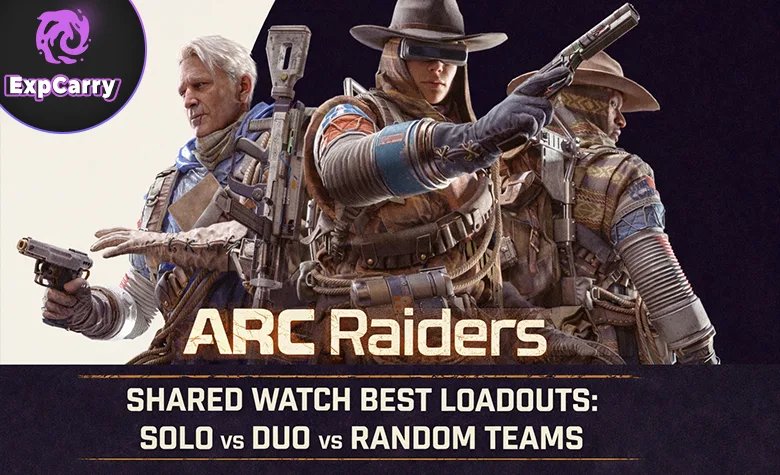
ARC Raiders Shared Watch Best Loadouts: Solo vs Duo vs Random Teams is a practical loadout guide for the Shared Watch live event (Feb 10-24, 2026). Shared Watch is a temporary Live Event that rewards ARC engagement: you earn Merits from XP gained by damaging, destroying, and assisting the destruction of ARCs, and that XP converts at 100 XP = 1 Merit. PvP is still part of the sandbox, but PvP encounters do not award Merits, so the event reward pace is driven by repeatable ARC pressure and low-downtime resets, not by chasing player fights.
This guide is written in the way most loadout articles are actually used: clear queue-type picks, clear roles, and fast tables. The weapon pairings below focus on reliable ARC uptime, ammo comfort, and reset consistency. Where the article names specific guns, it also states what those guns are (for example, Tempest and Bettina are Assault Rifles, Stitcher is an SMG, and Ferro is a Break-Action Rifle) so the recommendations stay readable even if your personal favorites differ.
Shared Watch Rules That Change Your Kit
Shared Watch pays you for ARC engagement uptime. Your kit needs three things. First, sustained damage you can hold on target without running dry or constantly reloading at the worst moment. Second, survivability that prevents the chip-damage spiral where you spend more time healing and repositioning than shooting. Third, a reset tool that reliably breaks line-of-sight so you can stabilize, re-enter, and keep earning Merits instead of wiping and rebuilding your run.
Patch 1.15.0 matters for one common utility habit. Trailblazer Grenade explosions no longer deal damage through walls, and Trailblazer now deals more damage to small enemies but less damage to bigger enemies such as the Leaper and Bastion. In Shared Watch, treat Trailblazer as control and small-target value, not as your primary answer to big ARCs. Your heavy-target plan should come from consistent weapon pressure and safer weakpoint angles, because that is what keeps your Merit pace stable across an entire session.
Loadouts at a Glance
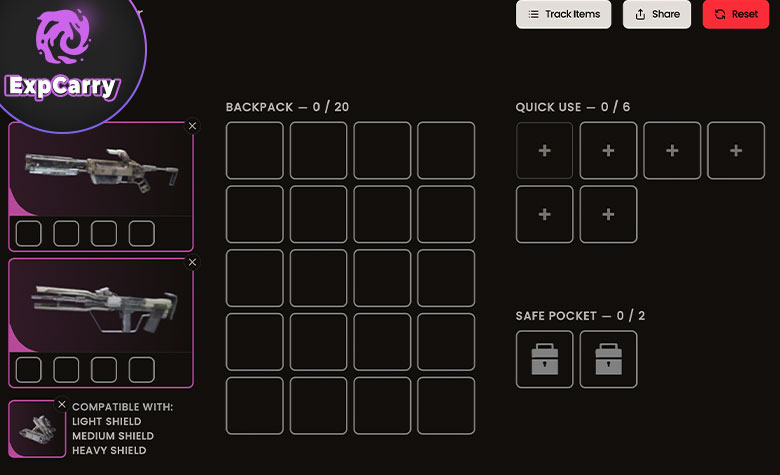
This table is the pick-fast layer. You choose your queue type, you pick a proven pairing, then you fill utility so you do not lose tempo to downtime. If you copy one thing, copy the utility focus, because Shared Watch reward pace is usually lost to resets and wasted time, not to raw DPS.
| Queue type | Reliable weapon pair | Why it works in Shared Watch | Must-have utility focus | Common failure |
|---|---|---|---|---|
| Solo | Tempest + Stitcher (or Bettina + Stitcher) | Stable mid-range ARC pressure plus close-range safety finish | Smoke-based line-of-sight reset, reliable healing, shield uptime | Over-committing and losing the reset window |
| Duo | Breaker: Bettina/Tempest + Anvil, Cleaner: Stitcher + flexible primary | Role split reduces downtime: one anchors ARC pressure, one controls adds and saves resets | At least one smoke reset on the team, shared extra recovery | Both players build the same job and fights drag |
| Random teams | Ferro + Stitcher (budget, repeatable) or Bettina + Stitcher | Redundancy and self-rescue: works even if teammates are unreliable | Self-sufficiency: your own heal, shield, and smoke reset | Assuming strangers bring essentials |
Best Loadouts by Team Type
The goal here is not to invent a perfect meta. The goal is repeatable loadouts that are easy to assemble, easy to replace after a death, and strong enough to farm Merits without turning every ARC fight into a resource crisis. Each section explains what to run, what the loadout is doing in the fight, and what to change if your sessions keep collapsing.
Solo: Tempest + Stitcher (or Bettina + Stitcher) for stable ARC pressure
Solo Shared Watch rewards the player who can keep shooting. Tempest is an Assault Rifle that supports steady mid-range pressure, and Bettina is also an Assault Rifle that trades fire rate for higher per-shot impact. Pair either with Stitcher, an SMG, as your close-range safety valve. The point of this pairing is tempo: your primary handles sustained ARC damage at safe ranges, and Stitcher deletes small threats fast enough that you do not have to full-disengage every time adds or a bad angle shows up.
If your solo runs keep dying, the most common failure is not your gun choice, it is the missing reset plan. Your reset tool should be something that reliably breaks line-of-sight so you can stabilize and re-enter. A practical default is Smoke or Small Smoke because it creates a screen you can fight around, heal behind, and use to cross open ground without taking free damage. Build your healing and shield uptime so chip damage does not push you into panic loops. In 1.15.0, do not rely on Trailblazer Grenade to solve big ARCs. Use it for control and smaller enemies, then win heavy fights with consistent pressure and safer weakpoint angles that keep you shooting instead of scrambling.
Duo: Breaker + Cleaner is the highest Merit pace
Shared Watch is strongest in duo because you can split jobs and keep fights short. The Breaker is the anchor: their job is sustained ARC pressure and phase progress, so they should run the steadier primary, typically an Assault Rifle like Bettina or Tempest, plus a dependable sidearm like Anvil. The Breaker should be the player who stays on target and keeps the fight moving, because long messy fights destroy Merit pace through downtime.
The Cleaner is what keeps your duo from collapsing. Cleaner runs Stitcher as a close-range delete tool and pairs it with a flexible primary that can still contribute at mid range. Their job is add control, peel, and stabilizing bad moments so the Breaker can keep shooting instead of resetting. The duo rule is simple: if both of you build like Breakers, adds and chaos force resets; if both of you build like Cleaners, ARC pressure drops and fights drag. Split roles and Shared Watch becomes boring in the best way.
| Duo role | Recommended weapons | Primary job | Utility priority | Fix if you keep failing |
|---|---|---|---|---|
| Breaker | Bettina or Tempest + Anvil | Hold ARC pressure and force phase progress | Ammo comfort, one recovery option | Stop over-peeking, keep uptime angles |
| Cleaner | Stitcher + flexible mid-range primary | Delete adds, peel, and stabilize resets | Smoke reset plus extra healing and shield uptime | Prioritize adds first so chip damage stops snowballing |
Random teams: Ferro + Stitcher (budget) when you cannot trust teammates
Random teams are where you want budget-replaceable kits and self-sufficiency. Ferro is a Break-Action Rifle that hits hard but forces a reload between every shot, and Stitcher covers the close-range emergencies and helps you recover tempo when your primary rhythm gets disrupted. In Shared Watch this pairing works because it is easy to rebuild after deaths and still has the tools to stay productive in chaotic fights where teammates do not peel or coordinate.
Your rule in random teams is redundancy. Bring your own smoke reset, your own healing, and enough shield uptime to survive chip damage. You are building a kit that stays functional even if you are effectively solo for long stretches. If you want to push higher efficiency, upgrade the primary into a steadier Assault Rifle like Bettina or Tempest and keep Stitcher as your safety valve, but keep the self-rescue utility rules unchanged.
Explore services related to this guide, selected from our ARC Raiders catalog.
View All ARC Raiders Services
Augment and Utility Priorities for Shared Watch
Weapons are the visible part, but utility is the uptime multiplier. Augments set practical constraints like carry capacity, slot limitations, weight, and shield compatibility, so they directly control how long you can stay productive before you must reset. For Shared Watch, pick the augment setup that lets you carry enough ammo and recovery to stay in ARC fights longer, because Merits scale with sustained ARC engagement, not with one fast highlight kill.
Utility should be chosen with one question: does this reduce downtime. A smoke-based line-of-sight reset is the biggest uptime multiplier because it turns a bad angle into a salvage instead of a wipe. Healing and shield uptime prevent chip damage from forcing repeated disengages. After the 1.15.0 Trailblazer change, explosives should be treated as control and small-target value rather than a heavy-target shortcut. When you build for repeatability, your Merit pace becomes consistent, which is exactly what Shared Watch rewards.
Conclusion
The Shared Watch event pays you for ARC engagement, not for player kills, so your loadout should be built around repeatable ARC pressure, survival through messy phases, and fast resets that keep you productive across multiple fights. Patch 1.15.0 reinforces that mindset: Trailblazer Grenade no longer damages through walls and is less effective against bigger enemies, so your heavy-target plan should be sustained weapon pressure and safe angles, not grenade shortcuts.
For Solo, Tempest or Bettina paired with Stitcher is the clean answer: stable mid-range pressure with a close-range safety valve. For Duo, split roles into Breaker and Cleaner so one player keeps ARC pressure up while the other prevents adds and chip damage from forcing downtime. For Random Teams, bring a kit you can rebuild cheaply and that can self-rescue, with Ferro + Stitcher being a reliable budget-replaceable option. If your results feel inconsistent, do not chase a new gun first. Fix uptime. Add a smoke reset. Increase survivability so chip damage does not force disengage loops. Reduce reload disasters by choosing steadier primaries. When your kit stops collapsing, Shared Watch starts paying out, because you spend more of your session damaging ARCs instead of rebuilding your run.