
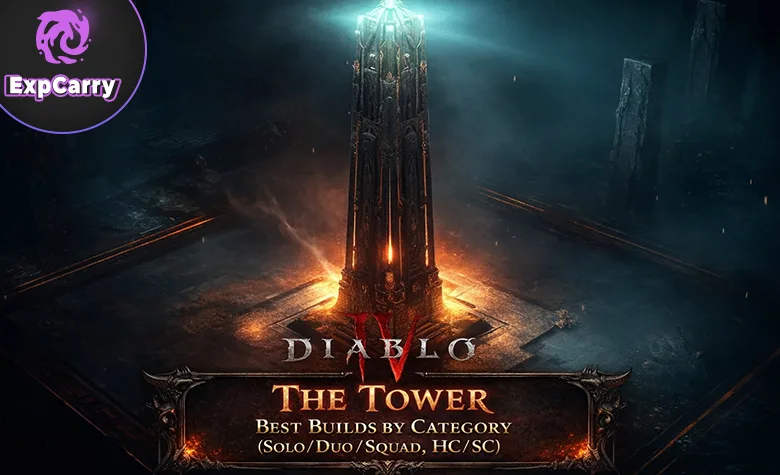
The best Diablo IV Tower builds in Season 15 depend on your class, leaderboard category and ability to complete timed runs consistently. Blazing Scream Warlock, Charge Barbarian, Penetrating Shot Rogue, Firewall Sorcerer, Blood Wave Necromancer and Stinger Spiritborn are among the strongest established Tower-pushing options. Blessed Shield Paladin and several Druid builds also provide class-specific routes to competitive clears. Softcore rewards aggressive damage and fast routing, while Hardcore requires enough defense to survive unexpected monster combinations without losing the character. Duo and squad teams must balance damage, mobility, crowd control and survivability rather than simply copy a solo build. This guide covers Solo, Duo and parties of three or four, including Softcore, Hardcore and Solo Self Found considerations for Season of Hell's Legacy, Patch 3.2.3, as of October 22, 2026.
Short answer: Blazing Scream Warlock is a leading Solo Softcore Tower choice in Season 15, while Charge Barbarian, Firewall Sorcerer, Penetrating Shot Rogue and Blood Wave Necromancer provide strong alternatives within their own class leaderboards. For Hardcore, use a defensive version of a proven class build. In groups, combine reliable clearing and boss damage with enough control and protection to prevent failed runs.
What Makes a Build Good in The Tower?
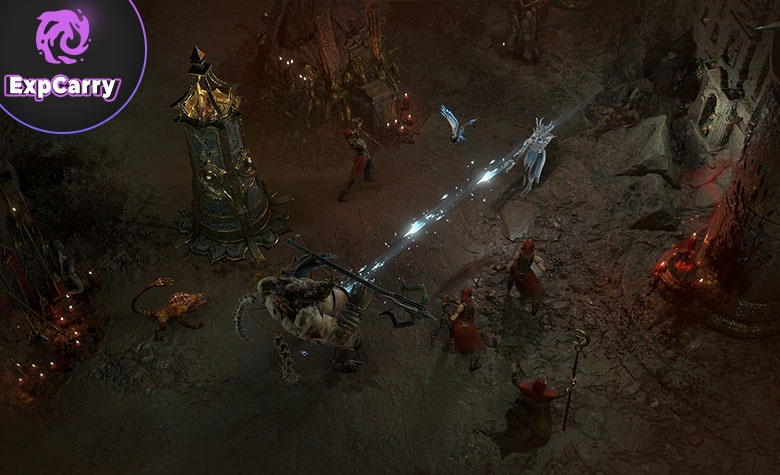
The Tower is a timed endgame activity where speed and survival matter together. Every run has a 10-minute limit, randomized floors and monster families, and a progress bar filled by killing enemies and collecting Orbs. Once the bar is complete, a final boss appears. The run only counts as a successful clear when that boss dies before the timer expires.
The timer begins when you leave the starting circle or 10 seconds after entering the Tower, whichever happens first. This rule prevents unlimited preparation time inside the instance and makes the opening seconds part of the run.
Unlike a normal dungeon, clearing every enemy is not always the fastest route. High-value monsters and Orb pickups are more important than chasing isolated enemies that contribute little progress. A strong build needs to move between valuable packs, eliminate them efficiently and preserve enough resources to finish the boss.
Four Pylons appear during a Tower run. Each is protected by a destructible structure that must be destroyed before the Pylon can be activated. The first three provide the three different Pylon effects in random order, and the fourth repeats one of them. Their benefits can dramatically change how quickly a build clears enemies:
- Power Pylon: Greatly increases damage, making it useful against dangerous packs or targets that would otherwise slow the run.
- Speed Pylon: Greatly increases movement speed and grants Unstoppable and Unhindered, helping maintain momentum across floors or between enemy groups.
- Channeling Pylon: Removes skill resource costs and greatly reduces cooldowns, supporting frequent ability use during demanding fights.
- Fourth Pylon: Randomly repeats one of the other effects, so the final sequence cannot be planned with complete certainty.
These mechanics favor builds with strong area damage, movement and reliable boss damage. However, maximizing one of those statistics while neglecting the others creates weaknesses. A character that clears monsters instantly but struggles with the final boss may lose the entire run to the timer. A character with excellent single-target damage but poor mobility can lose too much time moving between floors.
Equipment is part of that balance. Build-defining Diablo IV Unique Items can change damage scaling, defensive mechanics and skill interactions, but a Unique is only valuable when its effect supports the build's actual combat sequence. Wearing a powerful item that does not interact with the selected skills may be worse than using a well-optimized alternative.
How Tower Leaderboards Compare Different Builds
Tower rankings prioritize the highest completed Tier, with completion time determining placement among comparable clears. This creates two distinct objectives: first reach a higher Tier, then reduce the time needed to complete it.
Leaderboards separate solo classes, group sizes and Normal versus Hardcore characters. Solo Self Found and Hardcore Solo Self Found also have dedicated leaderboard categories. These divisions are important because they prevent a straightforward comparison between unrelated situations.
A Warlock and a Paladin completing the same Tower Tier do not compete for the same class-specific solo position. Both can earn meaningful placements within their respective categories, even if their completion times differ. Likewise, a party of four must be evaluated against other four-player groups rather than solo clear times.
Blizzard also introduced a build viewer that records snapshots associated with leaderboard entries. This allows players to inspect the equipment and character configuration used for a successful run instead of relying entirely on an external tier list.
Season 14 brought Tower and Leaderboards out of beta, introduced additional rewards and added Solo Self Found categories. These systems continue into Season 15. Current character strength should therefore be evaluated using the live Season 15 leaderboards rather than the original Season 11 beta rankings.
Best Tower Builds by Category: Solo, Duo and Squad
Season 15 has a different endgame landscape from the one shown in the original Tower article. Warlock is now part of the roster, and several classes have developed substantially stronger configurations than the builds that dominated the early Tower beta. The recommendations below use established Season 15 build guides and reported Tower results as a starting point.
Solo Softcore recommendations emphasize competitive pushing potential. Hardcore recommendations retain the strongest practical skill cores but place greater weight on defensive adjustments, consistency and escape options. There is not enough verified category-specific evidence to claim that every listed Hardcore variant is the statistically strongest Hardcore build for its class.
| Class | Solo Softcore | Solo Hardcore Direction | Why It Fits The Tower |
|---|---|---|---|
| Warlock | Blazing Scream; Apocalypse | Blazing Scream with additional defenses and reliable control | Excellent damage potential and effective clearing; strong results in the Season 15 pushing meta. |
| Barbarian | Charge; Whirlwind | Defensive Whirlwind or a controlled Charge setup | Charge provides mobility and powerful offensive pressure, while Whirlwind offers continuous damage during movement. |
| Rogue | Penetrating Shot with Poison Imbuement; Rain of Arrows | Penetrating Shot or Rain of Arrows with defensive positioning | Strong damage and mobility, with several viable approaches to ranged clearing and boss fights. |
| Sorcerer | Firewall; Meteor or other suitable Pyromancy variants | Firewall with stronger defensive layers and safer positioning | Persistent Burning damage supports repeated enemy engagements and high-tier pushing. |
| Necromancer | Blood Wave; Minion Necromancer | Blood Wave or defensive Minion Necromancer | Blood Wave provides powerful area damage, while Minion builds offer a different approach to sustained pressure. |
| Spiritborn | Stinger; Pestilent Swarm | Stinger or Swarm with additional survivability | Poison-oriented damage and sustained offensive effects perform well in Season 15. |
| Paladin | Blessed Shield / Shield of Retribution | Defensive Blessed Shield | A competitive class-specific pushing core with defensive and offensive interactions. |
| Druid | Shred; Tornado as an alternative | Defensive Shred or Tornado | Shred supports mobile melee combat; Tornado offers a more sustained damage pattern. |
The table does not rank all eight classes against each other. It identifies the strongest established or practical options within each class. That distinction matters because a class-specific leaderboard can reward a configuration that would not lead a universal damage ranking.
Druid results require particular caution. Some early Season 15 high-tier clears benefited from an unintended interaction between the five-piece Song of the Old Mountain Talisman bonus and the Grief Runeword. Blizzard corrected this interaction in the September 22, 2026 hotfix. Pre-fix records should therefore not automatically be treated as evidence of current build strength. Reported clear tiers and timings can also change as new runs are completed.
Solo Softcore: Best Builds for High-Tier Pushing
Softcore players can make more aggressive damage choices because death does not permanently remove their character. That does not mean a fragile build is always faster. Repeated deaths, defensive resets and missed Pylon opportunities can erase any advantage gained from increased damage.
Warlock — Blazing Scream and Apocalypse. Blazing Scream is one of the most prominent Season 15 Tower builds. It delivers exceptional offensive pressure and has established top-end pushing results. Apocalypse provides another high-damage direction, although its skill interactions and equipment requirements differ. Blazing Scream is the stronger general starting recommendation for players specifically targeting the current Tower meta.
Barbarian — Charge and Whirlwind. Charge has emerged as a major high-tier pushing option because movement and damage can contribute to the same combat sequence. Whirlwind remains useful for players who prefer a more continuous damage pattern while repositioning. Hammer of the Ancients is still playable, but it should not automatically retain its old position as the main Tower recommendation from Season 11.
Rogue — Penetrating Shot and Rain of Arrows. Penetrating Shot builds using Poison Imbuement have demonstrated strong Season 15 pushing potential, combining powerful ranged attacks with damage-over-time interactions. Rain of Arrows offers another established offensive approach. Dance of Knives remains relevant, but earlier exceptionally high results involving unintended damage behavior require caution when interpreting old records.
Sorcerer — Firewall. Firewall and associated Burning damage interactions are among the most successful current Sorcerer pushing directions. The Ring of Fire variant enables powerful Burning interactions with Pyromancy skills. The build is effective when enemies remain exposed to its damage long enough for the effects to contribute fully. Meteor can provide a complementary offensive approach, but the two abilities need to be configured around actual damage interactions rather than combined without a clear purpose.
Necromancer — Blood Wave. Blood Wave is a leading high-end Necromancer build, offering strong area damage and a clear offensive pattern. Minion Necromancer is a valid alternative for players who prefer a more summon-focused setup, although its exact damage output and positioning requirements differ. Mobility remains an important consideration when moving between Tower floors.
Spiritborn — Stinger and Pestilent Swarm. Both options can support high-end pushing through sustained damage and Poison-related interactions. Stinger is an established Tower choice, while Pestilent Swarm provides another competitive approach. Their performance depends on the current seasonal mechanics, equipment and the ability to maintain damage during dangerous fights.
Paladin — Blessed Shield. Blessed Shield, particularly configurations using its Shield of Retribution upgrade, is one of the class's strongest current pushing options. Its strength should not be confused with the earlier dominance of Judgement or Auradin in Season 11. Those older builds have different places in the current meta and should not automatically lead every Paladin recommendation.
Druid — Shred and Tornado. Shred offers mobility and direct combat pressure, while Tornado provides a different sustained-damage approach. Druid has had a volatile Season 15 leaderboard history due to corrected unintended interactions, making post-fix performance especially important when deciding which setup to invest in.
For exact skill trees, gear, Runewords and Paragon configurations, consult the current D4Builds Season 15 build guides. The builds listed above identify useful Tower cores; they are not complete equipment prescriptions.
Solo Hardcore: Strong Builds Without Unnecessary Risk
Hardcore changes the value of every offensive decision. A failed Softcore Tower attempt costs time and the opportunity to post a clear. A fatal Hardcore mistake results in permanent character death, making defensive consistency considerably more important than a small theoretical increase in maximum damage.
The safest general approach is to retain a proven offensive core while adjusting the supporting configuration. A defensive Blazing Scream Warlock can still use the class's main damage engine, for example, but should not sacrifice essential resistances or protection to imitate a Softcore leaderboard snapshot exactly.
Hardcore adjustments should address four specific weaknesses:
- Burst survival: Maintain suitable Armor, Resistances, maximum Life and damage-reduction effects for the Tower Tier being attempted.
- Control effects: Keep reliable ways to handle dangerous crowd control, including appropriate defensive skills and Unstoppable effects where available.
- Recovery: Use available healing, barriers or other defensive mechanisms before a dangerous pull becomes unrecoverable.
- Movement: Avoid skill or equipment changes that leave the character unable to escape a bad engagement.
These rules influence each class differently. A Hardcore Barbarian may favor a stable Whirlwind setup over a more demanding Charge configuration. A Rogue can retain strong ranged damage while emphasizing safer positioning. A Necromancer may prefer more protection around Blood Wave or use a suitable summon-oriented approach. Paladin and Druid builds should similarly preserve the defensive mechanics needed to survive their actual combat range.
Defensive Paragon choices are particularly important at high difficulty. Increasing Diablo IV Paragon progression provides access to additional character development, but available points must still be allocated effectively. More progression does not automatically compensate for missing resistances or unreliable defensive skill usage.
A sensible Hardcore pushing strategy also uses intermediate Tiers. If a character repeatedly survives a lower Tier but loses most of its defensive resources during the boss encounter, moving to a substantially higher Tier is not justified simply because the damage numbers appear sufficient.
Best Duo and Squad Tower Builds in Season 15
Group pushing changes which weaknesses must be solved by an individual character. A solo build requires enough damage, mobility and defense to handle every stage independently. In a coordinated party, players can specialize more heavily because teammates may provide additional damage, protection, crowd control or routing assistance.
However, the strongest solo class does not automatically create the strongest group composition. A team of several high-damage characters may clear efficiently, but overlapping combat roles, poor positioning and insufficient protection can cause problems on difficult floors. A dedicated utility character is worthwhile only when the benefits outweigh the damage the party gives up.
| Category | Suggested Composition | Main Advantage |
|---|---|---|
| Duo Softcore | Blazing Scream Warlock + Firewall Sorcerer | High offensive pressure with different damage patterns and opportunities to cover grouped enemies. |
| Duo Hardcore | Defensive Blessed Shield Paladin + Penetrating Shot Rogue | Frontline presence paired with a ranged damage dealer, provided both builds retain sufficient personal defenses. |
| Squad Softcore (3 players) | Blazing Scream Warlock + Charge Barbarian + Blood Wave Necromancer | Combines strong damage cores, movement and complementary area attacks. |
| Squad Softcore (4 players) | Blazing Scream Warlock + Firewall Sorcerer + Charge Barbarian + utility-focused Paladin | Multiple offensive sources with a fourth character configured for useful protection or group support. |
| Squad Hardcore (3 players) | Defensive Blessed Shield Paladin + Blood Wave Necromancer + Firewall Sorcerer | Balances frontline presence, area damage and ranged fighting while preserving individual defensive options. |
| Squad Hardcore (4 players) | Defensive Paladin + Blood Wave Necromancer + Penetrating Shot Rogue + defensive Blazing Scream Warlock | Spreads offensive responsibilities across several characters while emphasizing team survival. |
These are mechanically reasonable party templates, not measured rankings of the highest-performing Season 15 groups. They should be tested against the actual group leaderboard, available gear and the players' ability to coordinate. Replacing one suggested class may improve a team if the replacement solves a specific weakness.
Duo Softcore: Double Damage or Carry With Utility?
Two offensive builds can clear efficiently when both characters have enough survivability and their damage patterns work together. Blazing Scream Warlock and Firewall Sorcerer are an example of a pair with strong established solo damage cores. Both can contribute meaningful damage, but their effectiveness as a duo depends on positioning, enemy movement and whether they can maintain damage against the final boss.
An alternative is a primary carry alongside a more durable character. Penetrating Shot Rogue with a defensive Blessed Shield Paladin provides a different arrangement: the Rogue concentrates on ranged damage while the Paladin contributes frontline pressure and control.
Neither approach is universally better. Double damage becomes less useful if both players are forced to disengage simultaneously. A carry-and-utility pairing can be more consistent but may take longer to kill the boss if the support-oriented character contributes insufficient damage.
Successful duo teams should assign responsibilities before starting a run. One player can lead routing and decide when to skip scattered enemies, while both coordinate Pylon usage and major offensive cooldowns. This reduces time lost through separate movement decisions and unnecessary fights.
Duo Hardcore: Coordinated Survival
Hardcore duos need more than one durable character. Both players should have reliable defensive tools because unexpected enemy combinations can threaten either character. A durable Paladin does not automatically prevent a fragile ranged teammate from being eliminated by an enemy attack.
The strongest practical arrangement is usually one in which the characters can protect themselves while also helping each other maintain combat efficiency. A ranged damage dealer can reduce the time a frontline character remains exposed, while a durable teammate can provide space and useful defensive interactions.
Avoid separating across floors or engaging different packs without a clear plan. The advantage of a coordinated duo disappears when one player reaches a dangerous encounter before the other is ready to contribute.
Softcore Squads: When Does a Support Build Help?
Parties of three and four gain access to more specialized roles. In some compositions, a utility-focused character can improve total performance by providing defensive effects, positioning support or other bonuses that allow damage dealers to remain aggressive.
However, a dedicated zero-damage support should not automatically replace a fourth carry. Its value depends on which buffs and defensive abilities are actually available, whether they stack with existing effects and whether they reduce the time required to complete the Tower.
For example, a four-player composition containing Warlock, Sorcerer and Barbarian can already provide significant offensive pressure. A Paladin configured around useful defensive or utility effects might improve the team's consistency. But if the team already survives comfortably and the fourth player's support effects do not meaningfully increase damage uptime, another offensive character could produce faster results.
This should be tested using completed runs at the same Tower Tier. Compare boss duration, time spent clearing floors and the number of forced defensive resets rather than assuming the utility-focused version is stronger.
Group practice is also different from a recorded solo attempt. A coordinated Diablo IV Tower run in a party does not establish a solo leaderboard result, even if the same character deals most of the damage. The category selected for the run determines which leaderboard the completion belongs to.
Hardcore Squads: Survival Before Maximum Damage
Hardcore parties benefit from clearly defined positioning and defensive responsibilities. A frontline character should not initiate dangerous packs without sufficient allied support, and ranged characters should not assume that another player's defensive effects will always be available.
Good Hardcore coordination includes identifying who engages first, which abilities can interrupt or control dangerous enemies, and when the group should retreat rather than spend every resource on an unfavorable pull.
A balanced team can still contain several strong damage dealers. The difference from Softcore is that the group should avoid relying on one risky interaction that can result in permanent character loss when a random floor prevents the expected sequence from working.
Explore services related to this guide, selected from our Diablo IV catalog.
View All Diablo IV Services

How to Improve Tower Clear Times With Any Build
Build strength determines the ceiling of a Tower attempt, but routing and combat decisions determine how much of that strength is converted into a completed run. The fastest character can still produce a poor time by fighting low-value enemies, activating Pylons inefficiently or reaching the final boss without its important offensive skills available.
Choose Valuable Packs Instead of Clearing Everything
During the opening floors, concentrate on enemies that generate meaningful progress and are positioned along an efficient route. Orbs dropped by Elites, Champions and Treasure Goblins contribute to the progress bar, so collecting them matters as much as defeating the enemies that drop them.
Do not automatically pursue every isolated monster. If the progress gained is small compared with the time required to reach and eliminate it, moving to the next group may be more efficient. This decision depends on the floor layout and the mobility of the current build.
High-area-damage builds can eliminate several enemies together, but overpulling remains risky. The best pack is not necessarily the largest possible one. It is the group your character can defeat quickly without losing time to survival problems.
Use Pylons When Their Effects Matter
Pylon timing has a direct impact on the number of enemies a character can eliminate during its strongest combat window. The three initial Pylon effects appear once each in random order, followed by a fourth random repeat. Remember to account for the time required to destroy each Pylon's protective structure.
Power becomes particularly valuable when damage is the main limitation. Channeling is useful for builds that can exploit resource-free casts and greatly reduced cooldowns, while Speed helps maintain momentum during traversal and repositioning.
Activating a Pylon just before a low-value enemy group may waste much of its benefit. Whenever possible, use the effect during an important pull or when it can shorten the time needed to reach the next useful engagement.
Do not spend excessive time arranging a perfect Pylon sequence, however. The timer continues running, and an overly elaborate setup can cost more time than the optimized activation saves.
Prepare for the Final Boss Before Filling the Progress Bar
Once the progress requirement is met, the final boss appears. This is a major reason pure speed-farming setups do not always translate into strong Tower results.
Before the transition, consider whether your essential offensive abilities and defensive tools will be available. A build that depends on an important burst sequence may lose valuable time if it reaches the boss immediately after spending every major cooldown.
The boss also tests sustained damage and resource management differently from large monster packs. If your build has excellent area damage but weaker single-target performance, adjust the available equipment, skill configuration or combat sequence to address that limitation.
How to Optimize a Build Specifically for The Tower
A Tower configuration should not be copied blindly from a general farming guide. The activity has a hard timer, randomized layouts and a final boss that must be defeated. Those requirements create different priorities from comfortable open-world farming or low-tier dungeon runs.
Use four criteria when deciding whether a build needs adjustment:
- Clear speed: Can the character eliminate valuable monster groups without lengthy setup or repeated repositioning?
- Movement: Can it travel between packs and floors without spending too much of the timer outside combat?
- Boss damage: Does it have enough reliable single-target output to finish the final encounter?
- Survival: Can it withstand unexpected monster combinations and maintain damage without repeated defensive interruptions?
These priorities often explain why a build behaves differently in the Tower and the Pit. A Pit-focused configuration may specialize in maximizing sustained boss damage or pushing the highest enemy difficulty. A Tower-focused variation also needs to preserve fast movement and efficient progress generation during the ascent.
Season 15 adds another layer through Prime Evil Powers, Soul Splinters and updated equipment systems. These effects may strengthen particular damage types, trigger additional attacks or improve important build interactions. Their value must be evaluated within the actual configuration, including any trade-offs, rather than treated as universal bonuses.
The most useful comparison is between two completed runs at the same Tower Tier. If one version clears the floors faster but consistently loses time against the boss, its overall performance may be worse than a more balanced variation. Likewise, a highly defensive build that never risks death may still fail the timer because it cannot generate progress quickly enough.
Tower Leaderboard Rules, SSF and Current Season Changes
The Tower is no longer the experimental leaderboard mode it was during Season 11. Blizzard launched the fully released Tower and Leaderboards in Season 14, expanded the competitive categories and introduced additional rewards. Season 15 continues with those systems under the latest class and equipment balance.
Solo Self Found is particularly important when comparing competitive results. SSF is available to Seasonal characters in Normal or Hardcore. These characters cannot trade or join parties, and their stash, currency and Paragon progression are shared only within the corresponding SSF account partition. Their leaderboard results should not be directly compared with characters that can receive gear and other assistance through normal multiplayer systems.
The current leaderboard categories include solo class divisions, separate two-, three- and four-player group categories, and distinctions for Normal, Hardcore, Solo Self Found and Hardcore Solo Self Found where applicable. This means that identical Tower Tiers can represent different competitive achievements depending on the category.
Blizzard's official Tower updates also introduced:
- Build snapshots that can be inspected through leaderboard entries.
- Additional Tower environments, monsters and bosses.
- Rebalanced monster progress contributions.
- Milestone rewards and Treasures of the Artificer for qualifying progression.
- Cosmetic rewards associated with leaderboard performance.
Since Season 15 began, balance changes and bug fixes have also affected how some builds perform. In particular, unintended interactions can temporarily produce unusually high leaderboard results. A historic clear remains part of the recorded history, but it should not automatically be used to recommend an interaction that has since been corrected.
For current rules and balance information, see Blizzard's Season of Hell's Legacy announcement and Patch 3.2.1 details and the Diablo IV Patch Notes, including Patch 3.2.3. For current build comparisons, D4Builds Tower Tier List provides a separate seasonal reference.
Common Mistakes That Cost Tower Leaderboard Time
Several problems recur across classes and group sizes. Most are not caused by choosing a completely wrong build; they result from using a strong build in a way that does not match the Tower's scoring and time constraints.
- Following an outdated build: Season 11 recommendations may rely on previous class balance or equipment interactions. Check the current Season 15 configuration before investing heavily in a setup.
- Ignoring boss damage: Clearing floors quickly is not enough if the final encounter consumes the remaining timer.
- Wasting Pylon effects: Spending excessive time breaking a protective structure or activating a powerful effect where few valuable enemies are available reduces its contribution.
- Taking unnecessary fights: Chasing isolated low-value monsters may cost more time than moving toward another useful pack.
- Overbuilding damage in Hardcore: A small damage gain does not justify a major reduction in survival when death permanently ends the character.
- Poor group coordination: Players splitting apart or using important cooldowns at incompatible times can make a strong party slower than a well-executed duo.
- Misreading leaderboard results: A high-tier record may reflect a previous patch, an unusual equipment setup or an interaction that has since been fixed.
Correcting one major problem is usually more useful than changing several build components simultaneously. If the boss is too slow, focus on single-target performance. If the floors are slow, review mobility and pack selection. If survival is the limitation, improve the relevant defenses before attempting a higher Tier.
Diablo IV Tower Best Builds FAQ
These answers clarify the most important choices when comparing Tower builds and leaderboard categories.
What is the best Solo Tower build in Diablo 4 Season 15? Blazing Scream Warlock is among the strongest established Solo Softcore options. However, solo leaderboards are divided by class, so Charge Barbarian, Firewall Sorcerer, Penetrating Shot Rogue and other class-specific builds should be evaluated within their respective categories.
Are Hardcore Tower builds different from Softcore builds? They often use the same main damage skills but require more conservative supporting configurations. Hardcore players should prioritize reliable defenses, movement and survival over minor gains in theoretical damage.
Is a dedicated support required in a four-player Tower group? No. A utility-focused character can improve consistency when its abilities meaningfully support the group, but another damage dealer may be more effective when additional protection is unnecessary. The best choice depends on the actual composition and completed run times.
Can Solo Self Found characters join group Tower runs? No. Solo Self Found characters cannot join parties or trade and have dedicated leaderboard categories, including Hardcore SSF. Their progression and competitive results are separate from ordinary group play.
Conclusion: Best Tower Builds for Each Category
Season 15 Tower pushing favors builds that combine rapid clearing, effective movement, reliable boss damage and sufficient survivability. Blazing Scream Warlock is a leading overall offensive option, while every class has its own competitive build choices and leaderboard category. Hardcore requires additional defensive discipline, and Duo or Squad performance depends on coordination rather than simply stacking individually powerful characters.
Use the strongest current core for your class, adjust it to the selected category and evaluate completed runs by Tier, time and consistency. The most effective Tower setup is the one that converts its damage and mobility into a successful clear under the timer, not necessarily the one with the highest theoretical damage output.