



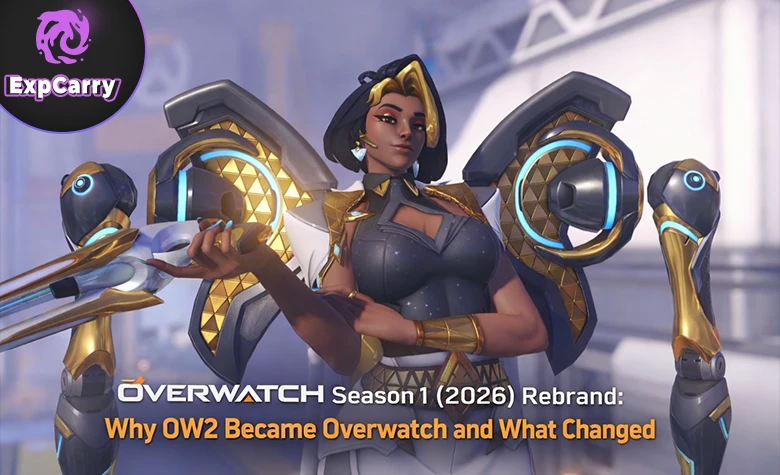
Overwatch Season 1 is the relaunch where Blizzard drops the "2" from Overwatch 2 and brands the game simply as Overwatch again. The important part is not the name. Season 1 is a bundle update that resets the year's structure, launches a connected story era, adds a new event format, changes how roles are defined, refreshes core UI flow, and introduces a relaunch-style Competitive reset with new expectations around recalibration. This article covers only the game-level changes: what was introduced, what was changed, and what was removed. A separate article can cover hero-by-hero balance and perks.
Why Blizzard dropped the "2" and what that signals
Blizzard ties the rename to a platform approach: Overwatch is positioned as a single long-running game that grows through big yearly beats rather than a sequel label that implies you move on again later. The rename is attached to a relaunch-scale Season 1 update so it reads as a real restart of the yearly cadence, not a logo swap. The practical implication is expectation management: Season 1 is meant to feel like a new starting point with visible systems work and a narrative framework that runs across multiple seasons.
Everything that changed in Season 1: what was added, changed, and removed
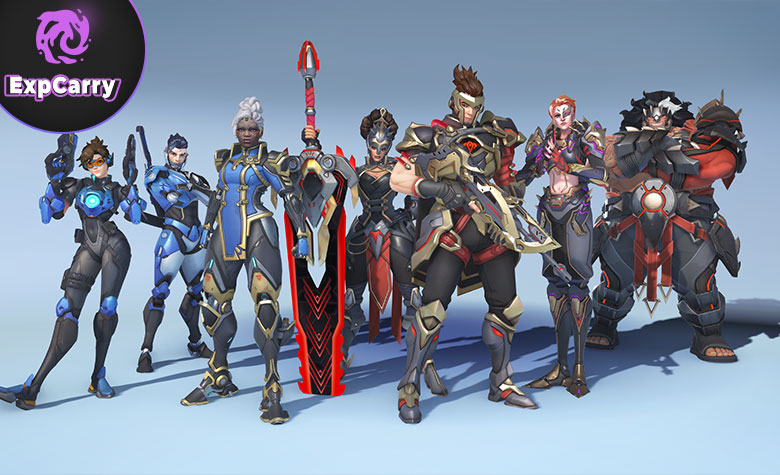
Season 1 is best understood as four pillars that touch nearly every login: a new year-long story delivery framework, a new meta event format that runs for the first five weeks of the season, a new role identity system that changes baseline expectations in matches, and a broad UI and usability refresh that changes how you navigate the game day to day. The list below is structured as Added, Changed, and Removed so returning players can quickly see what is actually different.
| Area | Added | Changed | Removed |
|---|---|---|---|
| Season structure and story | A connected year-long narrative arc called The Reign of Talon, described as Season 1 through Season 6 with a new Season 1 launching in 2027 | Story is delivered as a multi-format seasonal arc rather than isolated seasonal flavor | The sequel-era framing implied by "Overwatch 2" branding |
| Meta event format | Conquest meta event: a five-week faction war (Overwatch vs Talon) with weekly missions and weekly faction passes | You choose a faction each week, complete a weekly pass, and can switch allegiance after finishing that week's pass; you can also commit to completing both weekly passes as a Double Agent, then push a Prestige Pass for ongoing rewards | Nothing directly replaced; this is a new meta event category rather than a prior seasonal event being deleted |
| Roles and identity | Hero Sub-Roles within Tank, Damage, Support, each with its own passive identity framework | Role identity is now expressed through sub-roles; some roster behavior shifts because passives are different | The old one-passive-per-role model as the primary identity layer |
| Competitive year | A new-year competitive framing tied to the Season 1 relaunch | Competitive starts with a relaunch-style reset and recalibration window, with updated reward framing that is designed to fit the new yearly cadence | The sense of a normal season rollover without a relaunch reset moment |
| UI and navigation | New 3D lobby presentation and refreshed menu flow | How you navigate modes, view heroes, track seasonal systems, and surface updates is reorganized for the new yearly structure | Older menu flow and some legacy presentation patterns |
| Communication and social | Praise feature (positive comms via hero voice lines) and expanded contextual callouts | More match information can be communicated without voice chat, including better situational callouts and clearer intent pings | Nothing directly removed; this is an additive layer |
| Information and terminology | Expanded keyword and mechanics labeling in official info surfaces | More consistent language for interactions, counters, and status effects so players can read and act on mechanics faster | Older, less standardized labeling for some interactions |
Conquest nuances that matter
Conquest is not a normal limited-time mode. It is a five-week meta event layered on top of standard play, where you pick a faction each week, complete missions, and earn rewards tied to a weekly pass and faction performance. Three nuances matter in practice. First, the event is structured as a weekly plan: you make a choice, complete that week's pass, and only then can you switch sides, which changes how completionists schedule their play. Second, Double Agent and Prestige layers exist on top of the basic weekly pass loop, so "finishing everything" is more than just picking a side once. Third, because Conquest is a new meta-event category, expect the week-to-week experience to be more about steady progression than one-night grinding.
Sub-Roles and why the game feels different even before balance
The Sub-Role system is the highest-impact feel change for returning players because it shifts baseline expectations inside Tank, Damage, and Support. Even if a hero kit is unchanged on paper, the passive identity layer changes how they hold space, how they recover, and how they interact with tempo. The important nuance is that Sub-Roles are meant to be tuned over time, not locked forever, so Season 1 is the start of a new ruleset layer and early-season match feel is expected to evolve as Blizzard iterates on it.
UI/UX changes that affect daily play
The Season 1 UI refresh is not just visual. It changes where information lives, how quickly you reach modes, how seasonal systems are surfaced, and how the game presents your hero identity in the lobby. For returning players, this is why the game can feel different before you even queue: navigation habits change, event tracking is more prominent, and the overall flow is built to support a new year-long story and event cadence rather than a simple battle pass update.
What this means for players coming back
If you want the practical summary: the relaunch is not a nostalgic rollback and it is not a small seasonal patch. It is a reset of the yearly framing, a new meta event layer, and a new role identity system delivered alongside a UI refresh. That combination is why the game feels like "Overwatch again" in marketing language while still being a modern live platform rather than a 2016 ruleset.
For your first week back, treat Season 1 as a new baseline. Learn the Sub-Roles and the Conquest weekly structure first, because they affect every match and every week. Then decide whether you want to engage with the meta event rewards or ignore them. The biggest returning-player trap is assuming the name change is the change; the real change is the new seasonal structure layered on top of the same core shooter.
Conclusion
Season 1 drops the "2" as part of a relaunch and uses the rebrand to signal a single long-running Overwatch platform rather than a sequel era. The real change is structural: a year-long story framework, a five-week Conquest meta-event with weekly passes and controlled faction switching, and Sub-Roles that redefine role identity through new passive behavior. The UI/navigation refresh and expanded information surfaces change how you track systems and make decisions before you even queue. Treat this as a new baseline season, not a normal rollover.
For returning players, the fastest adaptation path is to learn the Sub-Role passive logic and the Conquest weekly loop first, because they affect every match and every week. Do not assume the name change means gameplay reverted to 2016; the season is built around ongoing iteration and a new cadence of systems layered on top of the same core shooter. Use the Added/Changed/Removed table as a checklist to update your expectations: what is new, what rules moved, and what habits are now outdated. Once those pieces click, the relaunch feels coherent and the rebrand stops looking like a cosmetic rename.