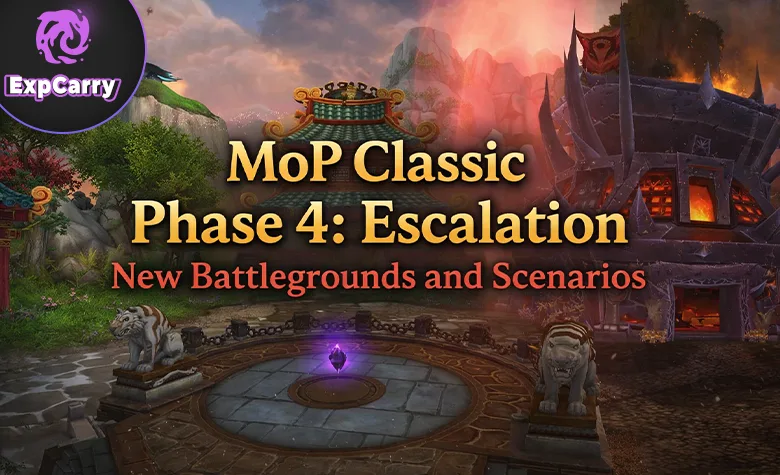
MoP Classic Phase 4 Escalation is the content chapter that brings Patch 5.3 style features into the Classic environment and shifts the spotlight onto repeatable small group PvE and structured PvP. Instead of a new raid tier, the phase leans on a new battleground, a new arena map, four new scenarios, and the arrival of heroic difficulty for scenarios. This matters because it creates a fast daily loop that can reward Valor and a chance at strong gear, while also giving PvP focused players new maps that change how queues feel. If you like short sessions with clear objectives, Phase 4 is one of the most schedule friendly points in the MoP cycle.
This guide explains what Phase 4 adds, how Deepwind Gorge and Tiger's Peak actually play, and how to approach the new scenarios in both normal and heroic difficulty. The focus is practical planning, not a thin list of names. You will get role templates, rotation logic, and scenario habits that reduce wipes and keep runs clean. The goal is to help you spend time where it matters, whether you are here for battlegrounds, arenas, daily heroic scenarios, or efficient Valor routines that support your bigger gearing plan.
What Phase 4 Escalation Adds in MoP Classic
Phase 4 is built around three pillars: new PvP maps, new scenarios, and heroic scenarios as a repeatable three player challenge lane. The battleground addition is Deepwind Gorge, a 15 vs 15 gold race where both teams fight to control three mines for steady income while also looking for openings to steal the enemy mine cart from their base and deliver it to their own. The arena addition is Tiger's Peak, a small scale battlefield set high in Kun Lai with strong line of sight features that reward teams who position well. On the PvE side, four new scenarios arrive: Battle on the High Seas, Blood in the Snow, Dark Heart of Pandaria, and The Secrets of Ragefire. These scenarios are designed as compact objective driven stories that can be completed quickly and repeated.
The biggest gameplay change is heroic difficulty for scenarios. Heroic scenarios are not a casual queue and forget activity, because the heroic option requires a premade group. Heroic difficulty also applies to a wider pool than just the four new scenarios, because two earlier scenarios are upgraded into the heroic lineup as well: A Brewing Storm and Crypt of Forgotten Kings. That requirement changes how you should plan your day, because you either need friends, guildmates, or a small group channel to keep heroics consistent. In return, heroics offer stronger rewards than normal scenarios, including Valor and a chance at Raid Finder level gear through the heroic treasure cache system. They also include optional bonus objectives that award extra Valor, so clean execution matters more than just finishing.
There is also a narrative and world activity layer tied to the Escalation theme. The phase continues the storyline pressure around Garrosh and the growing conflict that sets the stage for later chapters, and it ties into the Escalation quest campaign and the Battlefield: Barrens outdoor conflict that keeps players active outside instances. Even if you are mainly here for queues, story and world hooks matter because they direct where the playerbase spends time. When more players are doing the same daily loops, queues become healthier, premade recruitment becomes easier, and the economy around Pandaria Classic Gold, gems, enchants, and consumables becomes more active. In short, Phase 4 is built to keep the game busy without requiring a raid schedule.
Deepwind Gorge Battleground GuideGuide

Deepwind Gorge is a 15 vs 15 battleground that blends three mine capture points with a base cart steal objective. The win condition is not about topping the kill board, it is about building gold faster than the enemy by controlling mines and converting control into steady income, while also denying or executing cart steals at the right moments. What makes the map unique is that you can swing the score by stealing the enemy cart from their base and carrying it back to your own, which both removes gold from them and adds it to you if the delivery succeeds. That creates a battleground where defensive awareness matters even when you are ahead. Teams that play it like a simple domination map often lose to a smaller group that rotates well, protects their cart, and times steals when the enemy is distracted.
The best way to think about Deepwind Gorge is as a rotation, escort, and denial battleground. You win by controlling two mines more often than your opponent, and by making it hard for them to ever get a clean cap, a clean cart grab, or a clean delivery. The map punishes teams that overcommit to one point forever, because losing the other side of the map creates a gold deficit you cannot fix with kills alone. It also punishes teams that trickle back into fights one by one, because the time spent dying repeatedly is time the enemy uses to cap, stabilize, and set up a cart play. Even in random groups, simple discipline wins a surprising number of games.
Win conditions and the two mine rule
If your team can hold two mines for long stretches, you are usually in a winning position. The third mine becomes a pressure lever, not a mandatory objective, because trying to hold all three can split your team and create weak defense. When you win a fight, the correct follow up is to convert the win into a cap, a reinforcement, a cart escort, or a rotation that denies the enemy's next move. When you lose a fight, the correct response is to regroup and attack as a unit, not to run in one by one. A single coordinated push can flip a mine, while three staggered deaths usually only feed the enemy more control time.
Steal and delivery denial is the most important defensive concept. If you see the enemy sending fast movers or stealth classes toward your base cart, do not ignore it because you are winning mid fights. A successful steal and delivery at the right moment can erase the advantage you built. It is better to send one fast responder early to stop the grab or delay the carrier than to send three people late after the cart is already moving. The teams that feel unstoppable in Deepwind Gorge are the ones that treat cart defense and mine defense as proactive jobs, not emergencies.
Roles and a simple rotation template for random queues
A practical template is to split into three functional roles: an anchor, a responder, and a rotation pack. The anchor stays on the most contested mine and focuses on delaying caps and surviving until help arrives. The responder watches for stealth plays, back caps, and cart threats, and should be a class with speed tools or control. The rotation pack is the main group that wins team fights and converts them into captures, escorts, or denial. This structure prevents the most common random queue failure, which is the entire team fighting in one place while mines change hands or the cart play happens off screen.
Healers should position to support the anchor and the rotation pack, not only the biggest clump. Damage dealers should save key crowd control for capture moments and cart carrier moments when possible, because stopping a cap or a delivery is often more valuable than using stuns on cooldown. Tanks and durable specs are strongest as anchors or escorts, because their job is to buy time, not to chase kills. Fast movers should think like firefighters, arriving early to prevent the problem rather than arriving late to clean up. If you follow this template and communicate simple calls like two incoming, cart threatened, or rotate north, you will win more often than the team that only focuses on kills.
- Anchor holds a mine and focuses on delay and survival.
- Responder checks for stealth caps, back caps, and cart pressure swings.
- Rotation pack wins fights and converts into caps, escorts, or denial.
- After every fight, decide the next objective within 5 seconds.
Tiger's Peak Arena Guide
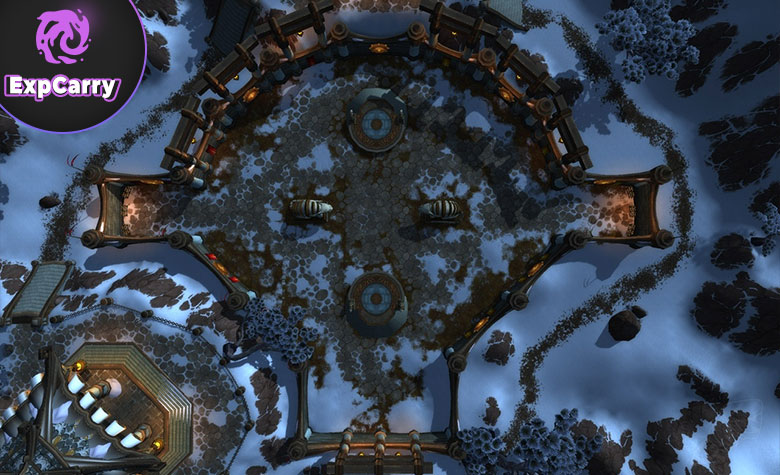
Tiger's Peak is an arena map designed around line of sight play and controlled movement. The map features large tiger statues that act like pillars and platforms that change how you approach positioning. This makes it a map where you cannot simply tunnel into the center and expect the same results as on flatter maps. Teams that understand angles and movement timing create safer healer positions and cleaner kill windows. Teams that ignore terrain often overextend and get punished by swaps or crowd control chains.
Because Tiger's Peak is built for setup play, it tends to feel better for coordinated teams than for chaotic teams. That does not mean you cannot win in pickup games, it just means you should simplify your plan. Choose a fight location, keep your team connected, and avoid splitting around different corners. The most common mistake is a damage dealer chasing a target around a statue while the healer loses line of sight and cannot save them. If you stay disciplined, the map becomes a tool you can use to reset pressure and force the enemy healer into bad positions.
Positioning basics that decide matches
If you are playing aggressively, you want to push the enemy into awkward angles where their healer must step into danger to keep line of sight. Once the healer moves, you punish that movement with crowd control or a swap. If you are playing defensively, you want to rotate around the statues to break casts and force the enemy to chase into your control. Healers should move early, not late, because proactive repositioning prevents panic moments where you are stuck in the open. Damage dealers should plan burst windows where the healer cannot easily step in to recover.
For melee comps, do not chase forever around terrain if it breaks your healer's line of sight. Instead, hold a strong position and force the enemy to come back to you. For caster comps, use the statues to control angles and create safe casting lanes. For hybrid comps, focus on clean crowd control chains that punish the enemy when they try to cross open space. The more you treat Tiger's Peak as a map that rewards patience and timing, the more consistent your wins become.
Explore services related to this guide, selected from our Mists of Pandaria Classic catalog.
View All Mists of Pandaria Classic Services


New Scenarios in Phase 4 and Why They Matter
Phase 4 adds four scenarios that expand the scenario system into a more meaningful daily activity. Scenarios are three player instances that emphasize objectives, pacing, and story rather than long boss fights. They are designed to be completed quickly, which makes them ideal for daily progression. In earlier phases, scenarios could feel like a side activity you did once and forgot. In Phase 4, heroic difficulty changes that, because scenarios become a repeatable lane with rewards that can matter for gearing.
The four new scenarios are Battle on the High Seas, Blood in the Snow, Dark Heart of Pandaria, and The Secrets of Ragefire. Each one rewards a different style of play. Some favor strong cleave and quick target swaps, while others punish overpulling and reward disciplined pacing. Because scenarios do not force a tank healer damage structure, your group composition matters in a different way than it does in dungeons-service">dungeons-services">dungeons. You want tools like interrupts, stuns, off healing, and defensives, because those tools smooth out the spike moments that cause wipes in heroic.
Battle on the High Seas tips for clean runs
Battle on the High Seas is a naval themed scenario with chaotic waves and tight spaces that can amplify mistakes. The biggest success factor is clear target priority under pressure. In heroic difficulty, groups commonly waste interrupts on low threat enemies and then die when the dangerous casts go through. Decide before the run who is responsible for interrupts and who is responsible for controlling adds. If your group has strong cleave, you can gain a lot of time, but you still need clean swaps when priority targets appear.
Movement discipline matters because it is easy to get separated and lose support range in a ship environment. Stay close enough that off heals and defensives can reach everyone. When the run gets messy, stabilize first, then recover time with clean damage. Most slow runs are not slow because the group lacks damage, they are slow because the group wipes and has to repeat a section. If you keep the run clean, this scenario becomes one of the most repeatable daily options.
Blood in the Snow tips for safe pacing
Blood in the Snow is a scenario where pacing matters more than raw damage. The most common wipe pattern in heroic is overpulling, especially in moments where objectives overlap with combat pressure. Because you only have three players, you do not have extra bodies to recover a bad pull. Pull smaller until your group learns where the spike moments happen, then increase pace once you can control them reliably. Save cooldowns for objective spikes rather than spending everything early.
This scenario rewards groups with a durable frontliner and steady support tools. If your team is fragile, compensate with careful pulls and more crowd control. When in doubt, choose survival over speed, because a wipe costs more time than any cautious pacing ever will. Once your group has a clean rhythm, Blood in the Snow becomes very consistent. It is a good pick on days when you want a stable run rather than a risky one.
Dark Heart of Pandaria tips for interrupts and mechanics
Dark Heart of Pandaria punishes tunnel vision. It rewards groups that respect dangerous casts, move early on ground effects, and manage interrupts as a real resource. In heroic, one missed interrupt can snowball into a wipe because the incoming pressure stacks quickly in a three player format. If your group has limited interrupts, rotate crowd control to cover gaps. Positioning matters because bad positioning often forces emergency movement that breaks damage and breaks support range.
Communication makes this scenario much easier. Call priority targets, call interrupts, and call defensives before health drops too low. Clean execution beats aggressive pulling here, because the scenario is designed to test discipline. If you keep mechanics under control, your completion time becomes stable without needing risky speed tactics. Over a week, stable runs generate more value than high variance runs.
The Secrets of Ragefire tips for staying together
The Secrets of Ragefire is an infiltration flavored scenario that can punish groups who rush into overlapping pressure. In heroic, rushing often creates boxed in moments where waves overlap and the group loses space. The best approach is steady forward pacing while maintaining control of what is behind you and what is ahead. Stay together so off healing and support tools remain effective. If you split, you usually lose more time trying to reconnect than you would ever gain by rushing.
This scenario favors control heavy compositions, but damage focused groups can still succeed with smaller pulls and better cooldown timing. Watch your positioning in narrow areas so you always have a retreat path. If you feel the run slipping, retreat early and reset cleanly instead of trying to brute force. With practice, Secrets of Ragefire becomes very repeatable and is a strong daily heroic candidate. The key is discipline, not aggression.
Heroic Scenarios: Requirements, Rewards, and How to Run Them Efficiently
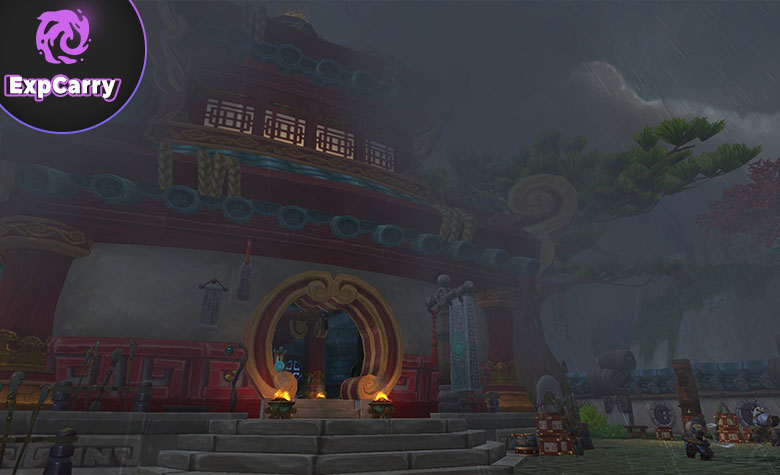
Heroic scenarios are the feature that turns scenarios into a real progression lane. The heroic option requires a premade group, which means you cannot rely on random matchmaking for heroics the way you might for normal scenarios. In exchange, heroics offer stronger incentives: Valor on completion, extra Valor from bonus objectives, and a chance at strong gear from the heroic treasure cache. You can also claim the daily bonus Valor reward from completing either a normal scenario or a heroic scenario each day, but not both, so picking the version you can complete cleanly is part of efficient planning. This is why many players treat one heroic scenario per day as a clean daily routine when they have a premade ready. It is fast, focused, and does not require a full group schedule.
Heroic scenarios reward role clarity. Even though there is no required tank or healer, groups that succeed consistently usually bring at least one durable character and at least one set of support tools such as off healing or strong control. Interrupts matter more than most people expect because many heroic failures are caused by letting one key cast through. Defensives matter because damage spikes can be sudden and three players means fewer rescue tools. If you build your group with those basics, heroics become far more consistent.
Daily routine and the bonus objective mindset
The best heroic scenario habit is to treat bonus objectives as part of the run, not as optional fluff. Bonus objectives award extra Valor, so they directly increase your weekly pace when you complete them consistently. This changes how you should think about speed. Speed comes from clean execution and fewer mistakes, not from reckless pulls. If your group wipes once, you usually lose more time than you would ever gain by rushing the early parts.
Make a simple pre run plan. Decide who interrupts first, who uses the first defensive, and who calls swaps. If you have a wipe, take ten seconds to identify why, because repeating the same mistake is what makes heroics feel frustrating. Over time, your group will develop a rhythm and you will complete runs quickly without feeling like you are speedrunning. That is how heroic scenarios become a sustainable daily loop instead of a stressful chore.
- Premade required means composition and communication matter.
- Interrupt priority targets first, do not overlap interrupts randomly.
- Save cooldowns for spike moments and objectives, not early trash.
- Bonus objectives are part of the value, so plan for them.
Phase 4 Scenarios at a Glance
The table below summarizes the four new scenarios and the kind of execution they reward. Use it as a quick planning reference when choosing your daily run. It is not a rigid ranking, because the best pick depends on your group strengths and your mood. Some groups prefer control heavy scenarios because they feel safer. Other groups prefer cleave friendly scenarios because they feel faster. Note that heroic difficulty is available in a larger pool than just these four, because A Brewing Storm and Crypt of Forgotten Kings are also part of the heroic lineup, but the focus here stays on what is newly added in this phase.
| Scenario | Main pressure point | Most common failure | Best habit | Group strengths |
|---|---|---|---|---|
| Battle on the High Seas | Chaotic waves in tight spaces | Missed interrupts and poor swap discipline | Assign interrupts and call swaps early | Cleave, stuns, quick target swaps |
| Blood in the Snow | Objective spikes with combat pressure | Overpulling and spending cooldowns too early | Pull safely and save cooldowns for spikes | Durability, steady support, safe pacing |
| Dark Heart of Pandaria | Dangerous casts and mechanics | Tunnel vision and late movement | Interrupt priority targets and move early | Interrupts, awareness, flexible positioning |
| The Secrets of Ragefire | Overlapping waves and boxed in moments | Rushing and splitting the group | Stay together and control waves before pushing | Control, coordinated movement, defensives |
Weekly Plan: Battlegrounds, Arenas, and Heroic Scenarios
Phase 4 offers multiple loops and it is easy to overload yourself by trying to do everything daily. The best approach is to pick a primary pillar and a secondary pillar. If you want the most predictable daily value, heroic scenarios are the cleanest anchor because they are short and reward consistent execution, but remember that the daily bonus Valor reward is tied to completing either a normal scenario or a heroic scenario that day, not both. If you want longer sessions and competition, battlegrounds and arena become the core of your week. You can mix these based on mood, which is one of the strengths of Phase 4 as a bridge phase.
For PvP focused players, Deepwind Gorge and Tiger's Peak are best learned through repetition with a clear goal. In battlegrounds, focus on rotations, cart defense, and denial habits rather than chasing kills. In arenas, focus on positioning discipline and line of sight control. For PvE focused players, heroic scenarios are best treated like daily challenges where you improve your run quality over time. In all cases, the phase pays off most when you aim for consistency and avoid burnout.
Two templates: casual week and efficiency week
A casual week template is simple. Do normal scenarios when you have short time, do battlegrounds when you want relaxed queues, and do arena when you have a partner and want focused practice. This keeps you engaged without feeling locked into a daily schedule. An efficiency week template is also simple. Do one scenario daily for the bonus, heroic if you have a premade and want the stronger cache incentives, normal if you do not, then schedule two or three focused PvP sessions where you practice Deepwind Gorge rotations and Tiger's Peak positioning. Raiders can use this structure to keep Valor moving and keep gear current without adding a raid night.
The biggest mistake is trying to do every loop every day. That turns a flexible phase into a checklist. If you pick two pillars, your week stays fun and your progress stays steady. That is the best way to treat a phase that is designed to offer variety. Your reward pace will be better long term because you will actually stick to the routine.
- Daily anchor: one scenario for the bonus, heroic if you have a premade, normal if you do not.
- Two or three times weekly: battleground session with a rotation and cart denial goal in Deepwind Gorge.
- One focused session weekly: arena practice to learn Tiger's Peak angles.
- Optional: story and world objectives when you want a change of pace.
Conclusion
MoP Classic Phase 4 Escalation is a content chapter built around fast repeatable activities that reward coordination and smart play. Deepwind Gorge adds a battleground where rotations, cart defense, and objective timing matter as much as fighting. Tiger's Peak adds an arena map where line of sight and positioning discipline create real advantages for teams that practice. The four new scenarios expand the three player catalog and offer varied play patterns, from chaotic wave control to disciplined pacing and interrupt focused execution.
Heroic scenarios are the center of the phase for many players because they create a short daily loop with meaningful rewards when run consistently. If you approach them with premade planning, clear interrupt roles, and a bonus objective mindset, they become reliable and efficient, and remembering the daily bonus rule helps you avoid wasting time chasing a reward you have already claimed. If you prefer PvP, Phase 4 gives you new maps that reward learning and teamwork rather than raw brawling. The phase works best when you pick the parts you enjoy, run them consistently, and avoid turning flexibility into a checklist. With that approach, Escalation becomes an enjoyable bridge chapter that keeps your character moving forward between major raid moments.