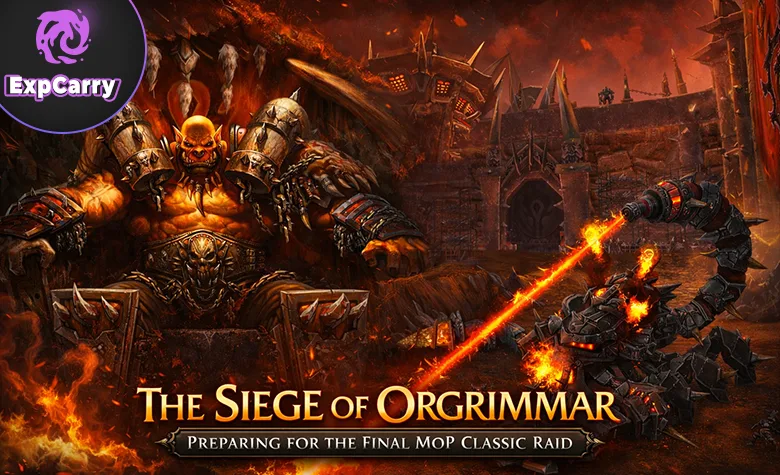
The Siege of Orgrimmar: Preparing for the Final MoP Classic Raid is about turning late-expansion habits into repeatable progress. Siege is a long, mostly linear raid with a big boss count, multiple difficulty options, and a clear ramp from early encounters into punishing end bosses. If your group waits until the doors open to solve roster, gearing, or assignment problems, you will spend the first resets relearning basics instead of pushing meaningful progression. This guide focuses on the preparation layer that pays off the moment you zone in: what to finish before the first pull, what to stock so you do not bleed time on logistics, and how to plan your first clears so they build momentum. It is not a full encounter script for every boss. Instead, it gives a mastery-oriented checklist and the specific wipe patterns that usually block early Siege runs.
Because MoP Classic is delivered in phases, the best approach is to treat Siege prep as a series of small upgrades rather than a single grind. You want a stable roster plan, a consistent weekly routine, and enough flexibility to swap roles and sizes without your raid night collapsing.
Raid Snapshot: What Siege of Orgrimmar Demands From Your Group
Siege of Orgrimmar is the final raid of Mists of Pandaria and it is built like a campaign: you push through distinct sections that keep moving forward with very little downtime. The instance is known for a long boss list, which makes consistency more important than peak performance. A group that can execute cleanly for two hours often outperforms a group that spikes damage but wipes on repeatable mechanics.
Siege also stands out because it popularized Flexible raid sizing during the original patch cycle. That matters for preparation because your roster and assignment style can be designed around scaling, not around a rigid headcount. If your team is returning for MoP Classic and rebuilding from scratch, this is the raid where good organization saves the most time.
Difficulty modes and why they change your prep priorities
Siege supports Flexible, Normal, and Heroic. Each mode changes how strict you must be about item level, assignments, and roster depth. Flexible mode was designed for premade groups that want scalable raid size and a lower-pressure learning environment, which makes it a practical bridge for many teams as they rebuild habits and fill weak slots.
Normal and Heroic are the main targets for structured progression guilds, but they also demand sharper execution on mechanics that groups cannot simply brute force. Your preparation should match your intended starting lane: if you plan to start in Flex, focus on roster stability and fast learning; if you plan to start in Normal, focus more on enchant quality, consumable discipline, and consistent defensive usage. The key is to decide now what your first two lockouts look like. A clear early plan prevents the common trap where players over-invest in short-term pieces, then have to rebuild their setup once the group moves up a difficulty.
Also be realistic about your raid size. In MoP Classic, Normal and Heroic are typically organized around fixed-size teams, so you want a plan that works for the headcount you can field consistently, not just the headcount you wish you had on perfect weeks.
| Difficulty | Group model | Loot positioning | Practical use in early weeks | Prep emphasis |
|---|---|---|---|---|
| Celestial dungeons-services">Dungeons (catch-up) | 5-player, queue-friendly | Entry tier for endgame upgrades | Fast gearing and practice for returning players, fills weak slots | Time efficiency, targeted upgrades, routine completion |
| Flexible | Premade, scaling size | Bridge tier between catch-up and organized raiding | Learning environment with meaningful gear gains and roster building | Roster flexibility, assignment habits, clean fundamentals |
| Normal | Organized, fixed-size teams | Core progression target | Main weekly clear goal for many guilds | Consumables, healer cooldown plans, consistent interrupts |
| Heroic | Organized, fixed-size teams | Highest challenge tier of the era | Long-term progression and prestige kills | Defensive coordination, strict positioning, mistake-proof pulls |
The Pre-Raid Checklist That Actually Moves the Needle
Before you worry about boss mechanics, lock down the basics that prevent wasted raid time. Siege is long, so every small delay compounds: missing enchants, sloppy gemming, inconsistent consumable usage, and unclear loot rules all add up over the first month. The best Siege groups look boring on paper because their prep removes most avoidable failure points.
A good checklist is not a wall of chores. It is a short set of actions that increase pull volume while keeping player stress low. If you can increase your clean pulls per night, you will progress faster even without perfect gear.
Legendary cloak progress and why it matters for endgame access
The Wrathion legendary cloak questline is part of the end-of-expansion power curve, and it mattered in the Siege era for access to specific Timeless Isle content. In particular, the cloak was tied to entering the Ordon Sanctuary area and engaging Ordos, which made cloak progress more than a vanity project for many raid-focused players.
If your goal is to experience the full final MoP loop, treat cloak progress as a parallel track to raiding, not as an optional side project. Even if your team does not require cloaks to step into Siege, cloak progression tends to correlate with player consistency because it rewards routine: showing up weekly, finishing structured steps, and keeping your character raid-ready. When a roster has a high percentage of players who keep up with their cloak steps, it usually means they are also keeping up with basic raid prep.
Do not turn the cloak into a blame tool. Use it as a planning signal. If half your raid is far behind, build a catch-up week into your schedule before you push the final bosses hard.
Consumables and utility you should stock before the first reset
Siege punishes groups that treat consumables as optional because many encounters include repeated burst windows and frequent raid-wide damage. You want a consistent baseline: flasks, food, potions for burn phases, and backup consumables for multiple wipe chains. The goal is not to be fancy. The goal is to never stop pulling because someone ran out of basics.
Utility items matter more than people remember. Engineering tools, battle resurrection planning if your comp supports it, and a clear system for healthstone usage can prevent pulls from collapsing late. Decide who is responsible for what. When utility is everybody’s job, it becomes nobody’s job.
Also set a repair standard. Long Siege nights can destroy gold reserves, and players who go broke stop enchanting and stop using consumables. A small guild bank policy is often the difference between a stable month one and a slow bleed into frustration.
Gearing Before Siege: What to Farm and What to Ignore
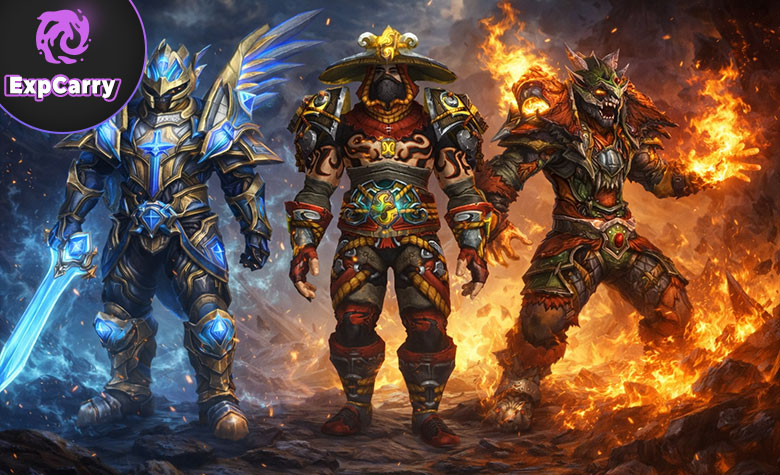
Pre-Siege gearing is less about chasing perfect lists and more about removing weak slots that cause avoidable deaths. If you are entering with a mix of earlier tier items, focus on survivability and consistency first. A small stamina or secondary-stat improvement that prevents one death can be worth more than a higher theoretical damage gain that only matters on perfect pulls.
Use your first plan to answer two questions: which slots are the most behind for most players, and which upgrades are easiest to repeat across the roster. When you solve gearing as a team rather than as individuals, you smooth out healing pressure and reduce the number of unpredictable wipes.
How Flexible difficulty influences early gearing strategy
Flexible difficulty exists to bridge the gap between catch-up gearing and organized raid progression in both pressure and rewards. That makes it a strong early tool for rebuilding rosters, retraining players, and establishing boss-by-boss discipline. If your group has returning players who are rusty, Flex can produce more productive learning per hour than banging your head on Normal with half the raid still re-learning movement rules.
Flex also changes how you recruit. You can bring a larger roster to stabilize attendance and still raid, instead of canceling nights because you are short one role. If you want a smooth Siege start, design your early weeks around scaling, then tighten for harder difficulties later when your core is stable.
Item level reality check: set expectations without drama
Siege gear tiers are spaced so that each difficulty feels like a meaningful step up, and this is part of what makes the raid a long-term progression environment. The practical implication is that your group should align on a starting lane. If leadership wants Normal clears but half the roster is geared and played like they are still in pure catch-up mode, the conflict will show up immediately as blame and burnout.
Set a minimum standard that is achievable and visible: fully enchanted gear, correct gems, and a basic understanding of each role’s defensive tools. If you want to use item level as a gate, keep it as a guideline, not as a weapon. Players should understand what the gate protects: time, not ego.
| Goal | Best gearing angle | Why it works | Common mistake | Simple fix |
|---|---|---|---|---|
| Get raid-ready fast | Target weak slots first | Reduces sudden deaths and healer panic | Chasing tiny upgrades in already-strong slots | Audit the lowest 3 slots per player |
| Improve raid consistency | Standardize enchants and gems | Predictable damage intake and output | Letting half the roster run under-prepped | Require full enchants for raid invites |
| Prepare for end bosses | Practice defensive timing | Siege end fights punish greed | Saving defensives “for later” and dying now | Assign defensive usage per mechanic |
| Keep morale stable | Build a two-night plan | Predictable schedule reduces stress | Random boss hopping that feels like chaos | Commit to a route for two resets |
Explore services related to this guide, selected from our Mists of Pandaria Classic catalog.
View All Mists of Pandaria Classic Services


Roster and Role Prep: Build a Siege Team That Does Not Collapse
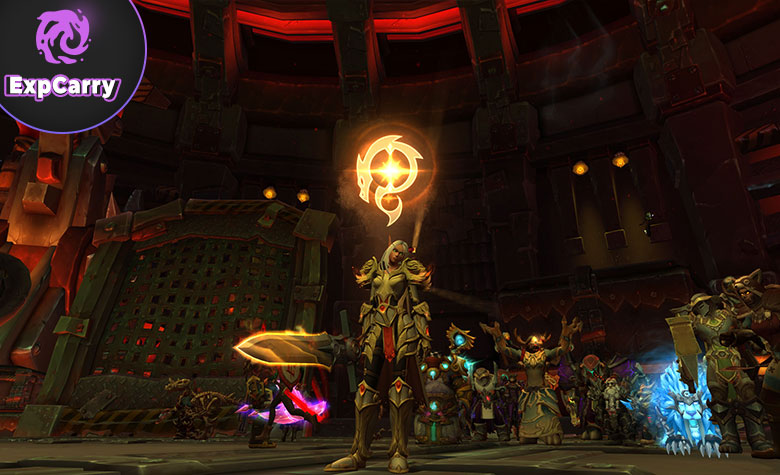
Siege is where roster design becomes a real progression tool. Because the raid is long and mechanics are varied, you need redundancy: backups for key roles, a plan for absences, and a consistent leadership voice. A raid that relies on one person for interrupts, one person for raid cooldown calls, or one tank to never miss a night is a raid that will stall.
You do not need to overcomplicate this. You need simple role ownership. Assign interrupt captains, dispel responsibilities, and cooldown rotations for predictable damage events. When a wipe happens, you want to know exactly which system failed, not argue about who should have done something.
Designing assignments that scale with raid size
If your group uses Flexible sizing, design mechanics coverage as clusters rather than as single-person jobs. For example, instead of assigning one player to every single add, assign a small group to handle add control and rotation-based interrupts. This style adapts naturally if you raid with 12 players one week and 18 the next.
Scaling assignments also helps new players integrate. They can join a cluster, learn one slice of responsibility, and become reliable without being overwhelmed. That makes recruiting less risky in the early Siege weeks, when rosters tend to shift.
Keep the language consistent. If you call something a soak group, it should always mean the same thing. Siege has enough moving parts that inconsistent terminology creates real deaths.
Encounter Planning: The Wipe Patterns That Usually Block Early Clears
You do not need to memorize every ability tooltip to progress in early Siege. What you need is an awareness of the common wipe patterns, because they repeat across multiple fights: players failing personal responsibility mechanics, groups losing control of adds, and healers falling behind because cooldowns are not planned. If you can solve those patterns, the raid becomes much more predictable.
Siege also rewards disciplined movement. Many deaths come from people doing the right job while standing in the wrong place. In your first week, prioritize clean positioning over damage padding. The damage will come when the raid stops dying to avoidable mechanics.
Opening stretch: Immerseus through Sha of Pride
The early bosses teach the rhythm of Siege: quick resets, repeated mechanics, and a high value on individual execution. Groups often wipe here not because the fights are the hardest, but because players have not locked into the discipline of the raid yet. Treat the opening stretch as a training ground for your raid’s communication style.
Make movement calls simple and consistent, especially for mechanics that target random players. If your raid has a habit of talking over each other, solve that now. The later fights punish confusion far more than these early bosses do.
Also use the opening bosses to calibrate healing cooldown timing. If healers are overlapping defensives or leaving gaps on predictable damage pulses, fix it early while the costs are low.
Middle stretch: Galakras to Malkorok
The mid-raid fights are where add control and assignment discipline become the real gate. Wipes here often come from messy target priority and from people trying to do everything at once. The simplest improvement is to assign clear kill orders and stick to them, even if someone wants to chase meters.
Make interrupts and stuns visible. If your raid relies on “someone will get it,” you will fail repeatedly and waste pulls. Use simple rotation calls. When you know who is responsible, you can fix mistakes quickly instead of repeating them.
Malkorok-style pressure teaches another Siege rule: greed kills. If players try to squeeze extra damage while ignoring safe positioning and defensive timing, you will lose more time than you gain.
Late stretch: Spoils, Thok, Siegecrafter, Paragons, Garrosh
The end of Siege is where “good enough” habits stop working. These fights punish sloppy movement, weak defensive planning, and inconsistent add control. If your raid struggles here, it is usually not because one player is bad. It is because the raid’s systems are not strong enough to handle complexity. Plan your learning pulls. Instead of trying to win every attempt, set a goal: practice a transition, clean up a mechanic, or test a cooldown rotation. This keeps morale steady and makes progress measurable even when the boss does not die that night.
Also decide your wipe threshold. Siege end bosses can eat hours if the group is tired. A disciplined stop time and a reset plan for the next week often produces faster progression than pushing into burnout.
Timeless Isle Prep: Coins, Faction, and Catch-Up Tools
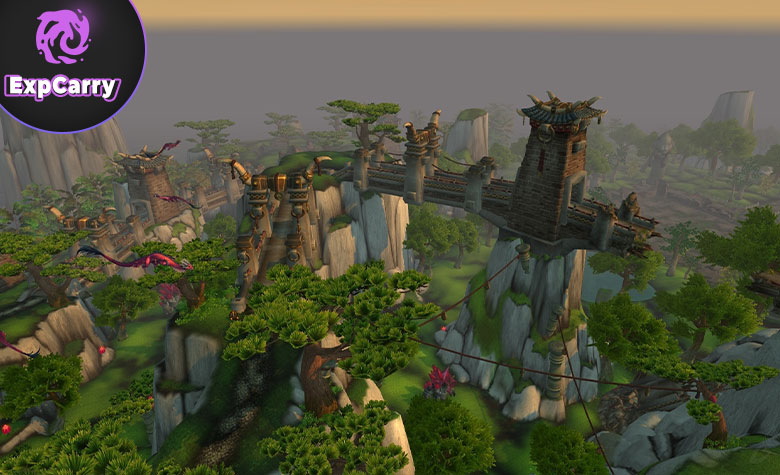
Timeless Isle is tied to the Siege era and it supports the endgame loop with a different style of progression. Instead of a strict daily checklist, it is built around exploration, rare hunting, and repeatable farming. That makes it a powerful catch-up layer for alts and returning players who need quick stability without living in older raids forever.
The island also introduces its own currency and faction progression. If you treat it as a background track that you work on between raid nights, it can smooth your gearing curve and reduce the pressure to farm the same content for weeks. It also gives your raid a “solo-friendly” option for players who want to contribute without needing to schedule extra group time.
Emperor Shaohao and why the faction is worth understanding
Emperor Shaohao is the signature Timeless Isle faction and its progression is based on combat activity rather than a long chain of gated dailies. The main value is not raw power in a raid sense, but the way it gives players structured goals on the island. For many rosters, that matters because it keeps players engaged between lockouts without forcing them into content they dislike.
For leadership, the best use of the island is as a catch-up tool that does not require raid time. If you have newer players who need to stabilize, this kind of side progression reduces the chance that your raid has to carry them through basic survivability issues.
Keep expectations clear. Timeless Isle can help, but it will not replace good raid fundamentals. Use it to support your roster, not to avoid fixing core mistakes.
A Simple Weekly Plan: Four Weeks of Prep That Feels Manageable
The fastest way to make Siege feel manageable is to enter with a repeatable weekly rhythm. That rhythm should include one or two structured raid nights, a small amount of flexible group time for catch-up, and optional solo time for players who enjoy it. The goal is to increase your total meaningful play without increasing stress.
Do not build a plan that only works for the most hardcore players. Siege is long, and the roster that survives is the roster that can maintain habits. A realistic plan beats an ambitious plan that collapses by week two.
| Time window | Primary focus | What good looks like | What to avoid | Quick win |
|---|---|---|---|---|
| Weeks 4 to 3 | Roster and standards | Roles locked, enchant and gem rules set | Changing rules every night | Write a one-page raid policy |
| Weeks 2 to 1 | Mechanic discipline | Interrupts, dispels, defensives are assigned | Relying on improvisation | Practice assignment calls on easier content |
| Launch week | Pull volume | Minimal downtime, fast re-pulls after wipes | Long debates after every attempt | Use short post-wipe checklists |
| Weeks 2 to 4 of Siege | Route consistency | Predictable boss order and steady clears | Random boss hopping | Commit to a route for two resets |
Conclusion
Preparing for the Siege of Orgrimmar in MoP Classic is about removing friction before it becomes a raid-night problem. Siege is long, so stable habits matter more than perfect spreadsheets. Decide your starting difficulty path, lock in consumables and role standards, and build assignments that scale with your roster rather than breaking when one player is absent.
Use early bosses to train communication and cooldown discipline, then treat the mid and late wings as a systems test. When wipes happen, look for patterns: add control, personal responsibility mechanics, and defensive timing are the usual culprits. Finally, use Timeless Isle as a support layer for catch-up and roster stability, not as a substitute for clean execution. If you do those things, Siege stops feeling like a marathon and starts feeling like a structured final chapter that your group can steadily conquer.