
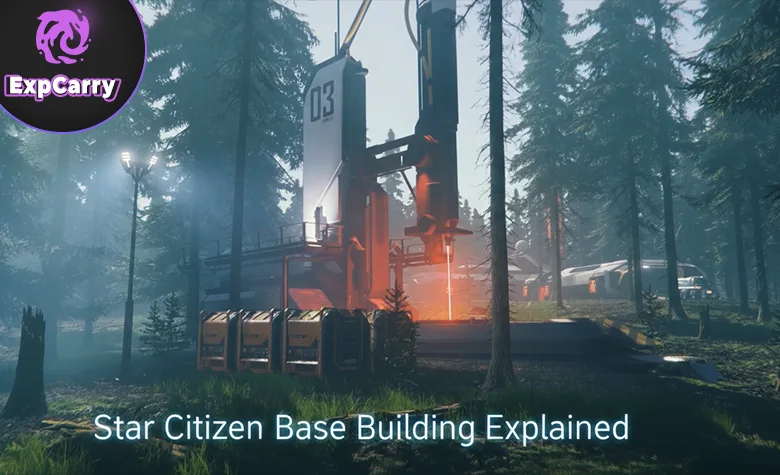
Star Citizen base building is an announced system for constructing player-owned homesteads, industrial facilities, and larger settlements on planetary surfaces. It is intended to connect land ownership, resource gathering, crafting, manufacturing, storage, security, and long-term infrastructure. However, these features are not all available in the current game. Alpha 4.10.2 LIVE already supports item crafting and material quality, while player-built bases, functional land claims, and the Consolidated Outland Pioneer construction career remain in development.
The distinction matters because a player can already gather resources, refine materials, earn blueprints, and craft supported equipment without owning land or constructing a settlement. Those are established gameplay systems. Building a permanent homestead, assigning its construction to drones, operating player-owned industrial buildings, and defending a claim belong to the announced base-building design rather than a complete LIVE feature set.
Short answer: item crafting is available in Star Citizen Alpha 4.10.2 LIVE, but player base building, functional land claims, and Pioneer construction are not. Starchitect is a separate developer-facing Genesis technology for generating planetary locations, not a tool players use to build homesteads.
This guide separates current gameplay from confirmed development plans and older concepts. It explains how homesteads are intended to function, what CIG has announced about land claims, how the updated Pioneer design supports construction, where Starchitect fits into planetary development, and which parts of the crafting and resource economy can already be used.
What This Guide Actually Covers
Base building can refer to several related but distinct activities. Understanding those differences prevents confusion between features that exist today and systems shown in development presentations.
There are three major player-facing goals behind the announced system:
- Personal homesteads: homes and smaller installations intended to provide persistent facilities, storage, access control, and useful services.
- Industrial outposts: facilities intended to support gathering, refining, manufacturing, farming, and resource logistics.
- Organization settlements: larger sites designed around shared infrastructure, multiple construction projects, security, and group operations.
These goals are connected to other Star Citizen systems but should not be confused with them. Crafting an item in an Item Fabricator does not create a homestead. Owning an unreleased Pioneer does not provide access to working construction equipment. Discovering a generated settlement on a planet does not make it player-owned.
The guide focuses on the intended functions of player bases, the official design history, practical planning, and the systems already available in LIVE. It does not present unannounced building costs, release dates, construction timers, exact base capacities, or final ownership rules as established facts.
Base Building Reality In The Current LIVE Era
As of October 12, 2026, Star Citizen Alpha 4.10.2 is the current LIVE release. Its patch notes do not introduce the full player-base construction system, working land-claim registration, or the Pioneer as a usable construction ship.
Several supporting mechanics are already operational, however. Alpha 4.7 introduced crafting through the Item Fabricator, including earnable blueprints, material quality, and dismantling. Mining and refining also provide resources that can be consumed by supported crafting recipes.
The distinction is not simply that base building is unfinished. Its different components are at different stages of implementation.
| Feature | Current status | What players can do |
|---|---|---|
| Mining and resource gathering | LIVE | Collect supported ores, minerals, and other materials |
| Station refining | LIVE | Process supported resources through refinery work orders |
| Item Fabricator | LIVE | Craft supported items using available blueprints and materials |
| Material quality | LIVE | Use quality-rated resources in recipes with stat effects or minimum requirements |
| Blueprint progression | LIVE | Earn selected recipes through available mission rewards |
| Personal hangar decoration and storage | LIVE, with limitations | Arrange supported objects in existing hangars; this is not planetary base construction |
| Player-built homesteads | Announced | No complete LIVE process for constructing a permanent player settlement |
| Land claims and registered parcels | Announced | No operational LIVE claim-registration and building-rights system |
| Construction drones and building vehicles | Announced | Construction gameplay remains separate from currently usable vehicle functions |
| Consolidated Outland Pioneer construction | Announced | Its construction role is not available as a functioning LIVE profession |
| Genesis: Starchitect | Tentative roadmap feature | Not a player-controlled base designer |
| Player-built outpost defenses and industrial structures | Announced | Cannot operate as a complete player-owned settlement system in LIVE |
The official Alpha 4.7 release notes confirm the initial crafting implementation. The Alpha 4.10.2 release notes confirm the current public version and its additions, without announcing the player-base construction system as released.
For base-building planning, the safest approach is to treat demonstrated future functionality as design intent until CIG explicitly confirms it in LIVE patch notes. Roadmap placement, a concept ship, and a development demonstration do not provide a release guarantee.
Why The Legal Layer Matters
CIG's base-building plans distinguish claimed land in lawful or protected areas from construction in less secure territory. Ownership, protection, taxation, and the right to attack a settlement are expected to depend on the location's security rules.
The older UEE Land Claim Q&A established the concept of official land registration and legal consequences for unauthorized exploitation. Later CitizenCon presentations expanded the intended design with different security environments, protection mechanisms, and raiding rules.
These remain future base-building mechanics. The current LIVE law system for ships, cargo, and FPS activity should not be treated as a functioning substitute for land-claim enforcement.
For planning purposes, a lawful site is expected to prioritize protection and predictable access, while a less secure site may provide greater freedom alongside more exposure to conflict. The exact balance is subject to implementation and testing.
Homesteads, Land Claims, And What Ownership Is Supposed To Mean
Land claims are intended to connect a specific location with legal ownership or building rights. They are one part of the wider base-building system rather than an existing process that every player can complete in Alpha 4.10.2.
CIG's original UEE Land Claim Licenses Q&A described placing a beacon at a location, recording its coordinates, and registering a claim through a UEE land-management office.
That description explains the historical concept, but it should not be published as an exact step-by-step guide for the final construction release. The design has evolved since the original land-claim announcement, including changes to construction tools and the classification of protected or unprotected territory.
The Beacon Is Not The Deed
The original land-claim design separated proof of legal ownership from the physical beacon used to survey and identify a parcel.
Under those historical rules, destroying a beacon would not automatically transfer the legal ownership of the land. Beacons were also described as supporting environmental monitoring and movement alerts.
The same early documentation described two claim sizes:
- Lot: approximately 4 km by 4 km.
- Estate: approximately 8 km by 8 km.
These are historical license specifications, not confirmed universal parcel sizes for the eventual LIVE base-building system. Players should not use them to calculate present-day construction limits, taxes, or the area required for a specific planned structure.
Existing claim-license entitlements or older concept descriptions are also not equivalent to having a surveyed, registered, and operational player-owned parcel in the current game.
The official UEE Land Claim Licenses Q&A remains useful for understanding the original ownership proposal, but the final mechanics must be checked when base construction reaches LIVE.
Why Claims Change Everything
Claims are intended to establish who can legally control an area and what consequences apply when another player interferes with that property.
Potentially important rules include authorized construction, access permissions, property protection, upkeep costs, and restrictions on building near settlements or protected natural areas.
These mechanics influence whether a homestead is suitable for long-term storage, industrial production, or organized PvP activity.
However, it is too early to publish specific advice about buying the cheapest claim, transferring an occupied parcel, or calculating permanent land taxes. Those operations are not available as an established LIVE gameplay process.
The practical planning principle remains useful: choose a location based on the activities it supports, and wait for the final ownership and security rules before committing to a specific parcel strategy.
Explore services related to this guide, selected from our Star Citizen catalog.
View All Star Citizen Services

Where You Can Build And Where You Should Not
The announced construction system is intended to support planetary and moon-based structures in suitable regions. However, there is no current LIVE map identifying all valid player-building parcels, terrain restrictions, or construction permissions.
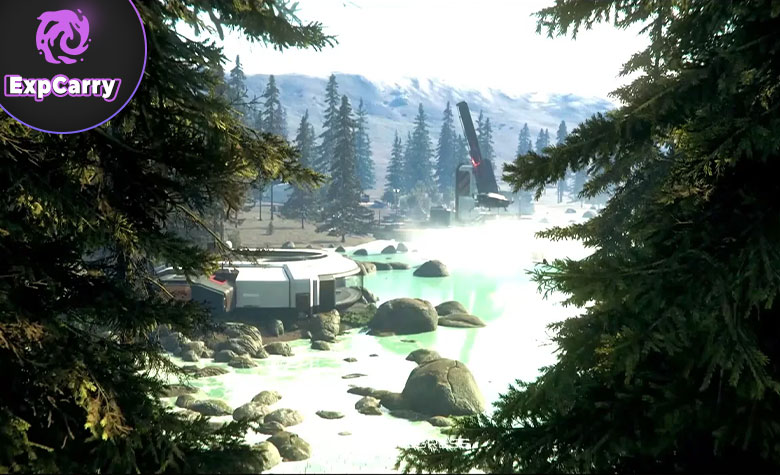
Earlier land-claim documentation described restrictions involving protected natural areas and land already assigned to other uses. More recent construction presentations emphasize surveying terrain and determining whether a site can support the intended structure.
Neither source establishes a complete, currently usable list of buildable locations for Alpha 4.10.2.
Players can still explore planets and moons to understand possible future operating regions. That is scouting, not land acquisition.
Terrain And Weather
Terrain suitability is an important part of CIG's construction design. The announced building workflow includes surveying an area and checking whether it can support the selected structure.
For a future settlement, useful considerations include:
- available space and terrain slope;
- safe approaches for ships and ground vehicles;
- environmental exposure, including wind and temperature;
- distance to relevant mining or resource-gathering areas;
- distance to existing trade and service locations;
- room for potential expansion;
- access to any resources required by the intended industrial process.
These are planning criteria, not an implemented terrain-placement checklist. A location that appears suitable in Alpha 4.10.2 may have different environmental details or construction restrictions when base building releases.
Future Genesis planetary changes are another reason not to assume that today's exact terrain will remain the optimal location for a permanent settlement.
Security Philosophy
Announced base-building plans distinguish several levels of territorial security rather than treating every settlement as equally vulnerable.
Under the broader CitizenCon design, more protected locations are intended to trade some freedom or economic cost for stronger security. Less protected areas are expected to permit more direct conflict and require greater investment in player-controlled defenses.
The final rules for attack windows, shields, taxes, and property destruction must still be tested in the actual player-base system.
A useful preparation principle is to match the proposed location to the base's function. A small personal home has different security requirements from an industrial operation containing expensive materials or a large organization settlement.
What You Need To Build: The Minimum Viable Homestead
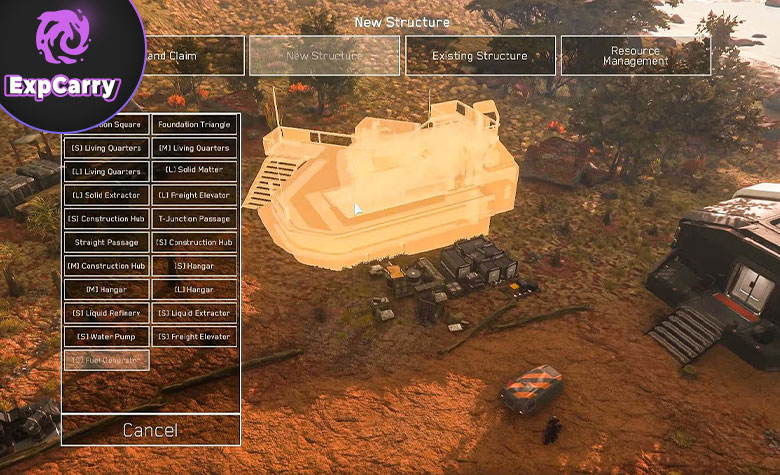
A future homestead will require more than available land. CIG's newer construction presentations describe a resource-driven process involving building plans, appropriate construction equipment, and drones that carry out the construction work.
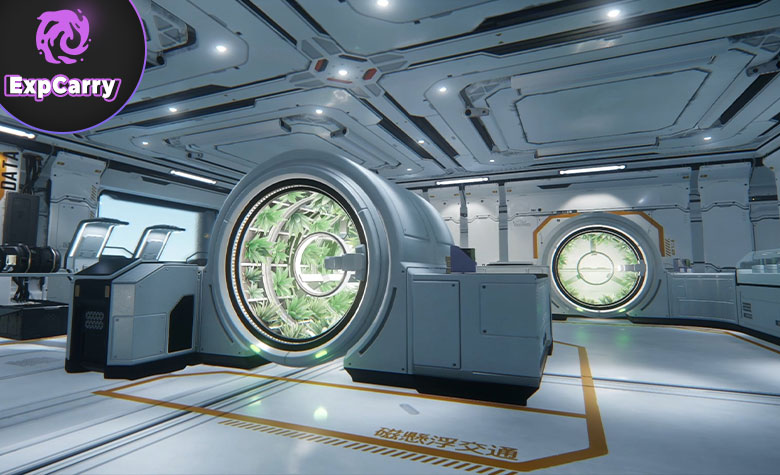
This is an important correction to the original Pioneer concept. The old design involved producing a complete outpost inside the ship and placing it on the planet. The more recent approach uses drones and construction equipment to create structures at the selected site.
The final material requirements, construction durations, and starting costs are not available as stable LIVE values.
For planning, a minimum viable homestead should have one clear purpose. A small site intended to support mining does not need to be designed around every possible future medical, manufacturing, habitation, and defense function at once.
Similarly, a personal living space does not automatically require a capital-class construction ship. The announced range of construction tools includes smaller equipment suitable for smaller structures.
Four Questions That Decide If A Base Works
Before planning a location or structure, answer four questions:
- Access: how will ships, vehicles, and players reach the site?
- Logistics: where will construction materials, supplies, and eventual production output be stored?
- Utility: which available or announced activities would the base support?
- Security: what protection would be appropriate for the location and its stored value?
These questions help separate useful infrastructure from a settlement built only because larger structures are available.
They also help prevent premature assumptions. Until the construction system is released, no player can confirm that a proposed arrangement will support every intended cargo, storage, or respawn interaction.
The Pioneer: What It Is And Why It Matters
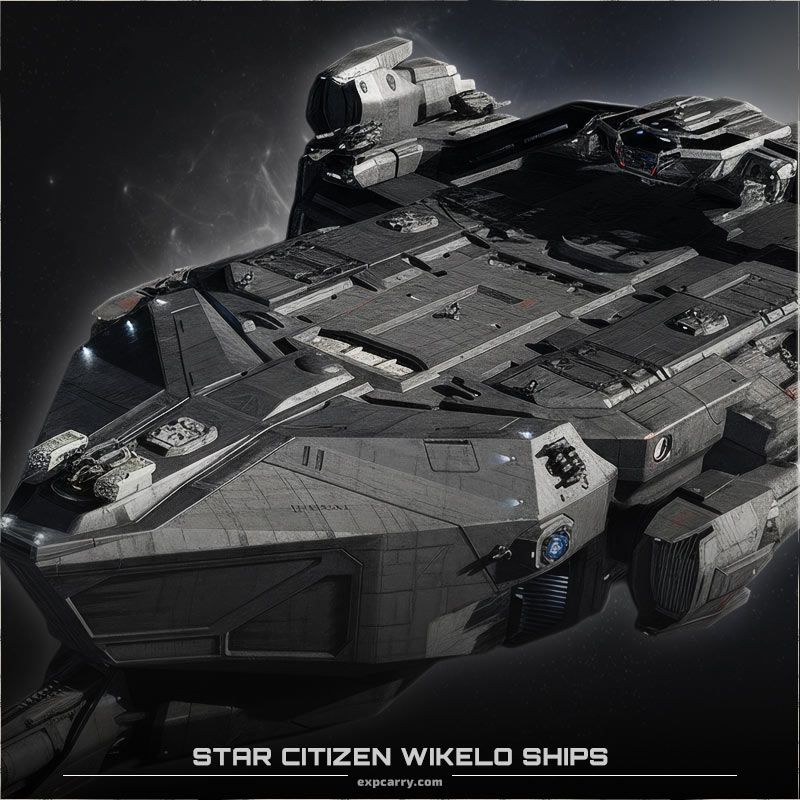
The Consolidated Outland Pioneer is an announced capital-class construction ship intended to support large-scale planetary building and manufacturing.
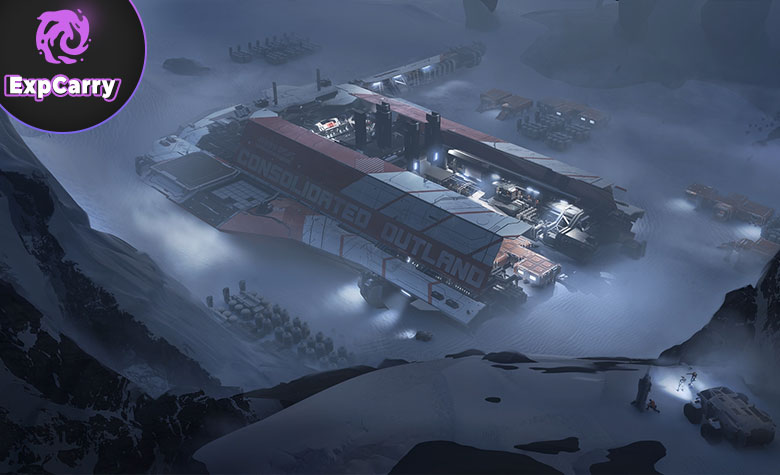
Its original concept described a self-contained mobile construction yard capable of assembling modular outposts. CIG subsequently redesigned important aspects of the ship to fit the updated base-building and crafting systems.
At CitizenCon 2954, the developers explained that constructing an entire base inside the ship and placing it onto a planet was no longer the intended approach.
The updated Pioneer concept instead supports construction drones and broader industrial capabilities, including fabrication, material processing, and support facilities.
It is also intended to serve larger construction projects than the basic equipment required for a small homestead.
The Pioneer remains an upcoming ship. Its design presentation is not evidence that the vessel can currently land, deploy construction drones, or build player settlements in Alpha 4.10.2 LIVE.
Why It Implies A Builder Economy
The intended Pioneer role creates the possibility of a specialized construction profession. A player or organization with suitable equipment could eventually provide building services to others.
That future economy could involve:
- construction planning and site preparation;
- resource gathering and material delivery;
- operation of construction equipment;
- manufacturing and fabrication support;
- transportation of supplies and finished products;
- security for construction projects;
- maintenance and expansion of completed facilities.
These are expected applications of the announced design rather than established LIVE contracts or guaranteed sources of income.
Importantly, CIG has also described smaller construction solutions. A player should not assume that purchasing a Pioneer will be mandatory to create the first personal homestead.
The official Pioneer Q&A provides historical context, while CitizenCon 2954: Captains of Industry explains the redesigned construction-vehicle approach.
Starchitect: What It Does and Why It Is Not Player Base Building
Genesis: Starchitect is a developer-facing procedural world-building system announced as part of CIG's Genesis planetary technology.
It uses planetary data to help identify suitable areas for sectors, clusters, and points of interest, then builds locations from modular components according to the relevant design rules.
The purpose is to create more coherent and varied planetary content without manually placing every structure across the entire surface of a planet.
For example, the system can support the generation of settlements, industrial areas, or other points of interest that make sense for the local environment and its resources.
Starchitect is not a player homestead editor. Players do not use it to purchase land, place their personal buildings, or operate Pioneer construction drones.
CIG's roadmap separates three related features:
| Roadmap feature | Purpose | Player-facing result |
|---|---|---|
| Genesis: Starchitect | Procedural assembly and placement of planetary locations | Technology supporting a larger variety of game-world locations |
| Starchitect POIs | Creates different combinations of faction-owned ground locations | More varied destinations for exploration and missions |
| Starchitect Mission Pack | Adds localized sandbox missions across planetary regions | Additional reasons to remain planetside and move between nearby locations |
These features were placed in the Alpha 4.11 roadmap as tentative work. The October 9, 2026 Roadmap Roundup did not announce their release or introduce player base building. Roadmap scheduling and exact release contents can change, and tentative features should not be described as already released.
Alpha 4.11 was moved to a Q4 2026 target in September. That target does not provide a confirmed release date for Starchitect or the separate player-base construction system.
For the roadmap distinction, see the existing Star Citizen 4.11 Roadmap Guide and the August 12, 2026 Roadmap Roundup.
Crafting in LIVE vs. Future Base Construction
Crafting is already a playable system, but crafting an item and constructing a permanent building are different activities.
Alpha 4.7 introduced an Item Fabricator that allows players to produce supported items using blueprints and collected materials.
The machine can be purchased from supported shops and used in appropriate existing locations, such as a compatible hangar or sufficiently large ship cargo grid.
The current crafting workflow includes:
- Obtain a blueprint that is already available or earned through supported missions.
- Gather the listed crafting materials.
- Check any minimum material-quality requirements.
- Place an Item Fabricator in a suitable supported location.
- Select the blueprint.
- Assign the required materials to the appropriate slots.
- Review the resulting item properties and output destination.
- Start the crafting job.
- Collect the completed item when the process finishes.
Material quality influences supported crafted-item statistics, and refining preserves the quality of mined resources. Some blueprint slots impose minimum quality thresholds and reject materials below those limits. Where lower-quality inputs are accepted, they may produce less favorable item statistics.
Earned blueprints are bound to the player's account under the current crafting progression system.
What Crafting Does Not Unlock Yet
Owning an Item Fabricator does not allow a player to:
- claim a planetary parcel;
- place permanent homestead buildings;
- construct an operational private refinery building;
- create a player-owned industrial settlement;
- deploy base defenses or planetary shields;
- operate the Pioneer construction system.
Those activities belong to future base-building and industrial development rather than the current item-crafting implementation.
Materials gathered today may illustrate the intended future resource economy, but players should not stockpile specific quantities on the assumption that unreleased construction recipes will require them unchanged.
The existing Star Citizen Mining Resources catalog lists tradable resource categories. For the confirmed crafting interface, use the official Alpha 4.7 patch notes rather than an unreleased base-building recipe list.
Outpost Modules And What They Actually Do
Outpost modules represent the functions CIG intends player-built settlements to provide. Earlier Q&A materials and later base-building presentations describe habitation, storage, refining, manufacturing, medical facilities, and other types of infrastructure.
The essential distinction is that these are planned player-base functions. The existence of similar services at NPC stations does not mean that a player can construct and operate the equivalent buildings today.
Current design material also suggests that larger settlements will support more elaborate industrial chains, including extraction, processing, fabrication, and the movement of resources between facilities.
Until released, the exact capacities, maintenance rules, power requirements, and construction recipes remain subject to change.
Module Snapshot
The following table summarizes the announced or historically described functions without presenting them as available LIVE buildings.
| Module or facility | Intended function | Current availability |
|---|---|---|
| Habitation | Living facilities and possible authorized respawn-related services | Player-built version not available in LIVE |
| Armory | Secure storage and access to equipment | Player-built version not available in LIVE |
| Refining | Process extracted resources | Existing station refineries are LIVE; player-built refineries are not |
| Hydroponics | Produce organic resources through cultivation | Planned base-building function |
| Storage | Hold resources, supplies, and production output | Existing hangar and warehouse storage is LIVE; player-built facilities are not |
| Medical | Provide treatment and related services | Existing medical facilities are LIVE; player-built versions are not |
| Manufacturing | Support larger fabrication and production projects | Limited item crafting is LIVE; settlement manufacturing remains planned |
| Defensive structures | Walls, turrets, shields, and perimeter security | Player-built defense system remains planned |
For future industrial sites, the most important question is how facilities will interact. A refinery is more useful when raw material can be delivered efficiently, processed output can be stored, and finished products can be transported without unnecessary handling.
These relationships are useful to plan now, but specific production rates or economic returns cannot be calculated reliably before the underlying buildings are available.
What Raiders Would Want
Planned industrial settlements may concentrate valuable resources, manufactured equipment, and supplies in fixed locations. That creates a possible reason for hostile players to attack them where the eventual rules allow raids.
Stored materials and exposed industrial equipment are natural targets, but no complete LIVE base-raiding economy exists to establish exact theft rates, attack methods, or recovery costs.
For future planning, separate frequently used supplies from the most valuable stockpiles. Also consider how quickly the owners could identify an intrusion and respond.
These are security principles rather than a tested guide to defending an existing player-built structure.
Permissions, Access Control, And How Groups Will Actually Use Bases
CIG has announced permission systems intended to allow individuals and organizations to use or manage player-owned property.
Depending on the final implementation, relevant permissions may cover access, construction, storage, and operation of shared infrastructure.
For organization settlements, separate roles are likely to be important:
- Owner or administrator: manages the property and high-level permissions.
- Builder: operates authorized construction equipment.
- Industrial operator: uses mining, refining, or production facilities.
- Quartermaster: organizes shared supplies and storage.
- Security: monitors access and responds to threats.
- Visitor: receives restricted access without control of important infrastructure.
This is a suggested organizational structure, not a list of confirmed LIVE permission toggles.
Existing Star Citizen party and organization features do not provide a complete player-base ownership and permission system. The actual interface and available rules must be evaluated when construction gameplay releases.
Defense Philosophy: Detection, Delay, And Response
Base defense is one of the major announced parts of the long-term settlement system. CIG's presentations describe different security environments and the need to protect facilities against threats appropriate to the chosen territory.
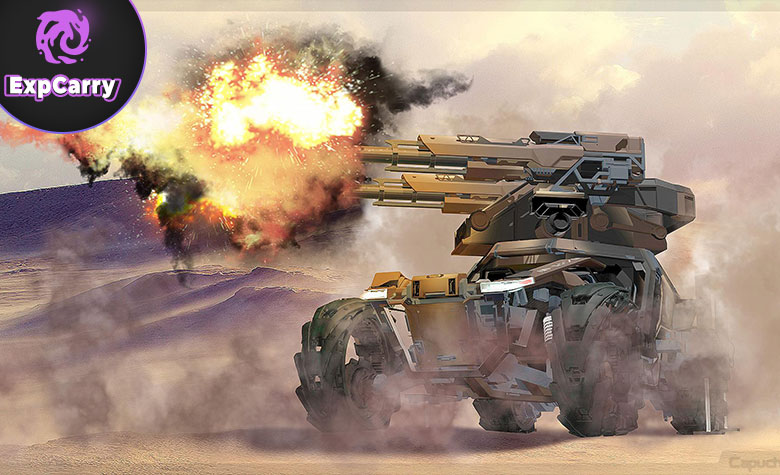
Earlier land-claim answers described monitoring and security response. Later CitizenCon presentations introduced more developed concepts involving protective shields, automated weapons, walls, and potential attacks against industrial settlements.
These demonstrations establish the intended direction, but they do not establish a working base-defense system in Alpha 4.10.2.
The Three Layer Blueprint
For planning, defense can be organized into three complementary layers: detection, delay, and response.
Detection concerns identifying threats before they reach important facilities. Delay concerns preventing an attacker from completing an objective immediately. Response concerns the defenders or other authorized forces reacting while there is still time to protect the site.
The planned equipment may change, but these categories help identify whether a proposed settlement concentrates too much value without appropriate protection.
Defense Framework
The framework below describes a planning model rather than currently craftable defensive modules.
| Layer | Purpose | Possible future implementation |
|---|---|---|
| Detection | Identify intrusion or hostile activity | Monitoring equipment and alerts |
| Delay | Make attacks take time and expose intruders | Walls, controlled access, shields, and defensive weapons |
| Response | Counter the attack before important assets are lost | Organization defenders or applicable security systems |
Exact protection mechanics, repair costs, defensive coverage, and attack permissions remain dependent on future implementation.
Lawful Versus Lawless
CitizenCon's broader settlement design distinguishes more protected locations from areas where player conflict is intended to play a larger role.
Protected territory is associated with stronger safeguards and possible upkeep costs. Less secure territory is associated with greater operational freedom, weaker external protection, and more responsibility for local defenses.
However, a player should not assume that every lawful area will provide complete protection or that every lawless structure can be destroyed under any conditions.
The final distinction will depend on the implemented security levels, shield rules, online and offline protection, and the specific territory involved.
Raiding And Theft: What Is Known And What Is Still Unclear
Raiding has been discussed as part of the future settlement ecosystem, especially for facilities in less protected territory.
At CitizenCon 2954, CIG outlined a design in which attackers might need to overcome a settlement's defenses before reaching its valuable infrastructure.
The same long-term design distinguishes protected locations from areas where players may engage in more direct attacks against bases.
These concepts are not current instructions for raiding player homesteads. A player-built base cannot yet be constructed and attacked through a complete LIVE settlement system.
What Is Still Unclear
Several details require final confirmation in the game:
- the exact rules for attacking bases while the owner is offline;
- differences between security levels and their protection systems;
- how protective shields function and when they can be disabled;
- which structures or equipment can be destroyed;
- how much stored inventory can be stolen;
- construction, maintenance, and repair costs;
- what happens to ownership after a building is destroyed;
- how territory taxes or other upkeep obligations work;
- how server persistence and migrations affect completed settlements.
Older statements about these mechanics may reflect earlier versions of the design. They should not be combined into a single definitive ruleset without checking the latest official implementation.
Until base building enters LIVE, advice about guaranteed offline protection or precise raid windows would be premature.
Practical Anti-Raiding Setup For A Small Homestead
For a future small homestead, the most useful defense plan is one that protects essential operations without making the entire site dependent on expensive or complicated infrastructure.
The exact building pieces are not yet available, so the following recommendations are site-planning principles rather than instructions to place specific items in the current game.
Location
Choose a site based on the combination of access, security environment, and distance from the activities it supports.
A remote location may reduce incidental traffic but increase resupply and recovery time. A location close to a major service center may improve convenience while attracting more players.
Neither option is automatically superior. The decision should follow the intended use of the settlement and the security rules eventually attached to its territory.
Design For Time
If the released system permits attacks, defensive layouts should be designed to create enough time for a response.
Separation between valuable storage, industrial equipment, and personal living facilities could reduce the consequences of a single breach.
However, this principle must be balanced against the actual mechanics of facility access, storage permissions, construction space, and resource movement once those features become playable.
Design For Loss
In a risky environment, reducing the value exposed at one location can limit the consequences of an attack.
A practical future plan would distinguish everyday operational supplies from long-term reserves and expensive manufactured items.
Do not assume that current warehouse persistence or ship insurance rules will automatically apply to player-built storage.
The eventual recovery and insurance rules for settlements will determine how much redundancy and external storage are actually necessary.
Base Comfort And Customization: Making A Home Worth Living In
The announced homestead system is intended to support personal spaces as well as industrial installations. A useful home should combine suitable facilities with a layout that fits the owner's activities.
The distinction between personal customization and actual construction matters. Existing hangar decoration and supported item placement are LIVE systems, but they do not provide the same ownership, terrain placement, and building mechanics as a planetary homestead.
Future customization options are expected to expand that distinction, although the final building catalog, available decoration pieces, and persistence rules have not been fully established.
Utility
A utility-focused base would support the gameplay activities the owner performs most frequently.
For a miner, that might mean appropriate storage and processing facilities. For a combat-focused group, equipment access and medical support could matter more. For a manufacturer, convenient material delivery and production capacity might become priorities.
These are intended functions rather than guaranteed existing building modules.
Players can already prepare for the underlying resource economy by learning extraction, refining, material quality, and the current crafting system.
Convenience
A useful base should reduce unnecessary movement and make its essential services easy to access.
That means planning routes between landing areas, storage, industrial facilities, and any living or medical modules.
However, exact distances, construction footprints, and interior connections cannot be optimized reliably before the final tools and building components become available.
For now, the practical objective is to understand which services would make an established gameplay routine more efficient.
Operational Use Cases: Why You Would Build In The First Place
Player-built settlements are intended to provide persistent infrastructure that supports the wider economy and long-term character progression.
The strongest potential uses include:
- Mining support: staging resources and reducing unnecessary travel between extraction and processing activities.
- Manufacturing: organizing materials and supported fabrication equipment around a production workflow.
- Hauling logistics: managing supplies and production output for transport.
- Organization activity: providing a location for shared equipment, operations, and future group facilities.
- Frontier support: improving access to services in regions far from established settlements.
- Personal living space: offering a customizable location connected to a player's long-term activities.
The economic benefit of each use case remains prospective. No reliable LIVE calculation establishes how much a player-built refinery, storage complex, or industrial outpost will earn per hour.
The nearest existing gameplay equivalents are station refining, resource gathering, physical cargo management, and item crafting. Those systems can be evaluated independently without pretending that a permanent homestead is already required.
Solo Homesteads Versus Org Settlements
Solo players and organizations have different construction requirements. The announced range of building tools suggests that personal homesteads will not necessarily require the same equipment as large industrial settlements.
Small projects are associated with lighter construction equipment, while larger structures and more demanding projects require greater construction capability.
The planned vehicle range includes construction tools such as the Grav-Cart, specialized construction vehicles, and the Pioneer.
The actual cost and progression path will depend on which of these systems CIG releases and how they are balanced.
Org Settlement Reality
Organizations are expected to benefit from shared access, larger construction projects, industrial specialization, and coordinated security.
A larger settlement could involve separate teams for resource gathering, manufacturing, transport, equipment management, and defense.
However, none of those roles currently grants access to a complete player-owned construction system in LIVE.
Organizations planning future settlements should avoid treating a particular ship pledge, concept module, or historical land-claim figure as a guaranteed operational requirement.
Bigger Before Proven
One of the main future construction risks is expanding a site before its location and workflow have proven useful.
A smaller initial footprint is a sensible planning approach because it allows the owner to evaluate travel, resource access, security exposure, and operational efficiency before investing in larger facilities.
This is a future strategy, not a recommendation to begin building in Alpha 4.10.2. The actual ability to survey, construct, expand, or relocate a base must first be implemented.
Centralizing Everything
Large industrial settlements may eventually concentrate expensive materials and equipment. This creates possible efficiency benefits but also increases the value exposed to disruption.
For future organization planning, consider separating everyday supplies from critical reserves and defining clear access permissions.
Do not assume that existing personal inventory, hangar storage, or item-recovery systems automatically determine how player-built warehouses will function.
Beginner Tips For Your First Homestead Plan
The best preparation for base building is learning which existing gameplay systems the settlement is intended to support.
A player does not need to purchase a Pioneer, acquire a historical claim entitlement, or stockpile speculative construction ingredients to begin preparing.
Instead, focus on understanding current activities and monitoring the development status of the features that would make a future base useful.
Validate The Location
Explore possible operating regions and compare their current resources, environment, nearby services, and travel requirements.
Stanton, Pyro, and Nyx offer different logistical and security conditions, but the final settlement system may impose restrictions that are not visible today.
Use exploration to understand the region, not to make definitive claims about future plot ownership.
Also account for planned Genesis planetary changes. Starchitect and Planet Tech V5 could alter generated locations and environmental characteristics, so a coordinate selected today is not guaranteed to remain the optimal construction site.
Assume Defense
Security should be considered when planning any future site containing valuable resources or equipment.
However, do not assume that every announced shield, turret, monitoring device, or protection rule will be available in the first construction release.
Start by identifying the intended security environment and what the settlement is supposed to protect. Refine the design only when the released building tools and applicable protection rules are known.
For current gameplay, ordinary ship security, inventory management, legal restrictions, and travel planning remain more relevant than unreleased base-raiding mechanics.
Verdict: Build For Your Loop, Not For Fantasy
Star Citizen base building is intended to turn planetary surfaces into persistent player-owned infrastructure rather than simply provide decorative housing. The announced design connects homesteads, land claims, construction equipment, security, resource gathering, and manufacturing, but those systems are not all available in Alpha 4.10.2 LIVE. Functional land ownership and settlement construction remain development features, while mining, refining, and item crafting already provide parts of the supporting economy.
The practical planning priority is choosing the right location and scale for the activity a future base should support. A small homestead has different needs from an industrial outpost or an organization settlement. Learn the existing resource and logistics systems now, but wait for actual construction rules before committing to exact building costs, claim sizes, maintenance requirements, or permanent coordinates.
Announced facilities such as habitation, storage, refining, hydroponics, medical support, and manufacturing explain why player settlements could become valuable. The redesigned Pioneer is intended to support larger construction and fabrication projects, while smaller construction tools are planned for less demanding structures. Starchitect is separate: it generates planetary points of interest for the game world and is not the player-controlled building system.
Defense will remain an important consideration for settlements once they become playable. Detection, delay, and response are useful planning principles, but the exact protections available in lawful and lawless territory must be confirmed in the released system. For now, treat base building as an announced future career, use the crafting mechanics already available in LIVE, and distinguish official roadmap commitments from concepts that may still change.