




Where Winds Meet is a game where your weapon is not just a cosmetic choice. It is your combat identity, your tempo, and your problem solving kit. The weapon you main decides how you open fights, how you survive mistakes, how you control crowds, and how consistent you feel when the game stops being forgiving. Where Winds Meet is a game where your weapon is not just a cosmetic choice. It is your combat identity, your tempo, and your problem solving kit. The weapon you main decides how you open fights, how you survive mistakes, how you control crowds, and how consistent you feel when the game stops being forgiving.If you are still building out your character, start with Where Winds Meet and then come back to these weapon pair ideas.
This guide is written as a practical build breakdown for the current global LIVE environment. The goal is clarity, not hype. I will map each weapon to the build directions that perform best for PvE and PvP, explain why they work, and show you how to pair weapons so your second slot covers your weaknesses instead of duplicating them. I will also separate advice for solo play versus group content, because the best build on paper can feel awful if it does not match your real fights.
What This Guide Actually Covers
When players ask for the "best build" they usually mean one of three different things. They might mean the build with the highest damage in a clean test. They might mean the build with the highest win rate because it is hard to punish. Or they might mean the build that makes the whole session feel smooth because it has mobility, control, sustain, and a safe way to reset fights when things go wrong. This guide treats "best" as a balance of damage, safety, and repeatability. I will still give clear top build directions for each weapon, but I will also explain what you are trading away. A burst PvP setup can feel unstoppable when it lands, but it can be fragile when it misses. A safe PvE setup can clear everything while half asleep, but it may struggle to force wins against players who refuse to stand still. A support leaning setup can carry group fights, but it may feel slower in solo boss encounters. I am focusing on builds that are realistic for normal players. I am not assuming perfect parry timing, perfect execution, or perfect connection. I am assuming you want consistent results, you want to understand why a build works, and you want to adjust it without breaking the core idea.
How Combat Builds Differ In Practice
Most fights are not won by raw damage alone. They are won by rhythm. PvE rewards reliable loops that keep damage up while spending as little time as possible in recovery animations. PvP rewards the ability to create openings, punish mistakes, and deny the enemy their comfort pattern. The same weapon can be excellent in PvE and only average in PvP if it cannot safely start its offense against a human opponent. In PvE, the biggest enemy is downtime. If your build forces you to wait on long cooldowns, or if it requires a perfect sequence to do normal damage, it will feel inconsistent in real fights. The best PvE builds are usually the ones with a simple core: a stable damage loop, a control tool for packs, and a panic button that prevents deaths when you misread a boss. In PvP, the biggest enemy is predictability. If your build only wins when the opponent lets you play your game, a good player will simply refuse. The best PvP builds either have a way to force contact, or they have a way to punish every attempt to force contact on them. PvP also rewards builds that can reset, and that matters even more if you care about Arena Rating. The ability to disengage, heal, or reposition often matters more than another small damage boost.
How Builds Actually Work In Where Winds Meet
A build in Where Winds Meet is not only your weapon. You have two weapon slots and you can swap, which means your best build is usually a weapon pair, not a single weapon. On top of that, your kit is shaped by your weapon Martial Arts skills and your wider ability choices, including utility and passive style effects that define how aggressively you can play. Specific skill names and passives can change from update to update, so this guide focuses on the consistent weapon pair logic that stays strong across patches. Think of your build like a triangle. One corner is damage, one corner is control, and one corner is survival. You can push hard into one corner, but the game punishes extreme builds unless you are very clean. The strongest builds usually sit between corners. They hit hard enough to threaten, they control enough to breathe, and they survive enough to learn fights instead of restarting them. Weapon pairing is the core rule. Your first weapon is your main tempo. Your second weapon is your fix. If your main weapon is bursty but fragile, your second weapon should bring safety and resets. If your main weapon is safe but slow, your second weapon should bring burst and chase. If your main weapon struggles against crowds, your second weapon should bring area damage and grouping. If you pair two weapons that do the same thing, you will feel strong in easy fights and weak in hard fights.
Universal Build Rules That Make Every Weapon Stronger
First, do not build around a single trick. Build around a loop. Your loop should answer four questions. How do you start damage safely. How do you keep damage up. How do you stop the enemy from playing freely. How do you escape when a trade goes bad. If your build cannot answer all four, it will feel amazing in highlight moments and horrible the rest of the time. Second, respect stamina and recovery windows. Most deaths come from forcing offense when you should be resetting. A good build feels like it always has a next action. That usually means you want at least one low commitment option that you can use while waiting for heavier tools to come back. Third, in PvE you should prioritize consistency over peak damage. In PvP you should prioritize punish windows over raw damage. A smaller hit that lands during a guaranteed opening is worth more than a larger hit you rarely connect.
Sword Builds: The Best All Around Weapon For Learning And Winning
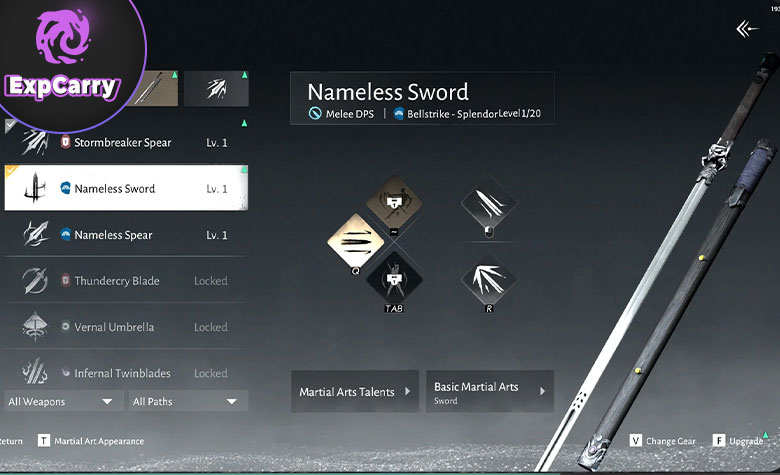
Sword is the most complete weapon archetype. It usually has clean reach, reliable hitboxes, and a kit that supports both pressure and defense. If you like a build that can adapt to almost any fight without changing your whole identity, sword is a safe long term investment.
For PvE, the best sword direction is a sustained pressure build that stacks damage through repeated clean strings. Your goal is to stay on the boss, maintain uptime, and convert every safe opening into damage without overcommitting. Pair sword with spear when you want easier crowd control and safer boss phases, or pair sword with fan when you want more sustain and steadier group value. In PvE, sword plus spear is a comfort pairing because spear helps you manage packs and control space while sword handles stable single target pressure.
For PvP, the best sword direction is a tempo pressure build with a safe engage and a reliable punish. Sword wins PvP by making the opponent uncomfortable. You poke, you threaten, you collect small wins, and you punish panic. Pair sword with rope dart when you want to force contact and punish evasive opponents. Pair sword with fan when you want a more stable duel style that can outlast burst and win long trades.
Solo sword players should bias toward a build that has one defensive reset option and one chase option. Group sword players should bias toward a build that can either hold the enemy in place for allies or peel for allies when the fight turns messy. Sword is flexible enough to do both, but you should pick one role and build around it.
Spear Builds: Control, Reach, And PvE Safety That Scales
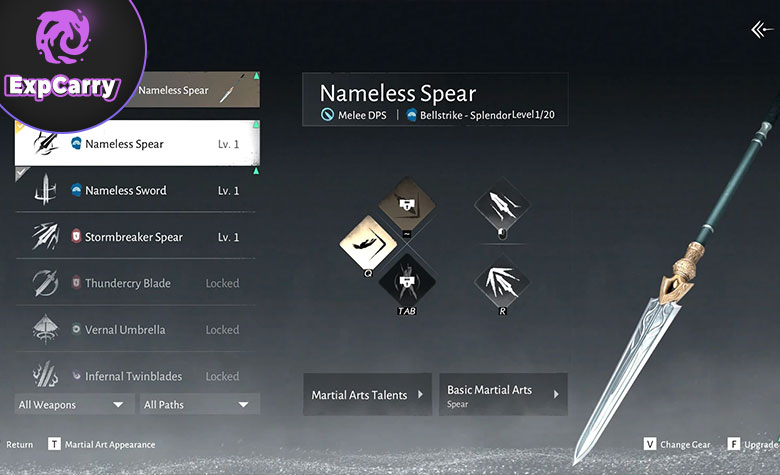
Spear is the weapon you pick when you want space control. Spear builds shine when fights have multiple enemies, when bosses punish short range greed, or when you need reliable stagger and spacing tools. Spear also pairs extremely well because it covers weaknesses for many faster weapons.
For PvE, the best spear direction is an area control build that clears packs fast and keeps you safe against elite enemies. Your loop is simple. Use spear to manage groups and create breathing room, then swap to your secondary weapon to finish priority targets. Pair spear with dual blades when you want high single target damage with spear handling the crowd. Pair spear with sword when you want a stable all content kit that feels good everywhere.
For PvP, the best spear direction is a keep out and punish build. You want to control the mid range, poke safely, and punish approaches with strong hitboxes. Spear can also be played as an aggressive chase weapon, but that style is harder. The safer and more consistent spear PvP style is to deny space and punish impatience. Pair spear with rope dart when you want to convert control into catches. Pair spear with umbrella when you want a defensive duel style that turns the fight into a patience test.
Spear is also a strong choice for players who are still learning parry timing. The reach and spacing make mistakes less fatal, and the weapon naturally teaches you to play around windows instead of forcing constant offense.
Dual Blades Builds: PvE DPS And PvP Burst With Real Risk
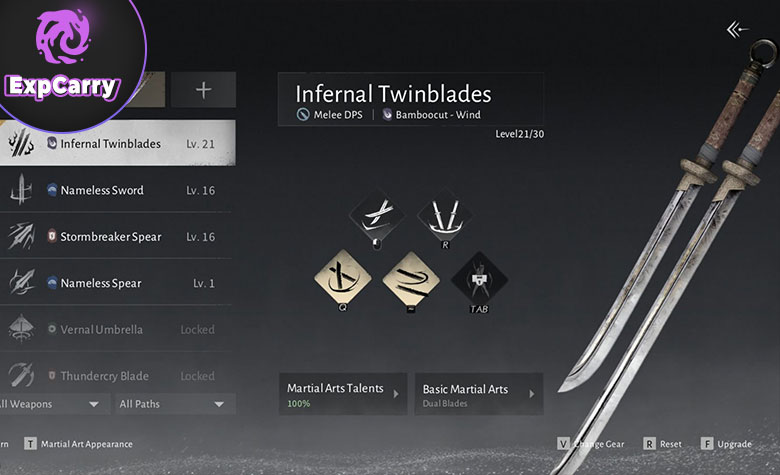
Dual blades are the weapon for players who want speed and momentum. The strength is rapid pressure and explosive damage windows. The weakness is that you can die fast if you overextend, especially in PvP where opponents punish predictable rushdowns.
For PvE, the best dual blades direction is a sustained DPS build that ramps into high damage once you are on target. Your job is to stick to enemies and keep the blade engine running. Dual blades love support from a second weapon that provides control and safety. Pair dual blades with spear for a very practical PvE setup. Spear handles packs and creates openings, dual blades melt single targets. Pair dual blades with fan if you want more sustain and less risk in longer boss encounters.
For PvP, the best dual blades direction is a burst assassin build. You want to create a short opening, dump damage, and disengage before the opponent trades back. Dual blades win by tempo, not by standing still. Pair dual blades with rope dart if you want a strong catch and punish identity. Rope dart forces openings, dual blades cash them out. Pair dual blades with umbrella if you want a more defensive duelist style that survives longer and still has burst when the opening appears.
If you are new to PvP, do not start with the glass cannon version. Start with a safer hybrid. Your goal is to learn how to pick moments. Once you can reliably disengage after your burst, you can push harder into damage.
Fan Builds: Sustain, Utility, And Some Of The Best PvP Value
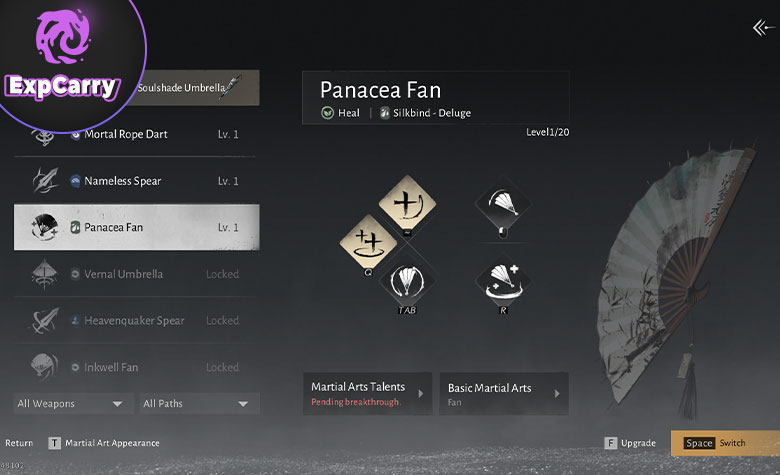
Fan builds are about control and support, but do not mistake that for weakness. Fan is one of the most annoying archetypes to fight in PvP because it can heal, disrupt, and punish mistakes with low commitment tools. In PvE, fan shines when you want comfort, survivability, and group value.
For PvE, the best fan direction is a sustain support hybrid. You want to stay alive, keep damage steady, and make every fight safer. Fan pairs best with a weapon that provides strong damage so you do not feel slow. Pair fan with sword for an all around build that can do everything comfortably. Pair fan with dual blades if you want high damage while using fan to survive in longer fights. In group PvE, fan becomes even more valuable because your utility and sustain can make the whole run smoother.
For PvP, the best fan direction is a pressure sustain build. You are not trying to one shot people. You are trying to win every trade over time while denying their burst windows. Fan wins by turning the fight into a resource war. Pair fan with sword for a clean balanced PvP setup. Sword gives you reliable offense while fan keeps you alive and disrupts the opponent. Pair fan with spear if you want to play a slower, more controlling style that shuts down reckless aggression.
Fan builds reward patience. If you like forcing opponents to make mistakes because they are tired of not killing you, fan is your weapon.
Rope Dart Builds: The PvP Catch Machine And A PvE Utility Monster
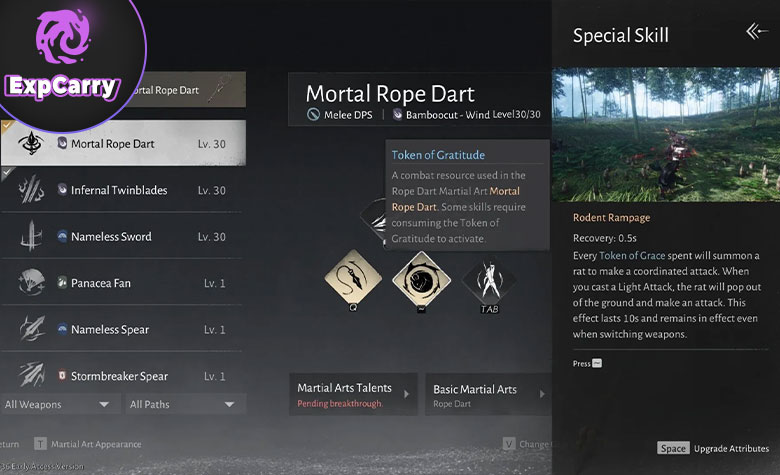
Rope dart is the weapon for players who want to control positioning. It is about catches, pulls, and forcing fights to happen on your terms. Rope dart can feel tricky at first because spacing and timing matter, but once it clicks it becomes one of the most practical PvP tools in the game.
For PvE, the best rope dart direction is a grouping and control build that turns messy packs into clean kills. Rope dart can set enemies up for your second weapon to delete them. Pair rope dart with dual blades for a strong PvE loop where rope dart creates the opening and dual blades finish. Pair rope dart with sword if you want a more forgiving version that still has excellent control and stable damage.
For PvP, the best rope dart direction is a catch and punish setup. Your entire plan is to deny the opponent free movement. If they try to kite, you pull them into danger. If they try to rush you, you punish with spacing tools and swaps. Rope dart pairs best with a weapon that can cash out damage fast. Dual blades are a classic partner because they convert a catch into a kill attempt. Sword is a stable partner because it converts a catch into reliable pressure while being less fragile than pure burst setups.
Rope dart is one of the strongest options for players who like controlling fights rather than reacting to them. If you enjoy being the one who decides when the exchange starts, rope dart will feel powerful.
Mo Blade Builds: Heavy Pressure, Stagger, And PvE Deletion
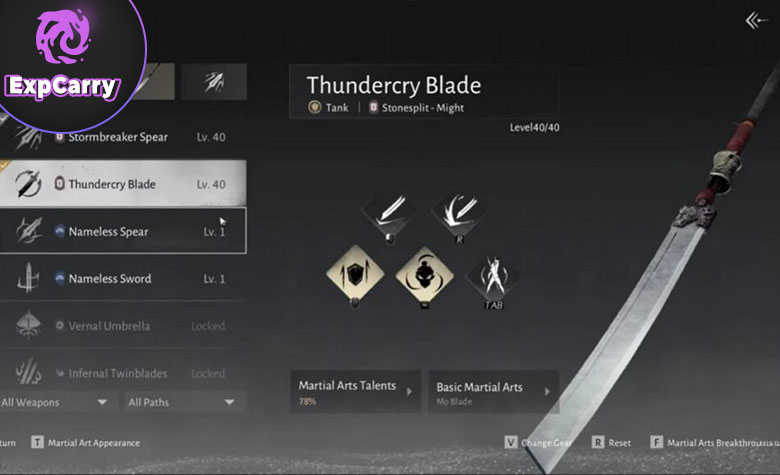
Mo blade is the weapon for players who want weight. It trades speed for impact. It shines when you can create openings and then land heavy hits that matter. In PvE, mo blade can feel incredible because enemies give you predictable windows. In PvP, it can still work, but it asks you to play smarter because good players will not volunteer to get hit.
For PvE, the best mo blade direction is a stagger and execution build. You want to break enemy posture, create a guaranteed window, and then drop heavy damage. Pair mo blade with spear when you want more control and easier crowd management. Pair mo blade with fan when you want more sustain so you can keep swinging without dying to mistakes. Mo blade PvE is strongest when you stop chasing small hits and instead focus on landing fewer, bigger, safer hits.
For PvP, the best mo blade direction is a punish counter build. You do not want to chase. You want to bait an approach, punish overcommitment, and win off a few high value exchanges. Pair mo blade with rope dart if you want a way to force contact and stop evasive players from running your stamina out. Pair mo blade with umbrella if you want maximum defense and a slower duel style that turns every mistake into a big punish.
Mo blade rewards discipline. If you can stay calm and only swing when it is correct, the weapon feels unfair for the opponent. If you swing because you are bored, you will get punished.
Umbrella Builds: Defense, Counters, And The Duelist That Refuses To Die
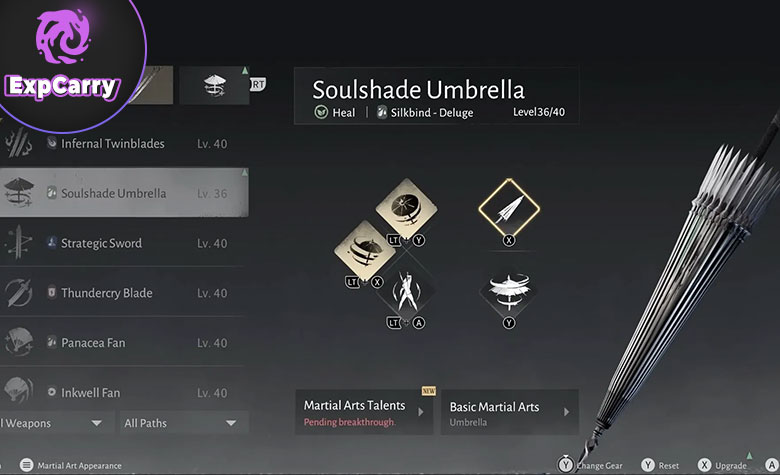
Umbrella builds are defined by safety. They often bring defensive tools, counter play, and a way to survive in situations where other weapons would fold. Umbrella is not the fastest killer, but it can be one of the most consistent weapons for players who prefer control over gambling.
For PvE, the best umbrella direction is a defensive comfort build that lets you learn bosses without constant deaths. Umbrella pairs best with a stronger damage weapon so you do not feel slow. Pair umbrella with sword for a stable all around PvE setup that can handle most content without stress. Pair umbrella with dual blades if you want more kill speed while keeping a defensive reset option in your pocket.
For PvP, the best umbrella direction is a counter duelist build. You are trying to deny the opponent their burst and punish them when they commit. Umbrella is excellent when you enjoy reading patterns and punishing. Pair umbrella with spear if you want a keep out style that frustrates aggressive players. Pair umbrella with mo blade if you want to turn a single counter window into a huge damage swing.
Umbrella is also great for group PvP when you want to peel for teammates. A defensive weapon that can disrupt and survive often creates more wins than another fragile damage build.
Best Pve Build Direction For Each Weapon
Sword PvE builds should focus on sustained pressure and safe uptime. The best sword PvE pairs are sword plus spear for stability and crowd control, or sword plus fan for comfort and sustain. If you want a never stress build, sword plus fan is an easy way to make mistakes and still finish encounters.
Spear PvE builds should focus on area control and safe clears. Spear plus dual blades is a strong loop because spear controls the fight and dual blades cash out damage. Spear plus sword is a balanced option when you want a single build that feels good in every type of content.
Dual blades PvE builds should focus on uptime and survival tools. Pair with spear if you want an effective combination of crowd control and boss damage. Pair with fan if you want more sustain so you can stay aggressive longer.
Fan PvE builds should focus on sustain and utility without sacrificing too much damage. Pair with sword for a clean all around setup. Pair with dual blades if you want higher kill speed and you trust yourself to manage risk.
Rope dart PvE builds should focus on grouping and setup. Pair with dual blades if you want to delete priority targets. Pair with sword if you want a more forgiving version that still feels powerful.
Mo blade PvE builds should focus on stagger and execution. Pair with spear for control and comfort. Pair with fan for sustain and safety in longer fights.
Umbrella PvE builds should focus on staying alive and creating safe windows. Pair with sword for balanced damage and defense. Pair with dual blades for more kill speed while keeping umbrella as your reset.
Best PvP Build Direction For Each Weapon
Sword PvP builds should focus on pressure and safe punish. Pair with rope dart to force openings and punish evasive play. Pair with fan to win the long game through sustain and disruption. Sword plus fan is a stable choice for players who want to win without gambling.
Spear PvP builds should focus on keep out, spacing, and punishes. Pair with rope dart when you want to convert spacing into catches. Pair with umbrella when you want to become very hard to crack in duels.
Dual blades PvP builds should focus on burst and disengage. Pair with rope dart for a strong catch and kill identity. Pair with umbrella for a safer duelist variant that survives longer and still has explosive windows.
Fan PvP builds should focus on sustain pressure and denial. Pair with sword for a clean balanced setup. Pair with spear if you want a slower control style that frustrates rushdown players and wins through patience.
Rope dart PvP builds should focus on forcing contact and controlling movement. Pair with dual blades for maximum kill threat. Pair with sword for a stable pressure style that does not collapse if you miss the first catch.
Mo blade PvP builds should focus on counter punishes and guaranteed hits. Pair with rope dart when you need a way to stop evasive players. Pair with umbrella when you want maximum defense and high value punish windows.
Umbrella PvP builds should focus on counter play and survival. Pair with spear for a deny and punish style. Pair with mo blade for a high impact punish variant that wins off a few correct reads.
Solo Versus Group Builds: What Changes And What Does Not
Solo builds need self sufficiency. You need your own sustain, your own escape, and your own way to handle both crowds and bosses. That pushes solo players toward balanced pairs like sword plus spear, sword plus fan, spear plus sword, or spear plus dual blades with a safety leaning ability set.
Group builds can specialize. In groups, you can build a role. One person can be the catcher and setup with rope dart. One person can be the finisher with dual blades or mo blade. One person can be the sustain and control layer with fan or umbrella. The best group fights are rarely won by everyone running the same build. They are won by builds that connect, where one kit creates the opening and another kit converts it into damage or control. If you only play with friends, you can afford to run riskier burst builds because you have backup. If you mostly play solo, you should not copy the fragility of a highlight build. You need a build that can recover when the fight gets ugly.
A Practical Progression Path: What To Build First And What To Build Next
If you are new, start with a build that teaches fundamentals instead of a build that depends on tricks. Sword plus spear is a simple all purpose start because it gives you reach, control, and reliable pressure. Sword plus fan is a safe start if you want comfort and you dislike dying. Spear plus sword is also excellent if you prefer spacing and control over close range pressure. Once you understand fights, you can specialize. If you love PvE boss damage, move into a setup where your secondary weapon supports your main damage weapon, like spear plus dual blades or rope dart plus dual blades. If you love PvP, decide whether you want to win by pressure and sustain or by catches and burst. Pressure and sustain pushes you toward sword plus fan or spear plus umbrella. Catches and burst pushes you toward rope dart plus dual blades or sword plus rope dart. The smartest build upgrades are the ones that reduce frustration. If you keep dying, add more survival and resets. If you keep failing to finish enemies, add more reliable punish and burst. If you keep getting overwhelmed by packs, add more control and area damage. Do not change everything at once. Change one piece, test it, then decide the next step.
Common Mistakes That Make Good Builds Feel Bad
The most common mistake is pairing two weapons that do the same job. Two damage focused weapons often feel great in easy fights and terrible in hard fights because you have no answer when you get pressured. A good build is not two strong weapons. It is a strong weapon plus a weapon that covers what the first weapon cannot do. The second mistake is forcing offense when you should be resetting. Many players build for damage and then play like they have infinite health. Even the best build fails if you refuse to disengage when the trade is lost. In PvE, that means you die to greed. In PvP, that means you get punished by a human who is waiting for exactly that mistake. The third mistake is building only for one mode and being shocked when it feels wrong elsewhere. PvE and PvP reward different priorities. If you want one build for both, you must accept a balanced middle, not the extreme peak of either mode.
Verdict: Pick A Weapon Identity, Then Pair To Cover Weakness
The best builds in Where Winds Meet are not mystical secrets. They are weapon identities that make sense. Sword is the most all around and forgiving. Spear is control and safety that scales. Dual blades are speed and burst with real risk. Fan is sustain and disruption that wins long fights. Rope dart is catches and positioning control that dominates PvP when mastered. Mo blade is heavy punish and stagger that deletes PvE when played with discipline. Umbrella is defense and counters that makes you extremely hard to break in duels. The final rule is simple. Your main weapon is how you want to fight. Your second weapon is how you refuse to lose. Build that pair, practice a loop that answers engage, pressure, control, and escape, and you will feel stronger than any player who only copied a tier list without understanding why it worked.