
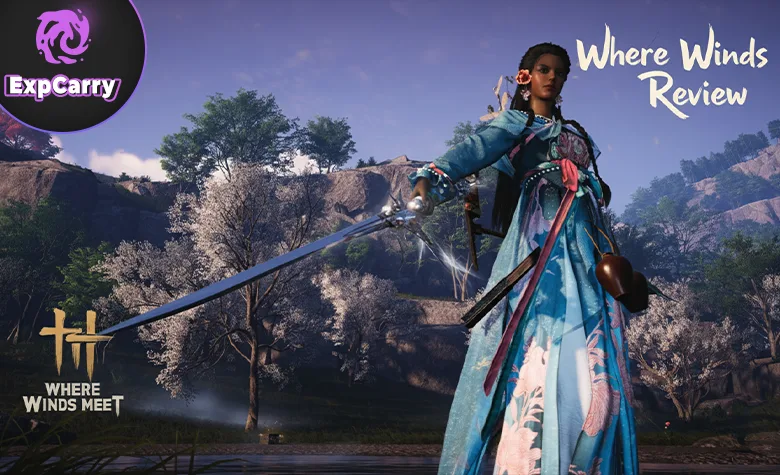
Where Winds Meet is a free-to-play open-world action-adventure RPG built around wuxia. It is set in late ninth- and tenth-century China during the turbulent Five Dynasties and Ten Kingdoms period, and it frames you as a young sword master trying to uncover the mysteries of your own identity while the wider world fractures into war, ambition, and shifting loyalties. If you want a clean one-line pitch, it is a martial arts fantasy sandbox that tries to deliver both a large single-player narrative and a modern online ecosystem, without forcing you to treat it like a full-time MMO job.
This review is written as a grounded overview for players who keep seeing the game pop up on Steam, the Epic Games Store, and PlayStation 5 and want to know what it actually is, what you do moment to moment, and what the tradeoffs are. I will cover the setting, the combat and movement, the structure of its content, the social and online layer, the business model, and the kind of player it fits best. The goal is clarity, not hype.
What Kind Of Game Is Where Winds Meet
Where Winds Meet sits in a space between a traditional open-world action RPG and a live service game, while still leaving room for Solo Mode Breakthrough play. It is designed to be playable completely solo in terms of story and moment-to-moment gameplay, but it also supports co-op and a broader shared online world. That means you can treat it as a personal wuxia journey with story missions, exploration, and character progression, or you can lean into multiplayer modes, co-op boss help, and social or competitive activities. The important point is that multiplayer is not supposed to be the gate to the main campaign. You can go through the core narrative as a lone sword master and still feel like you are getting the intended experience.
At its heart, it is a wuxia game. Wuxia stories are about wandering martial heroes, personal codes, rival sects, hidden identities, loyalty and betrayal, and mythic combat that feels larger than life. Where Winds Meet uses that to justify superhuman movement and dramatic martial techniques. From the first minutes, you can do things that are not trying to be realistic, like running up walls, chaining air dashes, and moving across terrain with a kind of airborne confidence that many open-world games reserve for late-game upgrades.
The game is also trying to be extremely broad. It wants to be a combat game, a story game, an exploration game, and a systems game where you can sink into side activities and progression layers. That ambition is part of its appeal and also the source of its biggest weaknesses, especially when the UI and the number of currencies, menus, and upgrade paths start to fight for your attention.
Who Made It And Why It Exists
Where Winds Meet is developed by Everstone Studio and published by NetEase Games. Everstone is presented as a studio aiming to bring a distinctly Chinese cultural fantasy to a global audience using modern open-world production values and a design language that can read well to players who grew up on big mainstream RPGs. That matters because the game is not trying to be a niche historical simulator. It is trying to be a mass-market open world with a strong cultural identity, built on the wuxia tradition.
In interviews and official features, the team describes the project as an attempt to create an immersive world that expresses the wuxia spirit through atmosphere, interpersonal connections, and themes like dual identities and hidden legends. They also point to the historical choice: the Five Dynasties and Ten Kingdoms period sits between better-known dynasties, and the gaps in records create room to mix real history with fantasy and fill in blanks with story. That is a smart foundation for a game that wants to feel culturally grounded without being boxed in by strict historical accuracy.
On the production side, the team has emphasized motion capture and choreography to make combat and ability animation feel cinematic. They have also highlighted collaboration with action choreographer and film director Stephen Tung Wai to shape the feel of weapon motion and combat performance. In practice, that focus shows up in the way attacks, parries, and special techniques are framed as spectacle rather than simple hitbox trades.
How Long Has It Been In Development
There is a simple, verifiable timeline that matters to players. Where Winds Meet was publicly revealed during the Gamescom 2022 window, when it first showed off its concept as a Chinese open-world martial arts RPG with dramatic combat and high-end visuals. It then went through a long rollout that included multiple public updates and test phases before global launch. It launched worldwide on PC and PlayStation 5 on November 14, 2025.
So if you are asking how long it was in development in a practical, player-facing sense, it spent at least three years in public view between reveal and global launch. And if you are asking how long it took to mature into a worldwide product, the answer is that it followed a multi-phase rollout: reveal, years of iteration, tests, then a full global release with seasonal structure. That is a normal arc for a modern free-to-play open-world game that wants a long tail.
The Setting: Tenth-Century China Through A Wuxia Fantasy Lens
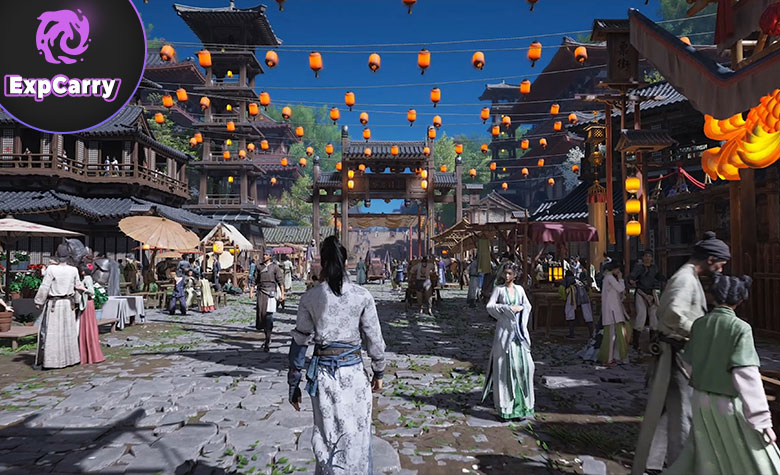
The world of Where Winds Meet is set during the Five Dynasties and Ten Kingdoms period. You are placed inside a land that is politically fragmented, socially tense, and narratively perfect for wuxia because local power centers, private armies, sect rivalries, and personal codes can collide without one unified authority immediately flattening the conflict. That era supports stories about wandering heroes because the world itself feels like it is in motion, with allegiances shifting and new legends being written in the gaps between order and chaos.
Where Winds Meet does not pretend to be a history textbook. It uses history as a stage. You will see environments and cultural motifs that aim for authenticity in architecture, music, tools, and clothing, but the moment-to-moment experience is unapologetically fantasy-forward. Superhuman movement, mystic arts, and dramatic set pieces are not exceptions. They are the language of the game. That combination is the entire point: it wants to evoke a wuxia world where human skill and will become myth.
The story framing is also clean: you are a young sword master, and your personal mystery is part of the forward momentum. That helps the game avoid the open-world problem where the main quest feels optional and the character feels like a tourist. Here, your identity and your past are part of why you are pulled through the world rather than simply drifting from activity to activity.
Core Gameplay Loop: Explore, Fight, Learn, And Build A Legend
If you strip away the layers, the core loop looks like this. You move through a large open world, you pick up quests and encounters, you fight enemies and bosses, you learn new techniques and build a combat identity, and you steadily unlock more regions, more story beats, and more side content. The game leans into the idea of a wandering hero, so you are not locked into one city hub and one fixed route. You travel, you investigate, you get involved, and you leave ripples behind you.
Exploration is built on mobility. This is not a map where you slowly jog uphill and wait for ladders. Where Winds Meet wants you to move like a wuxia protagonist. It gives you tools that make traversal feel athletic and playful: wall running, air dashes, and vertical climbs that turn cliffs into a puzzle you solve with momentum. That creates a sense of freedom that is closer to a martial arts fantasy than to a grounded medieval RPG.
Combat is the other pillar. You will spend a lot of time in fights against groups, elites, and bosses, and the game expects you to care about timing, defensive responses, and the rhythm of abilities. It is not pure Soulslike, but it does borrow the idea that knowing when to defend and when to commit matters. When the system is at its best, combat feels like choreographed chaos where you are constantly reading intent, responding with parries or evasions, and then punishing openings with flashy skills.
Combat And Movement: The Game Wants You To Look Cool
Where Winds Meet combat is often described as being influenced by modern parry-focused action games. Some reviews compare its feel to Sekiro in the broad sense that timing and defensive skill are central, but with a more forgiving approach and more spectacle layered on top. That is a useful way to frame it. You can play it as a precise timing game, but you are not punished with the same level of harshness as the most demanding parry-centric titles. It is designed to be accessible to a wider audience without turning combat into mindless button mashing.
The developers have said the game launches with seven weapon types, and they encourage swapping and combining weapons to create different combat identities. In practice, that design supports variety. A heavy weapon can anchor a build that plays around stagger and punish windows, while lighter options can emphasize speed, spacing, and opening creation. The point is not just damage numbers. It is feel.
Mystic arts are part of the fantasy. They are not only combat skills. They can be used for movement, for interacting with the environment, and for solving problems. That matters because it merges combat progression with exploration progression. Learning a technique can change how you fight and how you navigate. When a game manages that, progression feels meaningful instead of purely statistical.
Movement deserves its own note because it shapes everything. The game gives you strong traversal tools early, then asks you to use them constantly. Your character can climb, jump, dash, and chain actions in ways that keep open-world travel from becoming a slow commute. That mobility is a big reason the world feels like a wuxia stage rather than a set of separated quest zones.
World Design And Atmosphere: Field Research Meets Fantasy
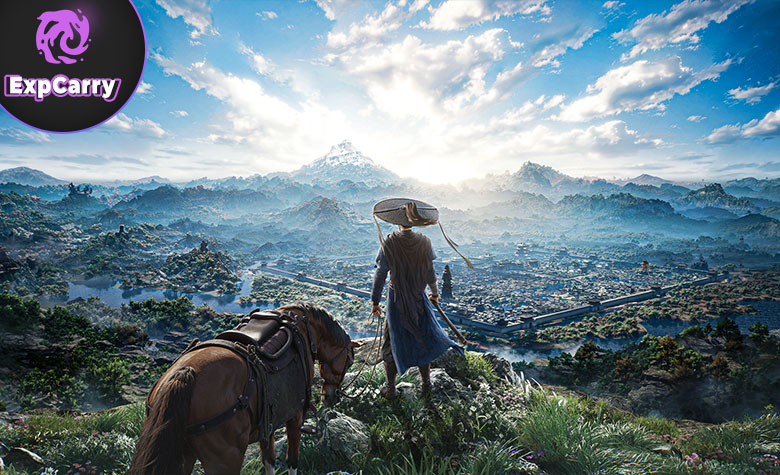
Everstone has talked about doing field research, visiting locations and museums, and studying cultural relics and landscapes to ground the game world visually. That approach shows up in the texture of environments: cities and countryside are designed to feel lived-in, with human scale details, not just postcard vistas. When it works, you get a strong sense of place even when the game is going full fantasy with its abilities and encounters.
The game also leans on music and sound to sell the atmosphere. Developers have described drawing from folk music and ancient musical pieces, then pairing that with natural sound motifs like water, wind, and birds. That is exactly the kind of audio design that can make exploration feel like a journey rather than a checklist.
That said, the game can also feel like it is trying to do too many things at once. When you bounce from dramatic combat to side activities to social systems to UI-heavy progression, the mood can shift fast. Some players will love that chaotic variety. Others will wish the experience was tighter and more focused. You should go in expecting a big buffet, not a single polished course.
Solo Versus Online: You Choose The Weight Of The Multiplayer Layer
One of the most important practical questions is whether this is a multiplayer-first game. The answer is no, not in the way many free-to-play games are. Where Winds Meet supports multiplayer, but it also aims to be a substantial solo experience with a long narrative exploration arc. The important caveat is technical rather than design-based: it is an online game, and platform listings indicate that an internet connection is required even if you play alone. So think of it as "solo-friendly in an online world," not as an offline single-player RPG.
At the same time, the online side is not a tiny add-on. Multiplayer includes cooperative assistance and more structured competitive and social activities. The mix is unusual: it can feel like the game wants to be a story RPG, a co-op action game, and a social platform all at once. If you like choosing your own level of social engagement, that flexibility is a strength.
There is also a quality-of-life upside to its platform strategy: the game supports cross-progression across Steam, Epic Games Store, the official PC launcher, and PlayStation, so you can keep one character and one journey across where you play, if you link accounts.
But if you are the kind of player who wants one clear identity for a game, the variety may feel messy. The game is confident enough to include strange systems and tonal shifts, and it does not always explain them cleanly. So your comfort with experimentation will shape your enjoyment more than raw difficulty will.
Progression, Systems, And Why Some People Will Bounce Off
Like many modern free-to-play RPGs, Where Winds Meet uses layered progression. You develop weapon skills, learn mystic arts, and interact with multiple systems that can affect combat and exploration. That can be satisfying because it lets you specialize and gives you a sense of growth. It can also be exhausting because it often requires menu work, resource tracking, and a mental model of which upgrade path matters most right now.
This is where the game becomes divisive. Some reviewers praise the world and combat while criticizing the UI and the sheer number of currencies, upgrade systems, and prompts competing for your attention. If you enjoy optimizing builds and poking at complex systems, the game gives you a lot to do. If you want a clean UI and a simple progression ladder, you may find it frustrating.
The best way to approach it is to decide early what you care about. Treat the game like a wuxia journey first. Pick a weapon style that feels good, focus on the main story and a small number of side systems, and only expand your complexity when you actually want more depth. The game will throw options at you. You do not have to catch all of them on day one.
Monetization: Free To Play, With A Promise Of No Pay To Win
Where Winds Meet is free to play on PC and PlayStation 5. The developers position monetization as cosmetic-first, with messaging that emphasizes "no pay to win" and a focus on appearance-driven items like outfits, mounts, and visual effects. Platform listings also describe optional purchases like seasonal monetization and subscriptions, while still framing paid content as not affecting core character skill expression.
One detail that is easy to miss is the way store disclosures are phrased. Some listings include "in-game purchases (includes random items)," which typically signals that at least part of the cosmetic economy may involve randomized pulls or chance-based rewards rather than only direct purchases. That does not automatically mean pay-to-win, but it does matter for players who dislike gacha-style presentation and want everything to be cleanly purchasable without RNG.
There is a practical reality, though. Even when a free-to-play game avoids selling raw power, it can still overwhelm you with a storefront presence, multiple currencies, and advertising surfaces. Reviews have called out the UI and the constant reminders of paid systems as a pain point. So while monetization may not decide fights, it can still affect comfort. If you are highly allergic to live service presentation, be prepared to tune it out.
What The Game Gets Right
Where Winds Meet is at its best when it leans into the wuxia fantasy and lets you move and fight like a legend. The mobility is immediately satisfying. Being able to run up surfaces, dash in the air, and treat vertical space as part of normal exploration makes the open world feel alive. It reduces the dead time that usually sits between quests in big maps.
Combat also carries the experience. Even critics who point out UI pain tend to acknowledge that the fighting is the reason to stay. Parry-focused encounters, dramatic abilities, and the spectacle of boss fights can make the game feel like a playable martial arts film. When it locks into that rhythm, the game feels unique among open-world RPGs because it is not trying to be grim realism. It is trying to be myth and adrenaline.
The setting is another strength. Western players do not get many AAA-scale open worlds grounded in this specific cultural tradition and historical period. Even if the game is not historically strict, it gives you a fresher atmosphere than the usual medieval Europe loops. The result is a world that feels distinct instead of familiar.
Where It Struggles
The biggest consistent criticism is focus. The game tries to contain a huge number of systems and activities, from minigames to social features to multiple progression layers, and it does not always make them feel essential. That can create a feeling of bloat, where you keep bumping into features that exist because the game wants to be an everything-platform rather than because the story and world demand them.
UI is the second major weakness. Reviews have described navigating the interface as painful and complicated, especially when the game asks you to manage multiple currencies and upgrade trees. If the UI does not click for you, it will add friction to every session, because even the best combat cannot fully compensate for constant menu frustration.
Finally, the tonal mix can be strange. Wuxia can be dramatic, tragic, romantic, and comedic, so shifting tone is not inherently wrong. But if the game jumps too quickly between serious story beats and goofy distractions, some players will feel whiplash. Others will love it. This is less a flaw and more a warning: it is not a single mood experience.
Who This Game Is For
Where Winds Meet is a strong match for you if you want an open world that is built around martial arts fantasy movement and combat, and you enjoy discovering systems rather than having everything streamlined. If you like parry-focused action, flashy abilities, and bosses that reward learning patterns, you will find a lot to enjoy. If you like the idea of a wuxia world, wandering heroes, sect rivalries, and a story that mixes history and fantasy, the setting will likely hook you.
It is also a good match if you want to decide how social your game is. You can play solo, invite friends for co-op, or touch multiplayer modes when you feel like it. That flexibility is valuable, especially in a free-to-play game where you might want to test the waters before committing.
On the other hand, you may bounce off if you demand a clean UI, a tight core focus, and a limited number of progression layers. You may also bounce off if you dislike the presence of battle passes, subscriptions, and chance-based cosmetic mechanics on principle, even when they are not selling power. This is not a minimalist RPG. It is a maximalist one.
Beginner Tips For A Better First Week
If you want to enjoy Where Winds Meet without being overwhelmed, keep your first sessions simple. Pick one primary weapon style and commit to learning its timing and defensive responses. Turn the open world into a route: story mission, exploration between points, and a handful of side encounters that feel organic. Do not try to master every system immediately. Let the game introduce complexity gradually.
Use the mobility to your advantage. The game wants you to move vertically and creatively. When you treat traversal like a combat skill, you will find more shortcuts, more hidden routes, and more ways to avoid frustrating backtracking. The game is simply more fun when you move like a wuxia hero instead of walking like a tourist.
Finally, treat multiplayer as optional spice. Do not feel pressured to engage with every mode. If you hit a boss that is annoying, co-op help can be great. If you want to test your combat mastery, competitive modes exist. But if your goal is story and exploration, you can keep your experience mostly solo and still get the core value.
Verdict: Ambitious, Messy, Often Brilliant
Where Winds Meet is not a perfectly clean product, but it is a rare kind of open-world RPG. It is built around a wuxia fantasy that gives you constant movement freedom and combat spectacle. It also tries to be bigger than it probably needs to be, with a huge pile of systems, menus, currencies, and side activities that can feel excessive. If you meet it on its own terms, it can be a joyful martial arts sandbox that delivers memorable fights and a distinct atmosphere. If you want tight focus and a polished UI, it may frustrate you.
The safest recommendation is this: try it. It is free to play, the solo experience is substantial in design intent, and you will know within a few hours whether the movement and combat are enough to carry the rest. For many players, the answer will be yes. For others, the UI and the feature overload will be the deal breaker. Either way, Where Winds Meet is worth understanding, because it is one of the most unusual and culturally specific open-world releases of 2025.