Destruction Warlock is a direct-damage ranged DPS specialization built around Soul Shards, Chaos Bolt, Havoc, strong priority damage, and controlled cleave. In WoW Midnight Season 2, Destruction is particularly effective when a fight rewards fast target swaps, two-target damage, planned burst, or repeated opportunities to convert Soul Shards into Chaos Bolt and Rain of Fire.
Hellcaller is the recommended Hero Talent for Raid, while Diabolist is the current default for Mythic+. Hellcaller excels in single-target and spread-cleave encounters through Wither and Malevolence. Diabolist performs better when enemies are stacked and its demon cycles, Shadowburn package, and AoE can be used repeatedly.
Updated: September 11, 2026 for Patch 12.1 and Midnight Season 2. This version includes current Raid and Mythic+ builds, the August 25 Rain of Fire buff, current Hero Talent recommendations, Embers of Nihilam, Season 2 tier bonuses, rotation, stats, Delves, and PvP.
For a comparison with Affliction and Demonology, see our best Warlock spec guide.
Best Destruction Warlock Build in Midnight Season 2
| Content | Best Hero Talent | Build Focus | Main Strength |
|---|---|---|---|
| Raid | Hellcaller | Single Target / Spread Cleave | Strong Chaos Bolt pressure, Wither, Malevolence, and excellent damage on separated targets. |
| Mythic+ | Diabolist | AoE / Stacked Cleave | Fast burst cycles, strong Shadowburn value, priority damage, and powerful stacked AoE. |
| Two Targets | Hellcaller | Havoc / Cleave | Excellent controlled damage when two important targets are active. |
| Delves / Solo | Hellcaller | Single Target / Utility | Strong elite damage combined with Warlock defensives and pet support. |
| PvP | Hellcaller | Pressure / Burst | Wither pressure, crowd control, and protected Chaos Bolt windows. |
Best Destruction Warlock Talents: Quick Answer
The best Destruction Warlock talents depend primarily on whether your content rewards single-target and spread cleave or stacked AoE.
Use Hellcaller for most Raid encounters. Use Diabolist for Mythic+. Current live Season 2 data strongly supports this split rather than one universal Hero Talent for every activity.
The core Destruction abilities and talents to understand are:
- Chaos Bolt — your primary high-value Soul Shard spender against important targets.
- Havoc — allows selected spells to damage a second target and defines Destruction's controlled two-target cleave.
- Conflagrate — provides mobile damage, Soul Shard generation, and Backdraft.
- Soul Fire — a powerful generator in current single-target builds.
- Shadowburn — valuable for movement, execute situations, and finishing low-health enemies.
- Rain of Fire — the main Soul Shard spender when enough enemies remain stacked inside its area.
- Malevolence — the central Hellcaller damage window.
- Embers of Nihilam — the Destruction Apex Talent that adds Echo of Sargeras effects to normal shard generation and spending.
Hellcaller vs Diabolist: Which Hero Talent Is Best?
| Hero Talent | Best For | Main Strength | Main Limitation |
|---|---|---|---|
| Hellcaller | Raid, single target, two targets, spread cleave, PvP | Wither pressure, Malevolence windows, and strong damage against important separated targets. | Loses value compared with Diabolist when repeated stacked AoE dominates the encounter. |
| Diabolist | Mythic+, stacked cleave, AoE | Powerful demon cycles, fast burst, Shadowburn value, and excellent damage on grouped enemies. | Less specialized for sustained single-target and spread-cleave raid profiles. |
Hellcaller is the current raid default. Live Venomous Abyss logs overwhelmingly favor it, especially at higher difficulties. Diabolist is the current Mythic+ default and also dominates high-key usage.
Explore services related to this guide, selected from our World of Warcraft catalog.
View All World of Warcraft Services


What Changed for Destruction Warlock in Patch 12.1?
Patch 12.1 changed both Destruction's baseline toolkit and its Hero Talents. Blizzard then applied additional Season 2 tuning and bug fixes after the raid and Mythic+ season opened.
- Overall Destruction damage was increased by 4.5% with Patch 12.1.
- Soul Fire damage was increased by 45%.
- Chaos Bolt damage was increased by 5%.
- Havoc now copies 50% of spell damage instead of 60%.
- Conflagration of Chaos was redesigned around guaranteed critical strikes and Critical Strike scaling.
- Wither damage was increased by 25% as part of the Hellcaller changes.
- Blackened Soul was redesigned and its damage increased.
- Rain of Fire received an additional 30% PvE damage increase on August 25.
- A bug preventing Conflagration of Chaos from guaranteeing the intended critical strike was fixed after Season 2 launched.
- A later hotfix corrected cases where Mayhem could become untracked when refreshed.
Destruction also received PvP-specific tuning on August 25, increasing Chaos Bolt and Shadowburn finishing pressure.
How Embers of Nihilam Works
Embers of Nihilam is the Destruction Warlock Apex Talent. It adds passive Echo of Sargeras effects to the normal Destruction rotation rather than introducing another major active cooldown.
Incinerate can trigger Echo of Sargeras, dealing Shadowflame damage to the target and nearby enemies. Additional Apex ranks add temporary secondary-stat effects, while later progression allows Soul Shard spenders such as Chaos Bolt, Shadowburn, and Rain of Fire to trigger reduced-strength Echoes.
The practical result is simple: you do not build a separate rotation around Embers of Nihilam. Continue generating Soul Shards efficiently and spend them on the correct spell for the target count.
Best Destruction Warlock Raid Build
Hellcaller is the recommended general Raid Hero Talent for Destruction Warlock in Season 2. It currently dominates live Venomous Abyss usage and performs especially well in single-target, two-target, and spread-cleave situations.
Best Destruction Warlock Raid Talents
CsQAAAAAAAAAAAAAAAAAAAAAAwMmZGNLMzmZmZWmFzMzsYMWMDAAmZGzMziNYgZxoxMAmtYjBAAGDM2AAmZwYGzYDAAwMzMAAMGG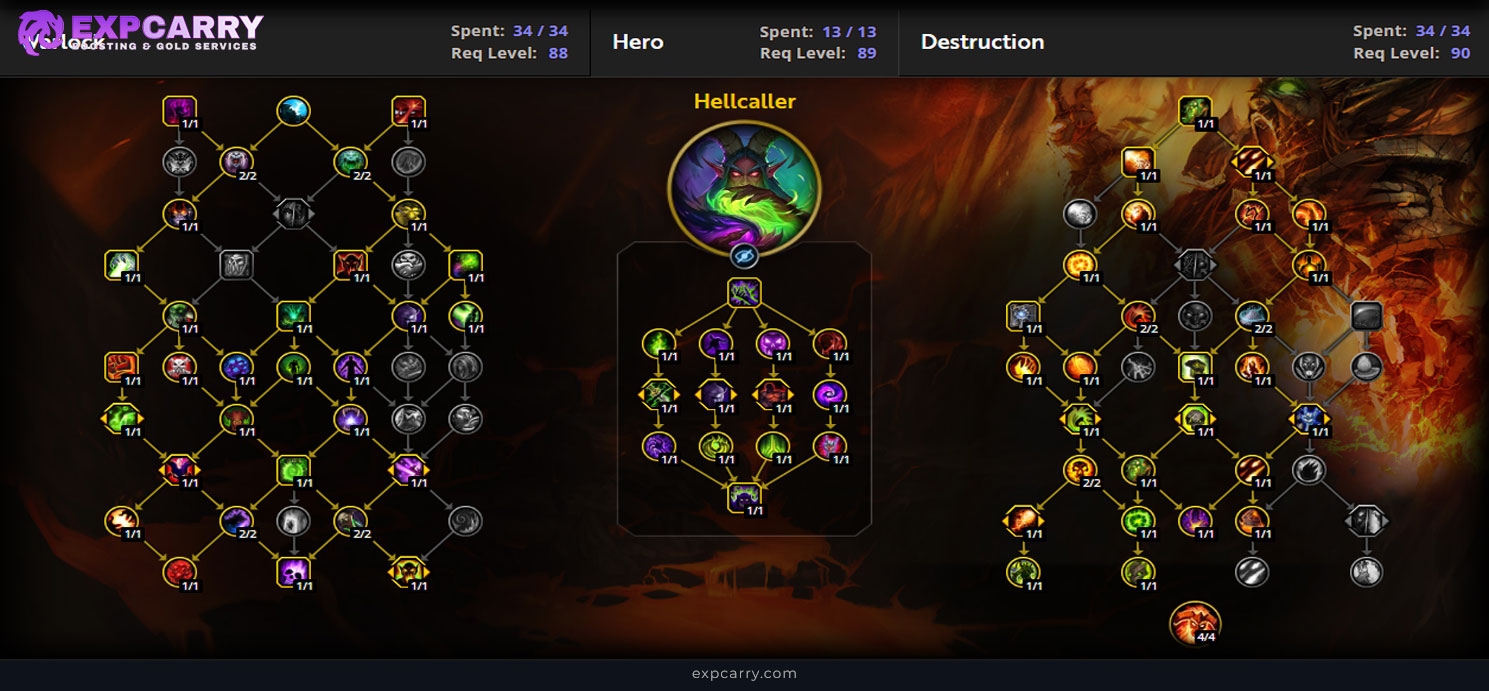
Hero Talent: Hellcaller
Best for: Raid progression, single target, two-target encounters and spread cleave
Alternative: Diabolist when repeated stacked cleave is significantly more important than the encounter's single-target profile.
Key Destruction Raid Talents
- Wither — replaces Immolate as Hellcaller and should remain active on important targets.
- Malevolence — creates an important recurring Hellcaller burst window.
- Chaos Bolt — primary Soul Shard spender against priority targets.
- Soul Fire — a powerful generator that benefits from current Patch 12.1 tuning.
- Havoc — converts prepared resources into exceptional two-target damage.
- Shadowburn — provides mobile damage and additional value when targets are dying.
Destruction Warlock Single-Target Rotation
- Maintain Wither as Hellcaller.
- Use major cooldowns according to the encounter plan rather than holding them indefinitely.
- Use Malevolence while Wither is established.
- Cast Soul Fire without wasting the Soul Shard it generates.
- Spend Soul Shards with Chaos Bolt before reaching the cap.
- Use Conflagrate without capping charges and take advantage of Backdraft.
- Use Shadowburn when the target state or movement makes it valuable.
- Fill with Incinerate when no higher-priority action is available.
Destruction Warlock Opener
- Pre-cast Soul Fire when talented and encounter timing allows it.
- Apply Wither.
- Use Conflagrate to establish Backdraft.
- Activate your planned major cooldown and compatible trinkets.
- Use Malevolence once Wither is active.
- Spend prepared Soul Shards through Chaos Bolt.
- Continue into the normal single-target priority.
How to Use Havoc Correctly
Havoc is most valuable when you prepare resources before the second target appears. Applying Havoc with no Soul Shards, no Conflagrate charges, and no useful casts ready wastes much of the effect.
Before a predictable add or secondary boss becomes active, bank enough resources to immediately convert Havoc into meaningful Chaos Bolt, Shadowburn, or generator value. Do not delay Havoc simply because another target exists; use it when the duplicated damage contributes to targets that actually matter.
Best Destruction Warlock Mythic+ Build
Diabolist is the current default Destruction Warlock build for Mythic+. Current live data strongly favors it in both the wider key population and the highest keys. Its faster burst, demon cycles, Shadowburn package, and strong stacked-cleave profile fit the Season 2 dungeon environment extremely well.
Best Destruction Warlock Mythic+ Talents
CsQAAAAAAAAAAAAAAAAAAAAAAwMjZGNLmxmZGzysNzYmFzYZZMAAYGjZmZBMmxwCMw2wCNWYAAgxMMsBgZGgxMjZ2AAAMzMzAAYMM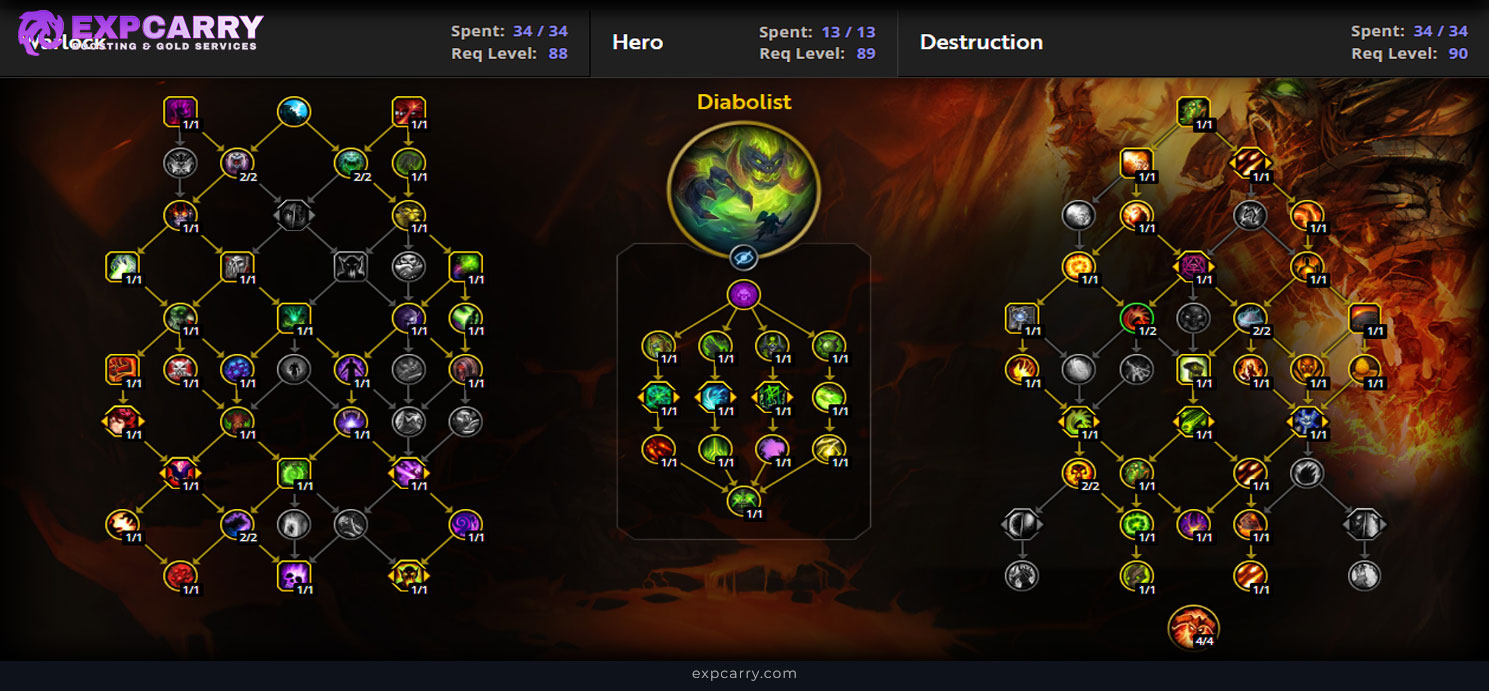
Hero Talent: Diabolist
Best for: Mythic+, stacked cleave, dungeon burst and priority-target damage.
Destruction Warlock Mythic+ Rotation
- Apply Immolate to the main target and spread or maintain it only on enemies that will live long enough.
- Use Conflagrate efficiently and avoid wasting charges.
- Use major demon and burst cycles on pulls that will survive long enough to benefit from them.
- Use Shadowburn aggressively on dying enemies when the shard economy makes it profitable.
- Use Havoc when controlled two-target or priority cleave is useful.
- Spend on Rain of Fire when several enemies will remain stacked inside it.
- Continue using Chaos Bolt when killing one dangerous target is more important than overall AoE.
- Use Shadowfury, Fear, Mortal Coil, Spell Lock, and curses proactively.
When Should Destruction Warlock Use Rain of Fire?
Rain of Fire is valuable when several enemies will remain stacked inside its area long enough for the damage to complete. It became more important after its 30% Season 2 damage increase, but it should still not replace Chaos Bolt automatically whenever three enemies are present.
If one dangerous enemy must die immediately, Chaos Bolt and controlled priority damage can contribute more to the key than maximizing overall pack damage.
Current Season 2 Mythic+ Dungeons
| Dungeon | Destruction Focus |
|---|---|
| Altar of Fangs | Coordinate interrupts and Shadowfury and preserve burst for dangerous priority enemies. |
| Murder Row | Use line of sight, curses, and planned Circle positioning around caster-heavy pulls. |
| Den of Nalorakk | Use defensives proactively and maintain priority damage through heavy melee pressure. |
| The Blinding Vale | Plan movement before committing to long Chaos Bolt casts. |
| Voidscar Arena | Enter large pulls with Soul Shards and cooldowns ready instead of building resources after the pull begins. |
| Kings' Rest | Coordinate Fear, Shadowfury, and Spell Lock without overlapping other group stops. |
| Temple of Sethraliss | Expect movement and target swaps and preserve instant casts for repositioning. |
| Ruby Life Pools | Pre-place Circle, interrupt dangerous casts, and keep a defensive available for overlapping mechanics. |
See our Midnight Season 2 Mythic+ dungeon guide for the complete dungeon pool.
Best Destruction Warlock Delve Build
Hellcaller is the recommended general Destruction build for Delves. Delves place more value on elite damage, control, positioning, and survivability than a normal Mythic+ route, making the Hellcaller profile a strong default.
Best Destruction Warlock Delve Talents
CsQAAAAAAAAAAAAAAAAAAAAAAwMjZGNLmxmZGzysZGzsYYZZmBAAzMjZmZxCMwsY0YGAzG2YAAgxMAAAzMYMzMmNAAAzMzMAAMDD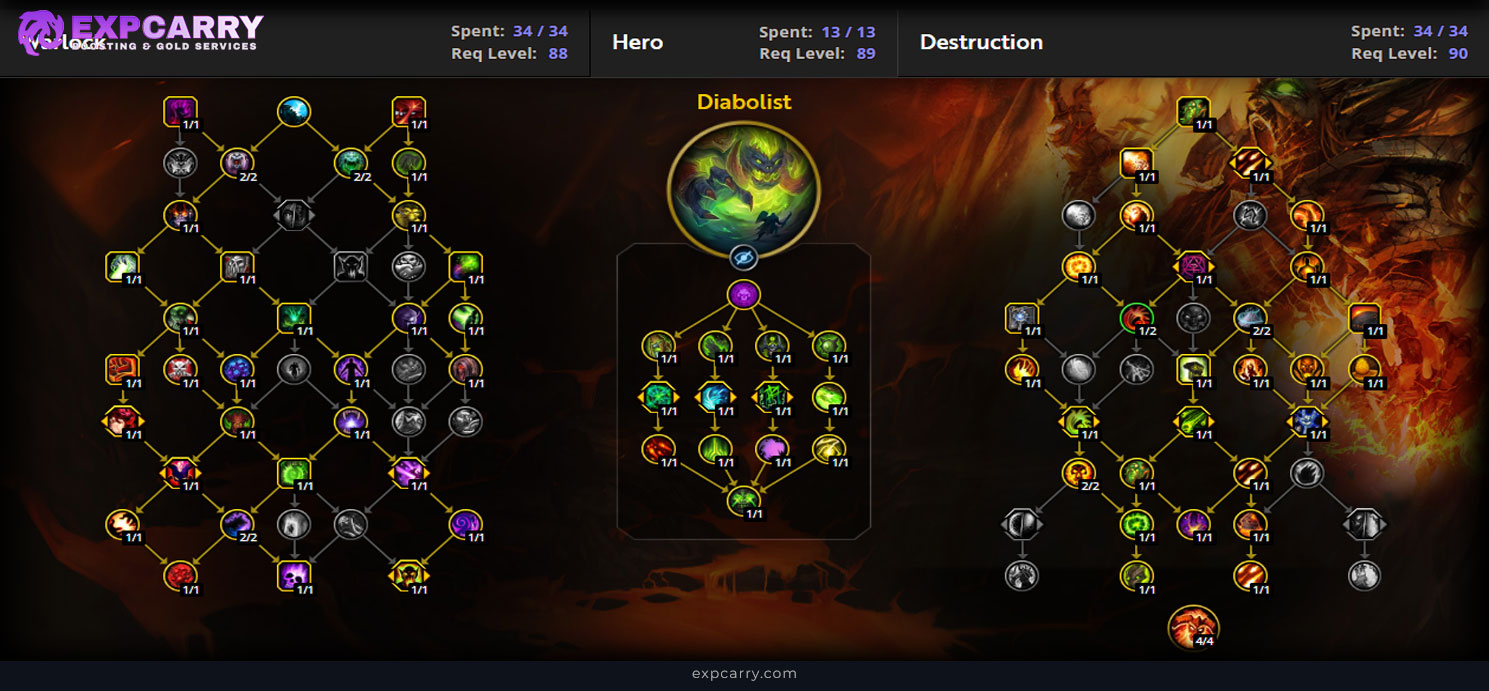
Let your pet establish control, place Demonic Circle before dangerous encounters, and use Dark Pact before predictable damage. Against multiple enemies, use your normal cleave tools only when the targets will survive long enough for the setup to matter.
Destruction Warlock Stat Priority
There is no single permanent secondary-stat order for every Season 2 character. Current live profiles change slightly between Raid, normal Mythic+ and high keys.
| Content | General Priority |
|---|---|
| General PvE | Item Level / Intellect → Haste / Critical Strike / Mastery → Versatility |
| Typical Mythic+ | Intellect → Haste → Critical Strike → Mastery → Versatility |
| High-Key Profiles | Intellect → Critical Strike / Haste → Mastery → Versatility |
| PvP | Intellect → Haste / Versatility → Mastery → Critical Strike |
Do not chase a fixed Haste percentage. Item level, weapon upgrades, tier bonuses, trinkets, and your current distribution can change the value of secondary stats. Sim close PvE upgrades after major gear changes.
Destruction Warlock Season 2 Tier Set
The Destruction Warlock Season 2 set is Damned Necrolyte's Shattered Restraints.
| Bonus | Effect | Impact |
|---|---|---|
| 2-Piece | Incinerate damage is increased by 25%, and Incinerate has an additional 10% chance to evoke Echo of Sargeras. | Improves filler damage while increasing the frequency of your Apex effect. |
| 4-Piece | Targets damaged by Echo of Sargeras take 6% increased damage from your spells and abilities for 6 seconds. | Turns Apex procs into short amplification windows for the rest of the Destruction toolkit. |
Completing four-piece is more important than optimizing small secondary-stat differences. See our Midnight Season 2 Tier Set Guide for the wider Season 2 system.
Destruction Warlock Gear and BiS Priorities
A full static BiS list becomes outdated quickly and should not cause you to reject obvious item-level upgrades. Use these priorities instead:
- Prioritize a high-item-level weapon and Intellect.
- Complete the Season 2 four-piece bonus.
- Target high-value trinkets and unique-effect items.
- Use Catalyst conversions to finish tier on strong base pieces.
- Craft long-term slots after your weapon and tier situation becomes clear.
- Use simulations for close weapon, trinket, and secondary-stat decisions.
Jan'thrazet, the Soul Fang remains one of the highest-value raid weapon targets, while Gebbo's Bottomless Bag is an important Season 2 trinket target.
Use our Venomous Abyss Loot Table to plan raid upgrades.
Destruction Warlock Enchants and Consumables
| Weapon | Acuity of the Ren'dorei or the strongest result for your simulated gear. |
|---|---|
| Chest | Mark of the Worldsoul |
| Legs | Sunfire Silk Spellthread |
| Weapon Oil | Thalassian Phoenix Oil |
| Health Potion | Concentrated Silvermoon Health Potion |
| Augment Rune | Void-Touched Augment Rune |
Destruction Warlock PvP Build
Hellcaller is the current baseline Hero Talent for rated Destruction Warlock PvP. The spec wins through sustained Wither pressure, crowd control, positioning, and protected Chaos Bolt windows rather than simply hard-casting into available interrupts.
Patch 12.1 Season 2 tuning increased Chaos Bolt damage by 15% and Shadowburn damage by 30% in PvP, giving Destruction more finishing power.
Destruction Warlock PvP Game Plan
- Place Demonic Circle and Gateway before the enemy team's first major attack.
- Maintain Wither on targets you can pressure safely.
- Use Fear to draw interrupts or control the healer.
- Combine Mortal Coil, Shadowfury, or teammate crowd control with Chaos Bolt.
- Use Malevolence when Wither is established and opponents cannot immediately line every cast.
- Trade Dark Pact before incoming burst rather than after the damage lands.
- Use Shadowburn to maintain pressure while moving or to finish vulnerable targets.
Useful PvP Talent Choices
- Impish Instincts — useful against heavy physical melee pressure.
- Nether Ward — valuable against dangerous casters and magical effects.
- Soul Rip — useful when its offensive and defensive reduction fits the matchup.
- Shadow Rift — particularly useful when displacement can decide an objective or positioning battle.
Useful Destruction Warlock Macros
Focus Havoc
#showtooltip Havoc
/cast [@focus,harm,nodead][] Havoc
Cursor Shadowfury
#showtooltip Shadowfury
/cast [@cursor] Shadowfury
Focus Spell Lock
#showtooltip Spell Lock
/cast [@focus,harm,nodead][] Spell Lock
Instant Dark Pact
#showtooltip Dark Pact
/stopcasting
/cast Dark Pact
Common Destruction Warlock Mistakes
- Reaching the Soul Shard cap before the next generator lands.
- Applying Havoc without enough resources to take advantage of the cleave window.
- Using Rain of Fire on enemies that will move or die before its damage completes.
- Refreshing Wither or Immolate unnecessarily early.
- Holding major cooldowns long enough to lose an additional use.
- Continuing a Chaos Bolt cast when upcoming movement should have been planned with Circle or instant casts.
- Using Dark Pact after predictable damage instead of before it.
- Ignoring Shadowfury, Fear, Spell Lock, and curses to gain one additional filler cast.
- In PvP, casting Chaos Bolt into an available interrupt without first creating a protected window.
Destruction Warlock FAQ
What is the best Destruction Warlock build in Patch 12.1?
Use Hellcaller for most Raid content and Diabolist for Mythic+. Hellcaller is stronger for current single-target and spread-cleave raid profiles, while Diabolist dominates current dungeon usage because of its stacked cleave and burst.
What are the best Destruction Warlock talents for Mythic+?
Use a Diabolist build with strong Immolate management, Conflagrate, Shadowburn, Havoc, Chaos Bolt, and Rain of Fire. The Mythic+ import string above is the current general baseline.
Is Hellcaller or Diabolist better for Destruction Warlock?
Neither is universally better. Hellcaller is the current Raid default, while Diabolist is the current Mythic+ default. Choose around the encounter's target pattern rather than using one Hero Talent everywhere.
What is the Destruction Warlock rotation?
Maintain Wither or Immolate depending on your Hero Talent, generate Soul Shards without capping, use Chaos Bolt for priority damage, Rain of Fire for appropriate stacked AoE, and prepare Soul Shards before Havoc windows.
What stats are best for Destruction Warlock?
Prioritize item level and Intellect first. Haste, Critical Strike, and Mastery are all valuable and can change order with gear and content, while Versatility is generally the weakest PvE throughput stat. Sim close endgame upgrades.
When should Destruction Warlock use Rain of Fire?
Use Rain of Fire when several enemies will remain stacked inside its area long enough for the full damage to matter. Continue using Chaos Bolt when killing one dangerous target is more important than maximizing overall AoE.
Is Destruction Warlock good in Midnight Season 2?
Yes. Destruction provides strong single-target damage, excellent two-target cleave, fast target switching, useful Mythic+ priority damage, and the complete Warlock utility package. Its main weakness is losing damage when movement or interrupts prevent important casts.
For other classes and specializations, browse our WoW Midnight class guides.