
Fire Mage guide - looking for a complete resource for WoW Midnight Season 2? This updated guide covers PvE builds for raids, Mythic+, and Delves, together with PvP advice for Solo Shuffle, 2v2, 3v3, and RBG. For more World of Warcraft content, visit our World of Warcraft hub. The sections below explain current talents, rotations, stat priorities, gear, consumables, defensives, and utility for Fire Mage in Season 2.
PvE Guide for Fire Mage in WoW Midnight Season 2
Fire Mage is a reactive ranged DPS specialization that turns Heating Up into Hot Streak and spends those procs on instant Pyroblast or Flamestrike casts. Combustion guarantees critical strikes and accelerates this loop, while Fire Blast converts Heating Up without interrupting another cast. Season 2 adds a major gearing change through the new tier set, which makes Pyroclasm mandatory for optimized builds and brings hard-cast Pyroblast and Flamestrike into the rotation. Sunfury is the recommended raid setup and the first listed Mythic+ option, while Frostfire remains viable and has a different damage, movement, and control profile.
Fire Mage Raid Guide in Midnight Season 2
Fire Mage contributes concentrated damage during Combustion, steady output between cooldowns, and cleave through Ignite and Flamestrike. Season 2 raid performance depends on preparing Fire Blast charges, using Meteor at the correct time, and placing Pyroclasm hard-casts where mechanics will not force movement. Shimmer, Alter Time, Blazing Barrier, and Ice Block or Ice Cold help preserve uptime, but strong defensive planning is still required because a lost Pyroclasm cast or mistimed Combustion can waste a large part of the damage window.
Best Talents for Fire Mage Raids
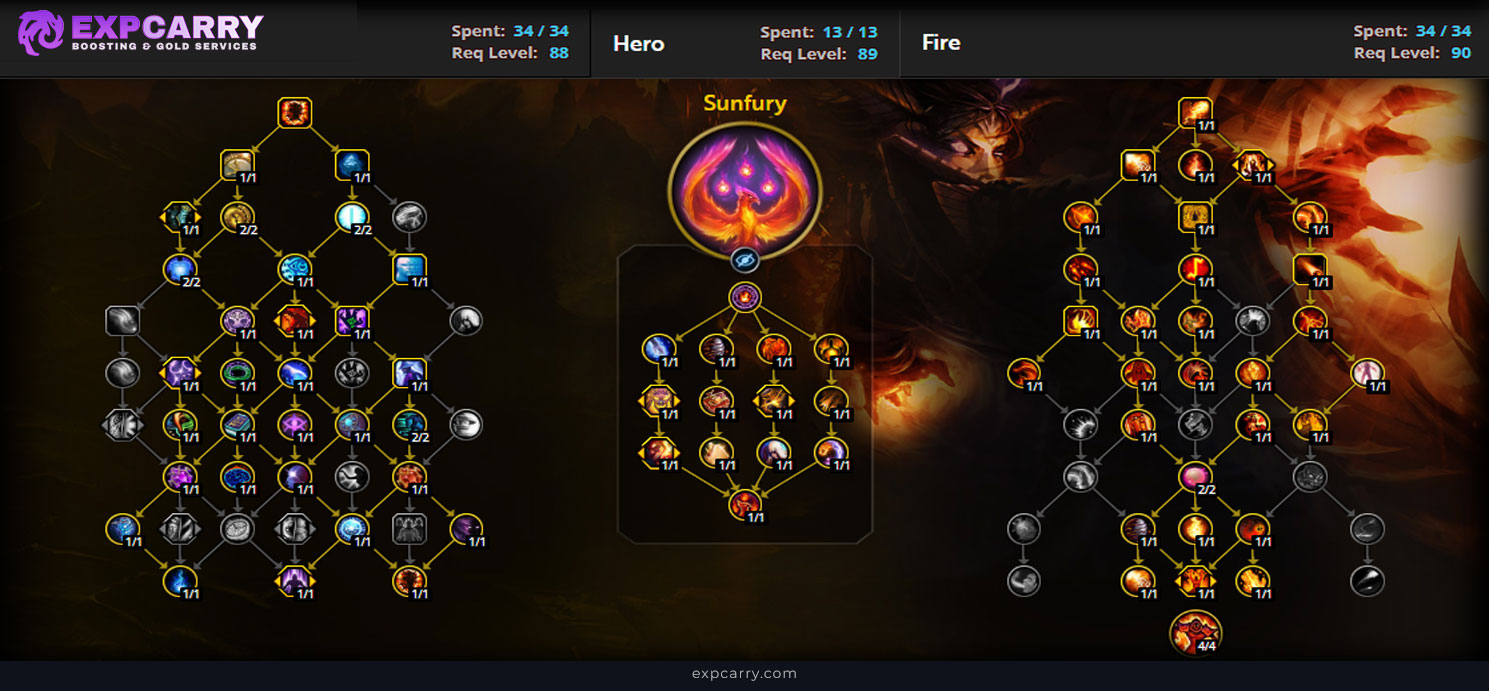
The code below is Wowhead's current Sunfury Raid (Best) recommendation for characters using the 12.1 tier set. Pyroclasm is required because both Season 2 set bonuses interact directly with it. Firestarter is useful while the target remains above 90% health, although Critical Mass can replace it when the encounter or cooldown timing provides little Firestarter value. Sunfury also gains additional control through Explosive Potential and can force Pyroclasm more predictably through Sunfury Execution.
Best Stats for Fire Mage Raids
Use Intellect as the primary stat, followed generally by Haste, Mastery, Versatility, and Critical Strike. Haste increases casting speed, shortens the global cooldown, reduces Fire Blast recharge time, and allows more actions during Combustion. Mastery improves Ignite and gains practical value when damage can spread to additional targets. Critical Strike is last because Fire already receives many guaranteed critical strikes from its core mechanics. Sim close upgrades instead of sacrificing a large item-level increase for preferred secondaries.
Best Consumables, Enchants, and Gems for Fire Mage Raids
- Potion: Use Light's Potential for your planned raid damage window.
- Food: Harandar Celebration and Quel'dorei Medley provide equal feast options, while Champion's Bento is the personal-food alternative.
- Flask: Flask of the Magisters is the standard recommendation, although Flask of the Blood Knights can be stronger for some stat distributions.
- Enchants: Use Acuity of the Ren'dorei on the weapon, Mark of the Worldsoul on the chest, Eyes of the Eagle on rings, and Sunfire Silk Spellthread on legs. Keep Thalassian Phoenix Oil active as the weapon buff.
- Gems: Use Powerful Eversong Diamond with at least one Peridot, Lapis, Garnet, and Amethyst, then fill remaining sockets with Flawless Quick Amethyst unless your simulation recommends another balance.
Best Gear for Fire Mage Raids
Item level and Intellect remain important, with weapons and trinkets usually producing the largest early gains. Jan'thrazet, the Soul Fang is the leading raid weapon target, while Fire can use either one passive trinket plus an on-use option aligned with Combustion or two strong passive trinkets. The Season 2 set is Primal Leywarden's Attire. Its 2-piece causes Pyroclasm to make Pyroblast and Flamestrike always critically strike. The 4-piece lets Pyroclasm shorten their cast time by 20% and increases its damage bonus by 25%. These bonuses require deliberate hard-casts instead of only chaining instant Hot Streak spells.
Rotation and Ability Priority for Fire Mage Raids
Fire uses a priority system rather than a fixed repeating sequence. Convert Heating Up with Fire Blast, spend Hot Streak promptly, and avoid using Fire Blast while Hot Streak is already active unless a specific sequence calls for it. Combustion can be activated during another cast and should normally be pressed immediately before that cast finishes. With the Season 2 set, Pyroclasm hard-casts must be planned around Combustion, movement, and the current target count.
Single Target
During Combustion, alternate Hot Streak Pyroblasts with Fire Blast or another builder that produces the next proc. Use Meteor when it will land during Combustion, and hard-cast Pyroblast whenever Pyroclasm is active. Outside Combustion, prepare the next window by obtaining Pyroclasm, use Meteor when the next Combustion is roughly 30 seconds away, and spend Hot Streak or Hyperthermia Pyroblasts immediately. Cast Fireball as the normal filler, switching to Scorch below 30% health or when movement requires it.
AoE Rotation
With Sunfury, replace Pyroblast with Flamestrike at three or more targets. During Combustion, prioritize Meteor when it can land inside the buff, spend Hot Streak on Flamestrike, and use Pyroclasm to hard-cast Flamestrike. Outside the cooldown, prepare Meteor and Combustion for a stable group, convert Heating Up with Fire Blast, and continue using Flamestrike procs while enemies remain stacked. Avoid queuing a Pyroclasm hard-cast Flamestrike directly into a Hot Streak Flamestrike, because the current interaction can waste the critical-strike result.
Opener
When Firestarter will remain active, hard-cast Pyroblast before the pull, begin Fireball, and use Fire Blast during the cast to create Hot Streak. Spend the resulting Pyroblast procs while preparing Pyroclasm. To enter Combustion, start a Pyroclasm Pyroblast when available and activate Combustion just before the hard-cast finishes. If Pyroclasm is missing, use Meteor to obtain it or begin Scorch or Fireball before activating Combustion at the end of the cast.
Fire Mage Mythic Plus Guide in Midnight Season 2
Fire Mage brings priority damage, Ignite cleave, frequent instant casts, an interrupt, Remove Curse, Spellsteal, and an additional stop through Supernova or Dragon's Breath. Mythic+ rewards planning Combustion and Meteor around the route instead of using them after a pull is nearly finished. Sunfury is mobile because Scorch and Hot Streak provide many casts on the move, while Shimmer helps reposition without cancelling an important hard-cast. Defensive preparation matters just as much in high keys, particularly when unavoidable damage overlaps with Pyroclasm or Combustion.
Best Talents for Fire Mage Mythic Plus
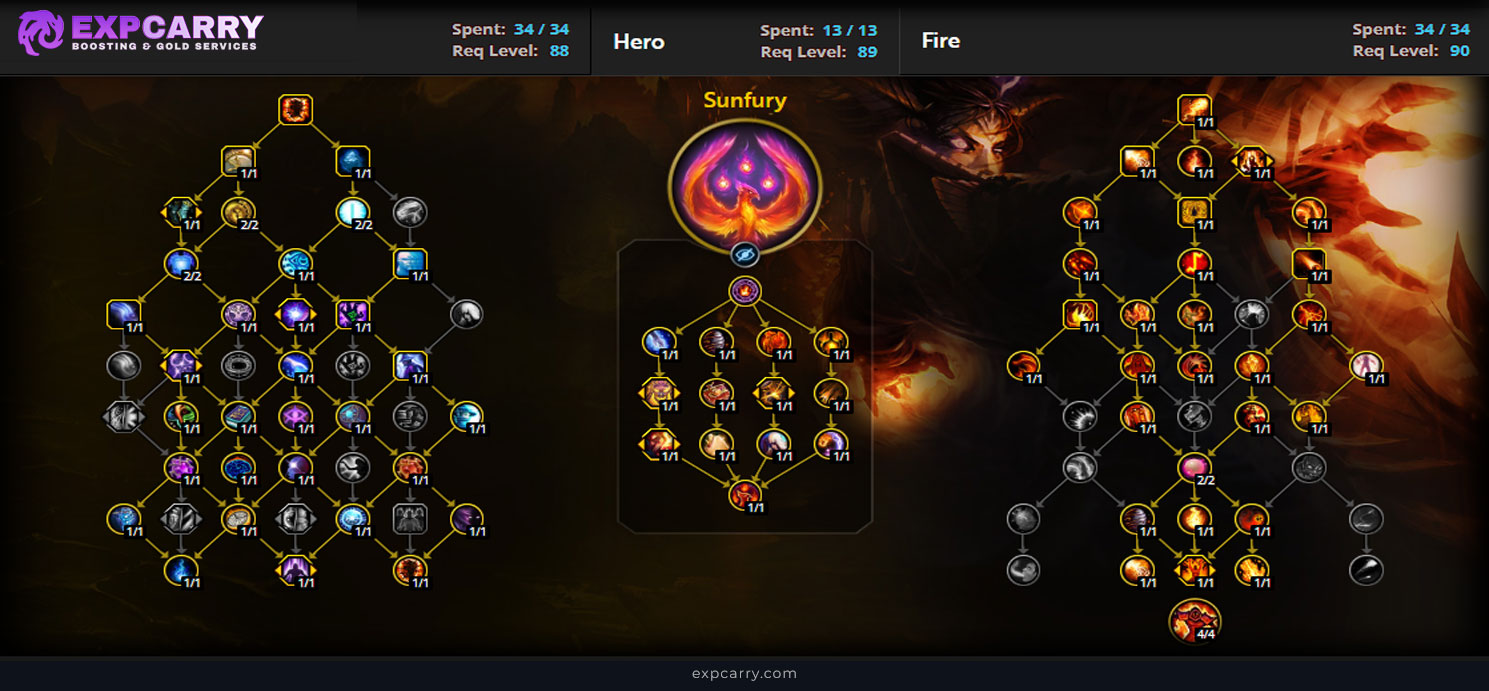
Wowhead currently lists Sunfury first for Mythic+, so that import is used below. Its Fire talents remain close to the raid setup, with class-tree adjustments providing dungeon utility such as Remove Curse, Spellsteal, and Supernova. Dragon's Breath can replace Supernova when a close-range disorient is more useful for the dungeon. The build retains Pyroclasm for the Season 2 set and uses Flamestrike from three targets onward.
Best Stats for Fire Mage Mythic Plus
Prioritize Intellect, then Haste, Mastery, Versatility, and Critical Strike as a general dungeon guideline. Haste improves Fire Blast availability and the number of actions possible during Combustion, while Mastery strengthens Ignite when pulls provide real cleave. Critical Strike remains the weakest broad secondary because Combustion, Pyroclasm, and other Fire mechanics already guarantee many critical hits. Use a Mythic+ simulation for trinkets, jewelry, and close item swaps.
Best Consumables, Enchants, and Gems for Fire Mage Mythic Plus
- Potion: Use Light's Potential for a planned large pull or boss damage window.
- Food: Use Harandar Celebration, Quel'dorei Medley, or Champion's Bento depending on whether the group provides a feast.
- Flask: Flask of the Magisters is the reliable option; compare Flask of the Blood Knights when optimizing a specific gear set.
- Enchants: Apply Acuity of the Ren'dorei, Mark of the Worldsoul, Eyes of the Eagle, and Sunfire Silk Spellthread to their respective slots, and use Thalassian Phoenix Oil on the weapon.
- Gems: Equip Powerful Eversong Diamond, activate its color requirements with the recommended Flawless gem families, and use Flawless Quick Amethyst in remaining sockets unless a simulation shows a better result.
Best Gear for Fire Mage Mythic Plus
Prioritize weapon and trinket upgrades, then raise item level without filling the character with low-value Critical Strike. Mythic+ can target missing slots repeatedly, while the Great Vault and bonus-roll system provide access to higher-track versions. Strong current trinket targets include Vile Vial of Volatile Venom and Gebbo's Bottomless Bag, but the final pairing should be simulated. Complete four pieces of Primal Leywarden's Attire so Pyroclasm guarantees critical Pyroblast and Flamestrike casts, reduces their cast time by 20%, and receives the additional 25% damage bonus.
Rotation and Ability Priority for Fire Mage Mythic Plus
Plan each Combustion around pull duration, target count, and the next major enemy rather than holding it indefinitely. Keep Fire Blast recharging, spend Hot Streak without overwriting it, and place Meteor where every impact will connect. Supernova or Dragon's Breath can stop dangerous casts, but coordinate these tools so they do not scatter enemies or overlap another player's control.
Single Target
On bosses, follow the Sunfury raid priority: spend Hot Streak on Pyroblast, use Fire Blast to convert Heating Up, and hard-cast Pyroblast with Pyroclasm. Activate Combustion near the end of a cast and alternate Pyroblast with builders while the buff is active. Use Fireball outside execute, Scorch below 30% health or during movement, and avoid capping Fire Blast charges while waiting for an ideal moment that never arrives.
AoE Rotation
At three or more targets, spend Hot Streak on Flamestrike instead of Pyroblast. Use Meteor around the largest stable packs, enter Combustion after enemies are grouped, and alternate Flamestrike with Fire Blast or other builders. Hard-cast Flamestrike with Pyroclasm when movement permits, preserve Ignite value by keeping targets together, and use utility stops before a dangerous cast forces the group to abandon its damage position.
Opener
As the tank establishes the pull, begin a Fireball or Pyroclasm cast and prepare Heating Up without spending Fire Blast into an active Hot Streak. Use Meteor when it will hit the complete group, activate Combustion just before the prepared cast finishes, and alternate Hot Streak Flamestrikes with builders. On a boss, use the single-target Pyroblast version of the same setup.
Explore services related to this guide, selected from our World of Warcraft catalog.
View All World of Warcraft Services


Fire Mage Delves Guide in Midnight Season 2
Delves require Fire Mage to combine burst with control, barriers, movement, and careful pull size. Instant Hot Streak spells allow damage while repositioning, but the Season 2 set also asks you to create safe moments for Pyroclasm hard-casts. Blazing Barrier, Alter Time, Shimmer, Mirror Image, and Ice Block or Ice Cold can stabilize elite encounters, while Dragon's Breath or Supernova interrupts an enemy long enough to finish an important cast.
Best Talents for Fire Mage Delves
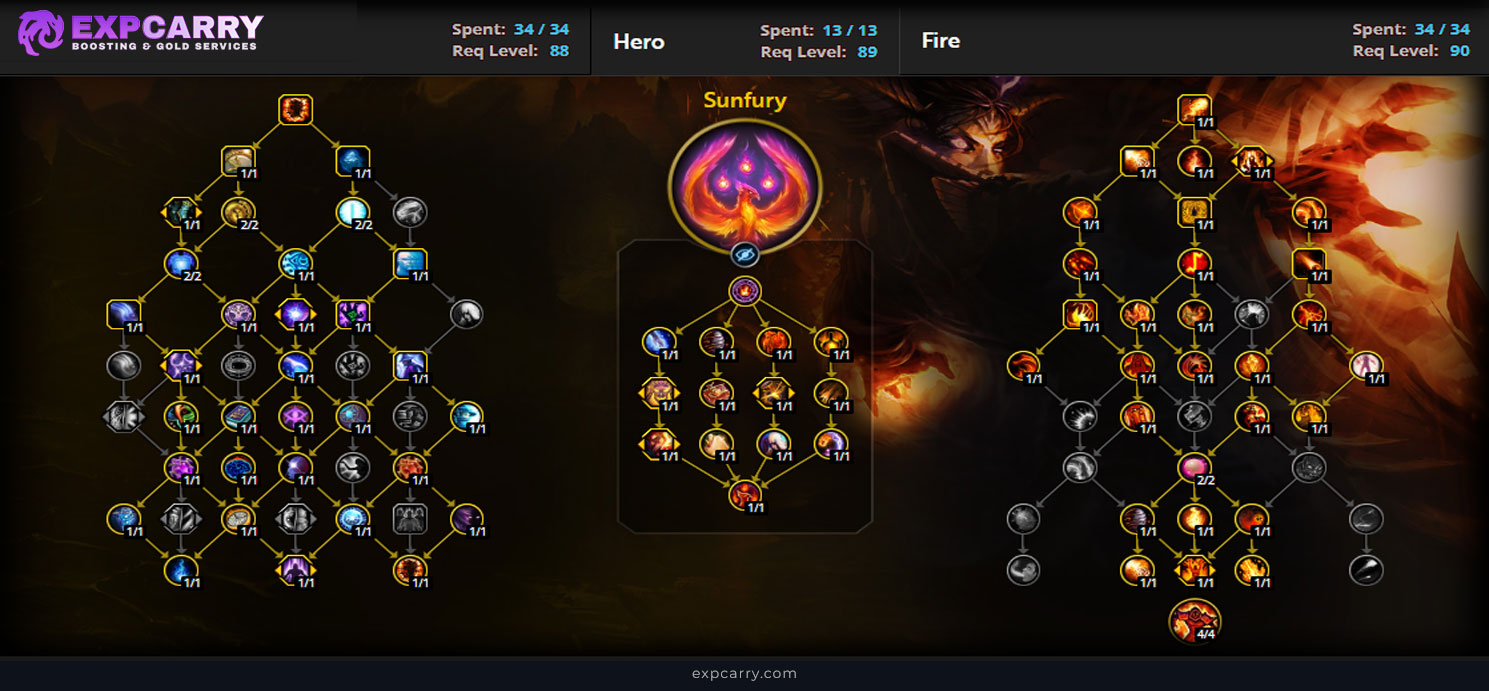
The import below intentionally duplicates the Mythic+ Sunfury code exactly, following the required article rule rather than using Wowhead's separate Frostfire Delve recommendation. It supplies the same Pyroclasm-based damage profile and useful class-tree tools as the dungeon setup. In solo play, utility choices can still be adjusted around the encounter, but the embedded talent string remains identical to Mythic+.
Best Stats for Fire Mage Delves
Intellect remains first, followed generally by Haste, Mastery, Versatility, and Critical Strike. The normal PvE priority provides the best damage foundation, but Versatility can become more useful when incoming damage rather than output is preventing progress. Item level still matters, so compare the entire upgrade instead of rejecting a strong piece because one secondary is not ideal.
Best Consumables, Enchants, and Gems for Fire Mage Delves
- Potion: Use Light's Potential for elite burst and keep Concentrated Silvermoon Health Potion available for emergency recovery.
- Food: Harandar Celebration, Quel'dorei Medley, and Champion's Bento are the current throughput choices.
- Flask: Use Flask of the Magisters, with Flask of the Blood Knights as a possible simulation-dependent alternative.
- Enchants: Use current caster enhancements such as Acuity of the Ren'dorei and Mark of the Worldsoul, together with Thalassian Phoenix Oil on the weapon.
- Gems: Start with Powerful Eversong Diamond and the required color mix, then use Flawless Quick Amethyst in remaining sockets unless damage or survival testing supports another choice.
Best Gear for Fire Mage Delves
Weapon item level remains a major damage increase, while passive or defensive trinkets can be easier to use consistently during solo encounters. Primal Leywarden's Attire is still the main Season 2 gearing goal: the 2-piece guarantees critical strikes for Pyroclasm Pyroblast and Flamestrike, and the 4-piece makes those casts 20% faster while increasing the Pyroclasm damage bonus by 25%. This reduces the time you must remain stationary during the most valuable hard-casts.
Rotation and Ability Priority for Fire Mage Delves
Build Heating Up and Hot Streak while controlling the approach, then commit Combustion only when an elite or full pack will survive long enough to justify it. Keep Blazing Barrier active before contact and identify a safe position for Pyroclasm. Fire Blast and Hot Streak preserve damage while moving, but spending every charge during a kite leaves no way to restart the chain once you stop.
Single Target
Against an elite, use Fireball to build Heating Up, convert it with Fire Blast, and spend Hot Streak on Pyroblast. Hard-cast Pyroblast whenever Pyroclasm is active and the enemy cannot interrupt or force movement. Enter Combustion near the end of a prepared cast, then alternate Pyroblast and builders. Use Scorch below 30% health or while relocating, and activate Alter Time before a predictable damage sequence.
AoE Rotation
Group enemies before committing Meteor or Combustion, then use Flamestrike from three targets onward with the Sunfury build. Convert Heating Up through Fire Blast, spend every safe Hot Streak, and hard-cast Flamestrike with Pyroclasm when control creates enough time. Dragon's Breath, Supernova, and roots should create distance or stop dangerous abilities rather than being spent without a specific purpose.
Opener
Begin from maximum range with Fireball or a Pyroblast hard-cast, build Hot Streak through Fire Blast, and use Meteor when the enemies are fully grouped. Activate Combustion immediately before the prepared cast finishes and alternate the correct Hot Streak spender with builders. Keep a defensive or movement charge available in case the target survives the initial window.
Best PvP Guide for Fire Mage in WoW Midnight Season 2
Fire Mage creates PvP pressure through instant Hot Streak damage, crowd control, frequent movement, and short offensive windows. Dragon's Breath, Polymorph, Counterspell, Blast Wave, and roots help isolate a target, while Alter Time, barriers, Shimmer, and Ice Block protect the Mage during counterpressure. Haste and Versatility provide a practical balance of faster actions and durability, but successful Fire PvP still depends more on coordinated crowd control and defensive timing than on a target-dummy rotation.
Fire Mage Solo Shuffle Guide
Solo Shuffle requires rapid target evaluation and defensive independence. Use Dragon's Breath or another stop to begin a crowd-control chain, then commit Combustion only when the kill target can be attacked without breaking control elsewhere. Preserve Shimmer for enemy uptime or line-of-sight changes, and trade Alter Time or Ice Block before incoming pressure becomes unrecoverable.
Best Talents for Fire Mage Solo Shuffle
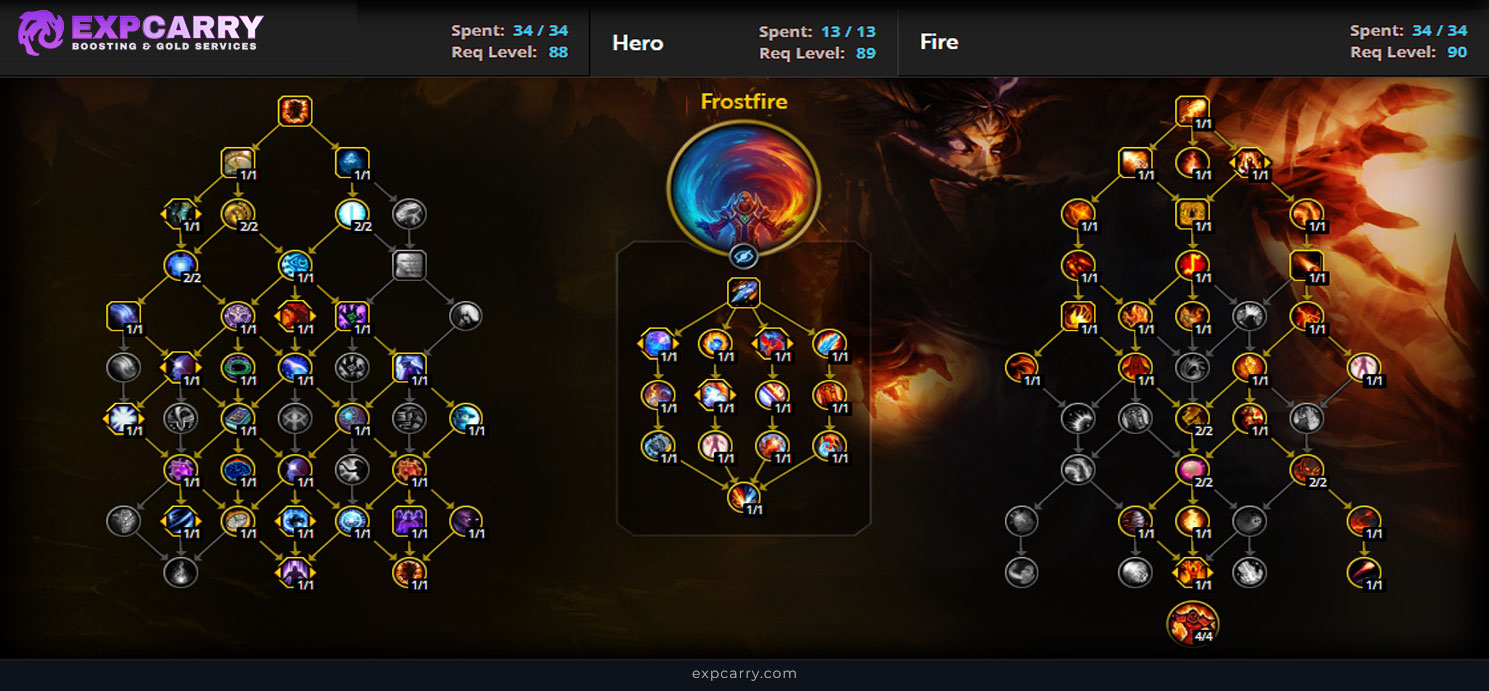
PvP talents must respond to the opposing lobby rather than remain fixed for every round. Glass Cannon can support aggressive damage when the additional risk is manageable, while defensive and control choices become more valuable against teams that can maintain constant pressure. The original PvP import code below is preserved exactly and has not been updated or replaced.
Best Stats for Fire Mage Solo Shuffle
- Haste
- Versatility
- Mastery
- Critical Strike
Best Consumables, Enchants, and Gems for Fire Mage Solo Shuffle
Use current PvP gear enhancements and gems that support Haste and Versatility, then adjust the remaining secondary distribution around the equipment available. Rated PvP does not use the same standard consumable plan as raid, Mythic+, or Delves.
Macros and Addons
Focus or arena-target Dragon's Breath, Polymorph, and Counterspell macros make setup changes faster. Track enemy trinkets, interrupts, major defensives, and diminishing returns before committing Combustion.
Fire Mage 2v2 Guide
In 2v2, Fire Mage wins through repeatable control rather than uncoordinated damage. Use Dragon's Breath, Polymorph, and partner crowd control to remove one opponent, then attack the other during the opening. Avoid overlapping Ice Block, Alter Time, and a partner's defensive cooldown, because every unnecessary trade weakens the next setup.
Best Talents for Fire Mage 2v2
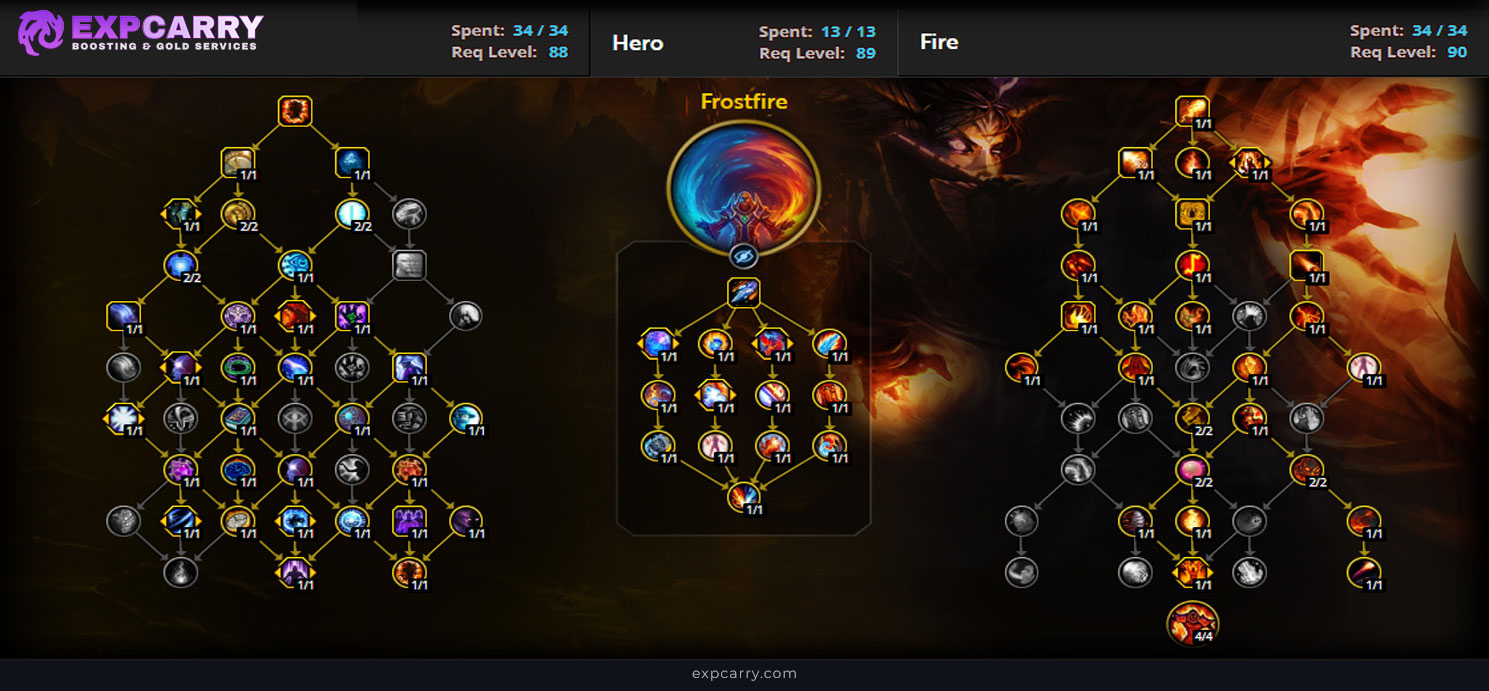
Select PvP talents according to the enemy composition, the map, and whether the match requires additional survival or stronger offensive pressure. Blast Wave and other control tools can protect a partner or deny melee uptime between Combustion attempts. As required, the supplied PvP import string remains unchanged.
Best Stats for Fire Mage 2v2
- Haste
- Versatility
- Mastery
- Critical Strike
Best Consumables, Enchants, and Gems for Fire Mage 2v2
Build the current PvP equipment, enchants, and gems around Haste and Versatility first. Refine the exact balance around the gear equipped and the amount of durability required for the composition.
Macros and Addons
Use focus Polymorph, Dragon's Breath, and stopcasting Counterspell macros for clean control sequences. Enemy cooldown trackers show when Combustion can be committed without running directly into an available interrupt or defensive.
Fire Mage 3v3 Guide
Fire Mage contributes to 3v3 through cross crowd control, instant damage, and repeated peels. Coordinate Dragon's Breath and Polymorph with partner stuns, fears, or silences, then focus Combustion damage into the unprotected target. Preserve Blast Wave, roots, and mobility for enemy offensive windows instead of spending every control tool during the first attack.
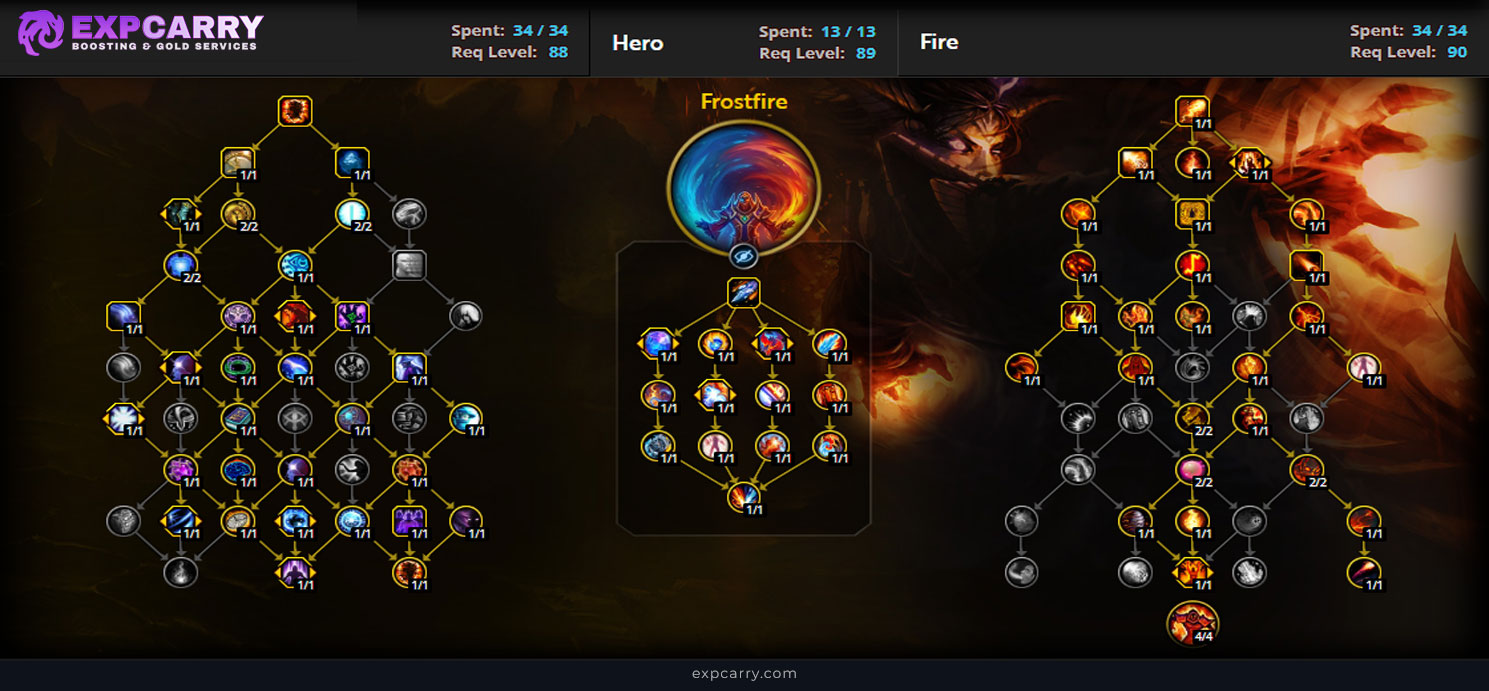
Best Talents for Fire Mage 3v3
PvP talents should reinforce the composition's setup and cover its weakest defensive matchup. Aggressive options can increase pressure when teammates provide protection, while defensive or control talents are safer against teams that consistently connect to the Mage. The original PvP import code remains exactly as provided.
Best Stats for Fire Mage 3v3
- Haste
- Versatility
- Mastery
- Critical Strike
Best Consumables, Enchants, and Gems for Fire Mage 3v3
Use current PvP enchants and gems that favor Haste and Versatility, then balance the remaining secondaries with the items available. The goal is dependable casting and survival under coordinated pressure.
Macros and Addons
Focus or arena-target Dragon's Breath, Counterspell, and Polymorph macros improve cross crowd control. Track trinkets, diminishing returns, and team defensives so offensive and defensive cooldowns are not overlapped.
Fire Mage RBG Guide
RBG Fire Mage focuses on objective pressure, ranged disruption, and fast attacks on isolated targets. Dragon's Breath, Polymorph, Counterspell, Blast Wave, and instant Hot Streak spells can interrupt a rotation or remove an exposed defender. Use Shimmer to maintain safe positioning around objectives and avoid chasing a target far enough to abandon the fight that matters.
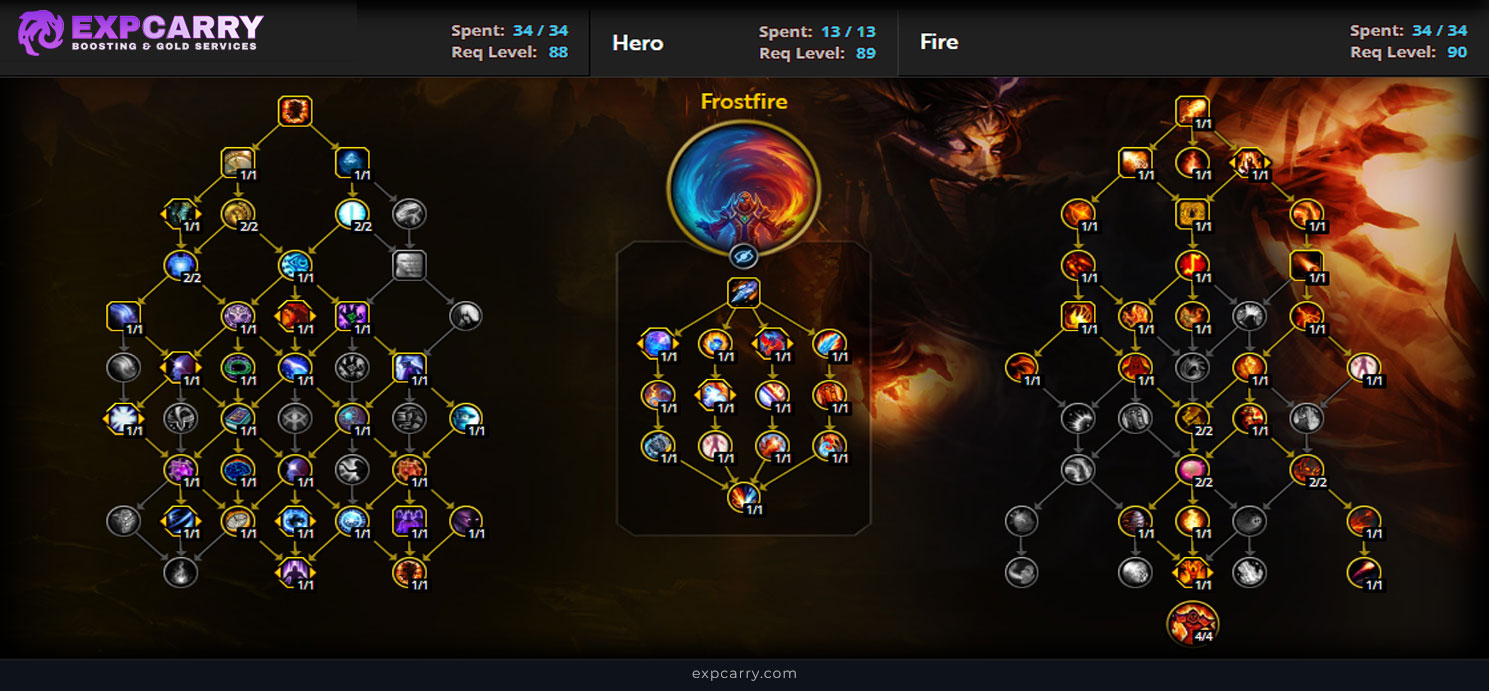
Best Talents for Fire Mage RBG
Talent choices should reflect the map, assigned role, and enemy composition. Control and mobility gain value when defending an objective or disrupting healers, while offensive options help finish a carrier or overextended target. The supplied PvP code is retained without any changes.
Best Stats for Fire Mage RBG
- Haste
- Versatility
- Mastery
- Critical Strike
Best Consumables, Enchants, and Gems for Fire Mage RBG
Use the current PvP gearing system, enchants, and gems to prioritize Haste and Versatility. Rated battleground preparation differs from the PvE consumable setup described earlier in the article.
Macros and Addons
Battleground enemy frames and objective timers help locate healers, carriers, and isolated defenders. Focus control macros preserve the current damage target while you interrupt or crowd control another opponent.
Conclusion
Fire Mage in WoW Midnight Season 2 combines Hot Streak management, planned Combustion windows, Pyroclasm hard-casts, and strong movement tools. Sunfury is the current recommended raid build and the first Mythic+ option listed by Wowhead, while the Delves section intentionally copies the Mythic+ import code. In PvP, Fire continues to rely on instant pressure, crowd-control chains, and disciplined use of Alter Time, barriers, mobility, and Ice Block.
Primal Leywarden's Attire is the defining Season 2 update. Its bonuses make Pyroclasm casts automatically critical, shorten Pyroblast and Flamestrike hard-casts, and increase the talent's damage bonus. This adds stationary casts to a specialization often associated with instant spells, so movement planning now has a direct effect on damage. Prioritize Intellect and Haste, keep Fire Blast from capping, spend Hot Streak cleanly, and enter Combustion with the resources and positioning required to finish the sequence.