
Aion 2 is NCSOFT’s new MMORPG in the Aion universe, and it is already live in Korea and Taiwan. That matters because it replaces guesses with real player experience: how combat feels, how the daily loop works, what the business model looks like in practice, and which parts of the game people argue about the most.
This article is written for the questions players actually search: how closely it follows Aion 1’s faction identity, whether it still feels like a PvPvE game where other players are the endgame, how harsh the monetization feels on live servers, what KR and TW players disliked right after launch, what the game does well, and what a Europe launch in 2026 might look like once early patches settle.
A quick reality check: live-service MMOs move fast. Systems get rebalanced, rewards get reshaped, and stores get rewritten when communities push back hard enough. The goal here is to capture the direction and the player experience so far, not to pretend every detail will stay frozen.
What you do every time you log in
If you have not followed every trailer and livestream, here is the simple picture. Aion has always been a faction MMO first. You progress through PvE, then that progression shows up in contested spaces where other players matter. Aion 2 keeps that identity, but packages it in a modern, menu-driven live-service style: structured activities, repeatable rewards, and a clear focus on keeping people busy across short sessions and longer weekend blocks.
Most sessions revolve around three things. First, you push your character through repeatable PvE content: instanced runs, gear upgrades, and routine objectives that raise your baseline power. Second, you spend that power in competitive spaces where factions collide and objectives are fought over. Third, you manage the “in-between” layer that often decides who stays strong over months: economy access, convenience systems, and how much friction you can remove from your grind.
That last layer is why Aion 2’s launch conversation got so intense. In a competitive MMO, convenience and power blur together quickly. Anything that speeds progression, unlocks trading, or removes pain points becomes a competitive advantage the moment your guild uses it more effectively than the guild across the map.
A realistic weekly cadence for solo players and guilds
Most players fall into a rhythm that will feel familiar if you have played any modern MMO. Weekdays are often “steady progress” time: shorter instanced runs, upgrades, farming materials, and checking whatever daily or weekly reward tracks are currently efficient. Weekends are where the faction game becomes the main game: longer sessions, coordinated pushes, and fights that you do not want to take alone.
If you enjoy being part of a group that plans nights, runs voice comms, and treats contested content like a sport, Aion 2 is built to reward that. If you prefer a quiet MMO where other people mostly stay out of your way, the best parts of the game can feel like the worst parts, because the faction loop assumes you will eventually collide with other players.
- Weekdays tend to be about upgrades and repeatable progression.
- Weekends tend to be about faction content, objective fights, and organized PvP.
- The game rewards coordination more than perfect solo execution.
Korea and Taiwan at launch: what the early mood looked like
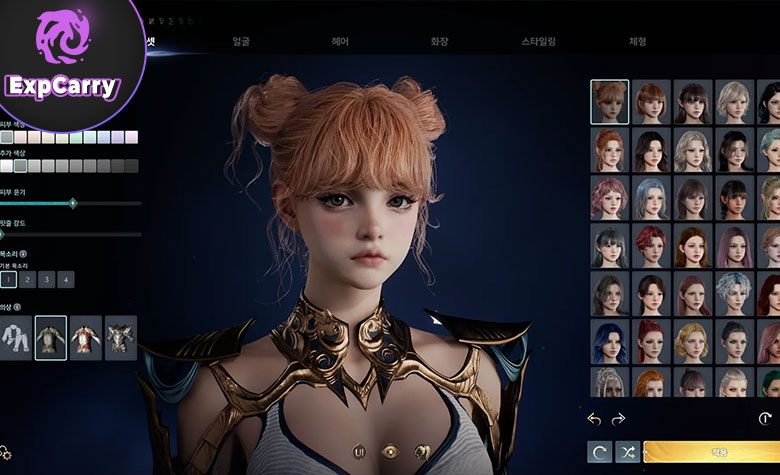
Aion 2 launched in Korea and Taiwan on November 19, 2025. The first impression was loud and polarized: curiosity and nostalgia on one side, frustration and distrust on the other. That blend is normal for big MMO launches, but Aion 2’s first days were especially defined by two topics that never stay small in a PvP-heavy game: stability and monetization.
Players who liked it often pointed to the obvious things: a new Aion, modern visuals, and a return to a faction MMO that is comfortable being competitive. That is a strong hook because the current MMO market has plenty of PvE-first games and fewer big-budget faction war games.
Players who disliked it did not focus only on one bug or one balance issue. The strongest criticism was about trust. Some players felt the business model crossed lines that are hard to accept in a game where other players are the endgame. Others complained that the launch experience had too much friction: maintenance, server issues, and that “rough edges on day one” feeling that can drain momentum fast.
What people praised, and what they dragged hard
The praise was mostly about identity and scale. Even critics acknowledged that a major Aion sequel landing as a live service is a big moment for the franchise. Players who miss faction rivalry liked seeing a modern game built around that fantasy rather than treating it as a side mode.
The dragging was mostly about perceived fairness. When the early conversation frames a game as pay-to-win, it becomes contagious: guilds hesitate to commit, casual players do not want to be target dummies, and competitive players assume the “real ladder” is spending. Even if the developer changes systems later, that first label sticks unless the studio makes very visible corrections.
One reason the topic escalated is that NCSOFT responded quickly in public. Very early after release, the studio held an emergency broadcast to apologize for technical problems and address monetization concerns. Whether those changes land well over time is the real story, but the speed of that response became part of the game’s reputation immediately.
- People liked the return of a big faction MMO with recognizable Aion flavor.
- People disliked anything that looked like paid advantage in a competitive game.
- Any future regions will inherit the reputation the live regions build first.
Monetization and competitive fairness: why it dominates every discussion
This is the topic that EU players search first for a reason. In a pure PvE MMO, a cash shop can be annoying without destroying the core experience. In a faction MMO, it is different. If paying affects progression speed, trading access, or combat outcomes, it shows up everywhere: in who wins fights, who controls objectives, and which guild becomes the one everyone else complains about.
Based on NCSOFT’s own pre-launch messaging, the business model leans on memberships and passes aimed at convenience, plus a wide set of cosmetics (costumes, weapon skins, pets, wings). It also mentions the ability to exchange in-game currency for premium currency, which is always a sensitive design choice in PvP ecosystems because it links the economy to cash behavior in indirect ways.
During the first days on live servers, monetization perception became the headline story quickly. Some of the loudest criticism centered on the feeling that “free-to-play” came with sharp limits, and that paid tiers or shop options touched systems that matter in competitive play. That is exactly the kind of controversy that forces emergency responses and fast patch cycles in modern live-service games.
A practical way to judge “fair enough” without endless arguments
Instead of debating labels, track outcomes. These are the questions that decide whether a faction MMO feels playable for normal people or only for spenders and extreme grinders. If the answers improve in KR and TW over 2026, Europe has a better shot at a cleaner start.
| Question players actually care about | Why it matters in PvP | What “healthy” tends to look like |
|---|---|---|
| Can you buy real combat power | Power purchases turn fights into spending contests | Cosmetics and mild convenience dominate, power is earned in-game |
| Do paid tiers gate core social systems | Trading and markets shape progression and dominance | Free players can participate without feeling locked out |
| Does the economy stay sane | Bots and whales can warp prices and progression speed | Visible enforcement, fewer loopholes, less bot profit |
| Does the studio react fast | Slow fixes kill trust and population momentum | Quick reversals when a system breaks fairness |
If you want one takeaway for EU: follow the KR and TW patch cadence with this checklist in mind. Aion 2 does not need to become “no shop ever.” It needs to become “competitive enough that normal players do not feel like targets.”
Explore services related to this guide, selected from our Aion 2 catalog.
View All Aion 2 Services
Core systems: flight, Abyss-style conflict, instanced PvE, and the grind
People can argue about monetization for weeks, but they only stay in a game if the loop is fun. For Aion, the loop has always had a recognizable shape: PvE progression, then PvP pressure in contested spaces, with flight and vertical movement making encounters feel different from a ground-only MMO.
Aion 2 keeps that skeleton. You progress through repeatable PvE, then you bring that progress into faction play. The Abyss is still a major keyword for veterans because it represents the place where your character and your guild matter most: objectives, points, and fights that feel meaningful because your faction’s position changes based on who shows up.
The other pillar is instanced content. Dungeons are not just “something to do.” They are the reliable engine of progression that makes the competitive side possible. A faction MMO without strong PvE progression becomes a war of whoever logs in the most. A faction MMO with structured PvE progression gives more types of players a path into the conflict.
What players describe first when selling the game to friends
When people explain Aion 2 in one minute, the same themes come up. Not because these are the only systems, but because they decide whether the MMO feels like Aion or like a generic live-service checklist.
- Flight and mobility that change positioning, chase patterns, and escape options.
- Abyss-style PvP and PvPvE pressure where factions collide over objectives.
- Dungeons and repeatable PvE that feed gear and long-term progression.
- Structured formats that let you practice PvP without always gambling in the open world.
A practical note for EU players: a lot of “is it good” depends on how these systems connect. If PvE rewards matter in PvP, PvE feels meaningful. If PvE and PvP are disconnected, PvE becomes chores and PvP becomes frustration. The best faction MMOs make the connection feel natural: you farm because it helps your faction, not because you are trapped in a checklist.
Sequel vs original: familiar DNA, modern delivery
Veterans will recognize the franchise DNA quickly. The faction conflict and aerial identity are the obvious pieces, but there is also a more subtle continuity: classic Aion was about pressure. You were always preparing for conflict, and you were always aware that other players could show up and change your plans.
The differences are about pacing and presentation. Aion 2 is built for a modern audience that expects structured activities, clear reward tracks, and a steady cadence of updates. It also leans into a more mobile-style UI approach in places, which can be great for accessibility and fast navigation, but can also feel “busy” if too many systems push you toward daily check-ins.
There is also a cultural shift in how players judge launches now. In the Aion 1 era, players accepted rough openings and slower fixes. In 2025 and 2026, players expect visible correction when something breaks trust. That is why the first day mattered so much. The studio’s response speed became part of the game’s identity, not just a temporary PR moment.
Quick comparison: the old Aion fantasy and the new live-service packaging
- Still familiar: faction rivalry, contested spaces, flight as a signature feature.
- More modern: structured formats, clearer daily and weekly loops, faster balancing cycles.
- More sensitive: store and economy choices become headline issues immediately.
If you are coming back for nostalgia, the best mindset is simple: chase the feeling, not the exact rules. If the faction war feels real, the game will feel like Aion. If paid systems distort the faction war, it will not matter how good the wings look.
Does it feel like Aion: the veteran checklist
This is the emotional core of the sequel. Players are not only asking whether it is set in the same universe. They are asking whether it produces the same kind of stories: rival factions clashing over objectives, alliances forming and breaking, guilds becoming feared, and individual players earning reputations-farm">reputations because they show up when it matters.
Aion 2 can deliver that if three things land well over time. First, the faction loop has to stay rewarding and active, not just a daily duty. Second, flight and mobility have to feel natural in real combat rather than awkward or overly restricted. Third, the rules of progression have to feel fair enough that people do not quit before the real conflict starts.
Those are not small requirements, but they are also the reason Aion has a unique slot in MMO memory. If you want to understand whether Europe will be excited or cynical in 2026, keep these pillars in mind while watching how the live regions evolve.
Global release window and what it could mean for Europe in 2026
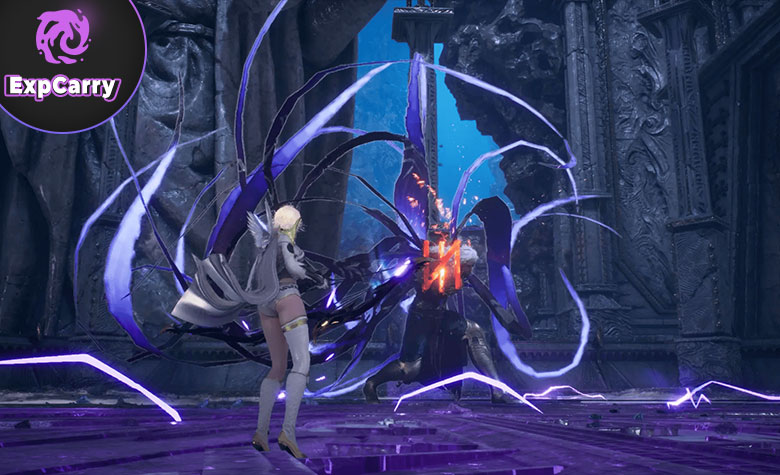
European players usually want a single date, but right now the more useful answer is a window and a set of signals. Public reporting around NCSOFT’s planning has pointed to a global launch target in the second half of 2026. That gives the live regions time to absorb patches, rebuild trust, and settle into a clearer direction before a Western release tries to grow a stable population.
In other words, Europe is not just waiting for servers. Europe is waiting for a version of the game that has already been shaped by real backlash, real balance issues, and real economy problems. That can be a benefit if the studio learns quickly. It can also be a risk if the same controversies keep returning with every major update.
Three signals that matter most for EU players watching KR and TW
If you want to plan without doomscrolling every thread, focus on three signals. They predict whether an eventual EU launch feels like a fresh start or like a delayed repeat of the same problems.
- Store boundaries: whether the shop stays away from power, and whether convenience remains reasonable in a PvP ecosystem.
- Economy control: whether bots, loopholes, and exploit routes get squeezed hard enough that normal players can keep up.
- Large fights: whether performance holds when real populations collide in the content that actually matters.
When Europe-specific details finally appear (servers, languages, publishing, account rules), they will matter, but these three signals usually decide the mood long before anyone reads a server list.
How to prepare for an EU launch without burning out
The easiest way to waste months is to treat a future EU release like a classic MMO launch race today. You cannot grind your way into a better launch, but you can prepare in ways that pay off no matter what patch changes. If you are joining with friends or building a guild, the real advantage is not a build guide. It is a repeatable process for adapting quickly.
Preparation in faction MMOs is mostly social. You want clear roles, clear expectations, and a culture that can handle setbacks. If your guild collapses the first time a patch nerfs a route or the first time a rival zerg pushes you out of a zone, you did not need better gear, you needed better structure.
A simple guild routine that stays useful even when the meta shifts
This routine sounds boring, but it wins in live-service games because it keeps your group flexible. It also protects you from the classic trap of grinding yesterday’s route for weeks after the game has already moved on.
- Short sessions during the week: steady upgrades, testing changes, keeping supplies and currency stable.
- Long sessions on weekends: faction objectives, group PvP, and contested content with meaningful rewards.
- After big patches: one discovery night before hard grinding, then update roles and priorities.
Conclusion
Aion 2 is already a real live-service MMO with a real reputation. The Korea and Taiwan release proved two things at once: there is demand for a modern faction MMO carrying the Aion name, and there is very little patience for monetization that feels unfair in a competitive game. The sequel’s long-term health will come down to whether the studio draws clear lines around the shop, protects the economy, and keeps large-scale content stable.
For Europe, the most useful approach is simple: watch how those pillars evolve across 2026, then decide whether you want to commit at launch or wait for the first wave of EU-side adjustments. If the game arrives with a fairer feel, strong performance in large fights, and a faction loop that creates real stories, it has a clear path to becoming the Aion revival many players wanted