

PoE 2 Patch 0.4.0d patch notes focus on endgame quality of life, clearer UI feedback, and a smoother Fate of the Vaal Temple experience. This update is not a full balance reset, but it targets several high-friction systems that affect daily farming efficiency, especially if you run Atziri’s Temple, build Temples often, or push Trial of Chaos for progression. Patch 0.4.0d also includes bug fixes that remove common “why did that happen” moments in endgame routing, Atlas setups, and skill behavior.
This article covers the PoE 2 0.4.0d changes that matter most in real gameplay: Temple boss respawns, improved Temple map information, safer Temple opening behavior, Holten placement improvements, UI clarity upgrades (buff names, spirit reservation display, character sheet defenses, anointment viewing), Trial of Chaos damage tuning, and key skill fixes. The goal is simple: help you understand what changed, why it matters, and what you should adjust in your routine after updating.
What Path of Exile 2 Patch 0.4.0d Is
Path of Exile 2 Patch 0.4.0d is an Early Access update aimed at consistency and usability. The biggest headline changes land in Fate of the Vaal content and Atziri’s Temple gameplay, where the patch reduces wasted runs, adds clearer planning tools, and makes boss attempts less punishing. At the same time, 0.4.0d improves several UI areas that directly affect build management and fight readability, such as spirit reservation values, enemy buff information, and defensive stat visibility. Finally, Trial of Chaos sees meaningful damage tuning that changes how dangerous specific outcomes feel, which can influence your risk management and farming speed.
If you mainly care about efficient progression, 0.4.0d is the kind of patch that quietly improves your session quality. Temple runs become less punishing, run planning becomes clearer, and several long-standing endgame bugs that hurt stability are addressed. You still play the same core loop, but the rough edges get smoother, which matters a lot when you repeat content every day.
Patch 0.4.0d Key Themes (Quick Overview)
PoE 2 patch notes can look massive because they list many smaller items, but 0.4.0d has a clear shape. The update is built around four big themes that affect most players: Temple improvements, smoother Holten mechanics in Fate of the Vaal, better information and UI clarity, Trial of Chaos damage tuning, and a strong set of bug fixes for endgame mechanics and skill behavior.
| Theme | Main changes in 0.4.0d | Why it matters |
|---|---|---|
| Temple of Atziri | Boss respawns, clearer room info, safer opening flow, better map feedback | Less wasted value per run and better planning |
| Fate of the Vaal | Holten placement variance improved, Energized Crystals re-enabled | Smoother encounters and fewer bad layouts |
| UI clarity | Enemy buff names, spirit reservation display, character sheet defenses, anointment viewing | Easier build troubleshooting and cleaner fight reads |
| Trial of Chaos | Boss damage tuning and monster damage adjustments | Changes risk level and consistency in runs |
Fate of the Vaal and Temple of Atziri Improvements
Patch 0.4.0d puts the spotlight on Temple gameplay because Temple runs are one of the easiest places to lose time and value through mistakes, unclear information, or harsh failure outcomes. If you run Temple content often, the patch makes your efforts more reliable. You can plan room upgrades with better information, avoid accidental Temple opens, and approach key boss fights with less “all or nothing” pressure.
Temple boss respawns and why they matter for farming
The most player-facing change in 0.4.0d is how deaths work in the Architect and Atziri boss fights inside Atziri’s Temple. If you die during these boss fights, you can now respawn into a new instance of the Temple with most other content removed, similar to how endgame maps work after a death. In practice, this means you do not lose your ability to finish the key boss objective just because you failed one attempt, but you also do not keep the full Temple value and clear path you built up before the fight.
This is a major quality-of-life improvement because it changes how players approach the Temple loop. Before 0.4.0d, many players played “Temple safe” by skipping high-risk boss attempts, especially on builds that were still gearing. That behavior is logical, but it makes Temple content feel inconsistent, because you are always deciding between risk and reward. With boss respawns available, you are encouraged to attempt the boss more often, learn the mechanics faster, and still complete progress objectives without feeling like the whole run is permanently dead.
If you care about efficiency, the best way to use this change is to treat Temple boss attempts as a repeatable skill check rather than a one-shot gamble. You still want a stable build because repeated deaths will still destroy the overall run value, but you can now practice and push more confidently without losing the ability to finish your main objective.
- Better for learning fights: more attempts, less “one mistake ends the run” pressure.
- Better for progression: you can still finish key boss tasks even after a death.
- Still has consequences: most other content is removed, so dying is not free.
Temple map clarity, room upgrades, and safer opening flow
Patch 0.4.0d improves Temple planning and reduces misclick mistakes, which is huge for players who run this content frequently. Room hover panels now show upgrade possibilities, Atziri’s Chambers has clearer text about unlocking rules, and the Temple map gives better feedback about whether a room is completed or unreachable. These changes do not increase your combat power directly, but they improve how accurately you can plan the Temple layout without guessing.
Temple mechanics are a planning puzzle, and planning tools determine whether the content feels rewarding or frustrating. Better upgrade visibility helps you make smarter decisions per run. Clearer unreachable feedback helps you avoid routing toward dead ends. There is also a small but important Temple fix: Atziri’s Chambers now correctly connects to any room placed next to it, reducing “this should work, why does it not connect” moments.
The update also adds a minimum requirement of placing at least one room before opening the Temple. This prevents accidental openings that waste a run. There is a bypass option for experienced players (hold Ctrl while clicking the Run Temple button) and a confirmation prompt for gamepad users. This safeguard is one of the best time-saved improvements in the patch because it removes a common way to throw away Temple value.
- Room upgrade planning is clearer, so you waste fewer runs on bad choices.
- Unreachable or completed room feedback reduces dead routes.
- Accidental Temple opens are harder to do by mistake.
- Atziri’s Chambers connections behave correctly, improving layout reliability.
Holten placement variance and Energized Crystals
Outside the Temple map itself, 0.4.0d improves Fate of the Vaal by adjusting Holten league mechanic placement variance and re-enabling Energized Crystals. This is a practical improvement because it reduces the number of runs that feel awkward purely due to layout placement, while restoring a system players expect to be present when interacting with the mechanic.
- Fewer frustrating Holten placements across runs.
- Energized Crystals are back, restoring expected mechanic value and flow.
Explore services related to this guide, selected from our Path of Exile 2 catalog.
View All Path of Exile 2 Services


UI Changes and Combat Clarity Updates
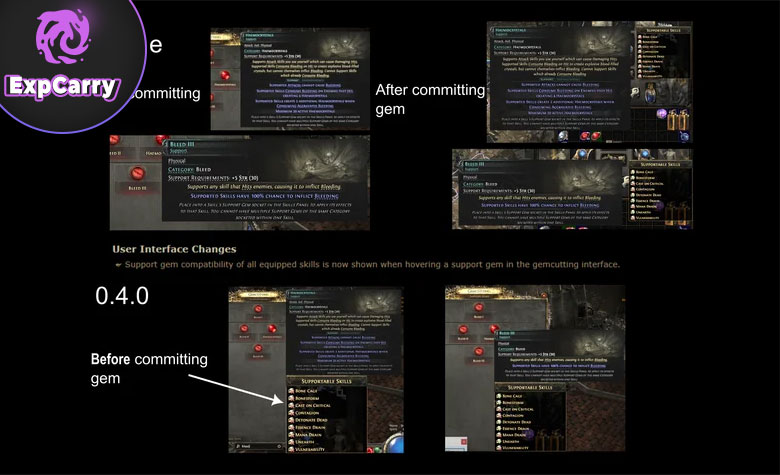
PoE 2 builds often feel strong or weak based on information clarity. When you know what is active, what is reserved, and what your defensive layers really look like, you make faster and better decisions. Patch 0.4.0d improves this in several places: enemy buff reading is clearer, reservation values are more transparent, and the character sheet shows more meaningful defensive numbers from items.
Better fight readability and build management
Enemy buff hover information now displays buff names, which improves combat readability in fights where enemies gain strong modifiers. This helps you understand why damage spikes happen, why a phase feels dangerous, or why an enemy suddenly becomes harder to kill. It also makes learning encounters less frustrating because you can identify what is active instead of guessing.
On the build management side, the character sheet now shows how much item armour, evasion, and energy shield you have. This makes gear swaps easier to evaluate without external tools. If you are making upgrades frequently, especially during early endgame, this is a real time saver because you can quickly confirm whether an item is improving your defenses or just moving stats around in ways that do not help your current setup.
Patch 0.4.0d also improves spirit reservation clarity. Skills that reserve spirit now display their final, modified spirit reservation value on the skill information popout. This matters a lot for builds that sit near reservation breakpoints. Instead of guessing whether a reduction applied correctly, you can read the final number and adjust immediately.
- Enemy buff names reduce confusion in high-pressure fights.
- Defensive stats from items are easier to track for upgrades.
- Final spirit reservation values make reservation setups faster to tune.
Anointment viewing without Distilled Emotion and small clarity upgrades
One of the most convenient quality-of-life upgrades in 0.4.0d is anointment visibility on Notable passives. You no longer need to pick up a Distilled Emotion just to see anointment options. You can now hold ALT while hovering a notable passive to view the available anointments on any character. This is a big improvement for planning, because it removes a pointless extra step and makes tree decisions easier to map out.
There are also a few small UI and readability improvements worth knowing about. Socketing an augment now shows distinct art representing the actual augment, rather than a generic rune image, which reduces socketing mistakes when managing multiple items. The patch also adds an information popup when hovering the button to run Logbooks, clarifying that you must select a destination area first. Finally, the Slow keyword is now clearer: monsters cannot be slowed below 25% of their base speed, which helps players understand realistic slow stacking limits.
- ALT-hover anointments makes passive planning faster and cleaner.
- Augment socket art reduces setup mistakes on complex gear.
- Logbook hover info reduces confusion during expedition routing.
- Slow floor clarity helps you plan real defensive expectations.
Trial of Chaos Damage Tuning
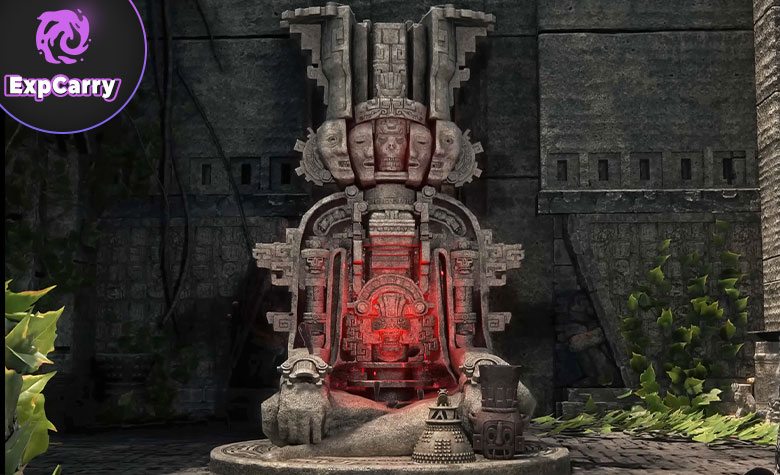
Trial of Chaos is an activity where small tuning changes matter because failures are often sudden and expensive. Patch 0.4.0d adjusts damage values for key bosses inside Trial of Chaos, and it also changes damage for a specific monster family. This does not rewrite Trial of Chaos, but it changes which outcomes feel predictable versus spiky, and it can shift which runs feel farmable depending on your build’s defensive profile.
Boss and monster damage changes you will actually feel
Patch 0.4.0d lowers the overall damage dealt by Bahlak, The Sky Seer, and increases the overall damage dealt by Uxmal, the Beastlord. This matters because many players experience Trial of Chaos difficulty as a “boss roll lottery”, where one boss feels far more dangerous than the others. By lowering one outlier and raising another, the patch aims to make the difficulty spread more even across boss outcomes, even if it does not make the activity universally easier.
The patch also increases damage for all Quadrilla monster variants. This is the kind of change that can catch players off guard because it impacts regular combat pressure, not just boss moments. On the other side, damage has been reduced for Vornas, the Fell Flame, and Morvak, the Infernal, which should reduce some extreme spikes for builds that struggled with those encounters.
The practical advice here is to recalibrate your expectations. If you used to breathe easy when you saw Uxmal, you should now respect that fight more. If Bahlak was a frequent reason your run collapsed, the reduced damage should make those attempts feel more controlled. And if your build is borderline on defense, you may notice the Quadrilla change first, especially in cramped situations where multiple threats overlap.
- Bahlak is less spiky, so some runs become more consistent.
- Uxmal is more dangerous, so do not autopilot that fight.
- Quadrilla pressure rises, so pay attention to stacked threats.
- Vornas and Morvak spikes are reduced, helping some builds stabilize.
Skill Fixes and High-Value Bug Fixes
Patch 0.4.0d includes multiple skill behavior fixes and a long list of endgame bug fixes. Most players will not notice every single one, but several are meaningful for build performance, targeting consistency, and routine gameplay flow. If you had a setup that felt off, 0.4.0d is worth revisiting because some issues were mechanical rather than purely balance.
Skills that now behave more consistently
Phantasmal Arrow no longer targets the ground, which fixes various range bugs it had with additional projectiles and Barrage. If you tested projectile scaling setups and felt inconsistent targeting or unexpected misses, this fix can make the skill feel cleaner and more reliable in real fights. These are the kinds of issues that can silently reduce DPS, even when your numbers look good on paper.
Spectral Fire also receives an important mechanical correction. It now uses the player’s stats for calculating area of effect and dealing damage. This aligns the skill with how players expect scaling to work when investing in stats that should affect AoE and damage behavior. The patch also updates Spectral Fire keyword wording to correctly state that damage modifiers do not scale the explosion further. This is a description clarity change, not a hidden tuning pass, but it matters because it makes Spectral Fire easier to evaluate honestly when testing.
- Phantasmal Arrow targeting becomes more reliable in projectile setups.
- Spectral Fire scaling is more consistent and more transparent for testing.
Endgame fixes that reduce wasted runs and broken outcomes
Several bug fixes in 0.4.0d address endgame systems that could waste time or break content flow. One notable fix resolves an issue where The Immured Fury would not spawn. Endgame content that fails to spawn correctly is one of the worst player experiences because it turns a run into nothing, so fixes like this increase overall reliability of farming and progression attempts.
The patch also fixes multiple Atlas passive issues for Abyss content. Depths Chance bonuses now correctly apply to Boss Depths Chance, and faction-specific nodes that were boosting the wrong faction have been corrected. For players optimizing Atlas setups, these fixes matter because they make passive investments behave as expected. If your Abyss results felt wrong compared to your point investment, 0.4.0d can meaningfully improve consistency.
There are also smaller but important skill and mechanic fixes that smooth out everyday play. Devour can now correctly consume your minions when Sacrifice is active, and several cases of getting stuck on objects while using Rend and Devour were fixed. Fate of the Vaal encounters in specific areas now correctly grant a guaranteed reward, reducing “empty” feeling outcomes. While these fixes are not flashy, they are the kind that make endgame feel less random in the worst ways.
- Fewer broken spawns and dead-end runs.
- Atlas passives behave more consistently for endgame planning.
- Less skill jank from edge cases in common ability loops.
Practical Plan: What To Do After Updating
The best way to benefit from PoE 2 patch 0.4.0d is to treat it as a routine upgrade to your farming loop. If you run Temple often, spend a few sessions re-learning the new hover information so you can plan room upgrades faster and avoid unreachable routes. The updated UI makes it easier to build smarter Temples, so take advantage of it and reduce wasted placement decisions. Also, consider attempting Architect and Atziri fights more often. The new respawn behavior means you can practice and complete objectives more reliably, even if you are still gearing.
If you farm Trial of Chaos, adjust your risk management for the boss tuning changes. Uxmal now hits harder, so do not treat that fight as a free win. Quadrilla monsters now deal more damage, so pay attention to stacked threats during your run, especially in cramped scenarios. If you struggled with Vornas or Morvak damage spikes, the reduced damage may help consistency. The best strategy is to re-check your defensive comfort level and avoid autopiloting fights until you feel the new tuning in practice.
If you are actively testing builds, 0.4.0d is a good moment to re-test any setups that felt mechanically inconsistent. Projectile builds using Phantasmal Arrow with Barrage and additional projectiles are the obvious example, but any build that relies on precise targeting should feel more predictable. For reservation-heavy builds, use the updated spirit reservation display to tighten your setup without wasting time guessing values. For planning-heavy players, the new ALT-hover anointment visibility is an easy win, so use it to map your tree options more efficiently.
Conclusion
PoE 2 Patch 0.4.0d is a strong endgame quality-of-life update that improves Fate of the Vaal Temple runs, increases UI clarity, and makes repeated content feel more consistent. The most impactful changes are Temple of Atziri improvements, including boss respawns for the Architect and Atziri fights, better Temple map feedback, clearer room upgrade information, and safer Temple opening behavior. Holten placement variance is improved and Energized Crystals are re-enabled, smoothing the overall league mechanic experience. The patch also upgrades combat readability with enemy buff names, adds more meaningful defensive stats to the character sheet, shows final spirit reservation values on skill popouts, and makes anointment viewing available via ALT-hover without needing a Distilled Emotion. Trial of Chaos receives damage tuning that lowers Bahlak’s overall damage while increasing Uxmal’s, alongside broader monster and boss adjustments that affect run risk. Finally, a long list of bug fixes improves endgame reliability, Atlas passive behavior, and skill consistency. If you want smoother farming and fewer wasted runs, 0.4.0d is a patch you will feel immediately in daily play.