
Aion 2 Season 2 is a full endgame refresh built around three big goals: more PvE variety, a more active Abyss with additional contested zones, and quality-of-life systems that reduce wasted progression when you upgrade gear or change builds. It is not just a seasonal reset. It changes what you run each week, where PvP fights happen, and how rankings reward performance.
This guide breaks down Season 2 by category: every new PvE activity and dungeon type, what exactly changed in the Abyss (layers, bosses, and faction balance rules), how the new ranking logic works, and which QoL updates actually matter for power growth. Use it as a “what to do first” map so you do not waste your first week running low-impact content.
Season 2 Overview (Everything New at a Glance)
If you want the fast scan, this table shows the full Season 2 scope. The rest of the article expands each line with details, priorities, and what to focus on first.
| Category | What’s new in Season 2 | What it changes for players | Best priority |
|---|---|---|---|
| PvE core | New Expedition: Dramata’s Nest (official name: Dying Dramata’s Nest) | New primary group farm loop and weekly anchor | Run early, then farm consistently |
| PvE bosses | Nightmare content expands into a larger boss cycle (part of it is new) | More rotating targets, better “best run” focus | Learn patterns first, push clean clears later |
| Endgame difficulty | Higher tiers added (Extreme / Despair / Hell) for multiple PvE lanes | More challenge and better efficiency for strong groups | Only push after stable baseline clears |
| PvP battlefield | New CTF-style battlefield: Stormy Snowfield | More structured PvP with record-based scoring value | Play after you have a stable build preset |
| Abyss structure | Lower layer boss spawns change + brand-new Abyss mid layer | More conflict points and less single-choke gameplay | Enter with planned timing and a party |
| Faction balance | Underdog buff added for Artifact Occupation | Less snowballing and more playable PvP cycles | Use buff windows for productive fights |
| Rankings & rewards | Rankings shift to best-record scoring + class-based season rewards | Quality runs matter more than endless spam | Push record runs when fully prepared |
| QoL power systems | Equipment inheritance (succession), new Soul Imprint options, extra tuning slots | Less wasted upgrades, more build flexibility | Use inheritance on long-term pieces |
| Cosmetic/QoL | Wardrobe improvements and appearance sharing changes | Less inventory friction, better alt convenience | Clean storage and standardize your presets |
New PvE Content (What to Run and Why It Matters)
Season 2 is PvE-heavy, but the key is understanding what is “baseline farm” and what is “push content.” Baseline farm is what you do repeatedly because it reliably converts time into upgrades. Push content is what you do when your group is stable and you want faster progression efficiency.
If you treat every new thing as mandatory on Day 1, you will burn your playtime and your resources without actually improving your character. The clean approach is to anchor your week around one or two high-value activities, then add the rest only after your core clears are consistent.
Entry Requirements and What Becomes Your True “Week 1 Gate”
One important Season 2 detail that many players miss is that some of the new endgame content is designed around a clear entry baseline. The new Rank 4 dungeon tier and the new Abyss mid layer are commonly tied to a 3000 Gear Score threshold, meaning your “real week 1 plan” depends on whether you already meet that number or you are still building toward it.
If you are already at the threshold, your first week is about organizing your routine so you turn time into upgrades efficiently. If you are below it, your first week is about accelerating Gear Score progression so you do not waste days trying to brute-force content that is not meant for you yet. This is where Season 2 QoL systems and smarter content selection matter more than raw grind.
Use this mindset: your first goal is unlocking, your second goal is stabilizing, and your third goal is pushing records. If you skip straight to “push,” you will wipe, lose time, and probably burn your group out.
Expedition: Dramata’s Nest (Your New Weekly Anchor)
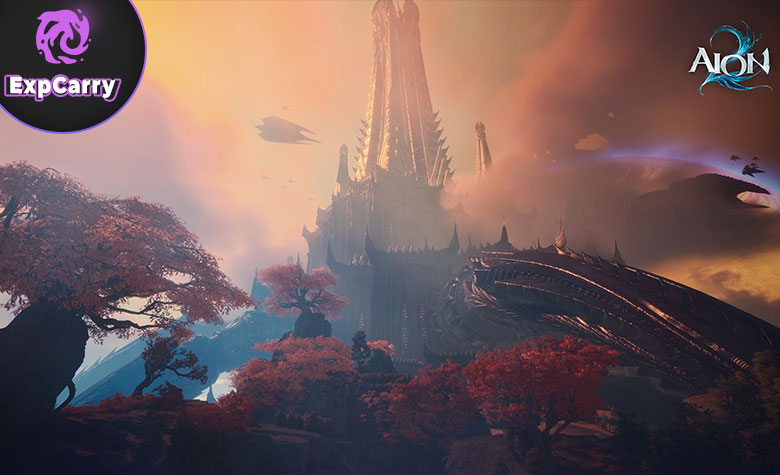
Season 2 introduces a new Expedition dungeon, Dramata’s Nest (you may see it written as Dying Dramata’s Nest or “Dead Dratama Nest” depending on translation and community wording). This is not side content. Expeditions are built as your repeatable core PvE loop, meaning they are designed to be run frequently and to deliver consistent progression value. For most players, this is the first Season 2 activity that should become part of your routine.
How to approach it correctly as a normal player: your first goal is not speed, it is stability. Clear it cleanly, learn the pacing, learn how your party deals with mechanics, and only then start pushing efficiency. A stable clear that you can repeat every week beats chaotic wipes in harder modes, especially early in the season when everyone is still adapting.
What you should take away from Expedition content in Season 2 is simple: treat it as your “guaranteed progress” bucket. If you only have time for one thing on a busy day, this is the content you want to rely on.
Nightmare Expansion (A Larger Boss Cycle, Better “Best Run” Value)
Nightmare content expands in Season 2, and this is one of the most misunderstood changes because different sources describe it differently. The clean and accurate way to think about it is this: Nightmare now functions as a bigger boss cycle, and a meaningful portion of those bosses are new. Some community summaries talk about “six new bosses,” while official messaging also frames it as “seven boss monsters within Nightmare content.”
In practice, the important part is not the number, it is the effect on your gameplay loop. Nightmare becomes more than “farm the same fight forever.” You get more variety, more pattern learning value, and more chances to choose a target that matches your build strengths.
Another key detail: many players treat Nightmare as a solo-focused progression mode rather than a standard party dungeon. That matters for your build planning because solo consistency is less forgiving than party play. If your tuning and Soul Imprint setup are messy, Nightmare will expose it immediately. Use Nightmare as feedback. If you cannot stabilize, do not brute-force harder stages. Fix your build baseline first, then return and convert your time into clean, repeatable clears.
Since rankings shift toward best-record scoring in Season 2, Nightmare is exactly the type of content where one clean execution run can matter more than several sloppy clears. Once you understand a boss, the goal becomes consistency and fewer mistakes, not reckless speed.
New dungeons-service">dungeons-services">Dungeons and New Difficulty Tiers (Extreme / Despair / Hell)
Season 2 expands upper difficulty tiers across multiple PvE modes. The names you will see in the community include tiers like Extreme, Despair, and Hell. This is not just difficulty for ego. It changes time efficiency for strong groups. If you already clear the baseline reliably, pushing higher tiers can convert the same playtime into faster progression.
But there is a trap: pushing too early. If your group is not stable yet, you will waste time wiping and your net progression will drop. A strong Season 2 plan is to clear the baseline tier first, then scale upward only when your party can do it consistently without tilt and disbands. High difficulty content is for coordinated groups, not for random “let’s see what happens” sessions.
Use this table as the practical PvE priority map. It separates what is “must-run baseline” from what is “push later.”
| PvE mode | Season 2 addition | Main reward value | Week 1 priority | Best approach |
|---|---|---|---|---|
| Expedition | Dramata’s Nest | Core repeatable progression | High | Learn first, then farm consistently |
| Nightmare | Expanded boss cycle (partly new) | Pattern mastery + record-based value | High | Stability first, record runs after |
| Raid battles | New mechanics + higher tiers | Better efficiency for strong groups | Medium | Push only after baseline stability |
| Awakening dungeons | New mechanics + higher tiers | Alternative upgrade path | Medium | Pick one lane to focus resources |
| Event PvE | Shugo Festa: Pang Pang Pang | Bonus rewards and quick value | Low | Do it as a filler, not as your main grind |
New PvP Mode (Stormy Snowfield CTF)
Season 2 adds a new battlefield called Stormy Snowfield, built around a capture-the-flag style objective loop. This matters because it creates a structured PvP lane that is not “random Abyss chaos.” You have a clear win condition, predictable team roles, and a mode where coordination directly turns into better outcomes.
Best-record ranking logic makes modes like this more important than many players expect. In an old accumulation system, you could spam games and brute-force progress. In best-record scoring, your clean games become your real value. A sloppy win can be less useful than a clean, high-performance match depending on how the record system evaluates you.
The best way to approach Stormy Snowfield is to treat it like a scheduled session rather than a “queue whenever bored” mode. Build a stable PvP preset, decide your job (flag defense, interception, disruption, or teamfight), and aim for consistency. If your group has even basic coordination, this mode becomes one of the most efficient PvP lanes to improve in Season 2.
Explore services related to this guide, selected from our Aion 2 catalog.
View All Aion 2 Services


Abyss Changes (Mid Layer, Boss Spawns, and Better PvP Flow)
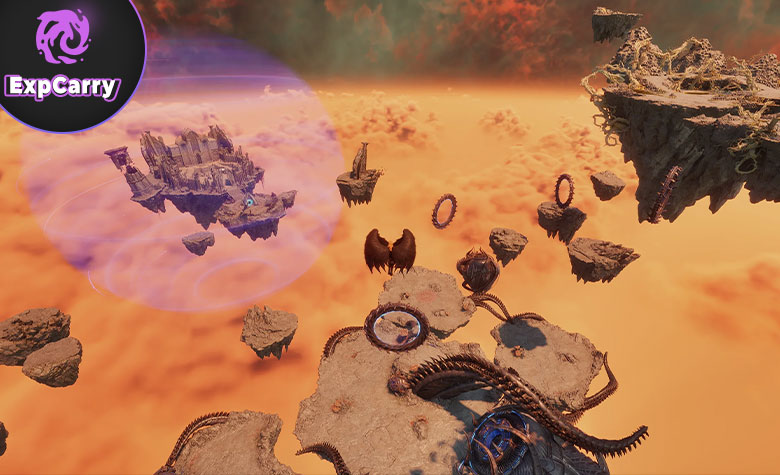
Season 2 expands Abyss content so it has more active fight points and less single-location chaos. The practical effect is that Abyss becomes easier to engage with if you are not in the biggest faction blob, and fights are less likely to become “one side dominates forever and the other stops showing up.”
The two biggest mechanical changes you will notice are the boss spawn changes in the lower layer and the addition of an entirely new Abyss mid layer. Both changes exist to create more PvP opportunities and to force population splitting so battles are not always decided by whoever shows up with the largest single group.
Lower Layer: Nahma Objective Spreads Out (Less One-Point Deathball)
In Abyss lower layer, the Guardian General Nahma encounter changes from a single “everyone piles onto one boss” objective into multiple objective points. The practical purpose is pacing and participation. When there is only one target, the whole map becomes a single choke point, and smaller groups either get deleted instantly or do not participate at all.
With more objective locations available during the window, the map naturally splits activity. Smaller teams can choose a route, factions have to decide where to commit power, and fights become more frequent and less “all or nothing.” This improves the Abyss experience even if you are not a hardcore PvP player, because it creates more consistent opportunities to participate instead of one giant fight you cannot realistically join.
To use this system correctly: do not wander the layer aimlessly. Pick an objective route with your group, commit to it, and treat it as a timed event. You will get far better results with planned positioning than with random searching.
Abyss Mid Layer Added: Enraged Nahma and New Contested Routes
Season 2 introduces a new Abyss mid layer, tied to an entry baseline that commonly aligns with endgame Gear Score expectations. This mid layer is not “more of the same.” It is a new battlefield concept meant to expand conflict into additional routes and reduce the feeling that Abyss is decided only by the biggest blob in one spot.
For most players, mid layer is a planned PvP session zone. You want to enter with a party and with a goal. If you go in solo and late, you usually become free points for organized groups. The value of the mid layer is not random wandering, it is predictable contest zones and structured fights around objectives.
If you care about efficiency, treat mid layer as a scheduled event. Go when your faction is active and when you can realistically fight for objectives, not when you are bored and alone.
Artifact Occupation: Underdog Buff to Reduce Snowballing
Artifact Occupation in Season 2 adds a balancing mechanism that provides buffs to the faction that is currently behind. This is important because Abyss PvP dies when one side snowballs too hard and the losing side stops participating. When that happens, even the winning side loses, because the content becomes empty and rewards become inconsistent.
The underdog buff system exists to keep fights playable and to keep the cycle alive. The practical win for normal players is more consistent battles and fewer “we already lost the server” situations. The correct way to use this is not to take suicidal fights, but to take smart fights during buff windows when your faction can actually contest objectives.
| Abyss feature | Season 2 change | What it improves | Best player behavior |
|---|---|---|---|
| Lower layer objectives | Nahma encounter spreads across multiple objective points | More participation, less one-point chaos | Pick a route and commit with a party |
| Mid layer | Mid layer added with Enraged Nahma objectives | More contested zones and fight variety | Enter on schedule with a group, not solo |
| Artifact Occupation | Underdog buff for the losing side | Less snowballing and better participation | Use buff windows for productive fights |
Rankings and Season Rewards (Best Record + Class Leaderboards)
Season 2 changes the ranking logic from accumulation-based scoring to best-record scoring. That is a massive behavioral shift. In an accumulation system, grinding more always wins. In a best-record system, your best run matters more than your total run count, which rewards preparation, coordination, and clean execution.
This ranking shift also makes the game less exhausting for normal players. You no longer need to spam content endlessly just to keep up. You need to produce a strong record run in the modes you care about, then maintain your progression without burning out.
How Best-Record Scoring Changes Your Weekly Routine
Best-record scoring means you should plan “serious” runs, not just spam attempts. Your first clears should be learning and stabilization. Once your group knows the mechanics and your build is tuned properly, that is when you push for record attempts. This is how you climb leaderboards efficiently without wasting time on chaotic runs that do not improve anything.
Do not push record attempts when your party is unstable, half-geared, or experimenting with random setups. That is how you waste your best opportunity windows. Stabilize first, then push. You will get better results with fewer attempts.
If you want a simple rule: do learning runs early in the week, then do record runs when everyone is focused and prepared.
Season Rewards by Class Ranking (Why This Is a Big Improvement)
Season 2 improves season reward distribution by tying rewards to class-specific rankings rather than only one mixed ladder. This matters because class performance does not always scale equally in every meta. A class-based ladder makes competition feel more fair and makes “master your class” a real strategy instead of “reroll what is strongest right now.”
For players who care about rewards, the best approach is to pick one build direction and commit. Constantly swapping builds will slow your progress and reduce your best-run quality. Season 2 ranking logic rewards consistency more than chaos.
| System | Season 2 change | What it rewards | Best strategy |
|---|---|---|---|
| Leaderboard scoring | Best record instead of cumulative | Clean execution and preparation | Schedule record runs when stable |
| Season rewards | Rewards distributed by class ranking | Class mastery and consistency | Stick to a focused build path |
QoL and Power Systems (Inheritance, Soul Imprints, Tuning Slots)
Season 2 QoL is not cosmetic fluff. It directly protects your power progression and reduces wasted upgrades. If you play multiple builds or upgrade gear frequently, these systems can save you a huge amount of time over the season.
The important part is using these systems correctly. A lot of players waste QoL power systems by applying them too early on temporary items. Season 2 rewards players who invest smartly into long-term gear and then maintain flexibility through tuning and imprint options.
Equipment Inheritance (Succession) and What It Actually Protects
Equipment inheritance (often called succession or transfer) is designed to move meaningful upgrade investment from one item to another of the same type. The core value is reducing the “reset pain” when you replace gear. If your old piece has real enhancement value and Soul Imprint investment, inheritance lets you carry progress forward instead of starting from zero again.
The smart way to use inheritance is on long-term upgrades, not short-term stepping stones. If you inherit onto gear that you will replace again soon, you waste the system’s value. Your best inheritance targets are the pieces you are confident will stay in your main set for a long time.
This system also improves build flexibility. It supports changing your setup without deleting the time you already put in, which matters a lot when Season 2 introduces new content, new tuning expectations, and best-record ranking pressure.
| Inheritance decision | Good target | Bad target | Why it matters |
|---|---|---|---|
| When to inherit | Main set piece you plan to keep long-term | Temporary “bridge” gear you will replace fast | Inheritance saves the most time when upgrades would be truly wasted |
| How to profit | Transfer to stabilize progression and keep momentum | Transfer impulsively for small upgrades | Small upgrades do not justify burning your flexibility too early |
New Soul Imprint Options and Extra Tuning Slots (Build Flexibility That Matters)
Season 2 adds new Soul Imprint options and additional tuning slots. This matters because it expands your build correction tools. Instead of feeling locked into one rigid setup, you can patch weaknesses, adjust for specific bosses, or shift between PvE and Abyss performance more smoothly.
For normal players, the biggest benefit is simple: fewer “dead builds.” If you realize your character feels weak in a specific mode, you have more ways to adjust without rebuilding from scratch. For competitive players, this raises the optimization ceiling and makes best-record pushing more interesting because tuning decisions can be the difference between an average run and a record run.
If you want to progress fast, focus on tuning for survivability and consistency first. Once you can clear reliably, tune for speed and output. That order prevents wasted wipes and makes your weekly routine smoother.
Wardrobe Improvements (Convenience That Actually Helps Progress)
Season 2 improves the wardrobe system and sharing behavior across characters on the same server for many appearances. Even if you do not care about cosmetics, wardrobe improvements reduce storage friction and improve alt convenience, which indirectly makes your progression cleaner.
The practical playtime benefit comes from less inventory clutter and easier preset management. When your organization improves, your “prep time” decreases. That matters more than people admit, especially in a season where you are running multiple different content lanes each week.
| QoL / power system | Season 2 update | What you gain | Best use case |
|---|---|---|---|
| Equipment inheritance | Transfer enhancement and Soul Imprint investment | Less wasted progression | Use only on long-term gear upgrades |
| Soul Imprints | New imprint options | More build control and adaptability | Fix weaknesses for specific modes |
| Tuning slots | Additional tuning slot access | More flexibility without rebuilding | Stability first, optimization later |
| Wardrobe | Improved sharing and management | Less clutter, easier presets | Standardize your sets and storage |
Week 1 Plan (Do This First, Then Expand)
Season 2 progress is not about doing everything. It is about locking a baseline routine that gives reliable upgrades, then adding Abyss and record pushes on schedule. This plan assumes you want power growth without wasting time.
Week 1 Priorities (The Clean Progress Path)
Start with your anchor content. Run Dramata’s Nest early, learn it, then repeat it consistently. Add Nightmare learning runs to understand the expanded boss cycle and identify which fights are most efficient for your build. This creates your baseline PvE loop and prevents you from drifting into random low-value activity.
Once baseline clears are stable, begin testing higher tiers like Extreme, Despair, or Hell only if your group is truly ready. If your clears are not stable, do not force it. Wipes waste time and lower your weekly efficiency more than players expect.
Then add structured PvP: try Stormy Snowfield after you set up a stable preset and know your role. Finally, treat Abyss as scheduled content. Use the new layer structure and objective spread as planned events with a party. Random solo Abyss time is the fastest way to feel like you are “busy” while actually gaining nothing.
Conclusion
Aion 2 Season 2 is a real endgame update built around new PvE anchors, a more active Abyss structure, and QoL systems that reduce wasted progression. Dramata’s Nest becomes a new core Expedition loop, Nightmare expands into a larger boss cycle that rewards pattern mastery, and multiple modes gain higher difficulty tiers for groups that want better efficiency. PvP also gains a more structured lane through Stormy Snowfield, while Abyss expands with a mid layer, spread-out objectives, and balance support that helps prevent long-term snowballing.
The most effective Season 2 approach is to build a stable baseline first, then scale into record attempts and higher tiers. Anchor your week around Expeditions and Nightmare, push best-record runs only when your build and group are ready, and use inheritance and tuning systems on long-term upgrades instead of temporary gear. If you follow that structure, Season 2 feels faster, cleaner, and more rewarding without forcing endless grind.