
TBC Anniversary Badge of Justice Priority by Phase is a practical spending guide for players who want the most power from every badge throughout Tier 4, Tier 5, and Tier 6. Badge value is never determined by item level alone. A strong purchase fixes a role-specific problem, survives long enough to justify its cost, and prevents one weak slot from slowing your Heroic or raid progression.
The same badge item can be a first purchase for a fresh level 70 character, a temporary gap filler during Tier 5, and an unnecessary sidegrade during Tier 6. This guide explains how that value changes by phase, which G'eras rewards deserve attention for tanks, healers, caster DPS, and physical DPS, and when saving badges is better than buying an item that will be replaced in the next raid.
What This Badge of Justice Priority Guide Covers
This is an evergreen Badge Priority by Phase rather than a list locked to the opening raid tier. Tier 4 covers Karazhan, Gruul's Lair, and Magtheridon's Lair. Tier 5 shifts progression into Serpentshrine Cavern and Tempest Keep. Tier 6 moves the main raid target to Mount Hyjal and Black Temple. The badge vendor inventory available through these tiers does not expand every time a new raid opens, so the spending decision changes because your alternative gear changes.
The core rule is simple: badges buy certainty. Raid loot depends on drops, competition, and lockouts, while a badge purchase has a known price and can be planned. That certainty has the highest value when the item solves an immediate problem and the lowest value when the slot already has several realistic raid replacements. The role and phase sections below use that rule to keep the recommendations useful for both first characters and late catch-up alts.
How Badge Value Changes from Tier 4 to Tier 6
Badge value falls or rises according to replacement pressure. In Tier 4, a 41-badge trinket can be one of the safest early investments because strong trinkets are limited and heavily contested. In Tier 5, that same trinket remains useful only if Serpentshrine Cavern and Tempest Keep have not supplied a better option. In Tier 6, the early badge pool is mainly a catch-up system, although several role-defining items can remain useful for particular specializations or encounter assignments.
Do not read "Tier 6" as an instruction to stop farming badges. A new or returning character still needs a reliable bridge into Black Temple and Mount Hyjal, and badges can build that bridge without waiting for perfect raid drops. The difference is that an established Tier 6 raider should compare every purchase against existing Tier 5 gear, crafted alternatives, and realistic Tier 6 drops before spending.
| Raid tier | Main badge purpose | Best purchase pattern | Main waste pattern |
|---|---|---|---|
| Tier 4 | Build a stable raid-ready set and remove weak pre-raid slots | Buy a role-defining trinket first when it is a major upgrade, then patch an important neck, cloak, helm, shield, or off-hand | Buying an expensive armor item before checking Heroic, reputation, crafted, and early raid alternatives |
| Tier 5 | Cover bad loot luck and protect key stat requirements during SSC and Tempest Keep progression | Spend only on a remaining high-impact gap or an item that keeps the correct hit, defense, healing, or mana profile | Replacing a good Tier 4 raid item with a small badge sidegrade that will soon lose to Tier 5 loot |
| Tier 6 | Catch up a fresh character, support an off-spec, or retain a rare role-specific item | Use badges for immediate readiness when the purchase clearly improves Black Temple or Mount Hyjal performance | Emptying the badge bank on old vendor gear simply because the currency is available |
Badge Sources and Vendor Rules Through Tier 6
Through Tier 6 and Phase 3, Heroic dungeon bosses are the reliable Badge of Justice source: each Heroic boss awards one badge to every eligible player. Raid bosses and repeatable daily Heroic quests do not become badge sources until later content updates, so do not count Karazhan, Serpentshrine Cavern, Tempest Keep, Mount Hyjal, or Black Temple clears in a Phase 1-3 budget. Plan around completed Heroic bosses and treat one-time quest rewards only as extra income.

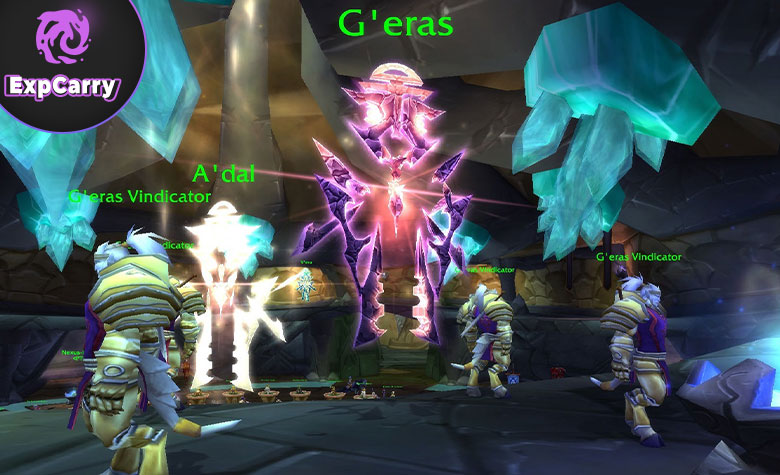
G'eras is the primary Badge of Justice vendor in Shattrath City for Phase 1-3. The available rewards include role trinkets, necks, cloaks, rings, helms, off-hands, shields, a dagger, resistance gear, and Primal Nether. The important evergreen detail is that Tier 5 and Tier 6 do not automatically add the later Zul'Aman badge armor, cloaks, bracers, relics, and other rewards. Items such as Slikk's Cloak of Placation, Brooch of Deftness, Dory's Embrace, Kharmaa's Shroud of Hope, and the larger 60 to 75 badge armor selection belong to the later vendor update and should not be presented as Tier 4, Tier 5, or Tier 6 purchases.
A farm plan should begin with an exact item target rather than an unplanned Heroic run. Players who want a defined badge total can use a structured TBC Badge of Justice farming route to match the number of runs to a specific purchase instead of continuing after the intended upgrade is already affordable.
Explore services related to this guide, selected from our WoW TBC Anniversary catalog.
View All WoW TBC Anniversary Services


Universal Badge Spending Rules
The best purchase is the item with the largest role impact after replacement risk is considered. A shield tank who cannot maintain crushing-blow immunity, or any tank who cannot survive predictable damage, has a more urgent problem than a small damage gain. Feral Druids do not use a shield-based uncrushable setup and must judge purchases by their complete survival and threat profile instead. A healer who loses control of mana on long fights values reliability above a minor healing increase. DPS players must protect hit and other required stats instead of choosing an item only because it displays more spell power or attack power.
Before buying, list the realistic alternatives from your current raid tier, not every theoretical Best in Slot item. If the only replacement drops from a contested final boss, the badge item has a long expected life. If three early bosses, a reputation vendor, and a crafted item can replace it, the badge purchase has much less value. This comparison becomes more important in Tier 5 and Tier 6 because established characters already have stronger baselines.
| What to check | Why it matters | Decision rule |
|---|---|---|
| Role failure | Badges should correct the problem that limits threat, survival, healing stability, or damage | Prioritize the purchase that removes the largest functional weakness |
| Stat requirements | Dropping defense, hit, spell hit, or another required stat can make a higher-level item perform worse | Compare the complete gear set after the purchase, including gems and enchants |
| Expected replacement time | A purchase replaced in one or two lockouts returns little value | Delay the item when several realistic upgrades are already on the current raid route |
| Current phase | A Tier 4 badge trinket can be excellent early but only a catch-up option in Tier 6 | Judge the item against current-tier alternatives rather than its original release position |
| Off-spec use | An item that remains useful for a second role has more total value | Use off-spec value as a tiebreaker, not as the main reason to buy a weak main-spec item |
| Primal Nether plan | Ten badges can secure a Primal Nether for a confirmed crafted upgrade | Buy the reagent only when the recipe, remaining materials, and final item are already planned |
Badge Priorities by Role
The role recommendations below use only rewards available from G'eras during the Tier 4 to Tier 6 window. They are priority frameworks rather than universal Best in Slot lists because class mechanics and existing gear can reverse the order. The first question is always whether the named item creates a meaningful upgrade for your specialization at the current tier.
Tanks: Fix Survival and Threat Consistency
Shield tanks should evaluate Gnomeregan Auto-Blocker 600 when their trinkets are weak. It costs 41 badges, adds 59 shield block value, and can add another 200 for 20 seconds on a two-minute cooldown. Protection Warriors mainly use that block value for stronger Shield Slam threat and reduced damage from blocked attacks, while Protection Paladins gain the clearest defensive value on block-heavy physical packs. It is not a universal tank recommendation: Feral Druids gain no value from shield block, and a Warrior or Paladin with two stronger trinkets should move directly to another weak slot.
Necklace of the Juggernaut at 25 badges is a lower-cost way to strengthen a poor tank neck, while Faceguard of Determination at 50 badges can serve as a substantial catch-up helm when its defensive profile fits the set. Shield choices such as Azure-Shield of Coldarra can also solve a major equipment gap for eligible classes. In Tier 5 and Tier 6, tanks should buy these only after confirming that the purchase preserves the required defensive setup and is not about to be replaced by an assigned raid drop.
Healers: Prioritize Reliable Throughput and Mana Value
Essence of the Martyr costs 41 badges and is the central early healer purchase when the current trinket pair is weak. Its direct healing value can remain relevant well beyond Tier 4 for some specializations, which makes it a better long-term investment than a small armor upgrade. Healers who already own strong raid or event trinkets should not buy it automatically, but it remains one of the few early badge rewards that deserves a serious comparison even during Tier 6.
Necklace of Eternal Hope at 25 badges, Bishop's Cloak at 25 badges, and Cowl of Naaru Blessings at 50 badges are practical ways to fill weak healing slots. Paladins and Shamans can also compare the available healing shields with their current off-hand. The correct order depends on whether the character needs raw healing, mana regeneration, or a safer stat balance for longer encounters. During Tier 5 and Tier 6, a healer should favor a durable trinket or a severe slot correction over a minor increase that breaks mana stability.
Caster DPS: Protect Hit Requirements Before Chasing Spell Power
Icon of the Silver Crescent costs 41 badges and is often the highest-impact early caster purchase because it gives a predictable damage cooldown without waiting for a contested raid trinket. Its Tier 4 value is high, it can remain a useful bridge through Tier 5, and it becomes a catch-up or temporary item once strong Tier 6 trinkets are available. A caster who already owns a better trinket pair should not spend badges on the Icon merely because it appears in a general priority list.
Manasurge Pendant at 25 badges, Shawl of Shifting Probabilities at 25 badges, Mana-Binders Cowl at 50 badges, and caster off-hands such as Khadgar's Knapsack provide targeted alternatives for weak slots. The best option is the one that keeps the required spell hit and supports the specialization's actual damage profile. In later tiers, avoid using badges on a neck, cloak, or helm that forces expensive regemming only to match the performance of an item already available from the current raid.
Physical DPS: Buy Throughput Without Breaking the Stat Plan
Bloodlust Brooch costs 41 badges and is the default early comparison for melee and ranged physical DPS with weak trinkets. Its on-use attack power gives it clear Tier 4 value and can carry a fresh character into Tier 5. By Tier 6, established raiders will usually compare it against stronger raid trinkets, so its main role becomes catch-up unless a specialization still benefits from its controlled burst timing.
Choker of Vile Intent at 25 badges, Blood Knight War Cloak at 25 badges, Ring of Arathi Warlords at 25 badges, and Mask of the Deceiver at 50 badges can repair weak physical DPS slots. Searing Sunblade costs 50 badges but is a 1.30-speed off-hand dagger for Rogues, not a general weapon upgrade for every physical DPS class. Physical DPS should preserve hit and expertise needs where applicable, then compare the badge item with crafted weapons, Heroic drops, and current-tier raid options before spending.
| Role | First Tier 4 comparison | Tier 5 adjustment | Tier 6 adjustment |
|---|---|---|---|
| Shield tank | Gnomeregan Auto-Blocker 600 for Warrior Shield Slam threat or a Paladin block-heavy physical pull set | Keep it for suitable encounters, but buy other items only for unresolved defensive gaps | Treat it as a niche encounter or catch-up option and compare every purchase with Tier 5 and Tier 6 loot |
| Feral tank | Skip the Auto-Blocker and prioritize a useful neck, ring, helm, or other stat-correct slot | Spend only when the complete set preserves critical-strike immunity, armor, stamina, and threat | Use the early badge pool mainly for catch-up or off-spec needs |
| Healer | Essence of the Martyr when the current trinket pair is weak, then a severe neck, cloak, helm, shield, or off-hand gap | Retain strong trinket value and avoid replacing good Tier 4 raid gear with small sidegrades | Recheck Essence of the Martyr by specialization, then use badges only for immediate readiness or off-spec value |
| Caster DPS | Icon of the Silver Crescent when it is a major trinket upgrade, then stat-correct accessories | Protect spell hit and buy only persistent gaps that Tier 5 loot has not solved | Use the badge pool as catch-up unless an item still supports a specific set or encounter plan |
| Physical DPS | Bloodlust Brooch when it beats the current trinkets, then a neck, cloak, ring, helm, or specialized weapon gap | Preserve hit and expertise needs and avoid badge purchases with an immediate raid replacement | Prioritize Tier 6 raid gear and use badges mainly for fresh characters or secondary roles |
Badge Priority by Raid Tier
The raid tier changes the expected lifetime of every vendor item. Tier 4 rewards immediate readiness, Tier 5 rewards selective gap filling, and Tier 6 rewards restraint unless the character is catching up. Use the tier-specific rules below after applying the role priorities above.
Tier 4: Build a Reliable Baseline
Tier 4 is where badge certainty has the greatest effect. A fresh level 70 character may enter Heroics with several quest or Normal dungeon items, and a trinket, helm, shield, or accessory can remove a visible weakness before the first raid lockouts. Start with the role-defining 41-badge trinket only when it is a real upgrade. After that, use 25 to 50 badge items to fix the weakest slot that affects your job.
Do not try to purchase a complete vendor set. Tier 4 raids, Heroics, reputations, and professions provide many alternatives, so badges should complement those sources. If a 25-badge neck solves the problem, there is no reason to spend 50 badges on a helm that already has several realistic replacements. A focused Tier 4 plan normally contains one major purchase and one or two efficient gap fillers.
Tier 5: Spend for Bad Luck, Not for Item Level
During Serpentshrine Cavern and Tempest Keep progression, the original badge pool remains available but the competition becomes stronger. Many characters already have Tier 4 raid gear, crafted sets, and selected Tier 5 drops. This changes the badge system from a primary gearing source into protection against bad loot luck. An old badge trinket can still be excellent if its replacement has not dropped, but an accessory that is only slightly better than the current item should move down the list.
Tier 5 spending should preserve the complete set. Tanks must maintain their defensive requirements, casters must protect spell hit, physical DPS should not create hit or expertise problems, and healers should compare mana stability with raw throughput. When the current equipment already meets the progression target, saving badges is a valid result. Currency does not need to be spent merely because a new raid tier has opened.
Tier 6: Use Badges as Catch-Up and Targeted Insurance
Mount Hyjal and Black Temple introduce enough powerful loot that most early badge items are no longer automatic purchases for an established main character. Their value shifts toward fresh characters, returning players, off-spec sets, and stubborn slots that Tier 4 or Tier 5 never replaced. This is the point where every badge purchase should answer a specific question: does this item make the character more ready for the next Tier 6 raid night?
Some early role trinkets can remain useful longer than their item level suggests, especially when their effect matches the specialization or encounter. That does not make the entire vendor list Tier 6 quality. Buy a proven functional upgrade, not an old item with a familiar name. If no Phase 1-3 reward improves the active set, retain the badges rather than forcing a purchase from an inventory that the character has already outgrown.
Universal Purchase Loop
A repeatable purchase loop keeps the guide evergreen because it works at every tier. First, identify the current raid target and the single weakness that most affects your role. Second, compare the badge item with Heroic, reputation, crafted, and current raid alternatives. Third, calculate replacement risk before committing the currency. Finally, repeat the evaluation after every major raid drop instead of following an old shopping list unchanged.
- Choose the raid tier: Tier 4, Tier 5, or Tier 6.
- Identify one functional weakness, such as survival, threat, mana, healing reliability, hit, or damage uptime.
- Confirm the exact G'eras item and badge cost.
- List realistic replacements from the current tier and estimate how soon they can be obtained.
- Buy only when the badge item provides enough immediate value to justify its expected lifetime.
- Rebuild the priority list after the purchase or after a significant raid drop.
Efficient farming follows the same principle. Choose Heroics that your group can clear consistently and combine badge progress with useful loot, reputation, or quest objectives. If forming a stable group is the main obstacle, organized TBC Heroic dungeon runs can combine repeatable badge income with targeted dungeon progress instead of separating the two goals.
Conclusion
TBC Anniversary Badge of Justice spending should change with the raid tier. In Tier 4, badges create a stable baseline and role trinkets often provide the largest first upgrade. In Tier 5, the same vendor becomes protection against bad loot luck and unresolved stat gaps. In Tier 6, the Phase 1-3 badge pool is primarily a catch-up, off-spec, or targeted insurance system, with a few role-specific items remaining useful when their effects still fit the character.
Buy for function and expected lifetime, not for color or item level. Tanks should prioritize the survival and threat profile their class can actually use, healers should balance throughput with mana, caster DPS should protect spell hit, and physical DPS should preserve hit and expertise needs where applicable. Compare every purchase with current-tier alternatives, farm toward a defined total, and keep the badges when the vendor no longer offers a meaningful upgrade.