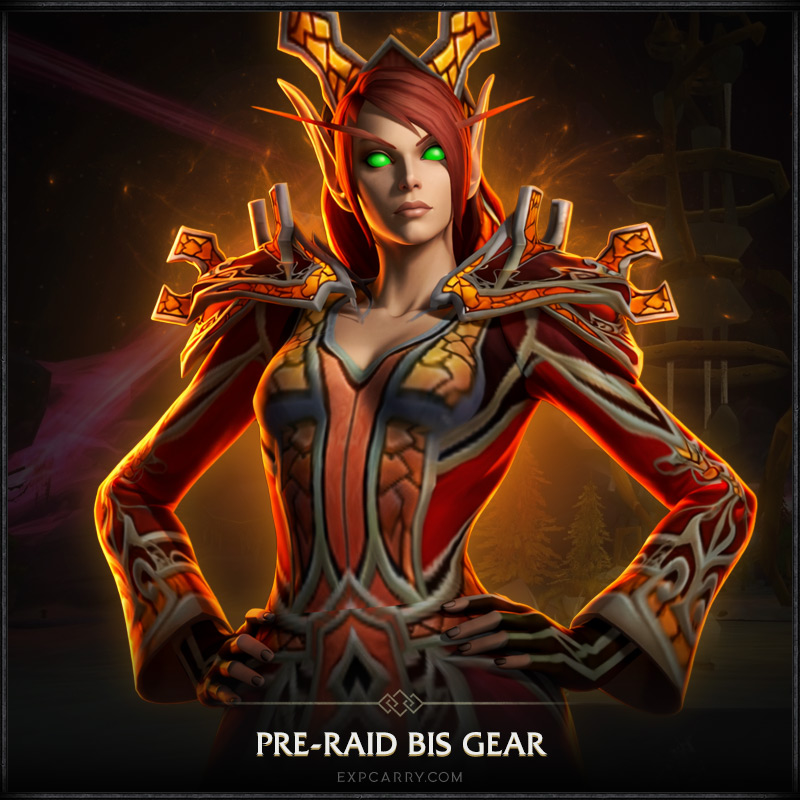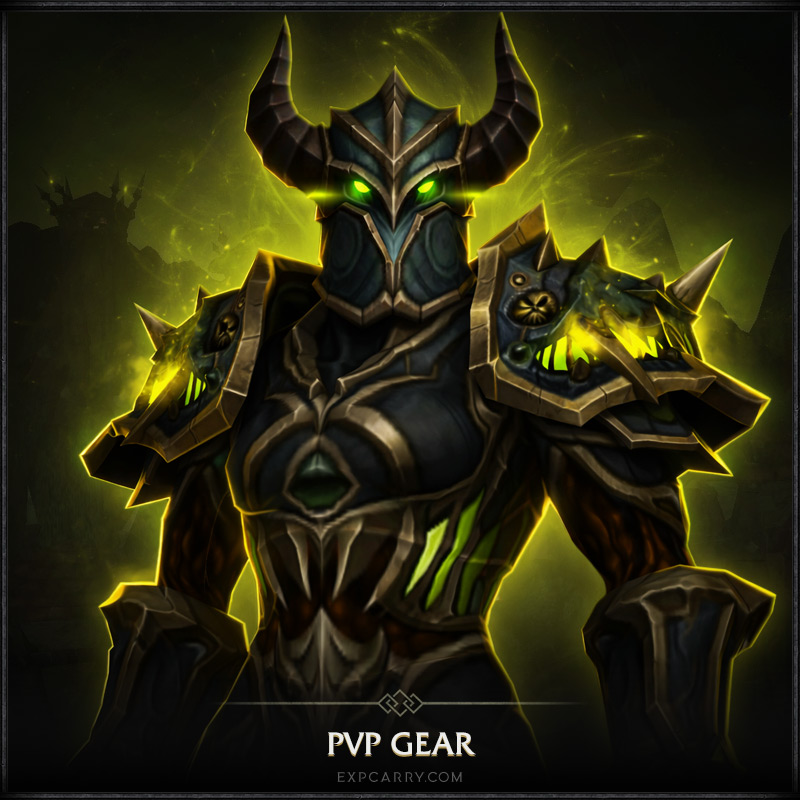

Reaching level 70 in Burning Crusade Classic Anniversary no longer means preparing only for Karazhan. Phase 2 is active with Serpentshrine Cavern and Tempest Keep, while Phase 3 opens Black Temple and the Battle for Mount Hyjal on August 27, 2026. A fresh character now needs a catch-up route that uses older raids, Heroic dungeons, Badges of Justice, crafted gear, reputation rewards, and PvP discounts to move toward Tier 5 and Tier 6 without spending weeks on a perfect Phase 1 pre-raid set.
The goal is not to skip every earlier tier. Karazhan, Gruul's Lair, Magtheridon's Lair, Heroics, and reputation vendors remain useful because they are accessible sources of targeted upgrades. The difference is that they are now stepping stones rather than the finish line. This guide shows what to do in the first day, what to prioritize during the first reset, how the route changes for an alt, and when a character is ready to move from catch-up content into Tier 5 and then Tier 6.
Current TBC Anniversary gearing stage
As of this update, Anniversary realms are in Phase 2. Serpentshrine Cavern and Tempest Keep are the highest available raids until August 27. Phase 3 then adds Black Temple, the Battle for Mount Hyjal, epic gems, Hearts of Darkness, the Netherwing hub, and the gear progression connected to Arena Season 3. Arena Season 2 ends on August 18, and Arena Season 3 begins on September 2 with weekly realm restarts.
This timing creates two versions of the same catch-up route. Before August 27, build a strong Tier 4 and Tier 5 base, complete The Vials of Eternity for Hyjal, advance every currently available Black Temple prerequisite, and save resources for confirmed Phase 3 upgrades. The Black Temple chain includes a Hyjal step, so its final access work cannot be finished until the new raid opens. After August 27, add Hyjal and Black Temple to the weekly raid ladder and use the new PvP and crafted options to replace weak slots faster. Do not delay gearing because a later phase is close; every useful Tier 4 or Tier 5 upgrade makes Phase 3 entry easier.
| Character stage | Main objective | Best sources | Stop condition |
|---|---|---|---|
| Fresh 70 in leveling gear | Replace the weakest weapon, trinkets, rings, and low-level armor | Normal dungeons, quests, cheap BoE items, reputation vendors | You can complete level 70 Normal dungeons without being carried by the group |
| Basic level 70 set | Open repeatable catch-up systems | Heroic keys, Karazhan access, targeted crafted items, Honor gear | You have several reliable Heroics and can join Tier 4 raids |
| Tier 4 catch-up | Build enough power for Tier 5 | Karazhan, Gruul, Magtheridon, Heroics, Badges, discounted PvP items | Your role can perform consistently in SSC and TK entry bosses |
| Tier 5 progression | Prepare for Tier 6 access and mechanics | SSC, TK, high-impact crafted pieces, remaining Tier 4 upgrades | Required attunements are complete and the character has a stable raid set |
| Tier 6 ready | Enter Hyjal and Black Temple from August 27 | Tier 5 gear, Phase 3 PvP catch-up, epic gems, selected Phase 3 crafts | The raid accepts your role, gear, attunement status, and preparation |
Fresh character and alt fast paths
A first character and an alt should not follow the same checklist. On a first character, Heroic dungeon access still requires Revered with Honor Hold or Thrallmar, Cenarion Expedition, Lower City, The Sha'tar, or Keepers of Time for the corresponding key. Once that character completes a key unlock, a Communal account-bound version can be sent to an alt. The alt only needs Friendly with the relevant faction to use it. Raid attunements are also account-wide on Anniversary realms, so an alt should not repeat completed raid chains.
| Step | First character | Alt with account unlocks |
|---|---|---|
| Heroic access | Reach Revered and purchase each required Heroic key | Reach Friendly and receive the correct Communal key |
| Raid access | Complete required attunement chains and boss checkpoints | Verify the account unlock, then skip chains already completed |
| Early gear | Use Normal dungeons, reputation rewards, crafted pieces, and Tier 4 | Move faster into Honor gear, Karazhan, Gruul, Magtheridon, and targeted Heroics |
| Weekly priority | Access work first, raid lockouts second | Raid lockouts first unless a missing key blocks an important Heroic |
| Gold spending | Buy only large upgrades while access is incomplete | Use cheap BoE and crafted catch-up pieces to remove obvious weak slots immediately |
The fastest new-character route is access-heavy because every completed key or attunement opens permanent value. The fastest alt route is lockout-heavy because the account has already paid most of that access cost. Before farming anything, check the keyring, reputation standings, completed account attunements, current raid lockouts, Honor, Arena Points, Badges, professions, and available gold. This prevents repeating an unlock or buying an item that a scheduled raid can replace the same week.
The first 24 hours at level 70

Fix the weakest slots first
Start by identifying three weak slots, not by copying a full pre-raid BiS list. Weapons, trinkets, rings, necks, and unusually low-level armor usually produce the largest immediate gains. Tanks should fix survival and threat stability, healers should fix mana and reliable throughput, and DPS should address the hit and primary stats required by their specialization. Exact caps are class-specific, so use your class setup rather than a generic number.
Stack value in every dungeon run
Run level 70 Normal dungeons that provide at least two useful outcomes. The Shattered Halls advances Honor Hold or Thrallmar, The Steamvault advances Cenarion Expedition, Shadow Labyrinth advances Lower City, Tempest Keep dungeons advance The Sha'tar, and The Black Morass advances Keepers of Time. These runs can provide gear, reputation, quests, and access progress together. Stop repeating a dungeon when it offers only one low-chance item and no important reputation or quest value.
Evaluate every possible upgrade with three filters: immediate performance, expected lifetime, and access value. Immediate performance asks whether the item fixes a stat or survival problem now. Expected lifetime asks whether an available Tier 4, Tier 5, Badge, PvP, or crafted item is likely to replace it within the next few sessions. Access value asks whether obtaining the item also advances reputation, an attunement, or a raid requirement. A modest dungeon item earned while completing a key track can be more efficient than a stronger item that requires repeated low-value runs. This method also controls spending. Pay more for a weapon, trinket, or crafted piece that changes the content the character can enter, but use cheap temporary solutions for slots with a clear raid replacement. The objective of the first day is not to make every slot look finished. It is to remove the weaknesses that prevent the character from joining the next layer of content.
- Replace the weakest weapon or main performance item first.
- Collect every relevant dungeon quest before entering the instance.
- Buy cheap BoE upgrades only when they are clearly better than the current item.
- Check reputation vendors for immediate blue or epic rewards already unlocked.
- Socket and enchant stable pieces, but avoid expensive treatment for temporary leveling gear.
- Reserve time for a raid lockout if the character can already enter Tier 4 content.
Do not spend the entire first day farming Normal dungeons if Karazhan, Gruul, or Magtheridon groups are available and willing to take the character. In the current phase, older raid gear is catch-up gear. A single raid evening can replace several dungeon slots and provide Tier tokens that remain more valuable than many small pre-raid upgrades.
Explore services related to this guide, selected from our Gear catalog.
View All Gear Services

Heroic dungeons and reputation without Phase 1 overfarming
Heroics remain the repeatable source of Badges of Justice during Phase 2 and Phase 3, but unlocking all five dungeon families before doing anything else is unnecessary. Prioritize the keys connected to dungeons with several upgrades, needed attunement steps, useful reputation rewards, or an efficient Badge route. A character preparing for Tier 5 or Tier 6 needs access to productive Heroics, not a completed reputation collection.
For a first character, reach Revered through the correct combination of high-level Normal dungeons, quests, and repeatable turn-ins. For an alt, reach Friendly and mail the Communal key from the unlocked character. The normal physical door requirements for locations such as The Shattered Halls, Shadow Labyrinth, and The Arcatraz are separate from Heroic access. Confirm both requirements before organizing a run.
Efficient Heroic choices depend on group speed and the character's weak slots. Short, controlled clears are better for Badge farming, while a longer dungeon can be correct when several bosses have upgrades. If unreliable groups are blocking reputation, access, or Badge progress, ExpCarry's TBC dungeon services cover Normal and Heroic routes, targeted dungeon clears, Heroic attunements, and Badge farming.
Badge of Justice catch-up route
During Phase 2 and Phase 3, Heroic dungeon bosses are the core repeatable Badge source. Add the daily Heroic quest in Shattrath when its target fits your route. Spend Badges with G'eras rather than waiting for later Isle of Quel'Danas vendors that are not part of the current phase. Badges are most valuable when they replace a weak slot that has no likely upgrade in the next scheduled raid.
Do not buy the cheapest item simply because it is affordable. Compare every purchase against the character's raid plan. If Karazhan or SSC has an easily accessible replacement, save the Badges. If a Badge trinket, off-piece, or relic solves a class-specific problem and remains useful through several lockouts, it has higher priority. Primal Nether can also matter for a confirmed crafted upgrade, but converting Badges or Heroic time into crafting materials is only correct after the recipe and total material cost are known.
| Role | First Badge priority | What to avoid |
|---|---|---|
| Tank | A major survival or threat upgrade that helps stabilize Heroics and raid entry | Small defensive sidegrades that do not change the content you can tank |
| Healer | Mana efficiency, reliable throughput, or a strong class-specific utility piece | Paying many Badges for a minor healing increase before fixing mana problems |
| Physical DPS | Hit, weapon support, trinkets, or a large primary-stat upgrade | Ignoring the specialization's hit requirement for a visually higher item level |
| Caster DPS | Spell hit, spell damage, haste where relevant, or a lasting trinket | Buying a temporary piece that a scheduled Tier 4 raid is likely to replace |
A practical Badge week uses several fast Heroics and one or two targeted longer runs. If a group repeatedly wipes, change the route rather than treating a difficult dungeon as mandatory. Badges are guaranteed progress only when the group completes bosses at a reasonable pace.
Crafted gear for Tier 5 and Tier 6 catch-up
Crafted gear should now be judged against Tier 5 and Tier 6 progression, not only against a Phase 1 pre-raid list. Some profession sets and class-specific crafted pieces remain excellent, but a fresh 70 should not automatically build every old recommended item. Check whether the item remains competitive for the specialization, whether it requires a profession specialization, whether materials can be used for a stronger Phase 3 craft, and whether a cheap raid or PvP alternative exists.
Crafting before Phase 3
Before Phase 3, focus on one or two high-impact crafts that fix a real bottleneck. A strong weapon, spell set piece, healing item, or tanking piece can justify the cost if it moves the character into better groups immediately. Cheap BoE raid drops can also be efficient catch-up purchases when their price is lower than a full crafted material list. Avoid spending heavily on multiple temporary pieces just to create a complete-looking set.
Phase 3 crafts and epic gems
From August 27, Hearts of Darkness from Black Temple and Hyjal support new Tailoring, Leatherworking, and Blacksmithing recipes, including Shadow Resistance equipment used for Black Temple progression. Epic gems also enter the gearing economy through Hyjal mining, Black Temple drops, and designs sold by Indormi. These are not automatic purchases for every fresh 70. Reserve them for a confirmed long-term upgrade, a raid-required resistance set, or a profession plan that produces real value.
- Calculate the full material and crafting cost before buying the first component.
- Compare the finished item with attainable Tier 4, Tier 5, Badge, and PvP alternatives.
- Prioritize Bind-on-Equip catch-up pieces that do not require the fresh character to enter Tier 6 first.
- Do not use epic gems in items scheduled to be replaced immediately.
- Coordinate Shadow Resistance crafts with the raid instead of building an unnecessary full set alone.
PvP gear as the Phase 3 catch-up shortcut
PvP gear becomes much more important for fresh 70 characters during the Season 2 to Season 3 transition. Arena Season 2 ends on August 18. Any unspent Arena Points convert to Honor at a rate of 1 Arena Point to 10 Honor Points. After Season 2 ends, Season 2 gear becomes available from Area 52 vendors at a discount with no Arena rating requirement, and Season 1 gear becomes available from Honor vendors in Orgrimmar and Stormwind. Arena Season 3 begins on September 2.
This creates a direct catch-up option for characters with weak weapons, armor, or off-pieces. Season 2 Arena gear can provide raid-viable raw stats even when some of its item budget is allocated to Resilience. Season 1 Honor gear is a lower-cost baseline for a newly leveled alt or returning character. PvP pieces should fill gaps, not replace the entire PvE plan, because many specializations still need PvE hit, expertise, mana, or class-specific effects that Arena sets do not provide.
| PvP option | Availability | Best use | Warning |
|---|---|---|---|
| Current Season 2 gear | Before the season ends on August 18 | Spend existing Arena Points on a large confirmed upgrade | Unspent points convert to Honor, so compare the purchase with the conversion value |
| Discounted Season 2 gear | With the Season 3 transition | Weapons and armor that immediately replace weak fresh-70 slots | No rating requirement does not mean every item is optimal for PvE |
| Season 1 Honor gear | From the Phase 3 PvP update | Fast baseline gear for new characters and alts | Check PvE hit and role requirements after equipping several PvP pieces |
| Honor off-pieces | Available through PvP vendors according to the active season | Fill neck, back, wrist, waist, feet, or ring gaps | Do not spend Honor on a slot already covered by a planned raid or crafted upgrade |
A new character with no Arena Points should not wait for a full PvP set before entering PvE. Use Honor gear for the worst slots, then continue Heroics and raids. An established alt can prepare Honor before Phase 3 and buy a stronger baseline quickly when the new vendor options unlock.
Raid priority from Tier 4 to Tier 6
Older raids are not obsolete when a fresh character reaches 70. They are efficient because experienced groups clear them quickly, many established players need only a few specific drops, and Tier tokens can replace several weaker pieces. The correct priority is based on access, group availability, and the number of meaningful upgrades in the instance.
| Raid tier | Raids | Fresh 70 value | When to move forward |
|---|---|---|---|
| Tier 4 | Karazhan, Gruul's Lair, Magtheridon's Lair | High catch-up value, Tier 4 tokens, trinkets, weapons, and accessible weekly drops | Start Tier 5 as soon as the role can perform reliably; do not wait for full Tier 4 |
| Tier 5 | Serpentshrine Cavern and Tempest Keep | Main current-phase gearing, Tier 5 tokens, attunement boss checkpoints, and strong weapons | Enter Tier 6 when attunements and raid readiness are complete |
| Tier 6 | Battle for Mount Hyjal and Black Temple from August 27 | Primary Phase 3 progression, Tier 6 gear, epic gems, Hearts of Darkness, and raid reputations | Keep useful Tier 4 and Tier 5 lockouts only while they contain realistic upgrades |
Tier 4 and Tier 5 catch-up
Karazhan is usually the best first raid because ten-player groups are easier to organize and the instance contains many possible upgrades. Gruul and Magtheridon are short additions with Tier 4 tokens and high-impact items. SSC and TK should begin before the character owns a complete Tier 4 set if the raid group accepts the character and the role is ready. Missing an entire Tier 5 reset to farm one dungeon sidegrade is a poor trade.
Tier 6 access and raid priorities
For Tier 6, complete The Vials of Eternity for Hyjal and the connected Black Temple attunement chain on the account. Hyjal offers Scale of the Sands reputation and its upgrading rings, while Black Temple provides Ashtongue Deathsworn reputation and Tier 6 progression. Players who cannot secure stable raid spots can use ExpCarry's TBC raid services for current raid clears and attunement-related options tied to the exact progression stage.
Tier 6 readiness checklist
Item quality alone does not determine whether a fresh 70 is ready for Hyjal or Black Temple. Tier 6 groups also evaluate attunement status, class utility, consumables, enchants, gems, resistance requirements, and whether the player understands encounter responsibilities. A well-prepared character in mixed Tier 4 and Tier 5 gear can be more useful than a poorly prepared character with a few higher-level items.
- Confirm the account has completed The Vials of Eternity and the Black Temple attunement chain.
- Meet the class-specific hit, defense, expertise, mana, or survival requirements used by the raid.
- Enchant and gem stable items that are likely to remain equipped through early progression.
- Prepare flasks or elixirs, food, potions, weapon consumables, repair gold, and class reagents.
- Ask whether the raid requires Shadow Resistance gear for Black Temple progression.
- Know which Tier 5 bosses still drop meaningful upgrades so earlier lockouts remain efficient.
- Review the role's assignments for Hyjal waves, Archimonde, Mother Shahraz, and Illidan before the raid.
If the checklist is incomplete, fix the real blocker. Do not respond by farming random gear. A missing attunement, resistance piece, enchant, or consumable plan can block the raid even when the character's average gear looks acceptable.
A one-week fresh 70 schedule
A weekly schedule should protect raid lockouts first and use repeatable content around them. The exact number of sessions depends on available playtime, but the order remains stable. Complete limited weekly opportunities before open-ended farms, then use Heroics, Honor, and professions to fill the remaining gaps.
- Audit gear, keys, attunements, currencies, professions, and scheduled raids.
- Replace up to three critical weak slots through quests, Normal dungeons, reputation vendors, or cheap BoE items.
- Unlock the most useful Heroic family or mail Communal keys to an eligible alt.
- Run Karazhan, Gruul, and Magtheridon if they provide several upgrades.
- Join SSC and TK as soon as the role can contribute and complete needed Tier 6 checkpoints.
- Farm a controlled Heroic route for Badges and targeted drops.
- Use Honor or discounted Arena gear to fill slots with no efficient PvE upgrade.
- Buy or craft only the pieces that remain valuable in the next raid tier.
- Prepare attunements, consumables, resistance requirements, and encounter knowledge for Phase 3.
An alt with all account access can compress the first three steps into a few hours and prioritize raid lockouts immediately. A first character may spend most of the first week on reputations and attunements. Both routes are correct because they remove different bottlenecks.
Common catch-up mistakes
The largest mistake is finishing an outdated Phase 1 checklist before entering current content. A fresh 70 does not need every pre-raid BiS item or a complete Tier 4 set before attempting Tier 5. The second mistake is treating old raids as worthless. Karazhan, Gruul, and Magtheridon are often the fastest sources of multiple upgrades, especially for alts.
- Do not farm one rare Normal or Heroic drop after the rest of the dungeon loses value.
- Do not buy several expensive crafted sidegrades without comparing Tier 5 and PvP alternatives.
- Do not spend Badges or Honor on a slot scheduled to be replaced in the next raid.
- Do not repeat account-wide attunements on an alt.
- Do not assume a Communal Heroic key works before the alt reaches Friendly.
- Do not miss SSC or TK lockouts because the character lacks one minor Phase 1 item.
- Do not describe Tier 6 as active before August 27 or Season 3 as active before September 2.
- Do not overinvest in Resilience while ignoring essential PvE stats.
When progression slows, identify the next action that opens more upgrade sources. That might be one reputation rank, a Communal key, a Tier 5 boss kill for attunement, a Badge purchase, an Honor weapon, or one crafted piece. The correct catch-up action increases the value of future sessions rather than only improving the character sheet by a small amount.
Conclusion
The current TBC Anniversary fresh 70 route is no longer Fresh 70 to Karazhan and then Phase 1. It is Fresh 70 to targeted baseline gear, Heroic and account access, Tier 4 catch-up, Tier 5 progression, and Tier 6 preparation. Normal and Heroic dungeons remain useful, but they support the raid ladder instead of replacing it. Badges provide controlled upgrades, crafted gear fixes specific problems, and the Season 3 transition creates a major PvP catch-up window.
First characters should prioritize permanent access and then protect every useful raid lockout. Alts should use Friendly Communal keys, account-wide raid attunements, Honor gear, and older raid clears to skip repeated setup. Before August 27, build a Tier 5 base, finish Hyjal access, and advance the Black Temple chain as far as the current phase allows. After August 27, complete the remaining Black Temple access steps and add both Tier 6 raids without abandoning earlier raids that still offer realistic upgrades. This approach keeps every hour connected to the next tier and avoids wasting time on a pre-raid checklist built for a phase that has already passed.