



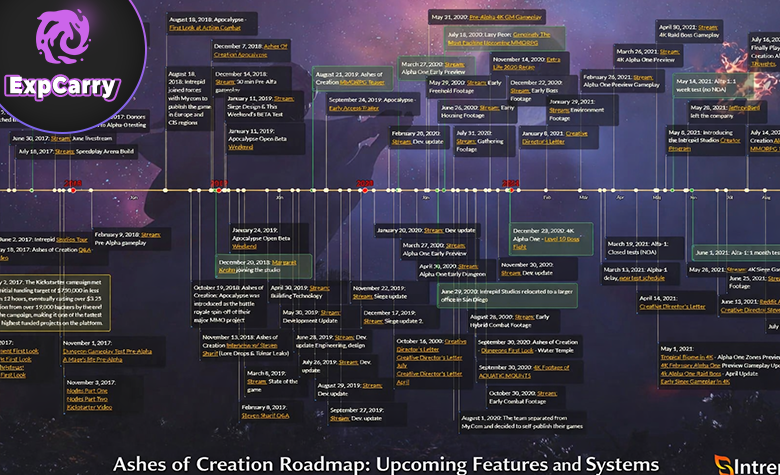
Ashes of Creation is entering a period where the biggest changes are not about one single feature, but about how many core systems are coming online at once and how fast they iterate in public testing. The developers have framed this stage as Alpha Two Phase III work delivered through Steam Early Access access to Alpha Two, with frequent updates, ongoing system rewrites, and heavy performance and stability focus so large-scale gameplay can actually hold up.
This article is a practical outlook on what to expect next: what Intrepid has publicly committed to (cadence, goals, and direction), what major systems are already in the baseline, and what kinds of new mechanics and expansions are most likely as Phase III matures and the road toward Beta becomes clearer. It is written to match how people actually search and plan: roadmap, Early Access status, wipes, new features, and which systems are being prioritized.
One note up front: Ashes of Creation is still in active development. Exact names, tuning, and timing can change between updates. The goal here is reliable direction and verified public statements, not hype. Use it as a planning document for your guild, your settlement strategy, and your personal goals while the game is still evolving quickly.
What This Period Actually Is: Early Access and Phase III
The most important context is that Steam Early Access (for Alpha Two) does not have a fixed end date, and the studio positions it as ongoing development aimed at quality, stability, and content breadth rather than a calendar deadline. Phase III is part of that same Alpha Two effort, and it is designed for iteration in public testing where systems arrive, change, and sometimes get reworked in response to test results rather than staying locked as final designs.
If you plan your play like a launch MMO, this stage will feel frustrating. If you plan your play like a living sandbox test, it becomes an advantage. Your durable progress is not one gear set, it is knowledge and coordination that survive resets.
Expectations and wipes: how to plan for volatility
Early Access is presented as an unfinished environment where tuning is frequent and not all content is in. That also implies that your “progress” is not only character power, it is repeatable execution: routes, settlement habits, market instincts, and role discipline. If you build those skills now, you enter later phases with a real head start.
Wipes can happen when necessary for testing and performance work, especially when big economy, progression, or backend changes land. The practical takeaway is to avoid emotionally committing to one permanent home or one permanent gold strategy. Instead, build a reset playbook: where you regroup, how you re-establish a supply chain, and how you reclaim settlement influence quickly.
- Assume builds change often and the meta can flip after major patches.
- Prioritize learning loops: settlement services, trade risk, profession flow, and PvP pacing.
- Keep roles clear: gatherers, processors, crafters, haulers, coordinators.
- Keep a flexible stockpile strategy: broadly useful inputs over niche materials.
- Keep a relocation plan: a second settlement option if your region becomes inefficient.
Update Cadence: How to Think About the Patch Rhythm
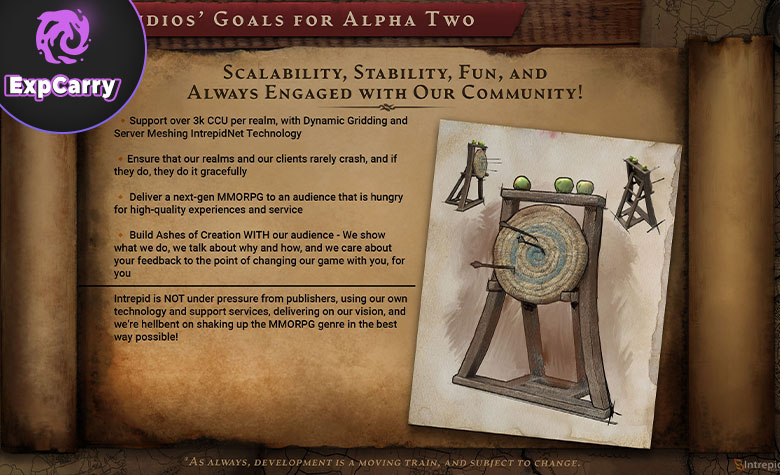
Intrepid has described a cadence where minor version releases land about every three weeks and major version releases about every six weeks, with hotfixes deployed as needed for critical issues. This matters because it defines your planning cycle. In practice, it means you will get regular tuning and bug fixes, plus periodic injections of new mechanics that can reshape priorities.
Your best strategy is to plan in patch windows rather than “forever plans”. You do not need perfect predictions, you need a repeatable process for adapting faster than other groups.
How to plan around minor vs major patches
Smaller updates tend to shift efficiency rather than identity. A number tweak, an economy friction change, or a bug fix can quietly change the best leveling route, crafting margin, or trade safety. Players who ignore these changes keep running last month’s loop and fall behind without realizing why.
Major updates are where new mechanics, new systems, or larger tuning passes tend to appear. These are the updates that create new hotspots, new profit centers, and new reasons for organized PvP. They can also be the updates most likely to need follow-up hotfixes, because new systems create edge cases. Treat each major patch like a mini season start: discovery first, then optimization.
- Good weekday goals: processing batches, route scouting, settlement service checks, build testing.
- Avoid heavy investment into a single recipe or a single market strategy until stability is confirmed.
| Update window | Best move | Why it works |
|---|---|---|
| Day 1 to 3 after major patch | Discovery sessions and role reassignment | You map what changed before you commit resources |
| Week 1 to 2 | Exploit the new demand and control routes | Most groups adapt slowly, early movers set prices |
| Late patch window | Stabilize supply and prepare for the next patch | Margins compress as the server catches up |
The Baseline Systems That Are Likely to Expand Next
The easiest way to predict what comes next is to start from what already exists. Recent Alpha Two update notes describe major additions like the Summoner archetype, Harbinger events, the Destiny System, Sport Fishing, and Duels. When systems like these ship, the next development step is typically expansion and integration: more variants, better rewards, clearer onboarding, and deeper links to settlements and the economy.
This is where a lot of “new mechanics” show up, not as brand-new pillars, but as new layers on top of shipped pillars.
Expansion and integration: events, guidance, and logistics
Large-scale event frameworks rarely stay static. Once an event type exists, it becomes a platform for new encounters, new escalation patterns, and reward tuning that shapes where players gather. If the event creates a hotspot, it also creates conflict and logistics, because groups will compete for timing, location control, and the ability to bring supplies quickly.
Destiny-style guidance systems also evolve fast in testing, because they directly affect how many players reach core loops and how quickly they can participate in meaningful content. Sport Fishing matters for the same reason: it demonstrates an economic loop that produces value and makes transport meaningful. Whenever the game adds loops that create physical goods, it increases the importance of route control, escorting, and settlement location.
- Expect more Harbinger variants, clearer region impact, and tighter reward pacing.
- Expect Destiny to push smoother early flow and stronger guidance into settlements and core activities.
- Expect more reasons to move value and more incentives to contest routes.
- Expect more settlement relevance because services and safety shape logistics efficiency.
Settlements and Politics: Structural Changes That Shape the World
Settlements are the centerpiece of the world simulation, and this system is actively being adjusted. Alpha Two Phase III materials describe major structural changes such as settlement stage adjustments, earlier vassalship introduction, and service building redistribution. These are the changes that reshape politics and regional identity more than any single item drop or class tweak.
If you want to know what will create server stories, settlements are the answer.
Why vassalship and services reshape power
When vassalship appears earlier, power networks form sooner. That shifts politics from “late game only” into midgame strategy, because control chains can matter before the server has matured. Earlier political leverage also changes player behavior: diplomacy, tribute, and strategic pressure become relevant earlier, which naturally increases organized PvP activity. For smaller groups, this is not a death sentence, but it does require awareness and alliances.
Service building redistribution and deeper service progression are signals that settlement identity is being tuned to matter. If services, storage, crafting access, and local bonuses are meaningful, players cluster around them and markets become regional rather than global. That creates the intended hub versus frontier dynamic: hubs offer convenience and depth but attract competition, while frontier regions offer margins but demand hauling and protection. Over time, the best groups exploit both by producing efficiently in one region and selling advantageously in another.
- Stronger settlement chains usually mean stronger economic leverage.
- Political decisions become gameplay, not just flavor.
| Region style | Strength | Tradeoff |
|---|---|---|
| Hub settlement | Convenience, services, market depth | High competition, margins compress faster |
| Frontier region | Shortages create strong margins | More hauling, more risk, less consistent access |
Economy and professions">Professions: What the Developers Are Trying to Validate
Economy rebalance is called out directly in Alpha Two communications, and that usually means repeated tuning until incentives feel right. In a player-driven sandbox, economy changes ripple into everything: crafting profitability, transport risk, settlement growth, and conflict hotspots. In this stage, any “best gold method” is temporary.
A smarter plan is to hold a stable role in the supply chain and rotate opportunistic strategies around patch windows. The goal is to stay relevant even when drop rates, recipe costs, or market friction shift.
The most common mistake is building a long-term plan around one patch. A better approach is to keep one stable throughput role, such as gathering or processing, and add one flexible role, such as crafting for the current shortage. This protects you from sudden margin collapse and keeps your time valuable across multiple updates.
- Stable value: raw and processed inputs that many crafts need.
- Flexible value: patch-window crafts that meet new demand spikes.
As more systems create goods that must be moved, logistics becomes a strategic lever. Escorting, scouting, and route control translate directly into market control because safe movement allows stable supply. If routes are safe, profit gaps shrink but volume becomes king. If routes are dangerous, profit rises but coordination becomes mandatory. Both states create meaningful gameplay, so expect ongoing tuning toward an equilibrium that feels contested and fun.
- Logistics roles often outperform raw grinding once the economy matures.
- Settlement politics and safety directly influence profits.
Combat, Archetypes, and PvP Tools: Expect Iteration, Not Final Balance
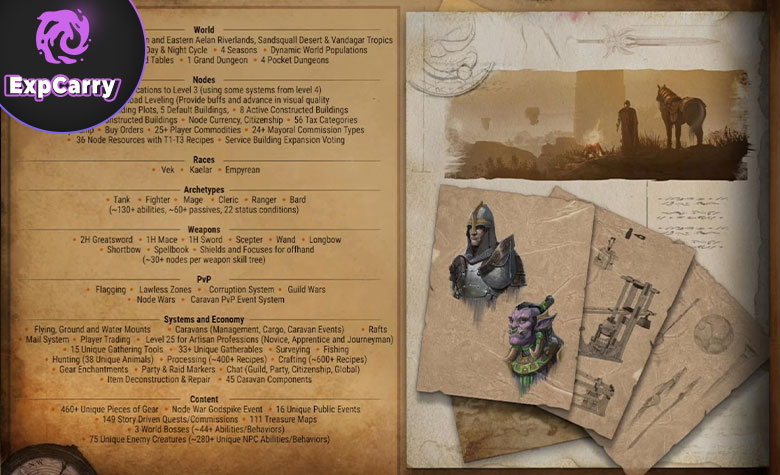
Combat and class balance are high-change in active testing, and official communication has highlighted time-to-kill analysis alongside archetype rollout. The Summoner debut is a signal that the roster continues to expand and that the surrounding combat environment will be tuned in response.
This is why build guides feel patch-bound in development phases. Your durable advantage is not one build, it is fast adaptation and coordinated comps.
Why new archetypes need testing tools
New archetypes force tests of core systems: performance under load, clarity of visual effects, counterplay in PvP, and encounter tuning in PvE. When a new archetype enters the ecosystem, it creates ripple effects across gear value, group composition, and time-to-kill pacing. That usually triggers balancing work that touches many classes, not only the new one. Expect this cycle repeatedly as more archetypes mature.
Structured PvP tools like duels matter because they enable rapid practice and testing without forcing open-world consequences every time. In a game with law and corruption dynamics, structured conflict tools reduce friction while still supporting competition. They also make feedback better because players can test builds and matchups quickly, then report what feels off.
- New archetypes create new comps, and comps reshape PvP pacing.
- Balance passes tend to be broader than players expect.
- Duels support testing and rivalry without constant escalation.
- Better testing tools usually means faster balancing progress.
Technology and Performance: The Work That Decides Whether Scale Is Real
Large-scale sandbox gameplay only works if the tech holds. Official development communication highlights work like Dynamic Gridding and an Unreal Engine 5.6 transition. This is the foundation that determines whether big events, dense settlements, and large fights remain playable. If the tech improves, the sandbox becomes more reliable. If it struggles, the game will feel unstable exactly where it should shine.
Performance foundations: Dynamic Gridding and engine transition
Dynamic Gridding is framed as improved load balancing and responsiveness when populations cluster. That is exactly the scenario Ashes of Creation creates: settlements grow, events spawn, and players concentrate. When this works, fights and events feel smoother and more consistent. When it does not, you see delays, desync, and instability under load. This is why performance work is often the most important work during development.
Engine transitions aim to unlock better tools and long-term stability, but they also introduce new bugs and edge cases. That creates a predictable pattern in testing: the team improves performance, then ships new tech or content that stresses the system again, then improves it further. You should expect this cycle rather than a straight line. The key indicator is whether each cycle results in measurable improvement under real player density.
How to Prepare Without Wasting Time: A Simple Player and Guild Plan
The fastest way to burn out is to treat this stage like launch. The smarter approach is to invest in transferable advantages: system knowledge, coordination habits, and clear roles. Your goal is to be the group that rebuilds quickly after changes, adapts to new mechanics, and exploits patch windows faster than competitors.
If you do that, development volatility becomes a weapon instead of a problem.
Weekly routine and post-patch discovery block
Use shorter weekday sessions for low-risk loops: scouting routes, checking settlement services, stockpiling processing inputs, and testing changes after patches. These sessions should be flexible because the “best method” can change quickly. Save weekend time for coordinated operations: settlement pushes, escorting transport, major events, and organized PvP. That is where your group turns knowledge into control.
After every major patch, run one dedicated discovery block before heavy grinding. Read the update notes, test what changed, and confirm what is now profitable or risky. Then update roles so you do not duplicate effort and starve your own supply chain. Groups that plan weekly tend to dominate patch windows because they move first and they keep their production stable.
- Weekdays: scouting, processing, testing, building flexible stockpiles.
- Weekends: organized operations and conflict around hotspots and routes.
- Discovery first, optimization second.
- Role updates prevent internal competition for the same bottleneck inputs.
Conclusion
This development period for Ashes of Creation is defined by rapid iteration and expanding scope in public testing. Steam Early Access is positioned as open-ended, with progress moving toward the quality and stability targets required for Beta. The update cadence is frequent, which means the game will keep changing in ways that affect settlement outcomes, economy loops, combat pacing, and what activities are worth doing from one patch window to the next.
What should you expect next: expansion and integration of major systems already in the baseline, continued evolution of settlements and vassalship, repeated economy and profession tuning, ongoing archetype and combat iteration informed by pacing analysis, and sustained investment into performance technology so large-scale events and conflict remain playable under real player density. The important pattern is that these pillars connect: better tech enables bigger events, bigger events create hotspots, hotspots reshape politics, and politics reshapes the economy.
If you want to stay ahead, plan like a sandbox competitor, not like a theme park tourist. Build flexible roles, keep supply chains resilient, treat settlement positioning as a strategic choice that can change after patches, and time major operations around update windows. When the game stabilizes into later phases, the groups who mastered adaptation during this stage will enter with the strongest advantage on the server.