




This Fellowship MMO rank push guide is for players who want a clean, repeatable path to Paragon without getting stuck in “spam the same dungeon forever” mode. In Fellowship, your rank progress is tied to clearing difficulty tiers and improving your dungeon rating, so the fastest push is a mix of smart gearing, hitting capstones on time, and spreading clears across unique dungeons-service">dungeons-services">dungeons instead of mindless repeats.
Below you get a practical system you can run every session: how the rank ladder works, how to plan a Challenge Dungeons boost route, what to farm at each stage, and how to convert “almost Paragon” attempts into a reliable unlock. Use it to reach Paragon faster with fewer wasted runs.
How Fellowship Ranks and Rating Actually Work
Fellowship progression is not about character level; it is about moving your Dungeon Rating upward by clearing difficulty breakpoints and capstones. It is about moving through league tiers by clearing difficulty breakpoints and capstones, while your dungeon rating rises based on the highest difficulty you clear per unique dungeon. Finishing faster can add extra value, but the core driver is still “best clear across many dungeons,” not “one dungeon repeated forever.”
Keep the ladder clear in your head because it explains why most grinds feel slow:
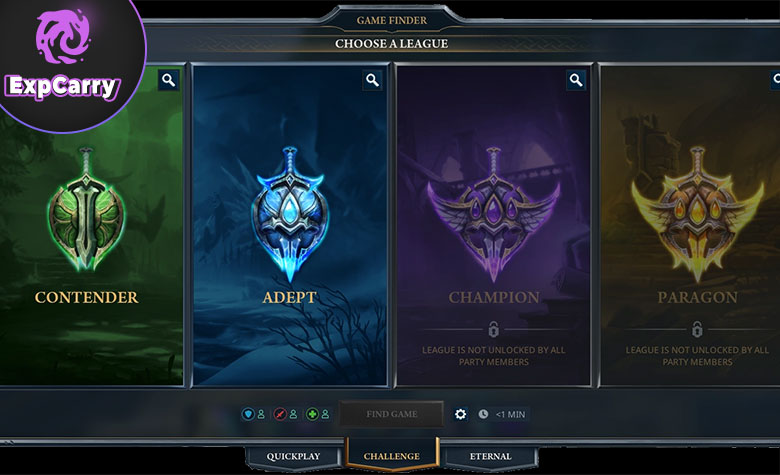
- Challenger Leagues are split into leagues (Contender, Adept, Champion, Paragon).
- Each league has difficulties +1 to +7, with +7 reserved for the capstone dungeon.
- Dungeons become timed starting at Contender +4, and curses start appearing from Adept and higher.
Two systems matter for planning your push:
- Dungeon rating: your best clears across unique dungeons create the foundation of your rank climb.
- Difficulty modifiers: higher tiers add a timer (from Contender +4) and later add curses (from Adept) that change which packs are safe, which routes are efficient, and when you must commit cooldowns.
Why Most Pushes Stall in Champion
Most players stall in Champion for one reason: they try to solve a structural problem with more attempts. Champion is where rating breadth, curse discipline, and gear breakpoints start to matter more than raw repetition. If you keep pushing the same dungeon at the same tier with the same mistakes, you are not farming progress, you are rehearsing failure.
Champion stalls usually come from one of these patterns:
- Rating is too narrow: you are strong in two dungeons but weak in the rest, so your overall rank progress crawls.
- Gear is “almost there” but not stabilized: you have one or two weak slots that cause deaths or long over-time runs.
- Route indecision: your group loses minutes at forks, skips inconsistently, or fights extra packs “just in case.”
- Cooldown waste: major cooldowns are used early, then the real danger overlap hits and the run collapses.
The fix is a short reset phase, not a long grind. Spend a small number of runs to secure a clear upgrade, then go back to rating breadth. If you cannot name the exact bottleneck, you should not be attempting your next tier yet.
The Paragon Push Loop: What to Do at Each Stage
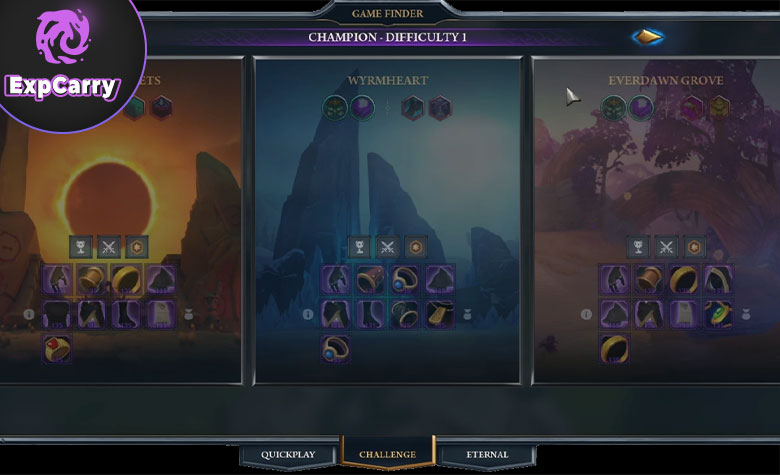
se this table as your session plan. It is designed to keep you moving forward even if matchmaking is inconsistent, because each stage has a clear “done” condition you can measure without guessing.
| Stage | Main goal | Best use of your runs | Stop when |
|---|---|---|---|
| Quickplay setup | Get functional gear and unlock basics fast | Run Quickplay Matches to learn roles, stabilize your build, and earn Supplies for basic gear so every slot is filled | Your kit is online and you stop dying to random spikes |
| Contender push | Build rating base and replace weak pieces | Clear many different dungeons at a comfort tier, learn one stable route per dungeon, and start timing runs once you reach Contender +4 | Your rating climbs smoothly and your clears feel repeatable |
| Adept transition | Adapt to curses and improve consistency | Practice curse management, refine pulls, reduce wipes to near zero, and stop bleeding time to indecision | You finish runs without panic resets and long over-time spirals |
| Champion push | Secure set pieces and prepare the capstone | Farm your key bottleneck slots briefly, then spread clears for rating breadth and capstone readiness | You have key pieces and your toughest dungeon is no longer a coin flip |
| Reaching Paragon Fellowship | Clear the Champion capstone and stabilize Paragon farming | Execute the capstone, then rotate dungeons to lock rating and upgrades instead of tunnel farming one map | Your Paragon runs are stable enough to farm without tilt |
Challenge Dungeons Boost Without Wasting Runs
Think of a Challenge Dungeons boost as an efficiency plan, not a service. Your “boost” comes from running the right content in the right order so each run advances at least two outcomes: rating and gear. When a run advances only one thing, it is usually slower progress overall.
Use these rules to keep your runs high value:
- Prioritize first-time clears on new dungeons at your current comfort tier to raise rating breadth.
- Repeat a dungeon only when you are targeting a specific set piece or an upgrade that fixes a known bottleneck.
- From Contender +4 onward, the timer matters for full rating and rewards. If you are repeatedly missing time, step down one notch, clean up execution, then go back up.
- Even if a run goes over time, it can still be worth finishing for loot, but pushing too far into overtime reduces rewards and score. Do not turn bad runs into 15 minute slogs.
- When you unlock a new league’s +7, schedule a short capstone block because capstones often concentrate your best upgrade chances and unlock the next league.
Timers and Curses: A Practical Playbook
Higher difficulties add pressure in two layers. First, dungeons become timed starting at Contender +4, so route quality and decision speed begin to matter. Second, from Adept and higher, dungeons gain curses that punish sloppy routing by making specific packs or mechanics dramatically more dangerous than the rest.
Use this playbook to keep runs stable under pressure:
- Pick one safe route per dungeon and repeat it until the group stops bleeding time to indecision.
- Assign one caller for route decisions. Even a slightly suboptimal route is faster than debating every fork.
- Tag the “curse packs” early: identify which pulls become lethal with current modifiers and decide whether you skip them or commit cooldowns.
- Split cooldowns by purpose: one set for planned danger overlaps, one set reserved for mistakes. If you spend everything early, one bad pull ends the run.
- Keep a consistent pull size target. If your healer is forced into constant emergency casts, your timer will die to drinking and deaths, not to lack of damage.
A good sign you are ready to push higher is when your group can recover from one mistake without losing the whole run. If one mistake still equals a reset, stay in the tier where you can practice and actually finish.
Gearing for Paragon: The Shortest Path
Gearing in Fellowship is about item level, set pieces, and upgrade discipline. The fastest push does not min-max perfect stats early. It reaches stable clears first, then optimizes once Paragon farming is unlocked.
Use this gearing priority that stays efficient:
- Early: use Quickplay to learn, stabilize survivability, and fill every slot using Supplies so your build is online fast. Then transition to Challenger dungeons for rating and meaningful drops.
- Tier breakpoints: when you unlock a new league, focus on timing your best dungeons at that league’s early levels so rating and rewards keep scaling cleanly.
- Capstones: +7 capstone dungeons are longer and harder, but they are your key progression checkpoints. When timed, capstone rewards can be treated as one league higher, making them a strong power spike when you are ready.
- Upgrade with purpose: spend resources only when it creates a clear breakpoint, like surviving a specific boss phase or meeting a timer target.
- Value set pieces and scalable bonuses: a slightly weaker item that completes a strong set can beat a higher item level replacement.
Upgrade Discipline: What to Upgrade and When
The biggest hidden time loss in a rank push is upgrading gear that will be replaced in a few hours. You want upgrades that change your clear rate, not upgrades that only make your current tier feel smoother. Treat upgrades like steps on a ladder: each upgrade should help you climb to the next rung, not decorate the rung you already stand on.
Use this decision rule before every upgrade:
- Upgrade now if it solves a named bottleneck: a repeated death, a healer mana collapse, a timer loss caused by slow boss kills, or a missing set breakpoint.
- Hold resources if you are still missing multiple pieces that you will likely replace quickly in the next tier.
- Prioritize upgrades on slots that affect survival first if wipes are your main problem, then prioritize damage once runs are stable.
- If your team is stable but slow, upgrade the pieces that increase consistent damage, not the pieces that increase burst only.
A simple sanity check: if you cannot explain how an upgrade improves your next 5 runs, it is probably a waste right now.
Capstone Planning: The Moment You Lock Paragon
Your Paragon unlock is a checkpoint moment: clear the Champion capstone with enough stability that Paragon farming does not feel like constant near-fails. If you are close but inconsistent, do not spam attempts endlessly. Fix one bottleneck first, then return with a plan.
Pre-capstone checklist that prevents wasted sessions:
- Identify the two highest risk moments in the capstone and assign answers before the first pull.
- Plan cooldown timing around the hardest overlap, not around the first big pack you see.
- Keep your comp structure clean and avoid experimental builds during the unlock push.
- Do two warm-up runs in the tier below to sync pace and communication.
- Agree on wipe rules: if the run is unrecoverable, reset quickly instead of dragging out a dead attempt.
After you clear the capstone, switch your mindset. The push phase is over. Your new goal is farming efficiency: rotate dungeons to lock in rating gains, target upgrades that last, and practice clean routes that keep Paragon runs consistent.
Conclusion
The fastest path for a Fellowship MMO rank push is not grinding harder, it is running smarter. Build a Quickplay baseline, then push Challenger dungeons in a planned sequence that grows rating breadth while you collect meaningful upgrades. Treat timers as route and decision discipline starting at Contender +4, treat curses as execution discipline starting at Adept, and treat capstones as focused checkpoints, not endless attempts.
To make reaching Paragon Fellowship predictable, track three things every session: which dungeons are missing high clears, what exact bottleneck caused your last failure, and whether your next upgrade actually changes your clear rate. Once Paragon is unlocked, keep the same discipline. Rotate unique dungeons for rating stability, farm efficiently for pieces that will last, and keep your run plan simple enough that you can execute it even with imperfect matchmaking. That consistency is what turns “I can reach Paragon” into “I can farm Paragon anytime I log in.”