
The best way to make money in Star Citizen in 2026 depends on your starting capital, available ships, experience and tolerance for risk. In Alpha 4.10.2 LIVE, hauling contracts, commodity trading, mining, salvage, bounty hunting and FPS missions remain the main ways to earn aUEC. Beginners can start with short contracts that require little investment, while established players can scale into industrial ships and higher-tier missions. The largest theoretical payout is not always the best income: loading time, refining costs, travel, repairs, failed objectives and cargo losses all reduce actual earnings. Alpha 4.10.2 preserves Long Term Persistence rather than repeating the 4.8 wipe, so progression should be planned around your current balance. This guide compares the available money-making methods and explains how to choose profitable loops for solo play, groups and different budgets.
Short answer: Start with delivery, hauling or low-risk combat contracts if you have little aUEC, then specialize in mining, salvage or trading when you have the equipment and capital to support them. For consistent income, prioritize completed payouts and repeatable routes over advertised aUEC-per-hour figures that ignore travel, losses and selling time.
Best Ways to Make Money in Star Citizen in 2026
Star Citizen offers several legitimate earning careers, but each has different equipment requirements and financial risks. Contract work pays for completed objectives, while industrial careers generate materials or cargo that must be processed, delivered or sold. Reputation can unlock better opportunities, but progression alone is not the same as receiving aUEC.
The following comparison describes practical use cases rather than a fixed profit ranking. Actual contract payments, commodity prices and resource availability change with the game version, available missions and market conditions.
| Method | Equipment or Capital | Risk | Best For |
|---|---|---|---|
| Delivery and Basic Contracts | Starter ship and mission access | Low to medium | Beginners and early cash reserves |
| Hauling Contracts | Cargo-capable ship; rented or owned where available | Low to medium | Repeatable solo income and reputation |
| Commodity Trading | Cargo ship and purchasing capital | Medium to high | Established players managing market risk |
| Mining | Mining tool, vehicle or specialized ship | Low to high | Solo industry and organized mining crews |
| Salvage | Salvage ship or access to a salvage crew | Medium | Industrial income from wreck recovery |
| Bounty Hunting | Combat-capable ship and appropriate contracts | Medium to high | Pilots specializing in ship combat |
| Mercenary and FPS Missions | Weapons, armor, medical supplies and transport | Medium to high | Ground combat and short contract loops |
| Research and Collection Contracts | Appropriate tools, access and collected materials | Variable | Reputation and resource-based progression |
For most new players, contracts are easier to manage because they do not require purchasing a full cargo hold or owning an industrial ship. For players with dedicated equipment, mining and salvage provide additional ways to generate value. Trading can scale with available capital, but losing purchased cargo can erase profits from earlier successful runs.
Current LIVE version: Star Citizen Alpha 4.10.2-LIVE.12881860 was released on October 9, 2026, with Long Term Persistence preserved. The official patch notes list a base starting amount of 20,000 aUEC for applicable fresh balances; this is not a reset of every existing player's wallet. The large economy reset associated with Alpha 4.8 should not be treated as a new 4.10.2 wipe. Alpha 4.10.2 also introduced RSI Discovery Month, a limited-time event with Defense, Transport and Collection contracts in Stanton. These event activities offer additional progression opportunities but should not be treated as permanent earning loops. Contract payouts and commodity values must still be checked in the current client.
How to Make Your First aUEC With a Starter Ship
The first objective is to build enough working capital to cover basic operating expenses and occasional failed missions. You do not need a specialized ship to begin earning aUEC, but you should select contracts that your current vehicle can complete without excessive travel, cargo requirements or combat pressure.
Delivery, investigation, entry-level hauling and low-risk maintenance assignments are suitable starting categories when available. Players comfortable with flying and ship combat can also consider beginner bounty contracts, while mercenary assignments require additional FPS equipment and carry the risk of losing personal gear.
A Practical Starter Contract Route
Begin in a system where you can access shops, hangars, medical services and nearby mission locations without lengthy transfers. Stanton is generally the most convenient environment for learning these systems. A short contract that completes successfully is more valuable than a complicated assignment with a larger advertised reward but a high chance of failure.
- Open Contract Manager: Review available low-risk delivery, hauling or introductory assignments and check their requirements.
- Choose a nearby objective: Prefer missions requiring equipment and cargo capacity you already have.
- Prepare the ship: Confirm fuel, required supplies and available storage before departure.
- Complete the objective: Follow the correct pickup, interaction or delivery steps.
- Verify payment: Check that the contract actually completes and the aUEC reward is credited.
- Repeat within the region: Select compatible nearby contracts instead of traveling across several systems for every assignment.
Keep initial expenses under control. Expensive armor, unnecessary weapons and speculative ship upgrades are poor investments when the immediate objective is establishing reliable income. Once you can cover several ordinary sessions without exhausting your balance, consider a specialized career or a suitable rental.
The Star Citizen First Million Guide covers early-game budgeting and starter progression in greater detail. Its earlier Alpha 4.8 wipe context should be distinguished from the persistence-preserving Alpha 4.10.2 update. This main money-making guide focuses on comparing careers beyond that initial stage.
When to Rent or Buy a Better Ship
A larger ship is useful only when it removes a demonstrated limitation in your current earning loop. More cargo capacity helps when available hauling contracts consistently exceed your hold, while specialized industrial equipment becomes relevant when mining or salvage is the activity you intend to repeat.
Before renting, compare the rental cost with the contracts you can realistically finish during the rental period. Before buying, account for repairs, fuel, replacement expenses and any supporting vehicle or cargo equipment. A ship that increases potential income but leaves you without operating capital can slow progression rather than improve it.
Hauling Contracts: Reliable Money Without Buying Cargo
Hauling contracts are a practical income path because you transport assigned freight for a contract reward rather than purchasing the entire shipment yourself. The main investment is the ship, travel, loading and unloading work, and the time required to complete the delivery. Reputation with organizations such as Covalex Shipping can open additional contracts as the player progresses.
Hauling still requires careful logistics. Cargo must be collected, transported and delivered according to the mission's instructions, and freight elevators or inventory interactions can create problems when the server is unstable. A successful flight without a registered delivery does not generate the intended payout.
How to Build a Repeatable Hauling Route
Start with contracts that fit comfortably inside your available cargo space. Review every pickup and destination before accepting multiple jobs, because seemingly compatible contracts can require different terminals, cargo handling or travel directions. Favor nearby destinations when the payout difference does not justify a much longer journey.
A practical hauling routine involves selecting a manageable group of contracts, loading the assigned containers, completing the required deliveries and verifying each payout before accepting more. As reputation increases, compare new contracts against the time and cargo capacity they demand rather than assuming a higher-tier label guarantees better earnings.
The Star Citizen Trading and Cargo Hauling Guide provides a deeper breakdown of hauling organizations, contract progression and freight routes. This article concentrates on how hauling compares financially with other careers.
Hauling Contracts vs Commodity Trading
Hauling contracts and commodity trading use similar transport skills but expose the player to different losses. Contract hauling rewards the successful movement of assigned cargo, while commodity trading requires buying goods with personal aUEC before selling them elsewhere. In trading, the purchase price is capital exposed to ship loss, piracy, demand shortages and selling problems.
New players should generally learn freight handling through contracts before committing substantial currency to commodity purchases. An experienced trader may earn more from a successful shipment, but that increased potential comes with more direct financial exposure and a greater need to understand the market.
Explore services related to this guide, selected from our Star Citizen catalog.
View All Star Citizen Services

Commodity Trading: Higher Capital, Higher Exposure
Commodity trading makes money from the difference between purchase and sale prices. Profit depends on the actual units bought and sold, the availability of supply and demand, transport time and total operating expenses. A profitable-looking route can become unattractive when buying inventory is limited, the destination has insufficient demand or unloading takes much longer than expected.
Trading also introduces the possibility of losing purchased goods. A destroyed or inaccessible shipment can eliminate the principal invested in that run. The relevant question is therefore not only how much the cargo could sell for, but how much money remains after the full operation and any losses.
How to Test a Trade Route Before Scaling Up
Choose a commodity and destination pair where your ship can operate efficiently. Check current terminal prices, the amount available to buy and the quantity the destination will accept. A route that appears profitable in an external calculator is only a candidate until the current game economy confirms the transaction can actually be completed.
- Check the purchase terminal: Verify the available stock and current buying price.
- Check the destination: Confirm the intended selling location and its current demand.
- Make a small test purchase: Avoid committing the entire cargo budget to an untested route.
- Load and transport the cargo: Include loading time, fuel and travel exposure in the calculation.
- Complete the sale: Verify the final credited aUEC rather than relying on the displayed asking price.
- Scale only after a successful cycle: Increase cargo investment when the route remains operational and the margin justifies the risk.
A larger cargo hold is not automatically more profitable. If the buyer cannot accept the full shipment or the loading process becomes the main time cost, smaller and more frequent cycles may provide a better outcome.
How Much aUEC Should You Risk on Cargo?
There is no universal safe percentage of your balance to invest in commodity trading. The appropriate amount depends on the price of the cargo, your ship, route security and ability to recover from a failed run. Preserve enough currency for fuel, repairs, replacement equipment and another earning activity if the shipment is lost.
A useful personal rule is to avoid any purchase that would prevent you from continuing to earn after one failed cargo cycle. High-value trading becomes more practical once the player has a substantial reserve and a repeatable route, not merely when a large cargo ship becomes available.
Salvage: Earning aUEC From Wrecks and Recovered Materials
Salvage generates income by recovering valuable materials and equipment from ships or wrecks. The available processes include hull scraping for Recycled Material Composite (RMC), structural salvage and recovering suitable cargo or components. The financial result depends on salvage rights, the target, collection efficiency, contract access fees, processing costs and the ability to sell or deliver the recovered output.
In Alpha 4.10.2, the dedicated salvage fleet includes the Drake Vulture for solo work, the MISC Fortune and RSI Salvation with different cargo-handling approaches, the ARGO MOTH for coordinated operations and the Aegis Reclaimer for large-scale salvage. These ships do not all have identical capabilities or contract eligibility, so choose a target and operation that suit the equipment available.
Solo Salvage With the Drake Vulture
The Vulture is a practical entry point for players who own or can access it because it allows solo hull scraping and material collection. Begin with a legally accessible, manageable salvage target, recover useful material and return to a supported selling location before storage or travel risk becomes excessive. Check authorization before salvaging intact ships or other players' property. The primary requirement is a repeatable connection between salvage work and successful payment.
Check whether recovered cargo or components are worth handling separately from RMC. A wreck containing valuable equipment can offer additional opportunities, but spending too long sorting low-value items may reduce the earnings of the entire operation.
The Star Citizen Salvage Guide explains current salvage ships, material types, Adagio Holdings contracts, refinery requirements and selling routes in greater detail.
RMC, Construction Materials and Salvage Processing
RMC and Construction Materials (CMAT) are not interchangeable products. Hull scraping produces RMC that can be sold at compatible commodity terminals, while structural salvage generates raw construction material such as Construction Rubble, Construction Pieces or Construction Salvage. These raw materials require suitable refinery processing to become finished CMAT for ordinary commodity sales.
Do not calculate salvage profit by assigning the final market price of CMAT to unprocessed material. Refining can change the saleable quantity, and work orders add fees, waiting time and transportation. Check what the ship actually produces, whether a contract accepts raw material directly and which processing costs apply before estimating the value of the run.
Larger salvage operations can increase throughput but introduce crew coordination, cargo logistics and higher operational costs. Compare the output that is successfully sold with the resources committed to the operation rather than using the ship's theoretical production capacity as an earnings figure.
Mining: Hand Mining, ROC, Golem, Prospector and MOLE
Mining remains a flexible earning career because it has several levels of equipment investment. Hand mining requires comparatively little specialized infrastructure, ROC mining uses ground vehicles and larger-scale mineral extraction is handled by ships such as the Drake Golem, MISC Prospector and ARGO MOLE. The Argo ATLS GEO provides another specialized ground-mining option. The appropriate method depends on the deposits available and the player's ability to handle extraction, transport and processing.
The important financial variables are mineral concentration, search time, extraction difficulty, cargo capacity and selling or refining costs. A rare mineral is not automatically the best target if it is difficult to find, slow to extract or requires a complicated delivery route.
Hand Mining and ROC Mining for Lower Investment
Hand mining uses tools such as the Pyro RYT Multi-Tool with an OreBit attachment to extract suitable small deposits. ROC mining uses a ground mining vehicle and requires a compatible transport setup when working away from established facilities. These approaches have different resource pools and should not be treated as smaller versions of every ship-mining target.
Start by identifying a material that your equipment can actually extract and sell. Practice scanning, collection and inventory handling before attempting a large farming session. When operating a ROC, account for the time spent transporting the vehicle and reaching deposits; an attractive mineral price does not compensate automatically for long empty drives.
Ship Mining With the Golem, Prospector and MOLE
The Drake Golem provides a straightforward dedicated ship-mining option, while the MISC Prospector supports customizable solo extraction. The ARGO MOLE is intended for coordinated mining with a crew and can tackle operations that differ from a single-pilot setup. Mineral extraction requires suitable lasers, careful fracture control and sufficient storage for the recovered ore.
Current mining also involves ore quality, modules and refinery decisions. Higher-value or higher-quality materials can be useful for selling or crafting, but the best financial result still depends on the complete extraction cycle. A profitable deposit must be accessible, mineable and worth transporting relative to the alternatives available during that session.
For ship selection, ore types and practical mining mechanics, see the Star Citizen Mining Guide.
Should You Refine Ore or Sell It Raw?
Refining can increase the saleable value of suitable ore, but it adds processing fees, waiting time and transportation requirements. Selling raw ore is simpler when quick payment is more important than potentially improving the return from a particular mineral load. The best choice depends on the refinery's available methods and the actual market for the processed output.
Before submitting a work order, compare the expected recovered quantity, refining fee and time to completion. Remember that the resulting commodity must still be transported to an appropriate buyer. If you do not have a suitable hauler or enough time to complete that stage, a theoretically stronger refined margin may not be the most useful choice.
The Star Citizen Refinery Guide covers refining methods, processing times, recovery yields, station bonuses and the logistics of selling finished materials.
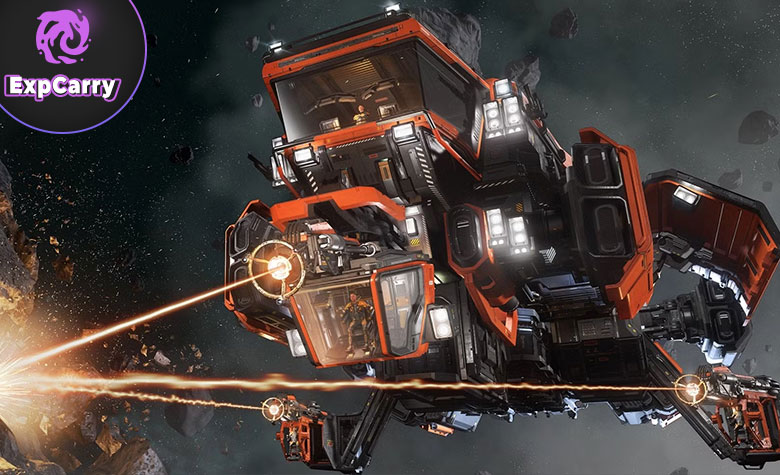
Bounty Hunting: Making Money Through Ship Combat
Bounty hunting earns aUEC through successful combat contracts against designated targets. Unlike mining or commodity trading, the primary payout does not normally depend on transporting a cargo hold to a buyer. The main costs are ship repairs, ammunition where applicable, fuel, travel and time lost through unsuccessful engagements.
The Bounty Hunters Guild uses certifications and reputation-based progression, so the highest-tier jobs are not available simply because a player owns a powerful fighter. Begin with contracts appropriate to your current certification and ship, then progress when the missions can be completed consistently without excessive damage or recovery expenses.
How to Build a Profitable Bounty Loop
Pick a geographic area with accessible contracts and convenient ship services. Prioritize targets you can defeat efficiently, including the time needed to find them and reach the next assignment. A more difficult bounty may show a higher reward while producing less actual income if each encounter requires lengthy repairs or repeated attempts.
Track the cost of ship operation as well as the contracted payout. If a mission requires repairs or rearming that consume a large share of its reward, compare it with an easier contract tier. Reputation progression may still justify temporarily lower income, but that is a separate objective from maximizing the current session's aUEC.
Ship Bounties vs Ground Combat
Ship bounties favor players confident in flight combat, targeting and defensive systems. Ground assignments can require leaving the ship, navigating a facility and surviving FPS encounters. These methods have different failure costs, so a ship well suited to one does not automatically make the other equally profitable.
When progressing into higher-risk work, check legal status and the issuing organization. Lawful Bounty Hunters Guild contracts should not be confused with unlawful combat opportunities that can create CrimeStat consequences or different mission requirements.
Mercenary and FPS Missions: Income Without an Industrial Ship
FPS contracts provide another earning route for players who do not own mining, salvage or large cargo ships. The primary requirements are transport, weapons, suitable armor, ammunition and medical supplies. Completing mercenary, security or investigation objectives can also build standing with the issuing organization and open more advanced assignments.
Short missions are attractive when the player can clear the objective with inexpensive equipment and return safely. More difficult facilities may contain valuable loot, but collecting every item is not necessarily worth the extra time or exposure. The contract reward should be evaluated separately from possible equipment recovered during the mission.
How to Farm FPS Contracts Efficiently
Choose objectives that match your equipment and familiarity with the location. Use a replaceable loadout and keep enough supplies for unexpected injuries. Before entering, confirm whether the mission requires eliminating enemies, recovering an object, interacting with a terminal or delivering evidence to another location.
After completion, verify the reward and decide whether additional looting is worthwhile. Repeatedly clearing familiar locations can reduce travel and navigation time, but missing enemies, blocked interactions or competing players can make the same assignment less practical on another server.
Contested Zones and major research facilities have additional risks and reward systems. They should not automatically be treated as stable aUEC farms merely because rare equipment can appear there; valuable loot must still be recovered and may not have a straightforward selling path.
Reputation and Resource Farming: Long-Term Economic Progression
Reputation affects earning potential because organizations can unlock additional jobs, certifications and rewards as your standing improves. A higher reputation level does not itself deposit aUEC into your wallet. The financial benefit comes from the activities it makes available and whether those activities are efficient with your current equipment.
Organizations such as Covalex Shipping, the Bounty Hunters Guild, Adagio Holdings and research groups have different progression requirements. Some reward primarily contract access, while others are associated with resources, items or crafting blueprints. These are related progression systems but not identical methods of earning cash.
Research Contracts and Collected Materials
Collection missions can be useful when you know reliable sources of the requested resources and can gather them without excessive travel. Rayari Incorporated is one example of a research organization associated with harvestables, minerals and creature materials. The current Alpha 4.10.2 RSI Discovery Month Collection track also features temporary assignments involving Shubin and Adagio Holdings. These event objectives and any blueprint-related unlocks should not be counted as immediate aUEC income unless an actual currency reward or sale is completed.
Before collecting a large stockpile for repeatable missions, verify the active contract's exact item names, quantities and delivery location. Some similar resources have different types or quality requirements, and a prepared batch is only useful if a compatible assignment is available.
Are Blueprint Rewards the Same as Money?
No. A blueprint unlocks a crafting recipe or provides access to particular equipment, while aUEC is currency used for purchases and operating expenses. Some blueprint rewards may be valuable for a player's longer-term equipment progression, but an unlock should not be entered as cash income without a verified way to realize that value.
For organization-specific requirements, reputation ranks and unlock paths, see the Star Citizen Reputation Guide. It explains why contract payouts, faction standing, crafting blueprints and physical rewards must be tracked separately.
Best Money-Making Method for Solo Players, Crews and Different Budgets
No single career is best for every account. The practical choice depends on access to ships, experience, available time and the amount that could be lost in a failed cycle. Match the earning activity to the resources already available before committing to more expensive equipment.
Best Solo Money Making
For a solo beginner, short contracts and modest hauling assignments are reasonable first choices because they can be completed without an industrial fleet or large commodity purchases. Pilots with a suitable fighter can develop bounty hunting, while those who prefer industrial work can move into hand mining, ROC operations or a dedicated solo mining ship.
A Vulture provides a salvage-focused alternative for players who already have access to the ship. The best option is the one whose entire operation you can perform alone, including cargo handling, repairs and cash-out. A career that requires crew help at its final step is not necessarily a reliable solo loop.
Best Low-Risk Money Making
Low-risk earning prioritizes manageable losses and straightforward completion. Basic contracts, short-haul missions and familiar mining routes generally offer more control than self-funded high-value cargo or contested PvP areas. These activities still carry technical and gameplay risk, but they allow the player to limit how much capital is exposed at once.
The safest option also changes with player skill. A confident combat pilot may complete easy bounties efficiently, while someone unfamiliar with ship combat may lose more time and aUEC through repairs. Compare your own completion record rather than treating a general ranking as a guarantee.
Best Money Making With High Capital
Players with substantial reserves can consider larger cargo operations, dedicated industrial ships and advanced contracts. Higher capital expands the available methods but does not remove the need to verify selling capacity, ship compatibility and operating costs. More expensive cargo also increases the loss if the route fails.
Scale up from a method that already works. A larger hauler makes sense when smaller loads are consistently selling and cargo capacity is the main limitation. A larger mining or salvage ship becomes useful when its extra output can be collected, processed and sold without creating a new bottleneck.
Best Multicrew Money Making
Coordinated crews can share duties across mining, salvage, cargo transport and combat operations. A group using a MOLE or Reclaimer can distribute extraction, equipment operation and cargo tasks, while combat teams can coordinate targets, medical support and defense. The benefit comes from operating efficiently together rather than simply having more players aboard.
Evaluate group earnings per participating player, including any shared expenses. A large total payout is less attractive when the crew spends considerable time waiting for work or the reward must be divided among many members. Decide how payments and recovered equipment will be shared before beginning a major operation.
How to Calculate Actual aUEC per Hour
The most useful money-making comparison is based on completed, repeatable operations. Advertised contract rewards and commodity values do not capture the time needed for travel, loading, processing, unloading and recovery from mistakes. Record what you actually earn after expenses rather than comparing the highest theoretical outputs of unrelated careers.
For a completed session, the basic calculation is:
Net aUEC per hour = (Total aUEC received − operating costs − realized losses) ÷ total session hours.
Total session time should include preparation, travel, scanning, combat, cargo handling, refinery collection and selling where applicable. If mining ore must be refined and later delivered, the process is not financially complete just because the refinery order has started.
Score Money Loops by Time, Reliability and Risk
Use a short record of recent completed cycles to compare career options. The objective is not to create an artificial universal score, but to identify which activity consistently converts your actual playtime into spendable aUEC.

| Metric | What to Record | Why It Matters |
|---|---|---|
| Completed Revenue | aUEC actually credited or received from sales | Excludes uncollected and speculative rewards |
| Cycle Duration | Time from preparation through payout | Measures the full earning process |
| Operating Costs | Fuel, repairs, ammunition, rentals and processing fees | Converts gross rewards into net income |
| Loss Exposure | Purchased cargo, equipment and other at-risk investment | Shows the capital exposed to an unsuccessful run |
| Completion Reliability | Successful payouts compared with attempted cycles | Identifies profitable-looking but unreliable methods |
| Recovery Time | Time needed to restart after failure | Accounts for downtime not shown in mission rewards |
Compare results across several attempts rather than declaring a winner after one unusually good run. A strong method should provide repeatable net earnings without requiring perfect server conditions or rare lucky outcomes.
When to Stop a Broken Money Loop
The original version of this guide used a two-strike rule: after two consecutive failures of the same critical payment or delivery step, switch activities rather than repeatedly testing the broken process. This remains a useful personal decision rule, but it is not an in-game mechanic or a confirmed server reset requirement.
If a trade terminal fails, choose a contract-based activity that does not depend on that terminal. If a specific mission repeatedly fails to register completion, use another contract type. The purpose of having a backup loop is to avoid committing an entire session to one malfunctioning system.
Patch Stability, Cargo Problems and Known Issues
Star Citizen is still in alpha, and technical issues can directly affect income. Contract objectives, inventory interactions, freight operations and ship retrieval all introduce dependencies that can interrupt an otherwise profitable route. The appropriate response is to identify the failed step, reduce further exposure and choose an alternative method when the issue persists.
The official Alpha 4.10.2 Known Issues documentation includes problems relevant to ordinary play, such as missing inventory items after patches, mining gadgets that cannot be placed during EVA and some mission targets that fail to spawn. These examples demonstrate why current issue reports matter to earning decisions, but they do not establish that every historical 4.8 freight-elevator or kiosk bug remains active.
Use the official Alpha 4.10.2 Known Issues list when a specific activity becomes unreliable. Where an issue has no confirmed workaround, avoid presenting speculative fixes or inventing a guaranteed recovery procedure.
How to Protect Your aUEC While Farming
Keep enough operating funds to resume earning after losing a shipment, replacing equipment or repairing a ship. For trading, test the route with limited capital before purchasing expensive cargo. For mining and salvage, confirm the sale or processing workflow before filling the ship with materials that may be difficult to unload.
A simple session routine helps limit preventable losses:
- Check contracts: Confirm that the intended earning activity is currently available.
- Test critical interactions: Verify the relevant cargo, inventory or sales workflow before scaling up.
- Use suitable equipment: Avoid entering higher-risk activities with ships or tools that cannot complete the job.
- Maintain a reserve: Keep working capital separate from cargo purchases and optional upgrades.
- Verify every payout: Do not assume that a completed flight or recovered resource has already become usable aUEC.
- Switch when necessary: Move to a different contract or career if the current method repeatedly fails.
These precautions are useful beyond patch launches. They reduce exposure to ordinary mistakes, hostile encounters and temporary technical problems without requiring a fixed universal farming route.
Recommended Money-Making Progression in 2026
A practical progression moves from low-investment income to specialized careers once the player understands the relevant mechanics and can absorb losses. The goal is not to follow one mandatory path, but to avoid buying equipment before there is a clear use for it.
Stage 1: Build a Reliable Cash Reserve
Begin with short contracts suited to the available starter ship. Learn delivery, cargo handling, ship retrieval and the payment process before taking on costly operations. Develop reputation with one appropriate employer when its mission chain offers worthwhile progression, but keep the immediate objective focused on successful completions.
Stage 2: Choose a Repeatable Career
Once ordinary expenses are manageable, select a career based on preferred gameplay and existing equipment. Hauling suits players who enjoy logistics, bounty hunting suits combat pilots, and mining or salvage suits industrial specialists. Avoid purchasing several different specialized ships before understanding which career you will actually use.
Stage 3: Expand Capacity and Reduce Downtime
After establishing a reliable loop, upgrade the part of the operation that limits earnings. This may be cargo space, mining capability, salvage throughput, contract access or travel efficiency. A successful upgrade should improve real net income or reduce operational risk, not simply increase a ship's theoretical capacity.
At this stage, maintain a backup earning method that uses different infrastructure. A player depending on commodity trading can keep compatible contracts available, while a miner or salvager can switch activities when processing or sales become inconvenient.
Star Citizen Money Making FAQ
These answers cover additional questions about earnings, required ships and the distinction between cash income and progression rewards.
What is the fastest way to make aUEC in Star Citizen 2026? There is no verified universal fastest method in Alpha 4.10.2. The best repeatable income depends on contract access, available ships, travel time, selling conditions and risk. Compare completed net earnings rather than relying on isolated payout claims.
Can you make money without buying an expensive ship? Yes. Delivery, entry-level hauling, investigation and suitable combat contracts can be completed with relatively modest equipment. Group participation can also provide access to industrial operations without requiring every player to own the relevant ship.
Is mining or salvage better for solo players? Both can work well with appropriate equipment. Mining involves scanning, extraction and potentially refining, while salvage depends on finding suitable targets, recovering materials and selling or processing the output. Choose based on ship access and the full workflow you can reliably complete.
Does Alpha 4.10.2 wipe existing aUEC? The official Alpha 4.10.2 release notes state that Long Term Persistence is preserved. The listed base starting aUEC is not evidence of a full wipe of established wallets, and future persistence changes must be evaluated from their own patch notes.
Conclusion
For most players, the strongest starting point is a repeatable contract loop that pays reliably and does not expose substantial capital. Hauling, bounty hunting and FPS missions provide different routes into stable earnings, while mining, salvage and trading become more attractive with the right equipment and operating reserve. Track net aUEC after expenses, verify every cash-out and switch activities when the current route stops working.