


This WoW pet guide for Midnight is written for players who want repeatable wins and fast collection progress without relying on fragile “one best team” lists. Expansion launches always reshape pet battling in two places: how you acquire new pets, and which mechanics dominate trainer fights and PvP queues. Your advantage comes from building a small set of reliable cores, then swapping one slot based on matchup instead of rebuilding everything every patch.
Midnight launches on March 2, 2026, and details may still shift between late testing and live. Use this guide as a system. You will get a clear way to evaluate midnight new pets 2026 (only the ones that are actually battle-capable), a role based approach that stays useful even when the meta rotates, and practical playbooks for PvE and PvP pet battles. The goal is consistent performance, not perfect predictions.
How Pet Battles Work in WoW Midnight 2026
WoW Midnight pet battles still come down to tempo and turn value. Tempo is who acts first and who controls swaps. Turn value is whether your turn creates one effect or sets up multiple turns of advantage. If you are losing pet battles, it is usually because of one of these problems: you are slower than you think, you have no answer to avoidance or decoy, or you are trading turns for effects that do not actually secure a kill.
In Midnight testing builds and developer discussion, the biggest change shown so far is how many wild pets in the new zones are collected. Instead of repeated wild pet battles for captures, reports describe a quick interaction that adds the pet to your bags or journal. Treat this as “likely, but still subject to change” until you confirm it on live, and build your plan around role coverage and upgrade discipline.
Capture rules in Midnight zones and what they mean for you
If Midnight pets in the new zones are obtained with a quick interaction instead of full battles, your biggest time sink shifts from catching to building. That is good news if you like collecting, but it also means you can end up with a large journal quickly while still lacking enough leveled, upgraded pets to actually win fights.
Important nuance from early datamining and testing reports: a large portion of “new” Midnight zone pets may be non-combat companions without battling stats or movesets. Those pets are still great for collecting, but they do not change your battle roster directly. The evaluation and upgrade framework below applies only to pets that actually have stats and a moveset you can queue into pet battles with.
Use these practical rules to stay efficient no matter how capture works:
- Do not upgrade everything you catch. Upgrade only pets that improve an existing team core or fill a missing counter slot.
- Separate pets into two groups: collectible companions you like, and battle ready pets you invest in.
- Assume your first week bottleneck is leveling and upgrades, not finding pets.
Midnight New Pets 2026: Finding Battle Ready Value
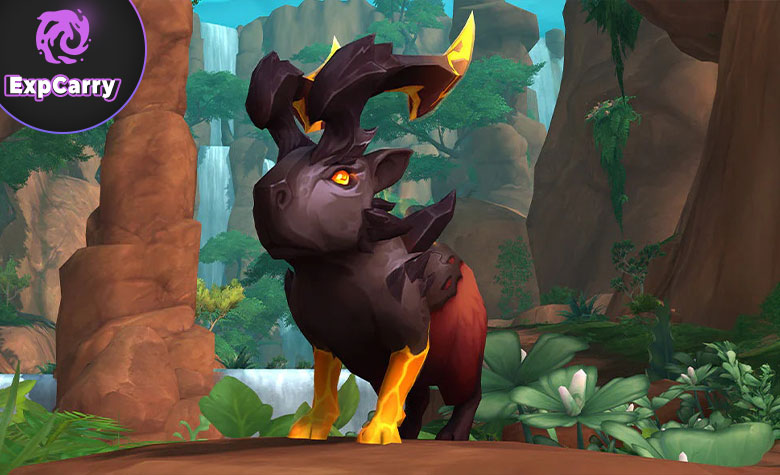
When players say “new pets are strong,” they usually mean the pet has one of a few high impact tools: a reliable multi hit that breaks decoy, speed control, a weather package, a forced swap tool, an avoidance pattern that buys turns safely, or a finisher that converts low HP into kills. Your job is to identify which new pets actually provide battle value instead of being purely cosmetic or non-combat.
Because early builds can include placeholder pets or incomplete move sets, avoid committing upgrades until a pet proves it has consistent combat value. A simple way to do that is to test each candidate in three environments: one trainer style PvE fight, one world style encounter, and a short PvP set. If the pet feels clunky in all three, bench it and save your resources.
What makes a new pet worth leveling first
Prioritize midnight new pets 2026 (battle-capable pets with full stats and a moveset) that do one of these things better than your current roster:
- Win the first two turns reliably through speed or safe setup.
- Remove common defenses with multi hit pressure or unavoidable damage.
- Force swaps or punish swaps, which is how you break many PvP teams.
- Enable a weather plan where your second pet gains extra damage or survivability.
- Carry fights by surviving long enough to apply dots and deny tempo.
If a new pet is only “good” when it high rolls RNG, treat it as optional. Consistency wins more pet battles per hour than highlight turns.
A Fast Evaluation Framework for New Pets
You do not need a spreadsheet to decide what is worth building. You need a repeatable checklist you can apply in under two minutes. This helps you avoid the most common mistake in a new expansion: spending stones and time on pets that look interesting but do not improve your win rate or coverage.
| Category | What to check fast | Decision rule |
|---|---|---|
| Speed and tempo | Does it act first often, or does it have speed control | If it cannot win tempo, it must bring strong utility |
| Damage shape | Burst, dots, or multi hit that breaks decoy | Multi hit or unavoidable pressure is a premium |
| Utility | Weather, forced swap, stun, shield, heal, avoidance | One good utility tool can justify average damage |
| Turn economy | Does it create advantage over multiple turns | Prefer effects that last and do not waste turns |
| Fit into your roster | Does it upgrade a core or fill a counter slot | If it needs a new team to matter, bench it for later |
Red flags that usually mean “do not upgrade yet”:
- Long cooldown abilities that do not swing a matchup when used.
- Movesets that require multiple dead turns before anything happens.
- Win conditions that rely on low odds procs rather than sequencing.
Explore services related to this guide, selected from our World of Warcraft catalog.
View All World of Warcraft Services


Team Building That Survives Meta Shifts
The most stable approach to wow midnight pet battles is role based team building. You build cores around roles, not around specific named pets that may rise or fall. Then you keep one flex slot for counters. This is how high win rate players stay stable across patches.
The five roles you actually need
Build at least one strong pet for each role, then expand into second options when you have resources:
| Role | Job in battle | What “good” looks like |
|---|---|---|
| Opener | Win tempo early and create safe swaps | Speed advantage, early pressure, or a safe setup |
| Weather setter | Multiply damage or defense over several turns | Weather + a move that benefits from it |
| Control | Force swaps, deny key turns, punish greed | Forced swap, stun, root, or anti swap pressure |
| Finisher | Convert low HP into kills and close games | Reliable burst or execute style cleanup |
| Stall | Outlast and win through attrition | Shields, heals, avoidance, dots, and safe tempo |
Two universal rules that prevent most auto losses:
- Always include a plan for decoy or avoidance: multi hit, unavoidable pressure, or a way to wait without losing the game.
- Avoid stacking three pets that share the same hard counter. Mixed coverage beats perfect synergy that collapses to one family.
PvE Strategy System: Trainers, World Encounters, Leveling
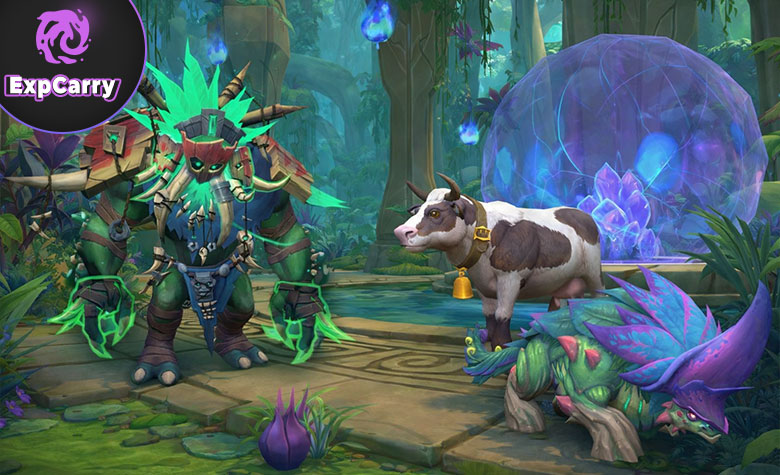
PvE pet battles reward low variance plans. You want wins with minimal resets because repetition is the real grind. The strongest PvE pattern is setup plus sweep: establish an advantage that makes your damage or defense better, then switch to a pet that can clear multiple enemies without risky lines.
Use this PvE sequencing checklist:
- Start with a safe advantage: weather, shield, or a debuff that improves your damage.
- Swap when the enemy is locked into a weak turn, not when you feel impatient.
- Do not over chase perfect captures or perfect RNG. A stable win is faster than a flashy win.
Carry pet leveling without wasting time
If you are leveling in Midnight, treat the carry pet as a tool, not the star. The carry should enter only when the opening is controlled. A simple routine that stays efficient:
- Turn 1: bring carry pet in only if the enemy opening cannot one shot it.
- Turn 2: swap to your sweeper and follow your normal win line.
- If the carry pet dies often, stop forcing it. You are losing time, not gaining it.
When you test a new pet for PvE value, measure one thing: does it reduce resets and speed up wins. If it does not, keep it as a collector pet and move on.
PvP Strategies: Drafting, Matchups, Counterpacks
PvP pet battles are won in draft and then executed in turns. Most players lose because they queue the same trio into everything. Instead, build a base core and keep counterpacks: one pet that replaces your weakest slot to answer a specific threat. This keeps your roster compact and your decision making simple.
Use these draft rules:
- Check speed first. If you are slower, plan for defense and safe swaps until you create an opening.
- Never queue without an answer to decoy or avoidance. It is the most common reason games feel “unfair.”
- Prefer one control tool on every team. Control is how you stop enemy setups and punish greed.
Matchup playbooks you can apply immediately
These are not specific pet names, they are lines you can run with many different pets:
- Versus decoy and avoidance: lead with multi hit pressure or use a low cost turn to wait out avoidance, then punish the cooldown window. Do not throw your finisher into a protected turn.
- Versus undead sustain: avoid trading small hits into healing loops. Build pressure with dots or weather amplified damage, then time your burst when their sustain tool is down.
- Versus forced swap teams: keep one pet that can punish swaps or stay safe when swapped in. Do not leave fragile setup pets exposed in slot one.
- Versus weather mirrors: win the weather war by timing. Either overwrite their weather late to waste their boosted turns, or ignore weather and win through control if your tempo is better.
Anti tilt habit that improves win rate fast: if you lose twice to the same archetype, stop queuing the same trio. Replace one slot with a counterpack pet and requeue. This prevents streak losses and makes you learn faster.
Weekly Routine and Upgrade Priorities
A good routine is what turns a big journal into a winning roster. Midnight is likely to tempt you into collecting many pets quickly, so you need a simple upgrade policy. Your resources should follow your team roles, not your emotions.
A 20 minute daily loop for steady progress
- 5 minutes: test one new battle-capable pet or one new team tweak in a controlled PvE fight.
- 10 minutes: run two to three battles in the content you care about most, trainers or PvP.
- 5 minutes: update your favorites list by roles and note which matchups felt bad.
Weekly priorities that stay efficient:
- Week start: build or refresh one core team, then pick one counterpack target you want to solve.
- Mid week: level one new battle ready pet that fills a missing role or counter slot.
- Week end: spend upgrades only on pets that either improve your core or fix a matchup that keeps beating you.
A simple upgrade rule that prevents waste: if a pet does not show clear value in at least one of these categories, do not upgrade it yet: tempo opener, decoy answer, weather plan, control tool, reliable finisher, stable stall plan.
Conclusion
WoW Midnight pet battles will reward players who treat pet battling like a system instead of chasing fragile tier lists. Build role coverage first, then invest upgrades only into pets that improve an existing core or solve a matchup problem. Use a fast evaluation checklist for midnight new pets 2026, and keep one flex counterpack slot so you can adapt without rebuilding.
In PvE, win by reducing resets with setup plus sweep sequencing and disciplined carry pet usage. In PvP, win drafts by tracking speed, keeping a decoy answer, and rotating a counterpack when you face repeated archetypes. If you follow the routine and upgrade rules in this guide, your roster stays strong even as Midnight changes the details around it.