
WoW Midnight Season 2 introduces a completely new Mythic+ dungeon pool, a new seasonal rating climb and a fresh gearing cycle. The rotation includes the new Altar of Fangs dungeon, four Midnight dungeons that were not active during Season 1 and three returning dungeons from earlier expansions.
This Midnight Season 2 Mythic+ start guide covers all eight dungeons, the best order for the first weekly reset, Great Vault thresholds, weekly limits, upgrade priorities and the most efficient routes toward Keystone Master, Keystone Hero and Keystone Legend.
Season 2 release note: Midnight Season 2 begins one week after Patch 12.1: The Curse of Ula'tek. Altar of Fangs becomes available up to Heroic difficulty during the patch week and joins Mythic+ when the new season begins.
For routes, boss mechanics and individual dungeon guides, visit the WoW Dungeon and Mythic+ Guides hub.
WoW Midnight Season 2 Mythic+ Dungeon Pool
The Season 2 rotation contains eight dungeons: five from Midnight and three returning legacy instances.
| Dungeon | Expansion | Season 2 Focus |
|---|---|---|
| Altar of Fangs | Midnight | A completely new three-boss dungeon. Use the Patch 12.1 week to learn its bosses before Mythic+ opens. |
| Murder Row | Midnight | Event pacing, priority casters and coordinated interrupts. |
| Den of Nalorakk | Midnight | Gauntlet execution, movement and priority-target damage. |
| The Blinding Vale | Midnight | Mobile trash packs, dangerous casts and boss-positioning checks. |
| Voidscar Arena | Midnight | Flexible routing, miniboss choices and efficient enemy-forces planning. |
| Ruby Life Pools | Dragonflight | Frequent group damage, movement-heavy bosses and important interrupt assignments. |
| King's Rest | Battle for Azeroth | Long boss encounters, disciplined defensive usage and limited recovery time after deaths. |
| Temple of Sethraliss | Battle for Azeroth | Reworked gauntlets, coordinated utility and a mechanically demanding final section. |
The exact easiest and hardest dungeons should not be locked into the guide before final live tuning. Blizzard is still adjusting enemy health, boss mechanics, checkpoints, caster density and dungeon pacing on the PTR.
Altar of Fangs Mythic+ Overview
Altar of Fangs is the only completely new dungeon in the Season 2 pool. It contains three bosses:
- Rav'i
- The Writhing Coil
- Zul'jan
The dungeon becomes available up to Heroic difficulty when Patch 12.1 launches. Mythic and Mythic+ versions open one week later with Midnight Season 2.
This creates a valuable preparation window. Players should complete several Heroic runs during the patch week to learn the basic boss mechanics, dungeon layout and important trash abilities. Heroic difficulty will not provide a finished Mythic+ route, but it removes the need to learn every boss mechanic inside the first timed keystone.
Altar of Fangs preparation checklist
- Complete the dungeon on Heroic before Season 2 begins.
- Identify important interrupt and crowd-control targets.
- Learn the three boss arenas and movement mechanics.
- Check which dispels, defensives and utility abilities the group requires.
- Do not copy a final Mythic+ route until enemy forces and live trash placement are confirmed.
What Changed in the Season 2 Dungeon Pool?
Blizzard's stated goal is to distribute dungeon difficulty more evenly and make damage dealers contribute more through target prioritization, interrupt usage and real damage checks. Several returning and Midnight dungeons have received structural changes:
- Murder Row: reduced event downtime and fewer oppressive caster combinations.
- Den of Nalorakk: pacing, role-play sequences and checkpoints have been adjusted.
- The Blinding Vale: caster density and several boss mechanics have been revised.
- Voidscar Arena: routing choices and miniboss interactions have been updated.
- King's Rest: the council order is fixed, checkpoints are improved and King Dazar has been reworked.
- Temple of Sethraliss: major changes affect the gauntlet and final encounters.
- Ruby Life Pools: several trash packs, patrols and overlapping abilities have been simplified.
These changes mean old routes cannot be imported without review. Existing knowledge remains useful, but enemy count, pull combinations and boss timing must be checked against the live Season 2 version.
Explore services related to this guide, selected from our Mythic Dungeons catalog.
View All Mythic Dungeons Services

Midnight Season 2 Great Vault Thresholds
The Mythic+ row of the Great Vault unlocks up to three reward choices. You still select only one final reward from the entire Great Vault each week.
| Completed Dungeons | Vault Slots Unlocked | Reward Calculation |
|---|---|---|
| 1 Mythic+ dungeon | First dungeon slot | Based on the highest eligible keystone completed that week. |
| 4 Mythic+ dungeons | Second dungeon slot | Based on the fourth-highest eligible keystone completed that week. |
| 8 Mythic+ dungeons | Third dungeon slot | Based on the eighth-highest eligible keystone completed that week. |
One high key followed by seven very low keys does not produce three equally strong Vault choices. To maximize the second and third slots, the fourth-highest and eighth-highest runs must also be completed at a useful level.
The correct target is therefore not simply “complete eight keys.” Complete eight keys as close as possible to the highest difficulty your character can consistently finish.
Weekly Caps and Mythic+ Limits
| System | Weekly Limit | Practical Meaning |
|---|---|---|
| Mythic+ dungeon runs | No weekly cap | You can complete and repeat as many keystones as needed. |
| End-of-dungeon loot | No weekly lockout | Every completed run can provide eligible dungeon loot. |
| Mythic+ rating | No weekly cap | Rating can be increased whenever a better dungeon score is earned. |
| Great Vault dungeon choices | Maximum of 3 slots | Complete 1, 4 and 8 dungeons, but select only one final Vault reward each week. |
| Mistcrests | Weekly acquisition cap applies | Check the currency panel for the current Season 2 cap before farming additional runs only for crests. |
| Nebulous Voidcores | Limited by acquisition sources | Available as a Great Vault alternative from the beginning of Season 2. |
| Ascendant Venomstones | Available later in the season | Each completed +10 or higher can award one Venomstone under the current PTR rules. Ten are required for one eligible upgrade. |
Blizzard has not yet published the final live Season 2 Mistcrest cap. Do not hard-code an unconfirmed numerical cap into the article. Update this section after the live currency tooltip and official release notes become available.
Best Order for the Patch Week
The week between Patch 12.1 and Season 2 should be used for preparation rather than outdated Season 1 upgrades.
- Complete Altar of Fangs on Heroic. Learn all three bosses and identify important trash abilities.
- Review the seven remaining dungeons. Refresh boss mechanics and inspect the Season 2 changes.
- Prepare multiple talent setups. Keep separate builds for single-target bosses, sustained AoE and heavy interrupt requirements.
- Organize consumables. Prepare flasks, food, combat potions, health potions and utility items.
- Build a stable group when possible. Consistent players reduce the time needed to relearn eight dungeons.
- Avoid unnecessary Season 1 upgrades. Save gold and resources for the new item-level cycle.
Best Week 1 Mythic+ Progression Order
The strongest Week 1 plan balances rating, Great Vault quality and efficient use of upgrade currencies.
Step 1: Establish a score in all eight dungeons
Do not repeat only two or three comfortable dungeons. That approach can farm gear, but it creates large gaps in Mythic+ rating and makes the later KSM or KSL climb less efficient.
Begin with a realistic key level that the group can consistently time. Complete each dungeon once to establish routes, rating and baseline experience across the entire pool.
Step 2: Secure four Vault runs early
Complete at least four useful keystones during the first sessions of the reset. This secures two dungeon choices in the Great Vault and prevents the entire weekly result from depending on one item.
Step 3: Improve the lowest dungeon scores
Open the Mythic+ rating panel and identify the weakest dungeon scores. Raising a low or missing dungeon score normally provides more rating than repeating a dungeon where the character already has a strong timed result.
Step 4: Finish eight consistent runs
Complete eight total keystones to unlock the third dungeon Vault choice. The eighth-highest run determines the quality of that slot, so avoid filling the final runs with keys far below the character's normal level unless the weekly reset is about to end.
Step 5: Spend Mistcrests after major weekly drops
Do not immediately upgrade every early dungeon item. Clear the available raid bosses, review direct drops and identify which slots are likely to be replaced. Then prioritize:
- Best-in-slot or long-term weapons.
- High-value dungeon trinkets.
- Tier-set items and Catalyst targets.
- Large item-level gaps.
- Survivability upgrades required for the next key range.
Step 6: Begin the seasonal rating pathway
Once every dungeon has a stable score, push the lowest keys first. A balanced score profile is more efficient than repeatedly improving one favorite dungeon.
KSM, KSH and KSL Rating Pathways
| Milestone | Rating Requirement | Approximate Dungeon Target | Main Reward |
|---|---|---|---|
| Keystone Conqueror | 1,500 rating | Build a timed score across the complete pool. | Seasonal title under the current PTR structure. |
| Keystone Master | 2,000 rating | Approximately every dungeon timed near +7, with small variations depending on completion speed. | Breath of Blight mount. |
| Keystone Hero | 2,500 rating | Progress toward consistent +9 and +10 completions. | Seasonal achievement; timing each dungeon at +10 unlocks its individual teleport. |
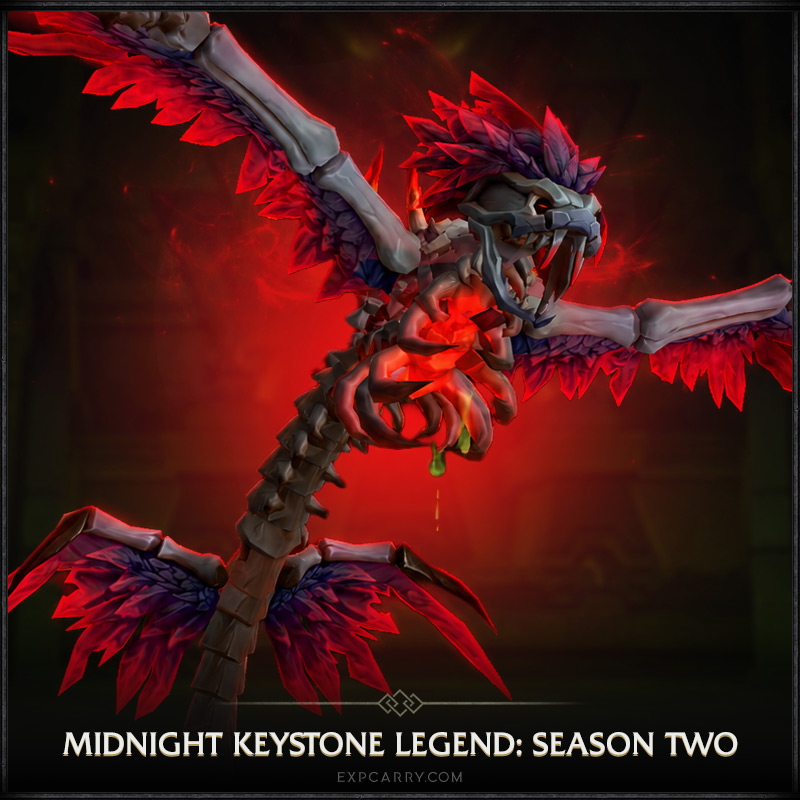
| Keystone Legend | 3,000 rating | Approximately every dungeon at +12, with several +13 scores normally required. | Breath of Ruin mount under current PTR data. |
Exact rating depends on whether a dungeon is completed within the timer and how much time remains. The key levels above are planning targets, not guaranteed mathematical requirements.
Fastest Keystone Master Path
- Complete all eight dungeons at a manageable level.
- Raise every missing or low score to approximately +5.
- Push the full pool toward +7 instead of farming one dungeon repeatedly.
- Replace depleted or weak +7 results with timed completions.
- Use stronger dungeons to compensate for one temporarily difficult key when necessary.
KSM is primarily a full-pool consistency challenge. A character with several high keys and multiple missing dungeons will normally progress more slowly than a character with balanced timed results.
Players who want a direct rating route can use the WoW Keystone Master Boost or select a custom target through the Mythic+ Rating Boost.
Fastest Keystone Legend Path
- Reach KSM first: create a stable score across all eight dungeons.
- Push every dungeon to +10: build toward Keystone Hero and unlock dungeon teleports.
- Move the complete pool to +12: avoid leaving one or two weak dungeons behind.
- Upgrade the weakest scores to +13: use the rating panel to identify the largest gains.
- Push favorable dungeons higher: compensate for one difficult dungeon without abandoning it completely.
- Prioritize clean completions: at this level, deaths and depleted runs reduce rating efficiency substantially.
KSL should be treated as a season-long progression project rather than a last-week grind. The efficient route is +7 across the pool, then +10, then +12, followed by selective +13 upgrades.
For an organized 3,000-rating push, see the WoW Keystone Legend Boost. Players targeting the intermediate milestone can use the WoW Keystone Hero Boost.
Best Mythic+ Strategy for Gear Farming
Rating and gear farming require different dungeon-selection logic.
| Goal | Best Strategy |
|---|---|
| Improve rating | Run the dungeon with the lowest or missing score. |
| Unlock Great Vault choices | Complete 1, 4 or 8 runs near the highest consistent key level. |
| Farm a specific item | Repeat the dungeon containing the targeted weapon, trinket or armor piece. |
| Farm Mistcrests | Run the fastest reliably completed keys that award the required crest tier. |
| Prepare for KSM or KSL | Keep dungeon scores balanced across the full pool. |
For repeated runs and targeted loot, use the Mythic+ Gear Farm. Individual keystones and weekly run packages are available through the WoW Mythic+ Runs service.
Pug and Premade Priorities
For pug players
- Prioritize proven routes with limited skip requirements.
- Join groups targeting a specific rating or Vault objective.
- Check whether the group has enough interrupts, dispels and battle resurrection options.
- Raise the lowest dungeon score rather than applying only to favorite dungeons.
- Leave experimental high-risk pulls for organized groups.
For premade groups
- Assign interrupts and stops before the key begins.
- Create separate Fortified and Tyrannical route variants when necessary.
- Review failures after each run instead of changing the entire route immediately.
- Push the full pool in rating bands: +7, +10, +12 and then +13.
- Use the same players and roles whenever possible to improve consistency.
Midnight Season 2 Mythic+ Checklist
- Learn Altar of Fangs during the Patch 12.1 preparation week.
- Review the updated routes for all seven returning Season 2 dungeons.
- Complete all eight dungeons instead of farming only a small subset.
- Secure four useful runs early for two Great Vault choices.
- Complete eight consistent runs for the third dungeon slot.
- Improve the weakest dungeon scores first.
- Save Mistcrests for long-term weapons, trinkets and tier-set pieces.
- Target approximately +7 across the pool for KSM.
- Build toward +10 across the pool for KSH and dungeon portals.
- Use +12 and selected +13 completions as the practical KSL route.
Midnight Season 2 Mythic+ progression is most efficient when gearing, Vault completion and rating are handled as one connected system. Learn the full dungeon pool, keep scores balanced and complete the 1, 4 and 8-run Vault thresholds at the highest consistent difficulty. This produces better weekly rewards and a much cleaner path from the first keystone to Keystone Master and Keystone Legend.
WoW Mythic+ Season 2 Services
- WoW Mythic+ Services — all available dungeon, rating and gear options.
- Mythic+ Keys and Weekly Runs — individual keys and multiple-run packages.
- Mythic+ Rating Boost — custom rating targets from the character's current score.
- Keystone Master Boost — reach 2,000 rating and earn the Season 2 KSM reward.
- Keystone Hero Boost — reach 2,500 rating and complete +10 dungeon targets.
- Keystone Legend Boost — reach 3,000 rating and earn the Season 2 KSL reward.
- Mythic+ Gear Farm — repeat selected dungeons for targeted loot.