





 ExpCarry Blogger
Outlaw Rogue Guide for WoW Midnight Season 1 - Best Builds, Rotations, and Tips
Outlaw Rogue guide - updated for WoW Midnight Season 1. This guide follows the same reference structure and focuses on current PvE setups for raids, Mythic+, and delves, plus PvP strategies for Solo Shuffle, 2v2, 3v3, and RBG. It covers talents, rotation priorities, stat priority, gear approach, and practical tips to maximize Outlaw performance. For raids, Fatebound is the default hero talent for smooth single-target damage. In Mythic+, Fatebound is also the higher-performing AoE choice, while Trickster is now the more niche alternative rather than the default dungeon recommendation.
PvE Guide for Outlaw Rogue in WoW Midnight Season 1
Outlaw Rogue is a sustained melee DPS spec with strong cleave through Blade Flurry, solid single-target pressure, and excellent utility. You maintain Slice and Dice, keep Roll the Bones rolling efficiently, and manage Combo Points with Sinister Strike and finishers like Between the Eyes and Dispatch. Fatebound is preferred for raid single-target and remains the more practical option for most players because it is smoother and more consistent. In Midnight Season 1, Outlaw also gains the Apex Talent Gravedigger, which adds extra value to Between the Eyes and smooths the spec's finisher rhythm. Strengths are flexible damage profiles and high uptime; weaknesses are rotation complexity and the need for good planning to avoid wasted resources.
Outlaw Rogue Raid Guide in Midnight Season 1
In raids, align Adrenaline Rush and Killing Spree with encounter damage windows and Bloodlust while maintaining uptime on the boss. Plan Blade Flurry for predictable add waves and avoid wasting cleave on low-priority targets. Movement is handled with Grappling Hook and Sprint to minimize lost globals. Outlaw is strong in sustained boss damage with added cleave flexibility, and its value rises when encounters reward uptime and clean target access rather than short burst cycles.
Best Talents for Outlaw Rogue Raids
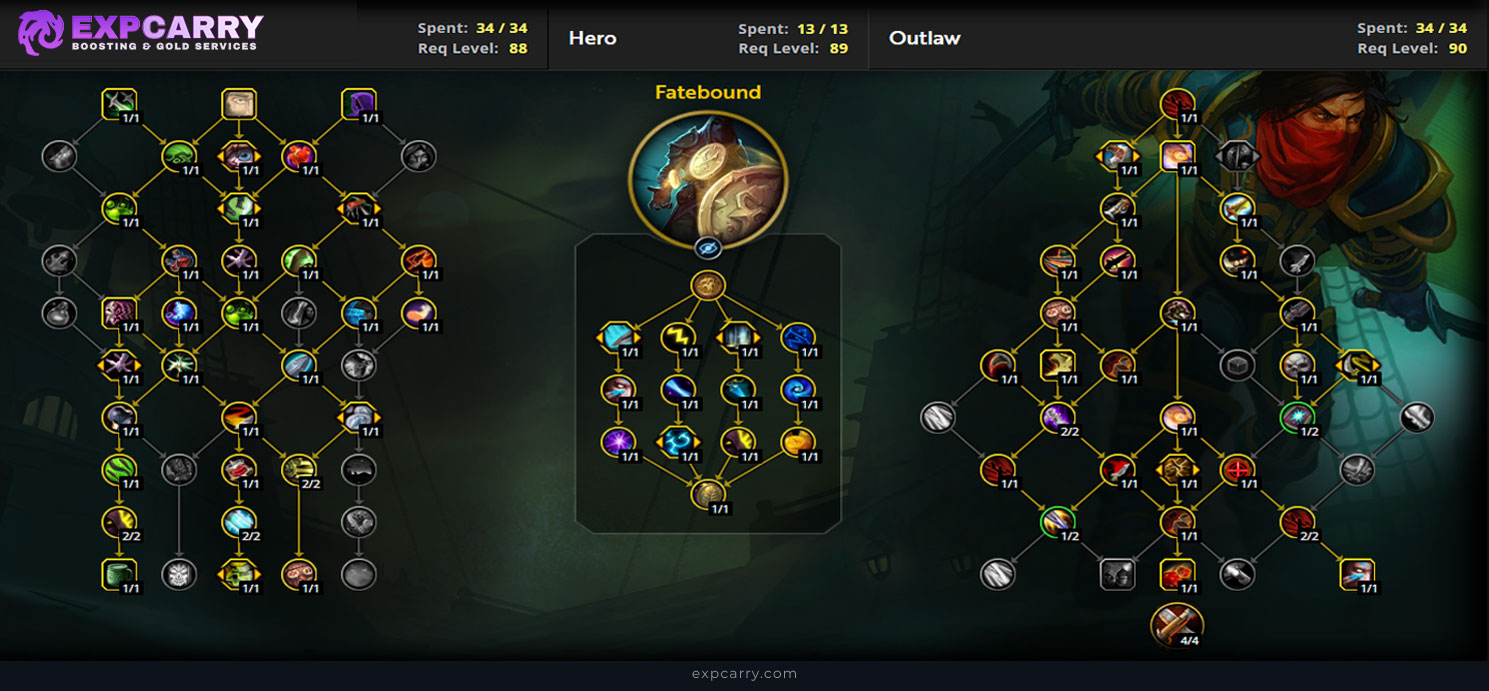
Use a Fatebound single-target build for most raid bosses. It is the current go-to setup for Midnight Season 1 and offers the best combination of sustained damage and ease of execution. Trickster can still be played if you want the more complex alternative, but it is no longer the default recommendation. On fights with meaningful add waves or long cleave windows, the Fatebound AoE build is also a valid swap.
Best Stats for Outlaw Rogue Raids
- Critical Strike
- Haste
- Versatility
- Mastery
Agility is the primary stat. In Midnight Season 1, Critical Strike and Haste are your main PvE secondaries, with Versatility behind them and Mastery still the weakest stat in most standard setups. Crit starts losing value once you reach very high levels, while Haste becomes less valuable after your rotation feels smooth during Adrenaline Rush. Exact values still shift with gear and talent choices, so sim your character when choosing between close upgrades.
Best Consumables, Enchants, and Gems for Outlaw Rogue Raids
- Potion: Use Potion of Recklessness on pull and during key damage windows; keep Silvermoon Health Potion for emergencies.
- Food: Use Silvermoon Parade when available; otherwise use Royal Roast.
- Flask: Run Flask of the Shattered Sun by default. If your Crit gets very high, Flask of the Blood Knights becomes a reasonable alternative.
- Weapon oil: Use Thalassian Phoenix Oil on both weapons.
Enchants
- Weapon: Use Jan'alai's Precision on both weapons.
- Rings: Use Crit or Haste enchants depending on your gear, since Outlaw gem and enchant choices can shift with current stat balance.
- Other armor enchants: Use the current Midnight Season 1 enchants that support sustained damage and survivability, with Leech and movement value still being useful on progression and keys.
Gems
- Unique gem: Indecipherable Eversong Diamond is the default choice, with Powerful Eversong Diamond as the alternative at very high Crit levels.
- Other sockets: Use Crit or Haste focused gems depending on your current gear, and sim if you are choosing between multiple similar options.
Best Gear for Outlaw Rogue Raids
Prioritize the highest item level slow main-hand weapon first, then strong passive trinkets and your four-piece set. Current Midnight Season 1 raid gearing points toward Arator's Swift Remembrance as the best main-hand target, with passive trinkets like Gaze of the Alnseer and Umbral Plume as premium options. Crafted pieces also matter, especially Silvermoon Agent's Sneakers and Masterwork Sin'dorei Band, while the ideal long-term set path generally leans toward shoulders, chest, legs, and gloves, with off-set legs becoming attractive later if they offer better stats. Do not drop major item level just to chase perfect secondaries.
Rotation and Ability Priority for Outlaw Rogue Raids
Maintain Slice and Dice at all times and keep Roll the Bones active with efficient rerolls. During major cooldowns like Adrenaline Rush and Killing Spree, avoid energy capping, spend Combo Points aggressively, and use Between the Eyes at high value points in the cycle. Gravedigger adds more Between the Eyes value over time, but it does not fundamentally rewrite the spec. The Midnight Season 1 tier set supports your sustained loop instead of forcing a completely different rotation.
Single Target
- Keep Slice and Dice up, then maintain Roll the Bones with efficient buff usage rather than wasteful rerolls.
- Use Adrenaline Rush early and often, aligning with encounter buffs when practical.
- Spend high Combo Points on Between the Eyes, then Dispatch as your main finisher; use Pistol Shot with Opportunity procs and Sinister Strike as your primary generator.
AoE Rotation
- Activate Blade Flurry whenever sustained cleave is present and maintain it without wasting duration on dying targets.
- Use Killing Spree and other cooldowns while Blade Flurry is active on stacked packs or add waves; keep Between the Eyes on priority targets and let Blade Flurry convert the rest of your pressure into cleave.
Opener
- Pre-pull: apply poisons, use Stealth if possible, and pre-pot; on pull, cast Slice and Dice, then Roll the Bones, Adrenaline Rush, Between the Eyes, and settle into your normal finisher cycle. Use Killing Spree once you are stable on positioning and energy.
- For survival, plan Feint and Cloak of Shadows for scripted magic damage, use Evasion for heavy physical hits or add waves, and use Crimson Vial proactively on dangerous overlaps.
Outlaw Rogue Mythic Plus Guide in Midnight Season 1
In Mythic+, Outlaw still excels at sustained cleave on frequent pulls, with Blade Flurry, repeated utility, and stable target pressure making it valuable in organized keys. The main Midnight Season 1 change is that Fatebound AoE is now the higher-performing dungeon build, while Trickster AoE is the lower-performing alternative. Your main value in keys comes from sustained damage, target access, and excellent stops through Kick, Kidney Shot, Gouge, Blind, and other control tools. Outlaw is strongest when you keep Blade Flurry active on live packs and avoid wasting cooldowns on pulls that die too quickly.
Best Talents for Outlaw Rogue Mythic Plus
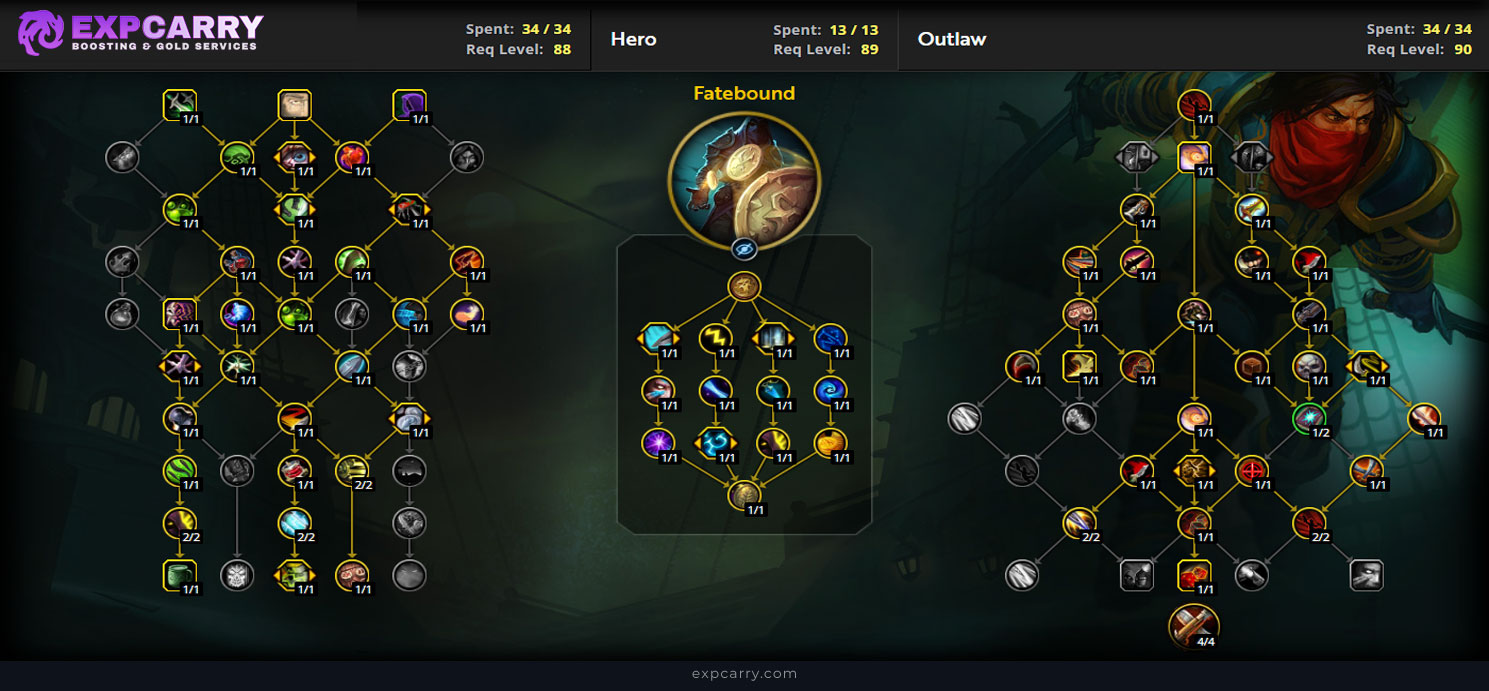
Use the Fatebound AoE build as your default Mythic+ setup. It is the stronger dungeon build in Midnight Season 1 and also works well on raid encounters with regular add spawns or permanent cleave. Trickster AoE is still playable, but it now has a lower ceiling than the equivalent Fatebound version. If you are very early in gearing and your Crit and Haste are still low, the separate low-Crit build is also a good choice for easier pacing and smoother resource flow.
Best Stats for Outlaw Rogue Mythic Plus
- Critical Strike
- Haste
- Versatility
- Mastery
This priority supports multi-target flow and keeps your sustained damage strong while preserving enough Haste to smooth out the rotation. Versatility still has real defensive value in keys, but it is no longer the default top PvE stat. Aim to keep Crit and Haste strong while avoiding pointless item level losses for tiny secondary-stat gains.
Best Consumables, Enchants, and Gems for Outlaw Rogue Mythic Plus
- Use Potion of Recklessness on large pulls or priority targets; pre-pot before high-value pulls if your route supports it.
- Use Silvermoon Parade when possible; otherwise choose Royal Roast.
- For flasks, continue using Flask of the Shattered Sun unless your gear pushes you toward the Blood Knights alternative.
- Use Thalassian Phoenix Oil on both weapons before runs.
- Enchants and gems broadly mirror the raid setup, with Crit and Haste as the main focus unless your current gear sims differently.
Rotation and Ability Priority for Outlaw Rogue Mythic Plus
On packs, activate Blade Flurry before your real cleave starts, then maintain Slice and Dice, keep Roll the Bones active, and funnel your finishers into priority targets while Blade Flurry spreads the damage. Outlaw succeeds in Midnight Season 1 when each dangerous pull gets at least one meaningful offensive cooldown and your utility is used on time. Kick is especially valuable because Rogue interrupts now have a 6-second lockout in PvE, which makes clean stops even more rewarding.
Single Target
- On bosses and priority mobs, use the standard raid cycle with good Adrenaline Rush timing.
- Maintain Slice and Dice and Roll the Bones, prioritize Between the Eyes and Dispatch, and avoid energy capping.
AoE Rotation
- Keep Blade Flurry active during every serious pack and do not let its duration drop while enemies are still alive.
- Stagger cooldowns so each dangerous pull has at least one major damage button available.
- Use Kidney Shot, Gouge, Blind, and Kick to cover key enemy casts and prevent dangerous overlaps.
Opener
- Pre-pot if allowed, then on the first pull activate Blade Flurry, Roll the Bones, Adrenaline Rush, and your normal finisher cycle. Use Killing Spree only when the pack is stable and your positioning is safe.
Affix notes: On Tyrannical weeks, favor cooldowns for bosses and priority enemies while using baseline throughput on trash. On Fortified weeks, hold bigger cooldowns for the most dangerous trash pulls and let your sustained damage handle smaller packs.
Outlaw Rogue Delves Guide in Midnight Season 1
In delves, Outlaw plays as a self-sufficient skirmisher with strong control and sustained single-target pressure. You kite dangerous elites with slows, stuns, and Gouge while keeping Slice and Dice and Roll the Bones up. Early in Midnight Season 1, the dedicated low-Crit build is especially useful in delves because low Crit and Haste levels can make the normal Outlaw flow feel rougher than it should. Once your gear improves, you can move back toward the standard Fatebound PvE setups more comfortably.
Best Talents for Outlaw Rogue Delves
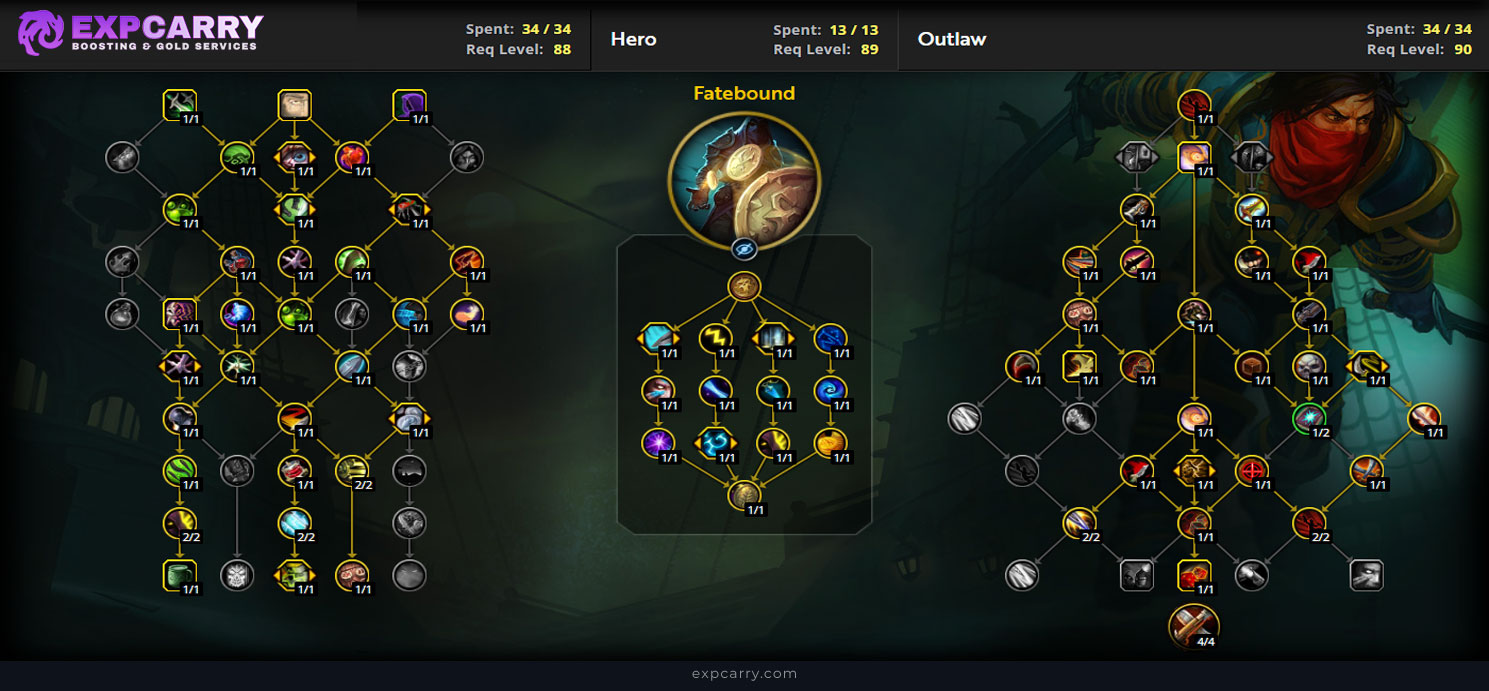
Use the current low-Crit and delve build if you are still early in gearing or if you want a smoother delve setup. It is tailored for the weaker early-gearing environment and works well when you are repeatedly farming delve rewards. Focus on survivability and control nodes such as Cheat Death, Feint upgrades, reduced Cloak of Shadows pressure, and mobility tools to keep difficult pulls manageable.
Best Stats for Outlaw Rogue Delves
- Critical Strike
- Haste
- Versatility
- Mastery
If survival is an issue, you can lean a bit harder into Versatility in practice, but the baseline PvE priority still starts with Crit and Haste. This balance helps you live through dangerous pulls while keeping the rotation smooth enough to avoid falling behind on damage.
Best Consumables, Enchants, and Gems for Outlaw Rogue Delves
- Potion choices for elites and bosses remain Potion of Recklessness for damage and Silvermoon Health Potion for emergencies.
- Use the same flask and food setup as raids unless you deliberately want a safer defensive lean.
- Weapon oil, enchants, and gems are generally identical to your raid setup unless your current gear makes a different sim result obvious.
Rotation and Ability Priority for Outlaw Rogue Delves
Prioritize control and safety over perfect damage cycles. Use stun, Blind, and Gouge to stop dangerous casts, and kite with mobility tools while keeping Slice and Dice and Roll the Bones running. Plan defensives before pulling multiple elites at once.
Single Target- Keep Slice and Dice and Roll the Bones active, then spend Combo Points on Between the Eyes and Dispatch.
- Line up Adrenaline Rush and Killing Spree for elite and boss breakpoints while saving Crimson Vial and Feint for predictable bursts.
- Set up packs with Blade Flurry already active, open with control on dangerous mobs, then funnel finishers while kiting when needed.
- On dangerous rooms, open with crowd control on the highest-threat target, then activate Blade Flurry and your normal cooldown cycle once enemies are grouped and stable.
Best PvP Guide for Outlaw Rogue in WoW Midnight Season 1
In PvP, Outlaw is still a brawling control spec that wins through frequent stuns, strong sustained damage, and disruptive tools rather than one short one-shot script. You apply pressure with repeated setup windows, use Between the Eyes and Kidney Shot to create kill opportunities, and control enemy cooldowns with Gouge, Blind, disarms, and peels. General PvP stat priority remains Versatility, then Haste, then Critical Strike, then Mastery, giving you both strong offense and sturdy defense. Midnight also changed PvP crowd-control rules, so repeated CC chains are more punishing to waste because immunity now comes sooner.
Outlaw Rogue Solo Shuffle Guide
In Solo Shuffle, your game plan is to keep one healer or DPS under pressure with repeated stuns and control while training a target during your cooldowns. You pair Kidney Shot or Between the Eyes with Adrenaline Rush and offensive pressure, then kite with Grappling Hook and Sprint when focused. Trade defensives like Evasion and Cloak of Shadows early rather than waiting until the round is already collapsing.
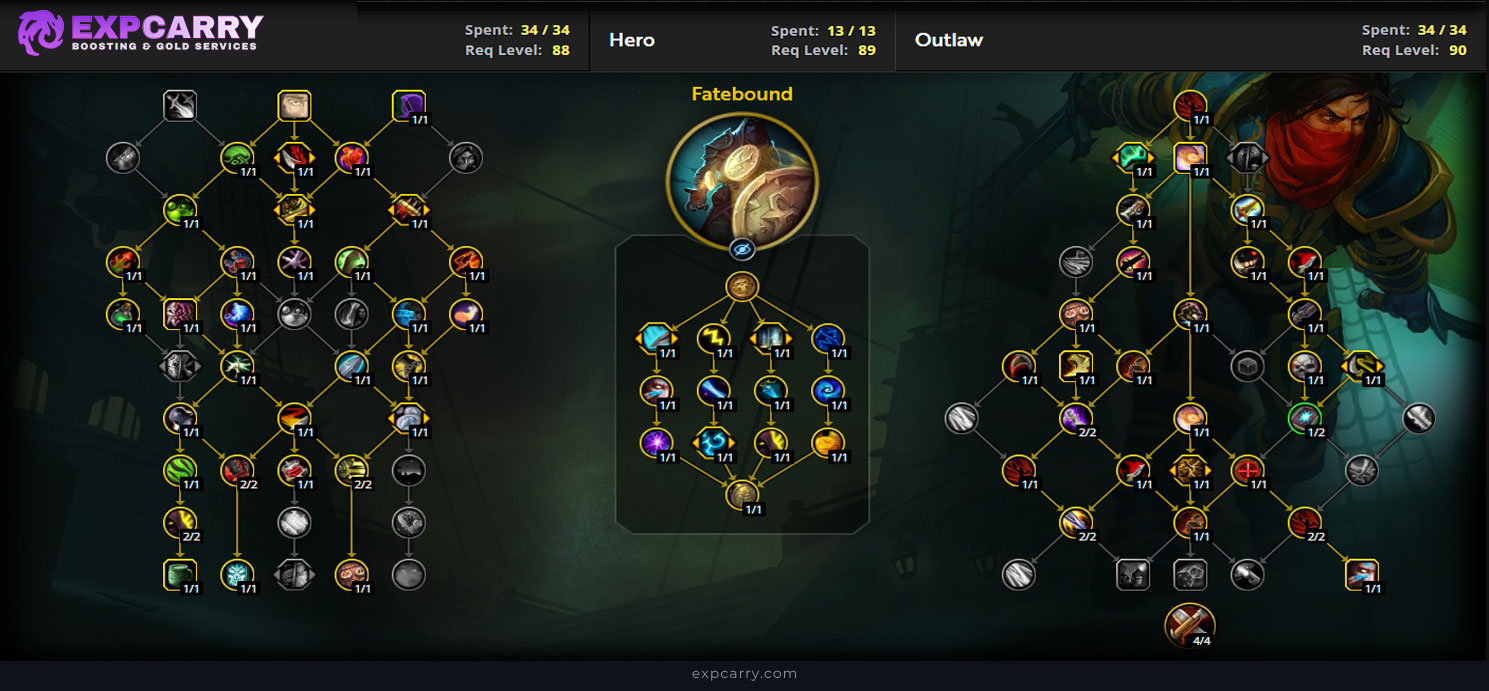
Best Talents for Outlaw Rogue Solo Shuffle
Default PvP talents still center on control, survivability, and repeated setup value. Smoke Bomb and Dismantle remain premium tools, while flexible PvP talents can be adjusted based on whether you need more kill pressure or more peeling power. Fatebound remains the safer overall PvP recommendation for most players because its flow is more reliable in real games.
Best Stats for Outlaw Rogue Solo Shuffle
- Versatility
- Haste
- Critical Strike
- Mastery
Rotation and Kill Setup
Typical kill setups are Kidney Shot or Between the Eyes into offensive pressure, followed by full finisher spam while Roll the Bones is active. Keep track of enemy trinkets and defensive cooldowns so you can swap targets intelligently instead of tunneling into dead setups. Maintain good positioning by playing around pillars and using mobility to reconnect or escape cross crowd-control chains.
Macros and Addons
- Use focus macros for Kidney Shot, Between the Eyes, Blind, Gouge, and Kick, plus arena1, arena2, and arena3 variants for fast CC swaps.
- Run standard PvP addons that track enemy cooldowns, interrupts, diminishing returns, and trinkets so you can plan real kill windows instead of guessing.
Outlaw Rogue 2v2 Guide
In 2v2, Outlaw pairs well with healers and with DPS that appreciate long setup windows and strong peel support. Your job is to peel for your partner with stuns, disarms, and blinds while building pressure through constant uptime on the kill target. You rotate defensives so you always have something ready for enemy goes.
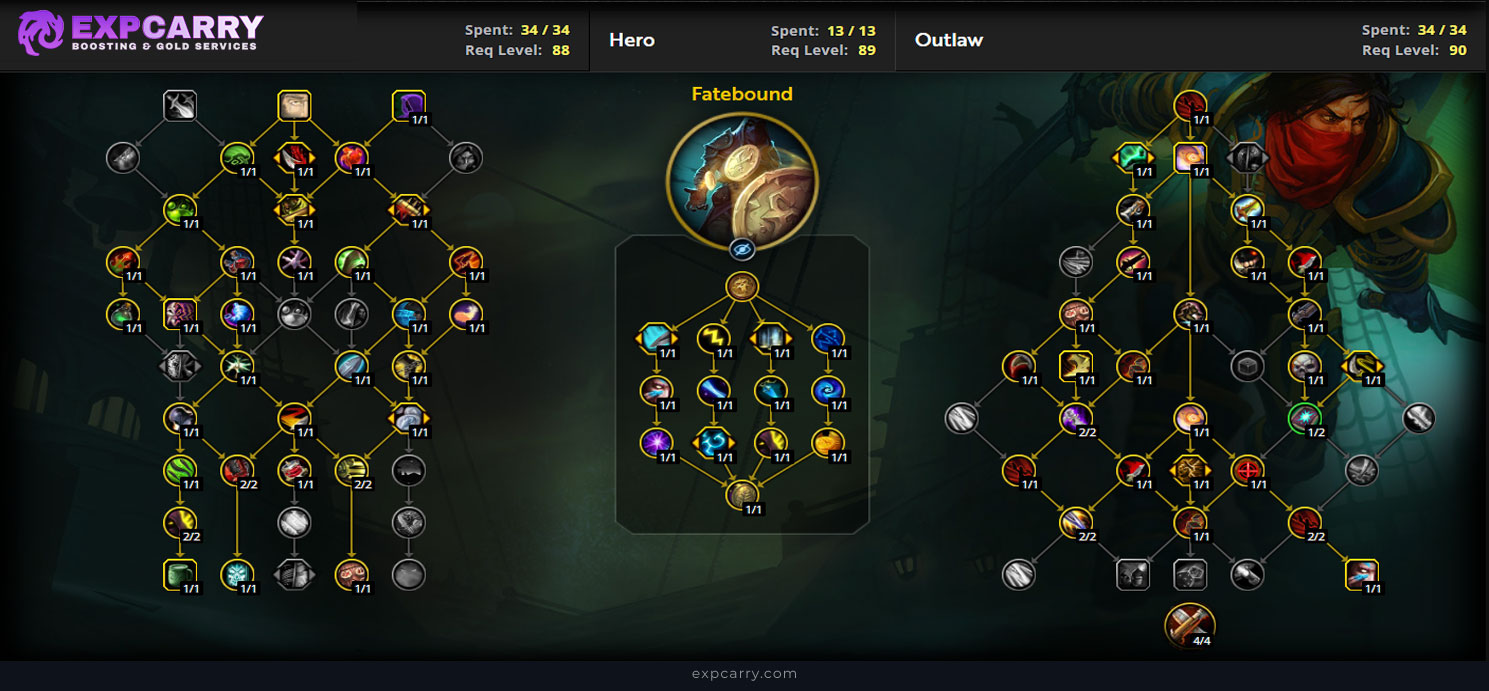
Best Talents for Outlaw Rogue 2v2
Use the same control-heavy PvP structure, then swap to more defensive or more offensive tools depending on the matchup. Into heavy melee, lean harder into defensives and disarms; into casters, value mobility, interrupts, and clean cross-CC.
Best Stats for Outlaw Rogue 2v2
- Versatility
- Haste
- Critical Strike
- Mastery
Rotation and Win Conditions
First goes usually aim to force trinkets with a clean stun into cooldowns. Your later goes should line up offensive pressure, Smoke Bomb when appropriate, and coordinated damage from your partner to secure the kill. Survive by staggering Evasion, Cloak of Shadows, and outside help rather than overlapping everything into the same enemy push.
Macros and Addons
- Use focus macros for main CC, arena target macros for fast swaps, and stopcasting tools for urgent interrupts or crowd control.
- Standard PvP addons for DR tracking, enemy cooldowns, and trinkets are recommended to keep track of actual win and loss conditions.
Outlaw Rogue 3v3 Guide
In 3v3, Outlaw plays as a control-heavy melee that links stuns and blinds into cross-CC from partners. You create kill windows by chaining CC on the healer while your team bursts a DPS, or by disrupting two players at once while your own team pushes advantage. Position to avoid easy swaps by not stacking with your team and using line of sight intelligently.
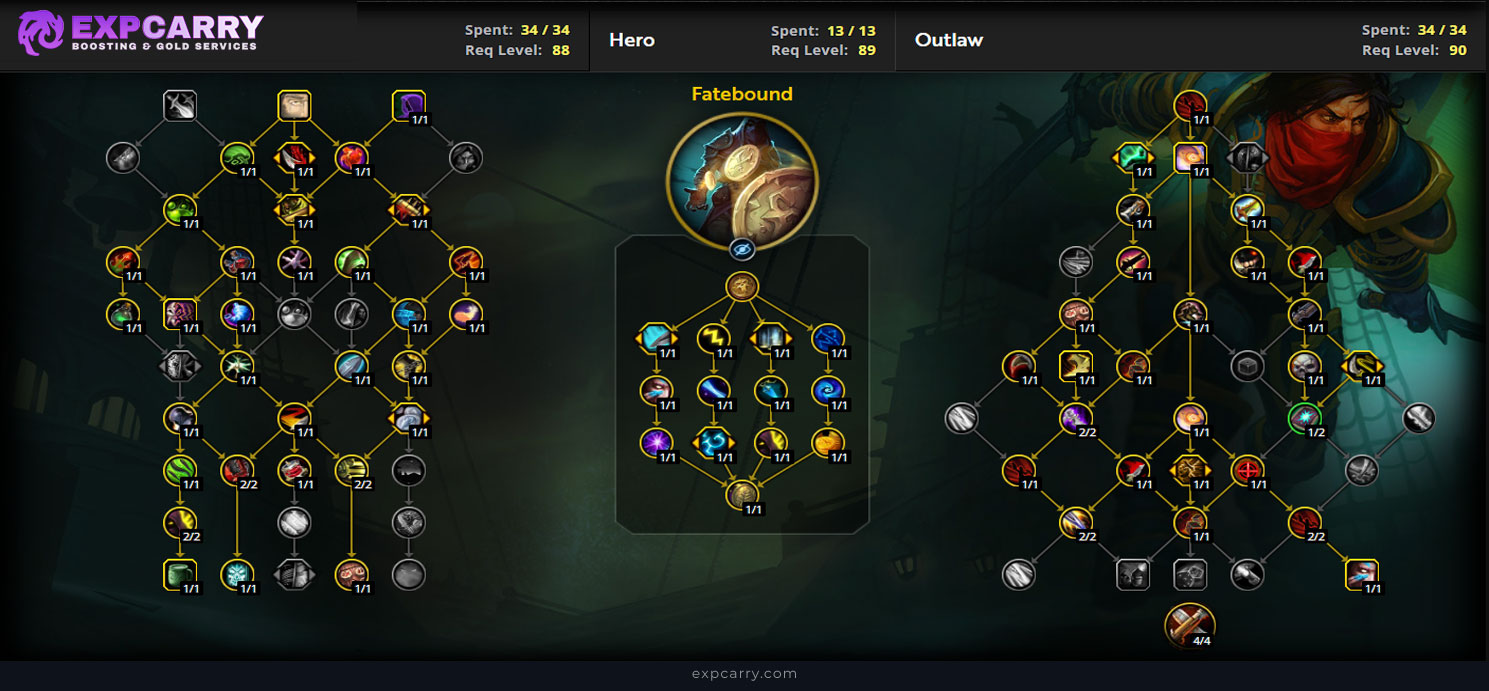
Best Talents for Outlaw Rogue 3v3
Default PvP talents again prioritize control and repeated setup value, with alternatives chosen based on comp goals. In cleave comps, keep enough durability to survive counterpressure; in caster-heavy comps, invest more into peels and fast cross-CC support.
Best Stats for Outlaw Rogue 3v3
- Versatility
- Haste
- Critical Strike
- Mastery
Rotation and Win Conditions
Coordinate CC chains where you open with stuns or blinds on the healer, follow with cross-CC on the off target, and use your damage tools during that window. Defensive trades should be planned so one major cooldown answers each enemy go rather than wasting multiple tools on the same push.
Macros and Addons
- Use focus and arena target macros for all primary CC, plus stopcasting macros for emergency kicks and control to avoid fake-cast losses.
- Standard 3v3 addons that track cooldowns, DRs, and trinkets will make planning your chains and defenses much easier.
Outlaw Rogue RBG Guide
In RBGs, Outlaw often plays in teamfight groups where its control, target access, and disruption shine. You help secure kills in chokepoints with coordinated stuns and pressure, and you peel for healers with blinds, disarms, and repeated utility. On certain maps you can also support objective play by harassing enemy backlines or disrupting pushes onto a flag carrier.
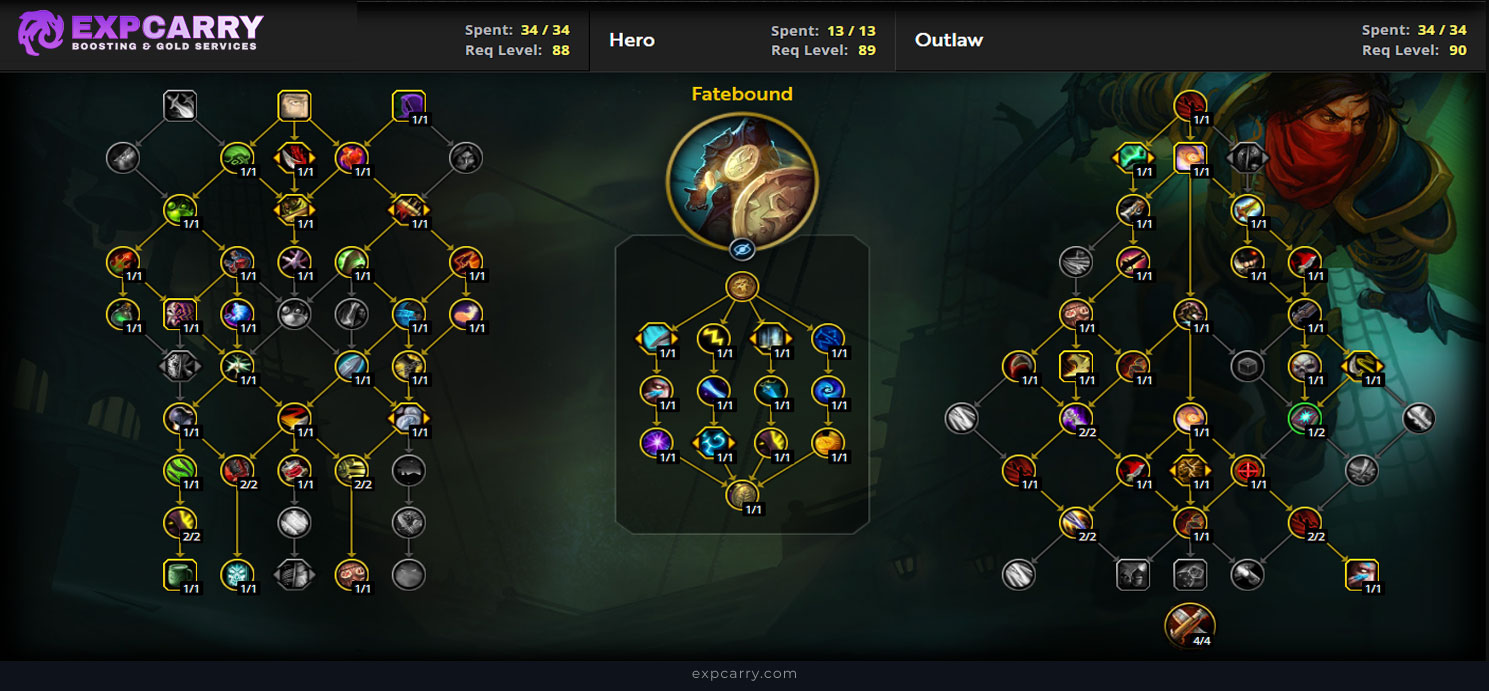
Best Talents for Outlaw Rogue RBG
Use default talents that emphasize control, movement, and setup value, with swaps based on your map role. For node defense, take extra dueling and survivability tools; for teamfights, lean harder into disruption and fast swaps on exposed targets.
Best Stats for Outlaw Rogue RBG
- Versatility
- Haste
- Critical Strike
- Mastery
Rotation and Ability Priority for RBG
On clumped fights, keep pressure on the highest-value target and rotate stuns with your team so enemy healers and priority DPS cannot freely cast. Use your peel tools to protect your own healers or flag carriers, and sync offensive cooldowns with team calls instead of wasting them into random spread pressure.
Opener
On node fights, open from Stealth with a stun into a control chain on the most dangerous enemy. On flag maps, focus on disrupting enemy pushes at chokepoints and creating numbers advantages with control rather than mindless damage padding.
Macros and Addons
- Use focus and mouseover control macros for fast responses and stopcasting tools for urgent swaps.
- RBG UI addons that highlight objectives, cooldowns, and kill targets will help coordinate your plays in larger fights.
Conclusion
For most raid situations, Outlaw Rogue runs Fatebound for smooth single-target damage and easier execution, while Mythic+ now also leans toward Fatebound AoE as the stronger default dungeon build. Delves benefit from the separate low-Crit setup early in gearing, and PvP still revolves around control, repeated setups, and strong defensive trading. Across all content, the core loop stays familiar: maintain Slice and Dice and Roll the Bones, manage energy and Combo Points cleanly, and align Adrenaline Rush and Killing Spree with real damage windows instead of wasting them.
Midnight Season 1 also changes the old stat assumptions. For PvE, the baseline secondary priority is now Critical Strike, then Haste, then Versatility, then Mastery, while PvP still favors Versatility first. Gear also shifts toward strong passive trinkets, a high item level slow main-hand, and a cleaner long-term four-piece setup rather than the old Season 3 logic. In other words, the article now actually matches the current patch instead of pretending 11.2.5 never died.
Related Product
Voidspire Mythic Boost - Full 6/6 Raid Carry in WoW Midnight Get your Voidspire Mythic boost and de..
539.00€

WoW Leveling Boost for Midnight - Reach Level 90 Fast ExpCarry's WoW Leveling Boost takes your ch..
10.20€