




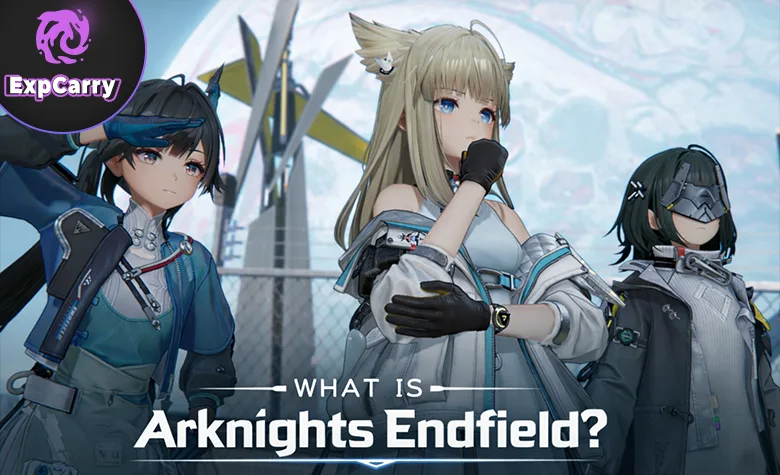
What Is Arknights: Endfield is best answered as a single connected pitch: it is a real-time 3D action RPG built around four-Operator squad combat, exploration on a frontier world called Talos-II, and a large-scale industrial system where you build automated production lines that materially affect your progression. You play as the Endministrator of Endfield Industries, leading Operators to protect and expand the boundary of civilization while your Originium engines and factory infrastructure push deeper into hostile territory. The game is designed so combat, exploration, and industry are not separate minigames but one loop: you explore to secure resources and space, you build to convert resources into usable power, and you fight to keep the frontier open.
Endfield is often compared to open-world gacha action RPGs because it shares the broad format of anime-style exploration and character collection, but it differs in what it asks you to do moment-to-moment. If you come expecting only chest routes and elemental burst rotations, you will run into a second core identity fast: industrial planning. The factory layer is not cosmetic. It is presented as a major system with automated production lines and facilities that keep running as part of your expansion, and it is positioned as a pillar equal to combat and exploration.
The Setting and What the Game Is About
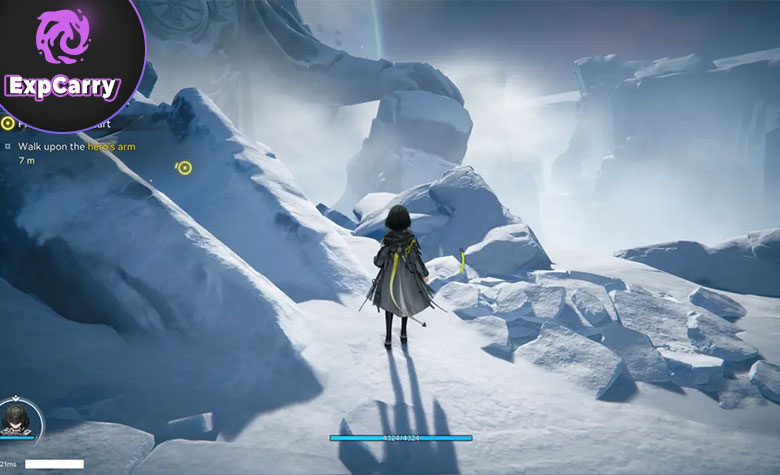
Arknights: Endfield takes place on Talos-II, described as a world of striking beauty and constant danger. More than 150 years before the game, pioneers endured war and catastrophe to carve out the first civilized zones, forming what is described as the "Civilization Band." Beyond that ring is a vast wilderness with lingering threats and unexplored territories. Your job as Endministrator is not simply to defeat monsters. It is to lead Operators to protect, expand, and redefine the boundary of civilization, where development and exploration go hand in hand and industrial facilities rise alongside your growing foothold.
The story framing is frontier-building under pressure. The world is not a theme park. It is an expansion problem with risks, unknowns, and systems that must hold together. Official story messaging also points forward beyond the initial launch arc, describing escalating threats and new areas on the outskirts of established regions, including named locations and incidents used as story anchors for continuing updates.
Core Gameplay Loop: Explore, Secure, Build, Push Further
The main loop is built to keep you switching contexts with purpose. Exploration is not just sightseeing. You move through wildlands to gather resources, discover routes, and open up room to deploy infrastructure. Building is not just decorating. You use an AIC Factory layer and production machinery to create automated production lines and produce materials that support your Operators and your expansion. Combat is not just random encounters. It is a strategic response to threats that block expansion and to enemies that punish careless routing and poor team coordination.
This loop explains why Endfield feels different from many open-world gachas: a significant portion of your power is not only in your characters, but in how efficiently your base systems feed your needs. If your production and logistics are stable, your upgrades and crafting become routine. If your production is chaotic, you will feel permanently starved and forced into manual fixes. Endfield leans into that tension on purpose, because it wants the frontier fantasy to be about building a functional foothold, not only about winning fights.
Combat Systems: Four Operators, Stagger, Execution, SP, Combos
Combat is explicitly designed as real-time squad play with up to four Operators fighting simultaneously, and you can switch control between them at any moment. The system is described as layered: basic attacks transition into strikes that deal stagger damage while restoring SP. When an enemy stagger bar is filled, they enter a staggered state, take increased damage, and you can trigger an Execution for heavy damage while recovering additional SP. SP fuels Operator skills, and ultimates exist as high-impact moments. Under the right conditions, Operators can chain abilities into combo skills that reward positioning and timing.
The practical consequence is that Endfield combat is not meant to be a single on-field character doing everything while the rest of the party waits. Your team is always present, and your rotation is closer to a real squad choreography than a strict one-character-at-a-time loop. If you play it well, you are constantly converting actions into stagger and SP, then converting stagger windows into burst through Execution and coordinated skills. If you play it poorly, you will feel slow because you are not using the system to generate and spend resources efficiently.
AIC Factory and Base Building: The Industrial Backbone
Endfield positions large-scale industrial systems as a core pillar, not an optional side mode. Official descriptions emphasize production machinery working around the clock and the deployment of new AIC Factory production lines as part of pushing into the wildlands. In practice, this is the part that makes Endfield stand out in the current gacha landscape: many players come for combat and discover they are spending hours building power lines, conveyor belts, and processing chains because the factory layer is deep and materially useful. The game supports a blueprint approach to construction, and community attention around blueprint sharing exists because optimizing factory layouts has real value for progression.
If you want to understand Endfield quickly, treat the AIC system as your account engine. It turns exploration gains into steady output, and steady output turns into upgrades and crafting that keep your Operators relevant. This is also why Endfield can feel intimidating early: you are learning two games at once, an action RPG and a factory builder. The design intent is that you do not ignore one to play the other. You do both, and the payoff is a progression curve that is less about daily chest routes and more about building a stable industrial base that keeps feeding you.
How Endfield Differs From Genshin Impact and Wuthering Waves

At the highest level, all three sit in the same broad category: open-world action RPGs with strong storytelling and character-driven progression. Genshin Impact is officially presented as an open-world adventure RPG set in Teyvat, and Wuthering Waves is officially presented as a story-rich open-world action RPG with a high degree of freedom. Endfield also includes exploration and action RPG combat, so the surface comparison is fair. The meaningful difference is what the games emphasize as the primary long-term loop.
Endfield is built around four-Operator real-time squad combat with simultaneous presence and free switching, plus a major industrial system that is framed as a pillar of expansion. That combination changes the daily feel of the game. In many open-world gachas, the core loop is exploration for currency">currency-farm">currency and materials plus combat rotations for progression. In Endfield, a large chunk of your advantage comes from industrial planning: automated production lines, facilities, and blueprint-driven factory design. That is why Endfield feels less like a pure "open-world gacha combat game" and more like a hybrid where an action RPG and a factory builder are welded together. If you love optimization, logistics, and building systems that run while you play, Endfield offers something that Genshin and Wuthering Waves do not position as a central pillar in the same way. If you only want combat and exploration, Endfield can feel heavier because it asks you to engage with industry as part of your power curve.
Conclusion
Arknights: Endfield is a real-time 3D action RPG set on Talos-II where you play as the Endministrator of Endfield Industries, lead Operators to expand civilization, and connect exploration and combat to a large-scale industrial backbone. Its combat is defined by four Operators fighting simultaneously, free switching, a stagger and Execution loop, SP-driven skills, and combo skills. Its identity is amplified by the AIC Factory system, where automated production lines and blueprint-based building meaningfully shape your progression. If you want an open-world gacha that is not only about moment-to-moment fights, but also about building an industrial foothold that powers everything you do, Endfield is built for that niche.