



Where Winds Meet is built to support two very different player moods at the same time. You can treat it like a long solo wuxia journey where you follow the main plot, move from region to region, and gradually unlock new combat tools. Or you can treat it like an online ecosystem where your character growth is fed by side lanes: bosses, hidden encounters, professions">professions, faction alignment, co-op, PvP, and guild activities. The key is that you do not have to pick only one identity. The game is designed so that leveling and story progression can happen while you constantly do other meaningful things in the same world.
If you are asking, "I am leveling and doing the campaign, what else can I do at the same time?", the answer is: a lot, and most of it is not filler. The world is intentionally stuffed with points of interest, Quests, and activity hooks that reward exploration and experimentation. The game also pushes you to build a personal martial identity by mixing weapons, mystic arts, and internal style choices. That gives you a practical reason to step away from the main quest, because the next story fight often feels better when you come back with a cleaner loadout and more confident timing.
This guide is a menu of what you can do in Where Winds Meet while you are still in the leveling phase, written to help you choose activities that fit your mood and time. Think of it less like a checklist and more like a set of lanes. Some lanes are combat heavy, some are story and mystery, some are pure atmosphere, and some are social. The best way to avoid burnout in a huge open world is to rotate lanes deliberately.
How The Game Wants You To Spend Time
Where Winds Meet is marketed as an open world featuring 20+ distinct regions and thousands of points of interest. That matters because the game is not structured like a straight line where you only move forward through main missions. It wants you to wander in a way that feels like wuxia fiction: you travel, stumble into trouble, meet strangers, uncover secrets, and build reputation through choices. The story is the spine, but the muscle is everything you do between story beats.
It also helps to understand that the game encourages multiple playstyles and identities. Public descriptions highlight that you can walk a noble path, or cause chaos and deal with consequences like bounties and time behind bars. You can dedicate yourself to a sect, or walk alone and learn from strangers. You can play solo for long stretches, then call friends in for harder fights, and later test yourself in PvP. This is not a game that expects one perfect optimal route. It expects you to write your own rhythm.
The practical mindset is simple. When you feel focused, push the main story. When you feel distracted, swap to exploration and side quests. When you feel mechanically rusty, do boss fights and combat drills. When you feel like being social, do co-op, duels, or guild activities. When you feel like you want atmosphere instead of efficiency, lean into the world activities that exist purely to make the world feel alive.
Exploration: Points Of Interest, Secrets, And Region Hopping
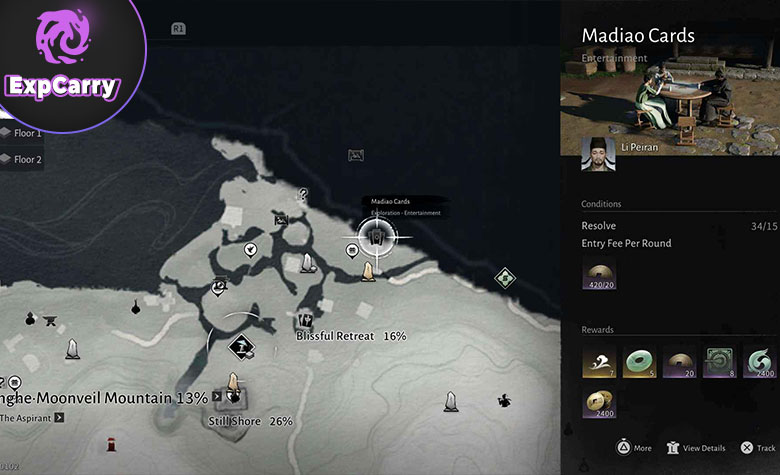
Exploration is not just sightseeing in Where Winds Meet. It is progression, because the world is packed with hidden encounters, side content, and fight opportunities. The game is presented as a journey through lively cities, caves, forests, and ancient temples, where you constantly find something that hooks you. If you are leveling, exploration is a clean way to keep gaining resources and ability options without feeling like you are grinding a single loop.
A good approach is to treat each region like a self-contained story arc. Enter a new area, unlock its key locations, and spend time learning its geography. The moment-to-moment fun comes from movement. The game leans into wuxia traversal, so exploration is faster and more playful than in many open worlds. You are not just walking between markers. You are solving the terrain with mobility and looking for routes that feel like a martial hero moving through the world.
Exploration also feeds narrative. Where Winds Meet puts heavy emphasis on secrets and stories waiting to be discovered. This is why roaming rarely feels empty. A casual conversation can become intelligence. A small detour can turn into a hidden encounter. A random ruin can become a boss fight. If you are doing the story and want to keep progressing without hard committing to a long quest chain, exploration is one of the safest options because it stays aligned with the game’s identity.
Side Quests And Hidden Encounters: The Real Middle Of The Game
In a lot of open-world RPGs, side quests are disposable. Where Winds Meet tries to do the opposite and position side content as part of the living jianghu. Public descriptions call out "countless side quests" and "hidden encounters" alongside the main storyline. That is an invitation to treat side content as the real middle of your playthrough, especially while leveling, because it helps you build your legend beyond the main plot.
Hidden encounters are especially useful when you want variety. They are the kind of content you stumble into without planning, and they often feel like short wuxia episodes. You arrive, something is wrong, an NPC situation escalates, and a fight or decision happens. This is great for leveling sessions because it breaks up the routine. You can do a main quest step, then clear two or three hidden encounters, then return to story with a refreshed brain.
Side quests also give you a safer space to learn the combat rhythm. Main story missions can sometimes push you into harder set-piece fights that punish bad timing. Side quests usually let you practice with lower pressure while still earning meaningful rewards. If you are still learning a weapon and you do not want to absorb story failure frustration, side quests are a strong training ground because they create real combat repetitions without feeling like a sterile tutorial.
Boss Hunting And Challenge Paths: Combat You Can Sink Into
Where Winds Meet is combat-forward in the sense that fighting is one of its main pleasures. The game highlights boss battles and legendary foes, and it frames part of the fun as testing everything you have learned. If you are leveling, bosses are the most direct way to turn time into mechanical skill. You can explore for hours and still feel shaky in combat. A few focused boss fights will sharpen your timing faster than anything else.
One reason boss content works well while leveling is that it gives structure without forcing you into the main narrative. You can log in, decide that today is a combat improvement day, and focus on bosses and challenge content. When you return to story afterward, everything feels easier. Your parries get cleaner, your positioning improves, and you start seeing enemy intent instead of reacting late.
Co-op can also fit here if you want it. Descriptions of the game emphasize seamless co-op with up to four other players, and bosses are a natural place to use that. It is not about being carried. It is about making hard fights feel like shared wuxia set pieces. Some players will always prefer solo mastery. Others will enjoy the social energy of turning a boss into a coordinated dance.
Weapons, Mystic Arts, And Build Identity: What To Practice While You Level
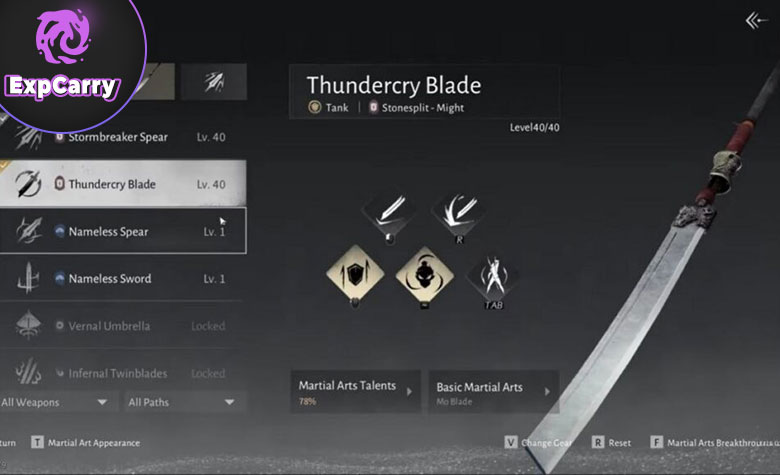
If you want a progression activity that does not feel like grinding, focus on building a combat identity. Where Winds Meet is presented as a game with multiple weapons and a loadout-driven style. Public descriptions highlight classic weapon types and the ability to switch weapons, combine skills, and use mystic martial arts like Tai Chi. Marketing also highlights a very large pool of Martial Mystic Arts. The point is not to treat that toolset like a museum. The point is to use it to build rhythm.
Early leveling is the perfect time to experiment because your habits are not locked in yet. Pick a primary weapon for comfort, then pick a secondary weapon that covers your weaknesses. If your primary is slow and heavy, test something that helps you reset spacing. If your primary is fast and short range, test something that gives you reach or control. The point is not to chase a meta. The point is to feel what makes you confident in real fights.
Mystic arts are also not only about damage. They are often about control, mobility, and utility. That matters while leveling because the world constantly asks you to move and respond quickly. An ability that creates space or interrupts an enemy can be more important than a skill that only adds numbers. The best leveling builds are the ones that make the game feel smooth, because smoothness keeps you playing longer and learning faster.
Another smart activity is to deliberately practice defensive timing outside story missions. Find groups of enemies in the open world and treat them like sparring partners. Do not try to kill them as fast as possible. Try to win cleanly. Practice parries, dodges, and punishment windows. This improves your skill, and it also shows you which abilities are reliable under pressure, so you stop filling your bar with flashy buttons that fail when it matters.
Factions, Sects, And The Choice To Belong Or Roam
Where Winds Meet leans on wuxia themes like sect identity, rivalries, hidden knowledge, and personal codes. Public messaging frames a choice: dedicate yourself to a martial sect and master its secrets, or walk alone and learn from strangers to forge something entirely new. That is not just flavor. It is a way to create a long-term activity lane that gives your time meaning outside the main story.
While leveling, the value of faction and sect-related content is that it gives you direction. Open worlds can feel overwhelming because there are too many options. A sect path helps by narrowing your focus. You start thinking in terms of "what does my character pursue?" and your sessions become more coherent. Even if the main story is your priority, having a parallel identity lane makes the overall journey feel less like you are just chasing the next quest marker.
If you prefer wandering, that is also supported. The world is built to reward curiosity, and it highlights the idea of learning secrets from unexpected places. That style fits players who want to roleplay a lone sword master and treat the world like a series of personal tests rather than a structured ladder.
Jobs And Roles: Doctor, Merchant, Assassin, Bounty Hunter
Where Winds Meet is not only about being a fighter. Public materials highlight role identity and call out roles like doctor, merchant, assassin, and bounty hunter. This matters because it gives you non-story progression lanes that still feel like part of the wuxia fantasy. While leveling, roles are a strong way to diversify your play sessions. You can do story for an hour, then spend the next hour leaning into a role, and you will still feel like you are building your character.
The doctor lane is for players who like support identity and social usefulness. Healing fits the wuxia fantasy of a wandering healer who brings hope to desperate villages or helps allies survive hard fights. Even if you mostly play solo, role flavor can still matter because it shapes how you think about your character’s place in the world. If you do co-op, a doctor identity naturally becomes a reason to team up and be the person others want around.
The merchant lane is for players who enjoy economy and logistics. In wuxia stories, money and supplies are often part of the underworld reality. A merchant identity turns everyday travel and trade into a meaningful activity. It is also a good lane when you are tired of fighting but still want progression. Some nights you do not want parry timings. You want calm gameplay. Merchant-style play gives you that.
The assassin lane is for players who like stealth, targeting, and sharp, decisive combat. Where Winds Meet supports different combat approaches, including stealth, so the assassin identity fits that. If you enjoy learning routes, controlling encounters, and choosing when to strike, assassin play can make even simple open-world fights feel like puzzles.
The bounty hunter lane is for players who enjoy conflict, consequence, and hunting targets. It ties well into the game’s law and chaos systems. If you want your leveling journey to feel like you are interacting with the world’s moral and political mess, bounty hunter play gives you a reason to engage with wanted status, bounties, and the idea that a reputation can be built through conflict as much as through heroism.
NPC Interaction And Social Roleplay: Making Allies And Enemies
Where Winds Meet markets itself as a living world with a very large NPC population, and public materials highlight that your interactions can turn characters into allies or enemies. This is a major activity lane while leveling because it turns the world into something more than combat arenas. A good wuxia game needs social tension: loyalty, betrayal, reputation, and the feeling that people remember what you did.
In practice, this means you can treat towns and villages as more than shops. You can spend time talking, learning, and choosing how you present yourself. If you want a slower leveling night, NPC interaction is a clean way to keep playing without getting mentally taxed. You still learn the world, uncover hooks, and build context, and that context improves the story because the main plot stops feeling disconnected from the world around it.
It also supports a powerful leveling trick: when you feel lost, follow people instead of markers. Open-world fatigue usually comes from staring at maps. Instead, talk to NPCs, listen to hooks, and let the world pull you. You will often find side quests, hidden encounters, and boss rumors that feel more organic than a UI prompt.
The Law, Chaos, And Consequences: Wanted, Bounties, And Jail
One of the most distinctive non-story lanes is the game’s willingness to let you cause chaos and deal with consequences. Public descriptions frame this clearly: defy the law, face bounties and pursuit, and even spend time behind bars, or choose the nobler path and build reputation as a hero. This creates a whole activity ecosystem that sits on top of the open world. It is not just a moral slider. It is a playstyle choice.
If you are leveling and want something different from questing, you can deliberately engage with this system. You can play like a troublemaker and see how quickly the world reacts. You can play like a disciplined hero and focus on building a clean reputation. The reason this matters is that it gives emotional texture to leveling. It is not only "do content, get XP." It is "decide who you are, then live with that in a world that responds."
This lane is also perfect for players who like stories that emerge from systems. A wanted chase, a jailbreak, or a bounty pursuit can become a personal session narrative that feels as memorable as a scripted mission. If you are the type of player who loves sandbox drama, this is one of the best ways to create it while still progressing.
Co-Op While Leveling: How To Use Friends Without Losing Your Story
Where Winds Meet supports co-op play with multiple players, and public descriptions frame the campaign as playable solo or with friends. If you are in the leveling phase, co-op is best used as a tool rather than a lifestyle. You do not need to play everything in a group. You can keep your story pacing intact and still use friends for the parts that benefit most from extra hands.
The best co-op moments while leveling are boss fights, hard encounters, and exploration runs where you want to cover ground quickly. Co-op makes big fights feel like wuxia set pieces, and it turns travel into shared discovery. If your friend finds a hidden encounter or a secret route you missed, your world knowledge expands. That is the good version of multiplayer: it adds perspective without stealing agency.
If you are worried about being pulled away from your own narrative, set a simple rule for yourself. Use co-op for challenges and open-world roaming, and keep your main story steps for solo sessions. That way the campaign remains your personal journey, but you still get the social energy of playing with others.
PvP And Duels: Skill Practice With Real Stakes
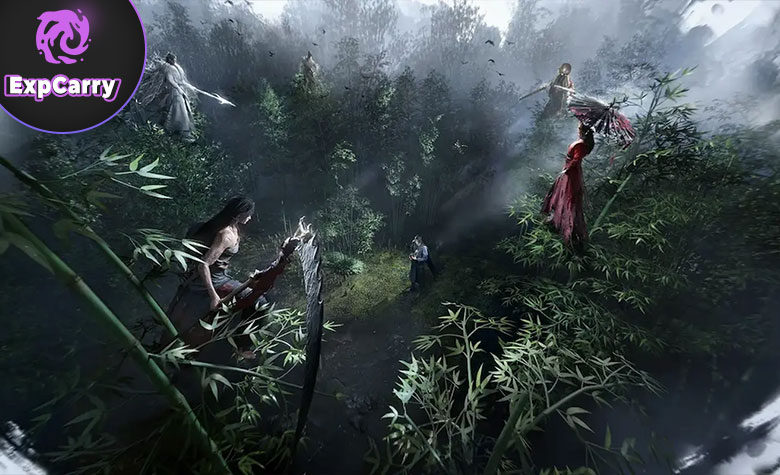
If you enjoy testing yourself, PvP is one of the cleanest activities to do while leveling because it forces you to learn your kit. Public descriptions reference competitive duels, PvP battles, and larger multiplayer structures. PvP is not for everyone, and you do not need it to enjoy the story. But it is a powerful training tool because it makes you confront real unpredictability.
Duels are especially valuable because they compress learning. Against NPCs, you can eventually memorize patterns. Against players, you learn spacing, restraint, and the ability to adapt mid-fight. Even if you lose a lot at first, you quickly learn what actually works under pressure. That feeds back into PvE because your decisions become faster and cleaner.
The best time to try PvP is when you feel your PvE routine becoming stale. If you have been running story missions and side quests for days, competitive play can refresh the game by forcing you back into the basics. It makes the world feel dangerous again, and it gives you something to measure your improvement against.
Guilds, Dungeons, And Raids: The Multiplayer Endgame You Can Sample Early
Even if you are not an MMO person, it is worth understanding that Where Winds Meet includes a wider multiplayer layer. Public descriptions mention guilds and group activities such as guild wars, multiplayer dungeons, and raids, alongside a shared world built for many players. You do not have to commit to this fully while leveling, but you can sample it when you want a different kind of session.
Guilds are basically an optional structure that turns the game into a social world. If you like having people to ask questions, group up with, and learn from, a guild removes friction. It also makes larger activities easier to access. In many games, endgame content feels distant and intimidating. A guild makes it feel normal because you see other people doing it regularly.
Dungeons and raids are a good activity lane for players who like coordinated PvE. If your story progression is slow that day, running group content can still make you feel productive. It also adds variety, because structured PvE content has a different pacing than open-world fights. The mechanics often feel tighter, and the teamwork creates a different kind of satisfaction.
Guild wars exist for players who enjoy large-scale competition and organization identity. If you like the idea of being part of a community and fighting for status, guild wars can become your main lane. If you do not, you can ignore it and still enjoy the game. The important point is that the option exists, and you can dip into it when you feel like your solo journey needs a burst of social intensity.
Seasonal Structure And Live Events: What Changes Around You
Where Winds Meet is positioned as a long-tail game, not a one-and-done RPG. Public materials frame its launch content as Season 1, and the overall presentation suggests an ongoing live-service cadence rather than a single static release. In practical terms, this means you should expect continuing rewards, rotations, and updates that create reasons to log in besides the main plot, even if the exact shape of that cadence can evolve over time.
While leveling, this matters because seasonal content often creates efficient progression opportunities. Even if you are a story-first player, you can use event rewards to smooth your journey when they line up with what you already want to do. The smart way to interact with seasonal systems is to treat them as optional boosters. Engage with them when they align with your play. Ignore them when they feel like chores. That approach keeps the game fun instead of turning it into a checklist.
Cosmetics and appearances are also part of the fantasy here. Wuxia is style, identity, and presence. Even if you do not spend money, you will still be surrounded by a world where visual customization matters. Use that as motivation, not pressure. Dressing your character to match the story you are living is a legitimate reason to chase side content, and it can make leveling feel more personal.
Authentic Activities And Atmosphere: The World Is Not Only Combat
Where Winds Meet also sells itself on "authentic activities" that help the world feel alive, like playing music or relaxing in scenic locations. These are not always about power progression. They are about vibe. That matters more than people admit, because a long journey needs pacing breaks or it becomes a treadmill.
If you are leveling and you feel tired, do not force another boss. Do not force another quest chain. Spend time in a city. Walk. Listen to the world. Do a small activity. The goal is to reset your brain so that when you return to combat and story, it feels exciting again. A good open world is not only a content factory. It is a place you inhabit.
This is also where the game’s time and weather presentation matters. Public descriptions emphasize a world that changes with time and weather. That is a signal that you should let yourself experience the world at different moments. If you always sprint from marker to marker, you will miss why the world exists. If you slow down occasionally, the wuxia mood lands harder, and the story feels more meaningful.
A Practical Session Plan: What To Do While You Level
If you want a simple way to structure your time, start each session with one main story step. That anchors your progress and keeps the narrative moving. After that, decide what lane you are in today. If you want calm, explore and clear points of interest. If you want story richness, do side quests and hidden encounters. If you want mechanical improvement, hunt bosses and train your defensive timing. If you want social energy, do co-op, duels, or guild content.
When you get bored, do not quit the game. Rotate lanes. The fastest way to burn out in a huge open world is to play it like a job. The game is framed as something you can approach flexibly, including long solo stretches and optional multiplayer depth. Use that flexibility. Two hours of mixed activities will feel better than two hours of forcing one loop that you do not enjoy.
Also, use leveling as permission to experiment. Do not wait for endgame to try new weapons or mystic arts. Early experimentation is cheaper emotionally and often faster. When you find a style that feels good, the rest of the game becomes easier because your character stops being a pile of systems and becomes a personal rhythm.
Finally, remember why the setting exists. The Five Dynasties and Ten Kingdoms period is chaotic by design, and the game uses that chaos to justify wandering heroes, shifting loyalties, and personal codes. Your best moments will come when you treat the world like a wuxia story you are living, not a progression ladder you are climbing. Leveling is not the goal. Becoming a legend in your own style is the goal.
Verdiction
While leveling and playing the story in Where Winds Meet, you can spend time exploring across a large world marketed with 20+ regions and thousands of points of interest, chase side quests and hidden encounters, hunt bosses and challenge paths, build combat identity through multiple weapons and a large pool of mystic martial arts, experiment with roles like doctor, merchant, assassin, and bounty hunter, shape relationships with NPCs through choices, engage with law and consequence systems involving bounties and jail, and optionally lean into co-op, PvP duels, arenas, and guild-based activities like wars, dungeons, and raids.
The best thing about this design is that nothing forces you to treat it like a full-time commitment. Your progress can be fed by the activities you actually enjoy. When you approach it that way, the game stops feeling messy and starts feeling like a real jianghu sandbox where every session can be different while still moving your character forward.
What was updated: Softened claims that depend on marketing language (20+ regions, NPC count, mystic arts scale) so they read as "marketed" or "presented" rather than absolute. Removed co-op wording that could be read as an exact fixed party size and rewrote it to avoid the "4 vs 5 players" ambiguity. Reframed seasonal and monetization language to avoid stating specific cadence details as confirmed facts.