
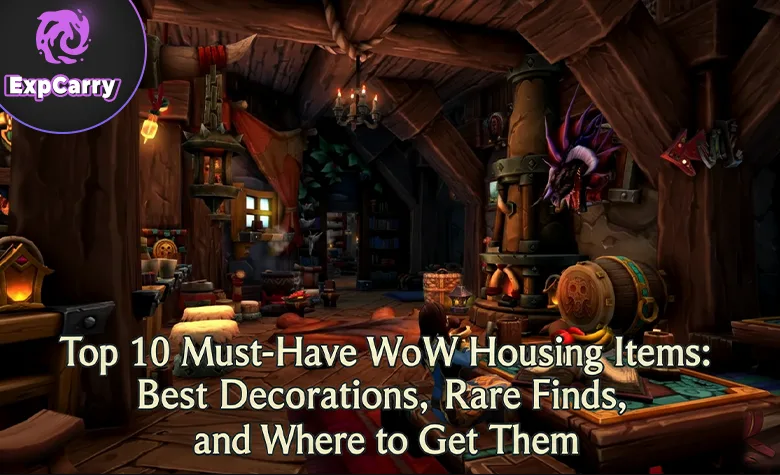
Most players do not fail at WoW housing because they lack rare trophies. They fail because their catalog has holes. No lighting variety, no wall fillers, no shelves, no plants, no rugs, no outdoor anchors. The result is a house that feels unfinished, even if it has one impressive centerpiece. The result is a house that feels unfinished, even if it has one impressive centerpiece. For Player Housing, the best upgrades usually come from filling the basics before chasing rare trophies. A strong home is built from repeatable staples first, then trophies second. If you are hunting the best WoW housing decorations, top housing items WoW, and popular housing decor WoW, the fastest wins almost always come from filling these staple gaps before you chase prestige pieces.
This guide gives you a practical "top 10" list of must-have housing items, not as a list of exact named drops, but as the 10 item types that reliably upgrade any build. Each entry explains why the item matters, where it usually comes from (vendors, crafting, achievements, dungeons and raids, events, reputations, neighborhood rewards), and how to farm it efficiently without wasting time on low-impact clutter.
Foundation Staples That Make Any Room Look Finished
If you want your house to look complete fast, you need a few categories that solve the same problem over and over: empty floors, empty walls, dead corners, and layouts that look random. These staples are not glamorous, but they are the difference between a space that reads as designed and a space that reads as temporary.
The key idea is layering. A room feels real when it has a floor zone, a light plan, and vertical detail. If you only place furniture, you decorate the bottom half of a room and leave the rest empty. If you add rugs, lighting, wall art, and shelving, the room starts to feel like a lived-in set. Farm these first because they work in every theme. You can build a noble hall, a tavern, a mage study, or a war room, and these categories still do the same job. Once your staples are strong, trophy pieces become multipliers instead of crutches.
Warm, Layered Lighting (Candles, Lamps, Wall Lights)
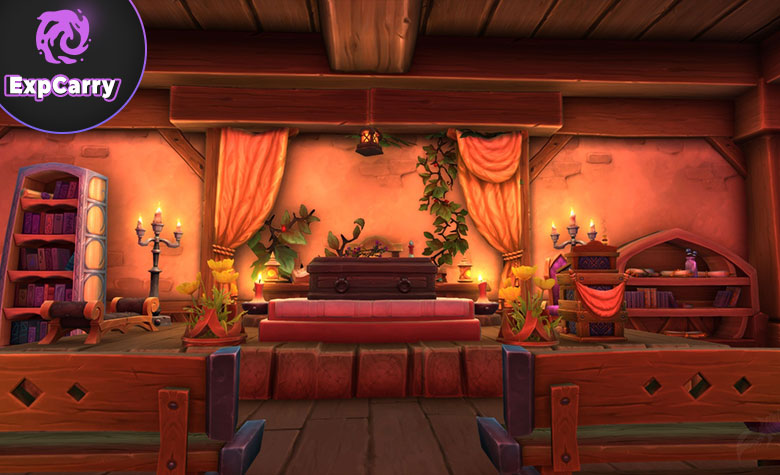
Lighting is the fastest way to make a room feel finished. You can place perfect furniture and still end up with a flat, dead look if lighting is harsh or missing. A must-have catalog includes multiple light sizes: small candles for tables, medium lamps for corners, wall lights for hallways, and one or two strong ceiling or centerpiece lights for large rooms.
Lighting also solves a practical design problem. It guides the eye. You can hide awkward empty zones by pulling attention to a lit focal point. You can make a small room feel cozy by using multiple small sources instead of one giant light. Where to get it. Lighting is usually one of the easiest categories to build through vendors and crafting. Events are also excellent for unique light colors and seasonal lantern styles. Some trophy lighting exists from raids and achievements, but you do not need trophies to make lighting work.
How to farm it fast. Vendor sweep first. Buy one of each unique light, then duplicate the best two or three pieces you will use everywhere. If you are gold rich, the Auction House can instantly fill lighting gaps because many crafted lights are tradable.
A Rug Set (Floor Control for Every Room)
Rugs are the secret weapon of interior design. They define zones, hide ugly floor transitions, and make furniture arrangements look planned instead of random. If you place a table and chairs directly on a bare floor, it often looks like a temporary camp. Put the same setup on a rug and it reads as a dining area. A rug set means you want at least three sizes: small mats for entryways, medium rugs for seating areas, and one large rug for your main room. Color variation matters too. Neutral rugs support many themes. Loud rugs can carry a room, but only when you build around them.
Where to get it. Rugs often come from vendors, crafting, and reputations. Events can provide seasonal rugs. Trophy rugs can exist as rare rewards, but for a must-have starter set you want predictable sources first.
How to farm it fast. Build a neutral base first. Get one light rug, one dark rug, and one patterned rug in each size category if possible. Only after that should you chase rare thematic rugs.
Wall Art and Banners (Filling the Empty Wall Problem)
Empty walls are the fastest way to make a house look unfinished. Wall art fixes that instantly. The must-have goal is to have a mix of large pieces (for big blank walls) and small pieces (for hallways and tight spaces). Banners are especially useful because they also communicate theme: faction pride, guild identity, raid trophies, or regional style.
Wall art also solves scale. Large rooms feel empty if everything is small. Big wall pieces let you fill space without spamming dozens of tiny objects that may hit placement limits. This is one of the cleanest ways to get finished visuals with fewer total placements. Where to get it. Vendors, reputations, achievements, and instance content are all common sources of wall items. Events often provide seasonal banners and wall hangings. Crafting may also provide framed pieces and tapestry style decor.
How to farm it fast. Start with vendors and reputations for guaranteed options. Then add one or two personal wall pieces from content you already do. Trophy items work best when they have meaning, not when they are just loud.
Shelves and Wall Storage (Vertical Detail)
Most houses look empty because players only decorate horizontally. Tables, chairs, beds, maybe a chest. Then the walls are bare and the upper half of every room is dead. Shelves and wall storage fix that by adding vertical structure.
Shelves also let you display small props without cluttering tables. With shelves, you can create libraries, workshops, kitchens, potion corners, trophy corners, and alchemy benches without needing custom walls. You can also use shelving as soft dividers to break up large rooms.
Where to get it. Shelves are typically crafted and sold by vendors, and reputation vendors often carry culturally themed storage. Dungeons and raids can award display objects that function like shelves or wall mounts, but you do not need those early.
How to farm it fast. Crafting is usually the most efficient path because shelves are staples and you will want duplicates. If you do not craft, buy tradable shelf pieces on the Auction House and treat them as infrastructure purchases.
Atmosphere and Story Corners That Make Builds Feel Lived In
Once your foundation staples are in place, the next upgrade is vibe. This is where the house stops looking like a showroom and starts looking like a life. You want at least a few corners that imply daily routine: a place to work, a place to rest, a place to gather, and small organic touches that soften hard edges.
These categories are also where duplicates become valuable. Repeated small props create density without chaos. One bottle looks like a random object. A set of bottles near a workbench looks like a scene.
The goal is not to clutter every surface. The goal is to pick a few believable corners and make them strong, then let the rest of the space breathe.
Plants and Greenery (Instant Lived In Vibe)
Greenery makes spaces feel alive. Plants also hide problems. A slightly awkward corner becomes intentional when you place a tall plant, a hanging vine, or a cluster of pots. Outdoors, shrubs and planters can define paths and boundaries without using heavy structural items that may cost more placement limits than you want to spend early.
Plants are flexible across themes. A noble hall, a druid grove, a tavern, a mage tower, a pirate den, and a hunter lodge can all use plants. You just change the style: manicured, wild, exotic, or cursed.
Where to get it. Vendors and events are usually strong sources for plants. Crafting can provide planters and arranged greenery. Some special plants may come from achievements or reputations tied to zones with strong nature identity.
How to farm it fast. Vendor sets first, then event sets when active. Do not chase a rare plant until you already have baseline variety, because variety matters more than one perfect tree.
A Fireplace or Hearth Corner (The Cozy Centerpiece)
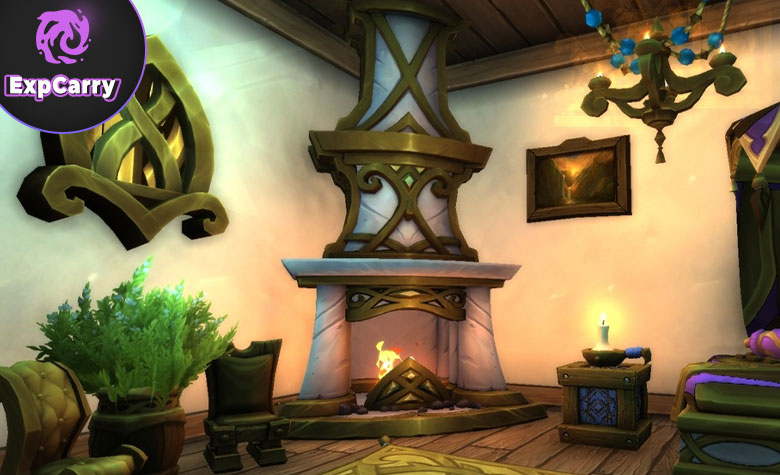
A hearth makes any home feel like a home. It creates a natural focal point for seating, lighting, and storytelling. Even if your theme is dark, you can build a ritual hearth vibe with candles and a brazier style setup. For bright themes, a classic hearth with warm lighting is unbeatable.
The practical reason this is a must-have is that it gives you a stable anchor around which you can arrange furniture. Many players place furniture randomly because there is no central gravity. A hearth gives you that gravity.
Where to get it. Hearth style decor often comes from vendors, crafting, and reputations. Some impressive hearth pieces may be trophies or rare rewards, but you can build a strong hearth corner with common items: a fire source, stone or wood framing, and layered lighting.
How to farm it fast. Do not wait for the perfect fireplace. Build a temporary hearth corner early, then upgrade it later when you find a better centerpiece. The corner itself is what makes the room work.
A Workbench Set (Kitchen, Workshop, or Alchemy Station)
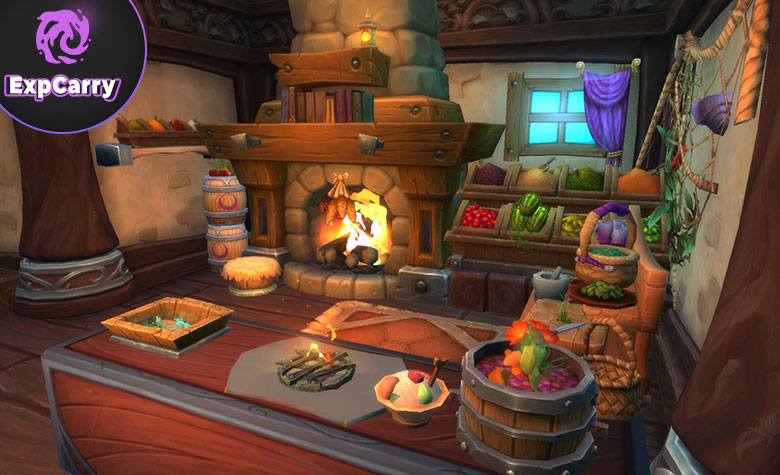
Functional corners make builds feel believable. A workbench set can be a kitchen counter, a blacksmith bench, an engineering table, an alchemy station, or a scribe desk. The key is that it creates story. You are not just placing chairs. You are building a life.
This is also one of the best places to spend duplicates. Workbench corners look best when they include repeated small props: bottles, tools, books, crates, sacks, jars. A strong catalog in this category turns a plain room into a scene.
Where to get it. Crafting is usually the best pipeline because professions naturally produce props that belong in workspaces. Vendors can supplement with containers and generic tools. Dungeons and raids can provide thematic clutter pieces for darker or more exotic corners.
How to farm it fast. Build a generic workbench corner first using common props. Then specialize it later (alchemy, forge, kitchen) once your catalog has enough variety.
Outdoor Structure and First Impressions
Outdoor space is harder than indoor space because it is exposed and large. Without structure, the yard reads like an empty default plot even if the house interior is beautiful. The fix is not more random objects. The fix is layout. You want a clear approach, a readable path, and at least one anchor so the exterior has a story. A visitor should understand where to walk and what the outdoor focal point is within a few seconds.
These item types also help placement limits. Clean lines and anchors often look better and cost fewer placements than pure clutter.
A Signature Entrance Piece (Doorway Anchor)
Your entrance sets the tone. Without a strong entry anchor, even a well-decorated interior feels disconnected from the outside. A signature entrance piece can be a banner set, a gate frame, a lantern pair, a signboard, or a large faction themed emblem that makes the approach look intentional.
This matters because the human brain reads the first few seconds of a space as the whole story. If your entrance looks like a default empty plot, visitors assume the rest will be unfinished. A clear entry anchor instantly fixes that. Where to get it. Entrance anchors are commonly sourced from vendors, reputations, and achievement rewards. Event vendors also tend to sell strong doorway items because they are visually loud and easy to theme. Crafting can also produce signboard style props and lighting that pairs well with the entrance.
How to farm it fast. Start with vendor and reputation options first because they are deterministic. If you have a preferred faction or zone theme, focus on that line until you can buy a matching set. Save dungeon and raid farming for later when you want a specific trophy style banner.
Outdoor Pathing and Landscaping Basics (Yard Control)
Without pathing and landscaping, your yard feels like an empty default plot. The must-have outdoor set includes some kind of path tiles or ground markers, boundary pieces (fences, stones, shrubs), and one large anchor (tree, statue, gazebo, or shrine) so the yard has structure.
Outdoor basics also help placement limits. Instead of spamming dozens of random objects, you can create clean lines with fewer pieces: a path, two boundary lines, and one anchor. That often looks better and costs fewer placements than clutter. Where to get it. Vendors, reputations, events, and crafting are common sources for yard items. Neighborhood progression and Neighborhood Endeavors (when available) can also award themed outdoor decor. Trophy outdoor anchors can come from content completion, but you should build the yard fundamentals first.
How to farm it fast. Focus on pathing first. Once your yard has a path, everything else is easier to place because you have a layout skeleton.
Explore services related to this guide, selected from our World of Warcraft catalog.
View All World of Warcraft Services


Identity Pieces and a Simple Priority Order
After staples, you add identity. This is the part players usually try to do first, and it backfires. A trophy looks amazing, but it cannot carry empty walls, empty floors, and dead lighting. When your base is strong, one trophy becomes the signature instead of a desperate distraction. Identity also comes from restraint. Ten trophies competing for attention looks messy. One trophy supported by clean staples looks intentional, and it is usually what separates the coolest player housing designs from builds that feel like a random museum.
Use this section as the final layer: pick a centerpiece with meaning, then follow a priority order that upgrades your house with minimum wasted time.
One True Trophy Piece (Your Story in One Object)
After you have staples, you need one trophy. Not ten. One. A trophy piece is the item that tells visitors, "this is mine." It can be a boss-themed display, a rare achievement reward, a seasonal centerpiece you never miss, or a special object tied to a major milestone on your account. The key is meaning. A trophy is not just expensive. It is narrative. You want an object that you can build a room around: a trophy hall corner, a shrine, a villain museum wall, a war table, or a collector display.
Where to get it. Trophies are most naturally sourced from achievements and harder content, including raids and long-term grinds, and some are earned as guaranteed rewards after specific clears rather than pure RNG. They can also come from limited-time events. If you want rare housing items Warcraft for a signature room, treat it as a single long-term goal after your staples are done, not as your first farm.
How to farm it fast. Pick one trophy goal at a time. Do not scatter your effort across five long farms. Housing is evergreen. You want steady progress, not burnout.
How to Prioritize These 10 Item Types (A Simple Order)
If you want the fastest visible improvement, start with lighting, rugs, wall art, and shelves. Those four categories fix the empty room look immediately because they add structure, layering, and vertical detail without needing rare items. Then add plants and a hearth corner to create warmth and a lived-in vibe. After that, build one functional workbench corner so your home has story and routine, not just furniture. Finish with outdoor basics so the exterior reads as intentional, and finally set a single trophy as your signature.
This order works because it solves the real bottleneck. Most homes look unfinished due to missing structure and layering, not because they lack rare loot. Once your base is strong, trophies become multipliers instead of crutches.
Fast Item Option: When You Want the Set Completed
If you would rather skip the long farm loops and focus on design and placement, ExpCarry can help speed up the time-heavy parts of collecting by targeting deterministic decor sources and building the copy counts you actually need for full rooms (lighting sets, rugs, shelves, wall fillers, and outdoor anchors) without wasting time on low-impact clutter. You still do the creative work - you choose the theme, layout, and final placement - we just help you complete the usable catalog faster so decorating stays fun instead of turning into weeks of checklist farming.