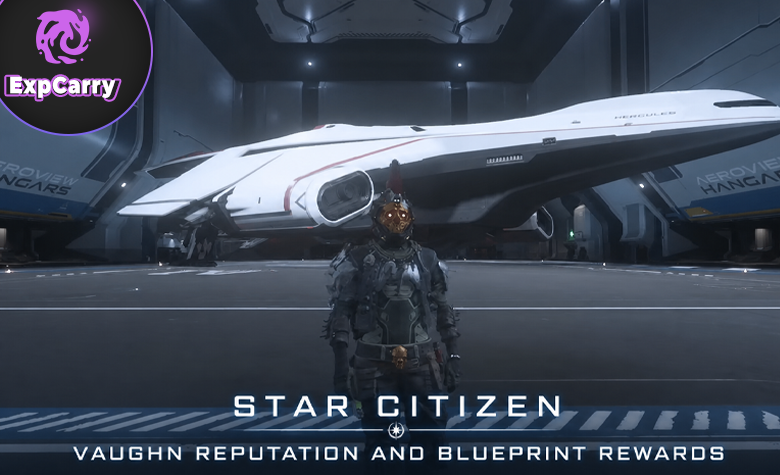
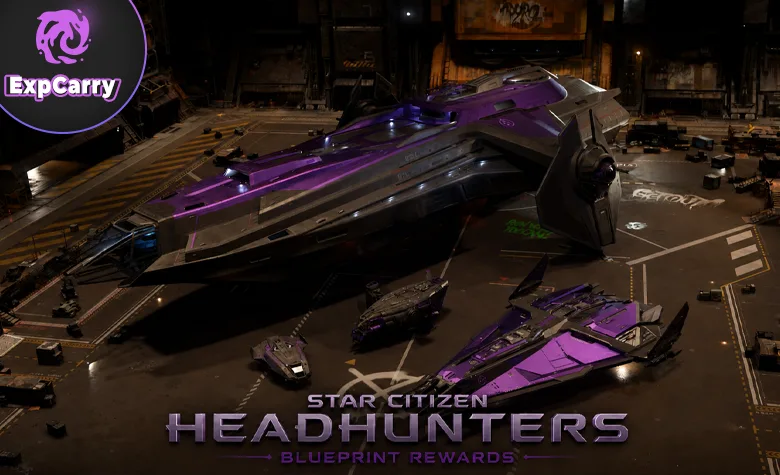
Headhunters blueprints in Star Citizen are crafting unlocks earned through contracts issued by the outlaw faction operating in Pyro. They provide a repeatable way to manufacture selected FPS weapons, armor pieces, ammunition, ship weapons, and ship components after obtaining the appropriate schematics. The reward is tied to the specific contract and its blueprint pool, so completing random Headhunters missions is not an efficient way to unlock a particular item.
This guide covers the faction's documented blueprint rewards, the missions associated with each equipment family, exact recipes for several popular items, and a practical farming route. The information has been reviewed against Alpha 4.10.2 LIVE data, while the farming method is designed to remain useful when individual missions or reward pools change.
Short answer: To farm Headhunters blueprints, take contracts issued by Headhunters, complete their objectives, and check which crafting schematic you received. Different contracts draw from different reward pools. For example, some assassination missions reward Coda, Scalpel, and Morozov-SH blueprints; others provide Yubarev, DustUp, Atzkav, or Calico schematics. Headhunters ship-combat contracts can also reward ship weapon and component blueprints. A listed 100% blueprint reward means one blueprint from that contract's pool, not every item in the pool or a guaranteed specific schematic.
How Headhunters Blueprint Rewards Work
Headhunters are an unlawful faction with contracts concentrated in Pyro. Their available missions include ground assassinations, assaults on hostile positions, and ship-combat bounties. Some missions can be accepted without an established faction rank; more demanding contracts require additional reputation. The important distinction is between the organization issuing the mission and the enemies you fight. A contract to eliminate Headhunters on behalf of another faction is not automatically a Headhunters blueprint-farming mission.
Each blueprint-bearing contract has a defined reward pool. When the contract awards a blueprint, it selects a schematic from that pool rather than granting a complete weapon or armor collection. Consequently, farming for a full four-piece armor set can take multiple completions. A blueprint also differs from a physical item found as loot: the schematic unlocks a recipe in the Item Fabricator, while an ordinary looted weapon does not grant that crafting recipe. This contract-based system was established with the introduction of crafting, described in the official Alpha 4.7 patch notes.
Before accepting a mission, check its issuer, target area, objective type, and listed reward. Similar mission titles can correspond to several distinct contracts with different reward tables. The in-game board remains the final check for availability; a mission appearing in extracted game data does not mean it will always be offered on every server.
Headhunters Missions and Blueprint Reward Pools
The following examples show why mission selection matters. They represent documented Headhunters reward pools, not a promise that every named contract will be available at all locations or reputation levels. Exact variant names and individual reward outcomes should be checked against the current LIVE build before committing to a long farming session.
| Contract or mission family | Blueprint pool | Best reason to farm it |
|---|---|---|
| Need someone taken out | Coda Pistol and variants, Coda magazine, Scalpel Sniper Rifle and magazine, standard Morozov-SH armor pieces | Ballistic FPS weapons and a heavy armor set |
| Reputation Management | Yubarev Pistol and variants, Yubarev battery, DustUp Tactical arms, core, helmet, and legs | Energy sidearms and DustUp armor |
| Block XenoThreat Expansion | Atzkav Sniper Rifle and variants, Atzkav battery, Calico Tactical arms, core, helmet, and legs | Energy sniper equipment and Calico armor |
| Kill the king / Paid Target in CFP, selected variants | Devastator Shotgun and variants, Devastator battery, Morozov-SH Thule armor pieces | Energy shotgun and Thule armor; verify that the relevant variant is offered in the current build |
| Wanna be a Headhunter?, selected ship-combat variant | Strife Mass Driver, Sledge I–III, 9-Series Longsword, 10-Series Greatsword, 11-Series Broadsword | Ship-mounted ballistic cannons |
| Wanna be a Headhunter?, another ship-combat variant | Singe Cannons S1–S3, M6A–M8A Cannons, SnowBlind, NightFall | Ship weapons and supporting components |
These pools are separate. Completing a Yubarev-related contract does not advance your chances of receiving a Scalpel schematic, and a ship bounty should not be treated as a substitute for a ground assassination. Even missions with the same visible title can have different internal variants. Record which contract actually produced the desired type of reward and repeat that route when it remains available.
Reputation matters because it expands the range of contracts you can access. Start with available low-rank Headhunters jobs, complete them consistently, and check for higher-tier offers as your standing improves. The broader Star Citizen reputation progression system is useful context for understanding why two players can see different contracts in the same region. For ship battles, also check the Unverified side of the Contracts app: the official Alpha 4.10 patch notes confirm a correction that moved Headhunters ship-battle missions out of the Verified section.
Headhunters Weapon Blueprints and Crafting Materials
The faction's personal-weapon rewards cover several distinct combat roles. The Coda is a ballistic sidearm, while the Scalpel is intended for precision shooting at longer distances. The Devastator offers an energy-shotgun option for close combat. Yubarev and Atzkav expand the available energy-weapon choices into pistol and sniper categories. Their associated magazines or batteries are separate blueprint rewards, so unlocking a weapon does not automatically mean you have also unlocked its ammunition recipe.

Coda, Scalpel, and Devastator
The Coda and Scalpel are useful early crafting targets because they serve different parts of a practical FPS loadout. Coda can fill the secondary-weapon slot, while Scalpel supports open-area engagements and overwatch. Their documented recipes use refined metals and minerals rather than requiring another finished gun as an ingredient. For players who primarily run indoor assaults, the Devastator is an alternative goal, but its shotgun blueprint and battery belong to a different reward pool from the basic Coda/Scalpel group.
Named variants are individual rewards, not interchangeable labels for the base schematic. A Coda Nighthawk or Big Boss blueprint should be tracked separately from the standard Coda. The same applies to Devastator Midnight and Warhawk, Yubarev Mirage and Igniter, and Atzkav Mirage and Igniter. If you only need an effective firearm for immediate missions, compare the time required to unlock and craft it with the availability of finished Star Citizen FPS weapons; the blueprint becomes more valuable when you expect to manufacture replacement copies.
Yubarev and Atzkav Energy Weapons
Yubarev and Atzkav are easy to overlook if you use an older list of Headhunters rewards. In current mission records, Yubarev pistol blueprints appear alongside DustUp Tactical armor in contracts such as Reputation Management. Atzkav sniper blueprints appear with Calico Tactical pieces in missions such as Block XenoThreat Expansion. Both weapon families include variant schematics and separate battery blueprints in their respective reward pools.
Choose between these groups based on how you fight. A pistol-oriented player will get more practical value from a Yubarev route, while someone supporting a team at distance may prefer the Atzkav pool. Neither pool guarantees its main weapon on the next completion. If your target is a specific variant, keep track of the exact name received instead of treating any blueprint from the family as success.
Explore services related to this guide, selected from our Star Citizen catalog.
View All Star Citizen Services
Headhunters Armor Blueprints: Morozov-SH, Thule, DustUp, and Calico
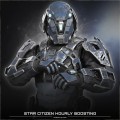
Armor blueprints are awarded by individual equipment slot. A complete set normally requires separate schematics for the arms, core, helmet, and legs, followed by enough materials to craft every piece. The standard Morozov-SH pieces are associated with the Coda/Scalpel pool, while the Thule version appears in documented Devastator-related contracts. DustUp Tactical belongs to Yubarev-associated pools, and Calico Tactical appears with Atzkav rewards.
Do not assume that a different color or named variant is unlocked by the standard set's recipe. When pursuing a matching set, maintain a checklist of the four exact blueprint names you have already received. If only the helmet remains missing, the correct response is to keep targeting its pool rather than switching to an unrelated high-reputation mission. The same distinction applies when comparing craftable equipment with finished Star Citizen armor sets: owning an armor piece and owning its crafting schematic are separate things.
Morozov-SH is particularly resource-intensive compared with a small sidearm. Its standard helmet alone requires Tungsten, Aslarite, and Laranite, and each additional armor piece has its own material requirements. Preparing the complete resource stock before starting fabrication avoids finishing the helmet only to discover that the core or leg recipe cannot be supplied.
Headhunters Ship Weapon and Component Blueprints
Headhunters rewards are not limited to equipment carried by your character. Documented ship-bounty pools include Sledge mass drivers, 9-Series Longsword, 10-Series Greatsword, and 11-Series Broadsword cannons, the Strife Mass Driver, Singe cannons in multiple sizes, M6A-series cannons, and selected ship components. This makes the faction relevant to pilots interested in crafting ship-mounted equipment as well as players concentrating on FPS combat.
The mission title Wanna be a Headhunter? is a good example of why a generic mission-name list can be misleading. Separate instances of that introductory ship-combat mission use different blueprint pools. One version offers Strife, Sledge, and 9/10/11-Series weapons; another offers Singe and M6A/M7A/M8A weapons alongside SnowBlind and NightFall. Completing either version grants a result from its own pool, not from every item associated with the shared title.
Check the exact ship weapon size and model before farming. A blueprint for a Sledge I is not the same as one for a Sledge III, and the existence of a schematic does not establish whether a finished weapon fits your current ship. Verify hardpoint compatibility and the required fabrication resources independently. Some ship-component pools also contain different equipment categories from ordinary cannons, so identify the desired item first and select its particular contract variant afterward.
Exact Crafting Recipes for Popular Headhunters Blueprints
Recipes provide a more reliable shopping and mining list than general advice to stockpile “rare materials.” The examples below use documented base blueprints. Amounts measured in SCU must not be confused with ingredients measured as individual gemstones or items. Crafting time is the listed fabrication duration for the recipe and does not include obtaining the schematic, sourcing materials, or traveling to a fabricator.
| Blueprint | Required materials | Fabrication time |
|---|---|---|
| Coda Pistol | 0.02 SCU Aluminum; 0.01 SCU Hephaestanite; 0.01 SCU Iron | 1 min 30 sec |
| Scalpel Sniper Rifle | 0.06 SCU Taranite; 0.02 SCU Hephaestanite; 0.03 SCU Iron; 1 Hadanite item | 3 min |
| Devastator Shotgun | 0.04 SCU Torite; 0.02 SCU Copper; 2 Dolivine items | 2 min 30 sec |
| Morozov-SH Helmet | 0.05 SCU Tungsten; 0.01 SCU Aslarite; 0.05 SCU Laranite | 4 min 10 sec |
Matching ammunition can also have its own resource cost. Documented examples include the six-round Coda magazine using 0.01 SCU Hephaestanite and 0.01 SCU Torite; the 12-round Scalpel magazine using 0.03 SCU Hephaestanite and 0.03 SCU Tungsten; and the 12-capacity Devastator battery using 0.02 SCU Hephaestanite and 0.02 SCU Copper. These recipes are separate from their weapons and require the relevant ammunition blueprints to be unlocked.
For armor, calculate the total by piece rather than multiplying the helmet recipe by four. Different slots can use different material quantities even within the same set. The official Crafting Gameplay Guide explains the fabricator workflow, while a current blueprint's in-game recipe should always take precedence over an older resource spreadsheet.
Headhunters Blueprint Farming Route
An efficient Headhunters route starts with a specific item, not with the highest-paying contract on the board. Repeatedly running the wrong blueprint pool can produce reputation and credits without making any progress toward the schematic you actually want. Prepare for Pyro combat, allow for travel between contract locations, and avoid carrying an entire stockpile of valuable crafting materials into an unnecessary firefight.

- Choose one target family. Decide whether you need Coda/Scalpel, Devastator, Yubarev/DustUp, Atzkav/Calico, or a particular ship weapon. Write down the exact schematic, including its variant or size.
- Find the correct issuer. Open the Contracts app in or near the relevant Pyro region and look for Headhunters-issued work. Check Unverified contracts when searching for outlaw ship bounties.
- Match the reward pool. Use the mission objective, region, and reward details to distinguish contracts sharing similar names. Do not use an unreleased database entry as proof that a mission can currently be farmed.
- Complete the objective safely. For ground missions, clear threats methodically and confirm the required target or defense objective is finished. For ship bounties, arrive with enough ammunition, fuel, and repair capacity for the expected encounter.
- Verify the unlock. After a successful completion, check the awarded schematic and your available recipes. Record the result so later sessions target only missing items.
- Repeat or change pools deliberately. Continue the same suitable contract for a missing schematic. Once that equipment family is complete, move to the next pool instead of farming unrelated jobs out of habit.
For a solo FPS player, an accessible Coda/Scalpel contract is a sensible starting point because the pool supports both a sidearm and a precision rifle. Yubarev and DustUp are worth prioritizing if you need a compact energy weapon and matching tactical armor; Atzkav and Calico suit a sniper-focused goal. If you mainly fly combat ships, start with the appropriate ship-bounty variant rather than building a ground-equipment route you do not need.
Fabricator Setup, Material Quality, and Replacement Gear
Once a blueprint is unlocked, use an Item Fabricator to produce the item. The crafting interface shows available schematics, required inputs, and the material options for each recipe. The fabricator can be set up in a suitable hangar or ship cargo area, provided the equipment and local inventory are accessible for the job. Select the exact recipe, confirm sufficient materials, review the quality of each input, and start the fabrication queue.
Material quality is important because different recipe slots affect different item statistics. In the Scalpel recipe, Taranite and Hephaestanite influence handling-related properties, while Iron and Hadanite are associated with impact force. For Morozov-SH armor, the quality of protective and insulating materials influences mitigation and temperature-related properties. Higher-quality materials are useful when they improve the statistics you care about, but not every input has the same adjustable effect.
If you regularly craft replacements, store materials for several copies of your chosen loadout instead of gathering only enough for one weapon. Group resource planning by actual recipes: Aluminum and Iron for basic ballistic equipment, Torite and Copper for the Devastator, Taranite and Hadanite for the Scalpel, and Tungsten, Aslarite, and Laranite for Morozov-SH. Tracking the required quantities against available Star Citizen mining resources prevents unnecessary trips for minerals that your current blueprints do not use.
Blueprint ownership and finished equipment should also be managed separately. The crafting unlock gives you the ability to fabricate additional copies when the recipe and resources are available, but a manufactured gun or armor piece remains physical equipment that can be lost during gameplay. Keep a replacement kit ready if you regularly enter dangerous contracts, and do not assume that an unlocked ammunition blueprint supplies magazines or batteries automatically.
Why a Headhunters Blueprint or Crafted Item May Be Missing
The most common explanation for a missing desired blueprint is an incorrect assumption about the reward pool. A contract offering one random schematic does not guarantee the particular gun, helmet, or component you want. Confirm that the contract was issued by Headhunters, that it belongs to the correct mission variant, and that the completion actually awarded the expected kind of blueprint. If you find a mission in a database but not in the Contracts app, it may require different reputation, location, or availability conditions; some records are explicitly marked unreleased.
If a schematic has been awarded but you cannot find its recipe, check the Item Fabricator's available blueprints and its current interface state. Make sure you are not confusing a similarly named variant with the standard item. If fabrication cannot begin, check the exact mineral, quantity, processed form, quality requirements, and where the materials are stored. A correct resource in the wrong location or form may not be usable for the current job.
There is also a known presentation issue in Alpha 4.10.2: improved statistics on crafted items may not appear correctly while the item is unequipped in inventory. CIG's official known-issues page recommends equipping the crafted item and checking its description again. This is a display issue, so a missing stat change in the inventory tooltip alone is not proof that better materials had no effect.
Which Headhunters Blueprints Are Worth Farming First?
The best target depends on the equipment you intend to use repeatedly. Coda is a manageable early sidearm project with a comparatively small recipe, while Scalpel is a useful long-range objective that needs more specialized materials. Devastator appeals to close-quarters players but requires a different mission pool. Yubarev and Atzkav are worthwhile when an energy-weapon loadout is your goal, especially if their accompanying DustUp or Calico armor blueprints also interest you.
For armor collectors, finish the four pieces of one set before changing reward pools unless an urgent equipment need takes priority. For ship pilots, prioritize the exact cannon model and size compatible with the desired build. Above all, use the contract's reward pool, not a general list of “Headhunters drops,” to decide where to spend your time. That single distinction makes the farming process more predictable and keeps this guide useful as individual missions change.