



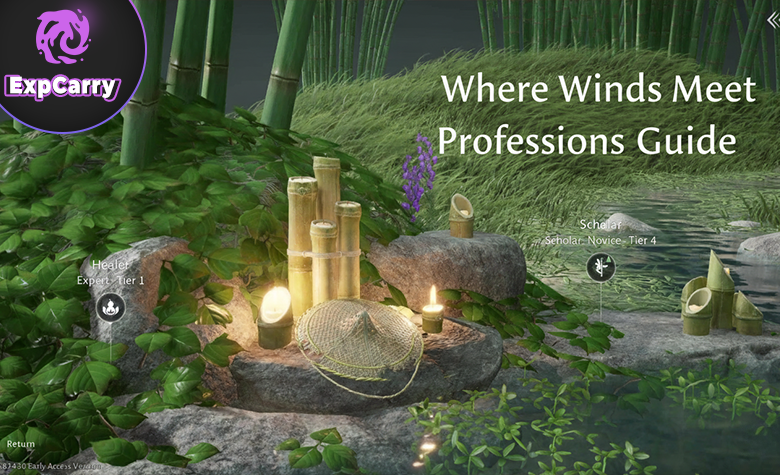
professions">Professions in Where Winds Meet are not a side gimmick. They are a parallel progression layer that turns the open world into a place where you can build value in ways that are not just combat damage or story completion. A good profession session can feel like its own mini campaign: you travel to a location, interact with NPC problems, run a dedicated minigame that has real depth, and end the night with permanent progression that makes both your character and your social utility stronger.
This guide is written for the current live release. It focuses on what is actually playable now, how to unlock each profession, how profession leveling works, where your time is best spent when you want to make profession progress, and how professions interact with the world around you. The two big goals are simple. First, you should be able to unlock professions without getting lost. First, you should be able to unlock professions without getting lost. If you are also working through Story Campaign Completion, professions can still fit into that same progression path. Second, you should understand why professions are worth doing while you level and follow the story, instead of treating them like endgame chores.
What Professions Are In Where Winds Meet
Where Winds Meet uses a job style system called Jianghu Professions. These are specialized careers that let you play a role in the world and gain unique systems that help NPCs and other players. Professions are not the same thing as your weapon choice, your martial arts kit, your internal cultivation, or your faction alignment. Those systems define how you fight. Professions define how you participate in the world outside of combat, and they often give you benefits that feed back into combat through crafting, buffs, and stat growth.
As of the current release, there are two professions you can actually unlock and level: Healer and Scholar. You may see other occupation names mentioned in community wikis or discussions, such as Doctor, Merchant, Orator, Architect, Bodyguard, or Ferryman, but the profession system you can actively progress right now is built around Healer and Scholar. If your goal is to write a complete, accurate guide, the clean approach is to document these two fully, and treat the rest as future-facing concepts unless you personally confirm them in your own current client.
This matters for your readers because it sets expectations. If someone clicks a professions guide, they want answers they can apply immediately. Telling them to grind a profession that is not actually implemented yet destroys trust. So the rest of this guide goes deep on Healer and Scholar, and then explains how to think about professions as a world system rather than a checklist.
How Profession Progression Works: Ranks, Mastery, And Upgrade Materials
Profession progression has two practical layers you need to understand. The first layer is your Profession Rank, which is the overall level of the profession. The second layer is your profession-specific toolkit upgrades, such as Healing Prescriptions for Healers or Gift of Gab cards for Scholars. If you only do profession activities but never upgrade your profession toolkit, you will hit friction. If you only buy upgrade materials but never actually practice the profession activities, you will also feel stuck because you will not build a routinized loop.
The main universal upgrade item is the Career Notebook. Career Notebooks are used to push your profession rank upward. You earn them through profession and Legacy related side quests, and you can also buy them from the Season Shop, where limited stocks refresh on a weekly schedule. In other words, the game wants you to do two things consistently: participate in profession gameplay in the world, and check your weekly shop and convert seasonal currency into profession progress.
For toolkit upgrades, both professions rely on duplicates. Healer Prescriptions and Scholar Gift of Gab cards can be upgraded by collecting duplicates. In practice, duplicates are obtained through profession-specific boxes sold in the Season Shop, again tied to a weekly restock rhythm. This creates a predictable profession ladder. Your daily play earns you progress and context, and your weekly purchases convert seasonal currency into raw upgrade power.
There is also a pacing layer that is easy to miss. Even if you have the currency and the desire to push a profession hard, your profession rank progression can be gated by your character level or by the way the game stages progression. For the current live release, both professions are commonly gated to around character level 13 before their unlock quests appear. This is normal for a live service RPG because it prevents players from finishing every progression system in the first week. The best guide advice is not to promise unlimited rushing. The best advice is to show a sustainable routine that makes profession growth feel smooth while you keep leveling your main character.
The Healer Profession: What It Is And Why It Exists
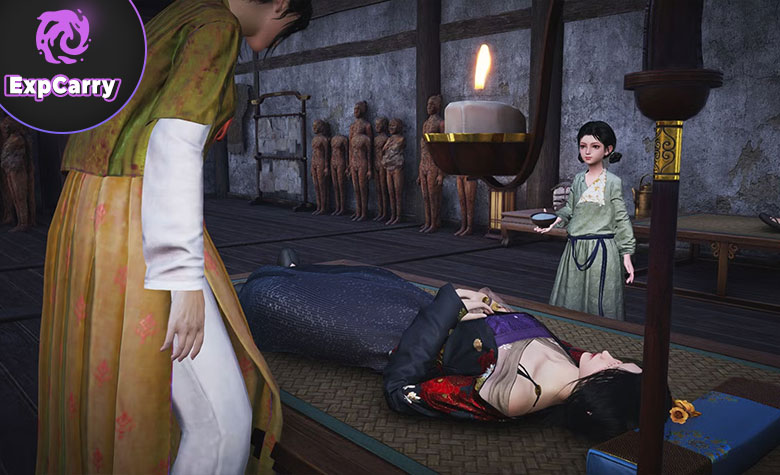
The Healer profession is the clearest example of a profession that changes how you interact with the world. Instead of treating healing like a consumable you press for yourself, Healer turns medicine into a role. You can heal sick or injured NPCs across the map, and you can also heal other players who request help. In a game that markets a living jianghu world, this is huge. It means your character can be valuable even if you are not the strongest duelist, because you provide a service other people actively need.
Healer gameplay is built around diagnosis and a turn-based treatment minigame. You find someone who is ill or injured, use detection tools like Wind Sense to lock onto the target, diagnose the illness, and then enter a treatment interface where you spend resources to push the patient toward recovery. If you enjoy systems that feel like a card battler or tactical puzzle, Healer is not just "press heal and leave." It is its own little game inside the game.
Healer also matters for solo players because it unlocks medicine crafting. Even if you never heal another player, being able to craft medicine gives you a consistent support lane that can improve your survivability and your overall smoothness while leveling. This is the real theme of professions: they help you play longer and cleaner by making your downtime more productive.
How To Unlock Healer: Where To Learn It And When You Can Start
You unlock the Healer profession through an exploration quest in Qinghe called Legacy: Healer's Calling. The quest becomes available once you meet the level requirement, which for most players is around character level 13. The profession tutorial is built into the quest flow so you learn the system by doing it. In the early steps you will heal an injured or poisoned traveler, and the game uses that moment to introduce the healing interface and the core rhythm of treatment.
If you want the simplest "where" answer: start in the Qinghe region, track Legacy: Healer's Calling in your exploration quests, and follow the quest to the nearby settlement area where the Healer line begins. Many players identify the start around Mercyheart Town (sometimes shown as Mercyheart Village) and the associated NPC that sends you into the first tutorial heal. Once you complete the quest, the Healer profession menu becomes available and you can start taking healer actions on demand.
Here is the most important guidance for new healers. When the quest unlocks, do it immediately. Do not postpone it for later. The profession gives you a new world activity lane, and getting it earlier multiplies your progress because you can begin collecting Career Notebooks, crafting support items, and responding to healer requests while you still level through story content.
How Healer Interacts With The World: NPC Illness, Player Requests, And Mapping
Healer is one of the professions that feels integrated into the world map. NPCs who need help are not just random encounters. The game provides ways to locate them, including map filters and markers that highlight healing opportunities. This means you can treat healing as a route. You can plan a loop through Qinghe or a nearby region, stop at multiple NPC healing points, gain rewards and mastery, and then return to story progress with real profession growth in the same session.
For player interaction, Healer adds a social contract system. Players can request healing when they have an illness or injury, and healers can answer those requests by traveling to the player's world through co-op. The healer system typically shows a mastery requirement for these requests. This is the game telling you that profession difficulty scales. New healers should start with lower requirement requests and build up. If you jump into high difficulty healing early, you can fail treatments and waste time, which makes the profession feel worse than it is.
Healer also has an economic and quality-of-life implication. If you are ill or injured and you are not a healer, you can still get treated. You can pay for treatment at a clinic service for coins (for example, Evercare Clinic, where an NPC like Yao Yaoyao can treat you for a flat coin fee), or you can request help from another player. This creates natural community interaction even among strangers. In practical guide terms, it means healer is one of the best professions for players who want to feel socially useful without committing to hardcore guild life.
How To Level Healer Fast Without Burning Out
To level Healer, you need to do two things consistently: perform actual healing in the world, and invest weekly materials into profession rank and prescription upgrades. When you heal NPCs, you build familiarity with the minigame and you collect whatever rewards and progression hooks the game provides. When you buy or earn Career Notebooks, you push the rank upward. When you buy profession boxes or other sources of duplicates, you upgrade your prescriptions so your healing toolkit gets stronger.
In the early stage, you should treat Healer like a practice discipline. Your goal is not to optimize every run. Your goal is to become stable and fast so you can weave healing into normal sessions. Take a cluster of nearby NPC healing points, do them back to back, and focus on playing clean. Once you can consistently complete treatments, you will be able to do healer content while half-watching a show or talking with friends, which is the real secret to long-term progression in open world games.
When it comes to weekly planning, Career Notebooks are the baseline buy. If you only do one profession, Career Notebooks are still worth it because they raise profession rank and make your supportive benefits stronger. If you do both professions, you should still prioritize Career Notebooks first, then split profession box purchases based on which profession you want as your primary identity for the week.
Finally, do not ignore crafting. Healer medicine crafting is not only about trivial potions. It is part of how the profession feeds back into your combat and your travel. A profession that can craft support items will always feel more useful than a profession that only gives cosmetic progress. If you want a profession guide to be honest, you should say it directly: even if you never heal another player, Healer is still worth unlocking because it expands your self-sufficiency.
Common Healer Mistakes That Slow Progress
The first common mistake is trying to level Healer purely through shop purchases, without doing healing activities. You can push rank, but you will still feel weak and awkward because you will not understand the rhythm of the minigame. Your real performance comes from repetition. The second mistake is the opposite: doing tons of healing but never buying notebooks and duplicates. In that case you stay underpowered, and harder healing requests remain out of reach.
The third mistake is treating healing as a passive background chore. Healer is not a fetch system. It is a minigame that rewards attention. If you rush treatments while distracted, you will fail more often, and that failure cost adds up. The best pace is focused repetition until you are comfortable, then casual repetition to maintain steady growth.
The Scholar Profession: What It Is And Why It Exists
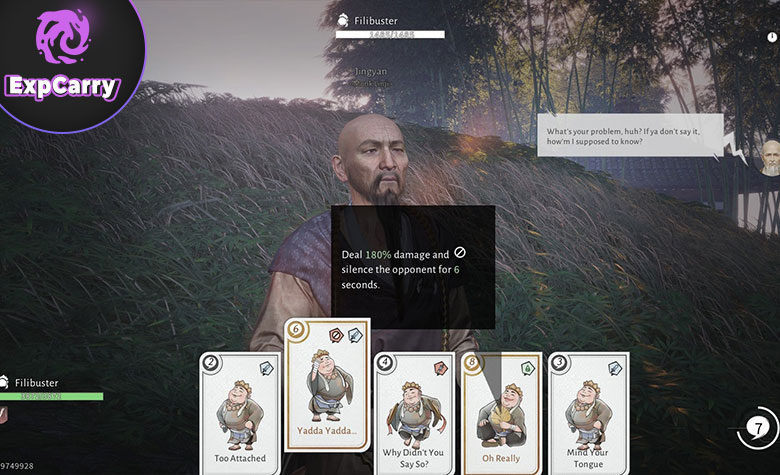
Scholar is the social and intellectual counterpart to Healer. Where Healer solves physical problems, Scholar solves rhetorical and influence problems. Scholar is built around a debate style minigame called Gift of Gab. You initiate debates with NPCs that have the Gift of Gab prompt, and you win by playing response cards that damage the opponent's mental focus while managing your own resource pool.
Scholar matters because it turns a "talk to NPC" prompt into an actual gameplay system. In many open world RPGs, persuasion is a dialog option with a percent chance. In Where Winds Meet, persuasion is a minigame with a progression tree, upgrades, and craftable items that make you stronger at it. Once you unlock Scholar, Gift of Gab shifts from frustrating to manageable because you gain the ability to upgrade cards and craft talismans that improve your performance.
Scholar also creates a strong identity lane for players who like non-combat mastery. You can be the person who wins arguments, unlocks social gates, and crafts talismans that support combat. It is still a power system, but it is a power system that feels like jianghu manipulation rather than sword skill.
How To Unlock Scholar: Where To Learn It, Required Quest Chain, And Locations
Scholar unlock is gated behind a short, specific chain. First, you need to reach the character level requirement, which for most players is around character level 13. Then you need to complete the introductory Gift of Gab exploration quest, which is commonly listed as Gift of Gab: Silver Tongue and may appear as Gift of Gab: Spring in some menus. This quest introduces you to the debate system and gives you the context for why it exists. After that, you unlock the actual Scholar profession through the exploration quest Legacy: Scholar's Path.
In current guides, the unlock steps converge on Qinghe as the relevant region. You complete the Gift of Gab introduction quest, then travel to Deerforage Grove and speak with the NPC associated with the Scholar profession questline (often listed as Yan Huaijin) to complete Legacy: Scholar's Path. Once finished, Scholar becomes available as a profession and your Gift of Gab upgrades and crafting options open up.
The most important warning for your readers is simple. Many players run into Gift of Gab early and assume it is purely skill based, then get stuck losing debates. The game does not always explain clearly that Gift of Gab is tied to Scholar progression. Your guide should tell them the truth: unlock Scholar first, then return to debates once you have upgrades and talisman crafting, and the minigame becomes much more winnable.
How Scholar Interacts With The World: Debates, NPC Prompts, And Social Gates
Scholar is a roaming profession. You find NPCs with Gift of Gab prompts scattered across the world, and you can initiate debates on demand. This means Scholar is perfect for short sessions. If you have 30 minutes, you can run a loop through a city or a village cluster, trigger multiple debates, and earn steady profession progress without committing to a long combat chain.
Gift of Gab itself is a card-based debate where the visible dialog flavor is not the primary mechanic. The win condition is to deplete the opponent's mental focus before time runs out, while managing your Inspiration resource and using cards that create damage or disruption. Scholar progression makes you better at this in three ways. It increases your stats for the minigame, it lets you upgrade cards through duplicates, and it lets you craft talismans that can provide buffs in combat as well as support your overall power loop.
This is the key world interaction value: Scholar ties social gameplay to power progression. You are not only roleplaying. You are investing in a toolkit that genuinely helps your character. Because the world constantly presents NPC situations and side content, a profession that makes you stronger in social challenges naturally keeps you engaged with the world in a way that is different from combat grinding.
How To Level Scholar Fast: The Sustainable Path
Scholar leveling follows the same two-part rule as Healer. Practice the profession in the world, and invest weekly resources into rank and card upgrades. In practical terms, your daily loop is to seek out debates, complete them efficiently, and slowly expand your route to include new clusters of Gift of Gab NPCs. Your weekly loop is to buy Career Notebooks and Scholar gift boxes from the Season Shop if you are focusing Scholar as a primary profession.
Profession rank upgrades matter because they raise your overall effectiveness and can improve your combat-related attributes. Card upgrades matter because Gift of Gab is strongly influenced by the quality of your deck and the upgrades you have. If you want a clean guide message, you should say it like this: do not judge Scholar based on your first debates before unlocking it. Scholar becomes a different experience once you can upgrade and craft.
To avoid burnout, rotate debates with other content. Scholar is brainy and can feel repetitive if you do it for hours. Do a set of debates, then do a story quest step, then do exploration or a boss fight. Professions are meant to be woven into your normal rhythm, not forced into a grind tunnel.
Healer Versus Scholar: Which Profession Should You Focus First?
If you want the safest answer for most players, Healer is the best first unlock because it gives immediate world utility, crafting value, and social impact. Healing has a clear purpose. You can see the result instantly. Scholar is powerful too, but it is more abstract until you unlock it and invest into cards and talismans.
If you are a player who loves world systems, dialog gates, and minigames, Scholar can be your first love. The Gift of Gab system becomes a real mastery lane once you have production value in it. Scholar also feeds into combat through talisman crafting and stat boosts, which makes it feel more like a hybrid profession than a pure social toy.
If you want the long-term best approach, unlock both and pick a primary for weekly investment. Because your weekly shop and duplicate materials are finite, most players naturally end up with one profession that is ahead of the other. That is fine. Your guide should frame this as a choice, not as a failure. You can have both professions and still focus your main progression into the one that matches your playstyle.
Professions And The Live Service Economy: Why Weekly Resets Matter
Where Winds Meet is a modern online RPG, so it uses weekly shop rhythms to pace progression. Professions are designed to fit that structure. Career Notebooks and profession boxes being tied to weekly restocks is not an accident. It is the game telling you that a consistent routine is the intended path. The correct player mindset is not "how do I max professions in three days." The correct mindset is "how do I make steady profession progress while leveling, so I feel stronger every week without turning the game into a job."
In practical terms, this means your guide should teach a habit. Check the Season Shop weekly, buy Career Notebooks, buy the profession boxes that match your chosen primary profession, and then spend the week doing short profession sessions whenever you want a break from story or combat. This creates a loop that feels natural, because professions become your palate cleanser content rather than your mandatory grind.
How Professions Fit Into Your Leveling And Story Routine
The best way to use professions while leveling is to treat them as session anchors. Start with one story step so you keep narrative momentum. Then decide what kind of session you want. If you want social utility and a calm but meaningful loop, do Healer work. If you want mental gameplay and social mastery, do Scholar debates. If you want variety, do both in short bursts.
Professions also solve a common open world problem: fatigue. When you get tired of marker-to-marker combat, professions give you a different kind of progress that still feeds your character. They turn "playtime" into "progress time" even when you are not in the mood to fight. That is why they matter. They expand the number of moods the game supports without breaking the core wuxia fantasy.
Finally, professions help your character feel like a person, not a build. A wuxia hero is not only a weapon. They are a role in the world. They heal, persuade, manipulate, support, and build reputation. Professions are the system version of that. If you want to make Where Winds Meet feel like a living jianghu and not just a combat sandbox, professions are one of the strongest tools the game gives you.
Conclusion
As of the current release, the playable profession system centers on two Jianghu Professions: Healer and Scholar. Healer is learned through Legacy: Healer's Calling in Qinghe (commonly available around character level 13), and it lets you diagnose and treat NPCs and players through a dedicated healing minigame while also unlocking medicine crafting and supportive progression. Scholar is learned through a short chain that includes the Gift of Gab introduction quest (Silver Tongue, sometimes shown as Spring) and then Legacy: Scholar's Path (commonly available around character level 13), and it turns debates into a progression system with upgradeable cards and talisman crafting that can feed back into combat power.
To level professions efficiently, build a simple routine. Unlock both professions early once you meet the level requirement. Use profession gameplay regularly in the open world to gain experience and mastery. Then use weekly resets to buy Career Notebooks and profession upgrade boxes so your profession rank and toolkits keep scaling. If you do this while leveling through the story, professions stop being a separate grind and become one of the most satisfying ways to make the world feel alive.