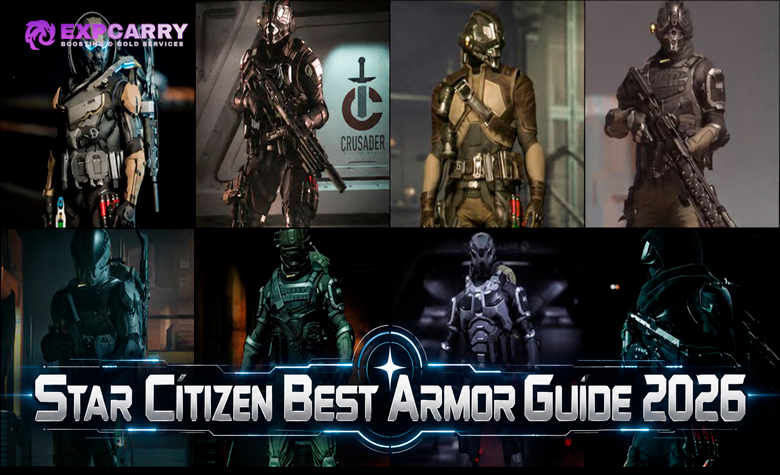

Star Citizen is slowly shifting from a game where you simply fly and fight into a simulation where you also maintain, build, and industrialize your corner of the universe. Alpha 4.3 and 4.4 have already pushed resource loops forward with better salvage, refining, and frontier systems like Pyro and Nyx. The next big step, according to the public roadmap and 1.0 plans, is a full engineering role on ships and a deep crafting and base building layer that will sit on top of mining, salvage, and hauling.
This article looks ahead at what those engineering and crafting mechanics are supposed to be, how they connect to existing gameplay, and what they are likely to mean for solo pilots, org logistics teams, and anyone who wants to live off more than simple mission payouts. Everything here is based on what Cloud Imperium has already shown or documented: roadmap entries, CitizenCon demos, and official 1.0 feature breakdowns. Timelines and labels can change, but the direction is consistent. This is a forward-looking guide: it covers planned and announced systems for Alpha 4.5 and 1.0 based on official CIG materials as of Alpha 4.4. These mechanics are not fully live yet, and specific details and timings can still change.
Engineering Gameplay: Turning Ships Into Machines You Actually Run
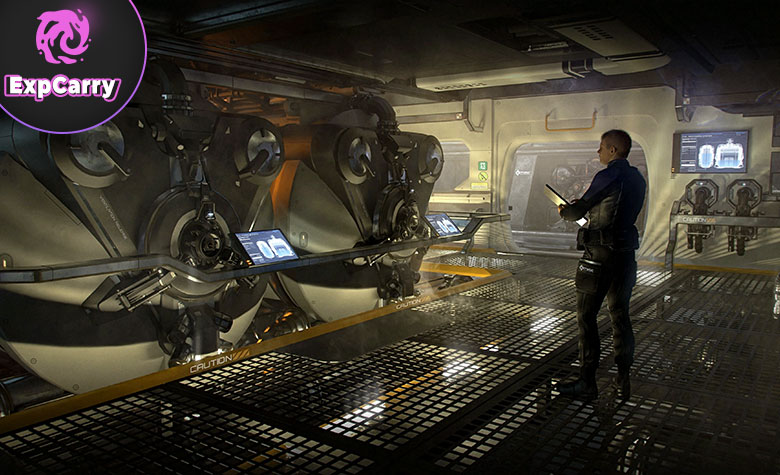
Right now, most ships in Star Citizen behave like very detailed props sitting on top of relatively simple systems: shield hit points, hull hit points, a few basic power sliders, component damage that mostly matters when something is completely destroyed. The upcoming engineering gameplay is designed to replace that with a full resource network where the ship behaves like a complex machine that needs to be actively managed, especially under stress.
Core Idea: Managing Power, Resources, And Item States
The public upcoming-features list and roadmap descriptions boil engineering down to a clear core: players in the engineering role will manage, maintain, and repair ship systems instead of just watching a generic damage bar. You will work with an engineering screen that shows generators, power relays, components, and subsystems as a network. Each item has a state: healthy, degraded, malfunctioning, or offline. Problems propagate through that network if you ignore them.
In practice, this means three constant tasks for the engineer role:
- Power management: deciding which systems get full power, which run in a reduced mode, and which are temporarily cut off to keep the ship alive.
- Degradation and malfunctions: catching early warning signs when components start to degrade under stress, before they fail at the worst possible moment.
- On-the-fly repairs: rerouting power, swapping fuses or modules, and coordinating with EVA or internal repair crews to physically fix damaged sections.
Instead of set-and-forget power presets, engineering mechanics will push you into constant triage under pressure. A high-speed chase, a drawn-out dogfight, or a risky atmospheric entry becomes something you survive because your engineer kept the right systems alive at the right times.
Fire, Atmosphere, And Damage Control Inside The Hull
Engineering is not just about abstract numbers on a screen. The current roadmap targets the first wave of this engineering gameplay and shipboard fire hazards around the 4.5 timeframe, with more advanced life support updates expected to follow afterward. Damage will no longer be just external scorch marks; hits and malfunctions can trigger fires that spread through ship interiors, consume oxygen, and threaten crew who are not paying attention.
For the engineer and anyone helping them, this will create classic damage control gameplay:
- Locating fires and hull breaches via internal sensors and engineering displays.
- Dispatching crew with fire extinguishers and tools to contain or isolate problem areas.
- Shutting down or venting flooded or burning compartments to protect the rest of the ship.
- Managing life support and atmosphere so that crew have breathable air where they need to work.
Big multi-crew ships will feel much closer to movie-style capital ships under attack: alarms, smoke, systems failing one after another, and a dedicated team scrambling to keep the whole thing from turning into a dead hulk.
Engineering As A Full Ship Role, Not Just A Menu
Engineering is being pitched as a stand-alone playstyle, not just a submenu the pilot occasionally touches. On large ships, an engineer will have their own dedicated station with a tailored UI, and the expectation is that a good engineer makes the entire crew more effective in combat, hauling, or exploration.
That implies a few important consequences:
- True multi-crew: capital ships and many larger multicrew vessels become dramatically harder to run at full capacity alone. A solo pilot can still fly them, but cannot realistically manage engineering, turrets, scanning, and piloting at peak performance.
- Specialization: some players will almost exclusively play as engineers, joining org fleets, capital ships, or tanky haulers much like tank or healer mains in MMOs. Knowing how to squeeze performance out of a resource network becomes a valued skill.
- Training curve: new players will need to learn how components, power plants, coolers, and weapon systems interact. Trial and error will be part of the gameplay, and orgs will likely develop internal training docs and classes for their engineers.
For smaller ships, engineering will still matter, but often as a subset of the pilot or co-pilot duties rather than a dedicated chair. You might briefly jump into an engineering panel to cut power to non-essential systems, reboot a malfunctioning shield generator, or reroute power to engines for an escape burn.
Solo vs Multi-Crew: How Hard Will It Hit Single Players
A common concern whenever engineering is discussed is the impact on solo pilots. If ships become more complex to run, will single players be punished or forced into multi-crew against their will?
The way the system is designed should avoid outright punishment. Smaller ships will still be comparatively simple, and a single player can pause combat pressure to fix issues. But there are some unavoidable trade-offs:
- High-end ships will be balanced around full crews. Running a capital or large multi-crew ship alone will almost always mean compromised performance: slower damage control, more risk of cascading failures, and less uptime on heavy weapons or strong shields.
- Solo players will likely gravitate toward well-engineered smaller ships and mid-size multicrew vessels that can be run with 1–2 people while still offering some engineering depth.
- Org play becomes more attractive for those who want to operate the really big toys under the upcoming engineering and resource management rules.
The important thing to understand is that engineering is not just difficulty for its own sake. It is a way to make large ships feel like complex machines that reward coordination and planning, while still letting smaller ships exist as more approachable platforms for solo and duo play.
Engineering And The Wider Economy
Beyond combat, engineering will tie into the broader economy and crafting ecosystem. Components will degrade over time; heat, stress, and bad power management will chew through their lifespans. That naturally creates demand for replacement parts, refurbished components, and higher-grade engineered items that resist wear better.
Combined with crafting and base building, this leads to a future where an org might specialize as a repair and refit provider: running industrial bases with refineries, fabrication hangars, and component stockpiles, then sending out specialized teams to repair and upgrade fleet ships between major operations.
Crafting: From Raw Resources To Player-Made Gear And Ships
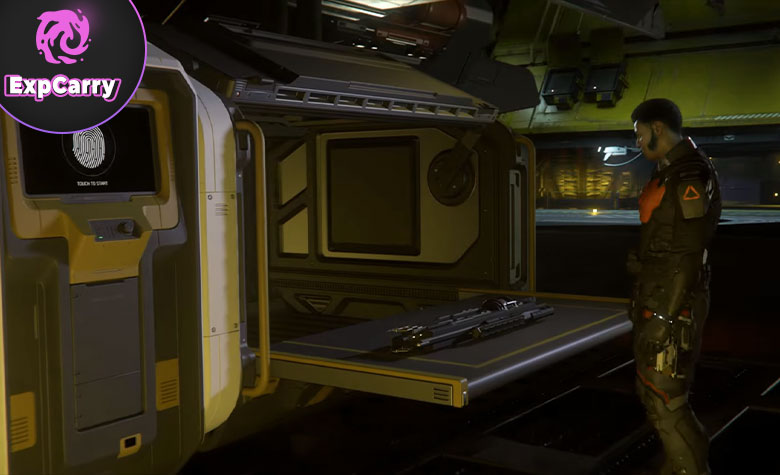
If engineering is about keeping your ship alive and effective, crafting is about controlling what that ship and your character are made of in the first place. CIG has outlined crafting as a profession on par with mining or salvage, and as part of the official 1.0 feature set: players will find blueprints, research higher tiers, refine resources, and use specialized fabrication machines to produce items, components, and even full vehicles.
Blueprints And Research As Long-Term Progression
The foundation of crafting is blueprint ownership. Every item you want to produce, from small components up to full ships, starts as a blueprint. These blueprints are digital unlocks you acquire through gameplay: mission rewards, exploration finds, purchases from certain vendors, guild rewards, or special events.
Once a blueprint is unlocked, you keep access to it permanently. On top of that, there is a research layer that lets you unlock higher-tier versions of the same blueprint. Each tier represents a stronger or more specialized version of the item, but reaching those tiers takes time and resources. Research is time-intensive, consumes currency">currency-farm">currency and materials, and may be tied to specific actions or conditions.
This gives crafters a clear long-term progression path:
- Acquire basic blueprints for items, gear, components, vehicles, and ships.
- Research higher tiers to improve their stats and unlock more advanced versions.
- Maintain a portfolio of highly developed blueprints that set you apart from casual crafters.
Because higher-tier items require more advanced resources, this naturally connects crafting to high-risk mining locations, deep salvage operations, and frontier systems where quality deposits are abundant but dangerous to exploit.
Resource Quality And Refining: Not All Ore Is Equal
CIG is also putting clear emphasis on resource quality. It is not enough to simply gather X units of metal; those resources carry a quality rating that directly affects the final item stats. High-quality resources produce better equipment, higher-performance ship components, and more valuable ships.
To work with this, players will use scanning tools, potentially including high-end radar and specialized industrial gear, to identify promising deposits and cargo loads. The process looks roughly like this:
- Prospecting: locate deposits or salvage that contain high-quality resources, using scanners and survey missions.
- Extraction: mine ore, strip salvage, or otherwise gather raw materials.
- Refining: convert raw materials into refined resources, often using refineries on stations, ships, or bases. Refining itself can require blueprints and may consume catalysts or secondary materials.
- Transport: move refined resources to crafting bases or fabrication hangars where they are actually used.
This is where recent salvage and refining changes in the 4.3.x cycle start to look like groundwork for crafting. Structural salvage overhauls and on-ship refining are not just about giving salvagers more to do; they are about creating the flow of refined resources that crafters will eventually rely on.
Crafting Machines And Fabrication Hangars
Actual item creation happens in crafting machines, often called fabricators. They come in different types and sizes: small item fabricators for weapons, armor, and tools; specialized chemical or nutrition fabricators; and full fabrication hangars that can construct vehicles and ships.
Fabricators themselves have tiers. Higher-tier machines can process more complex recipes, handle larger items, or work with more demanding materials. In many cases, they will be installed in bases or large industrial ships, tying crafting to base building and logistics.
At the top end, fabrication hangars can build entire vehicles and ships, using large quantities of refined resources and advanced blueprints. Some of these will even support upgrading existing ships via dedicated upgrade blueprints, changing them into higher-tier versions instead of starting from scratch.
What Players Will Be Able To Craft
Based on the 1.0 feature descriptions and CitizenCon demos, the craftable range is broad:
- Items and equipment: FPS weapons, armor sets, attachments, tools, medical gear, and consumables.
- Components: ship power plants, coolers, quantum drives, shields, weapons, and specialized modules.
- Vehicles and ships: ground vehicles and full ships, with multiple tiers and upgrade paths.
Because craftable items can be tuned by material quality and blueprint tier, a well-developed crafter is not just reproducing vendor gear. They are potentially producing items above the quality of anything you can buy directly from an NPC, or with different stat profiles that suit specific roles: more efficient, more durable, lighter, or focused on particular types of damage and resistance.
Crafting As A Business: Selling What You Make
Crafting is designed to plug directly into a player-driven economy. Bases can host shops with trading terminals tied into freight elevator networks, allowing you to sell crafted items and vehicles from your own facilities. Items can also be physically displayed in a showroom layout, especially for ships, turning industrial bases into real commercial hubs.
This means a dedicated crafter or industrial org can eventually run an end-to-end business loop:
- Run mining, salvage, or exploration operations to source quality resources.
- Refine those resources in owned refineries or rented facilities.
- Use fabrication machines to produce high-tier items, components, and ships.
- Sell them via base shops, stations, or direct org contracts to fleets, haulers, or combat groups.
Combined with engineering gameplay, you get a full pipeline: industrial teams build the gear, engineering crews keep it working and squeeze maximum performance out of it, and front-line pilots and ground teams actually use it in combat or dangerous missions.
Base Building: Industrial Backbone For Engineering And Crafting
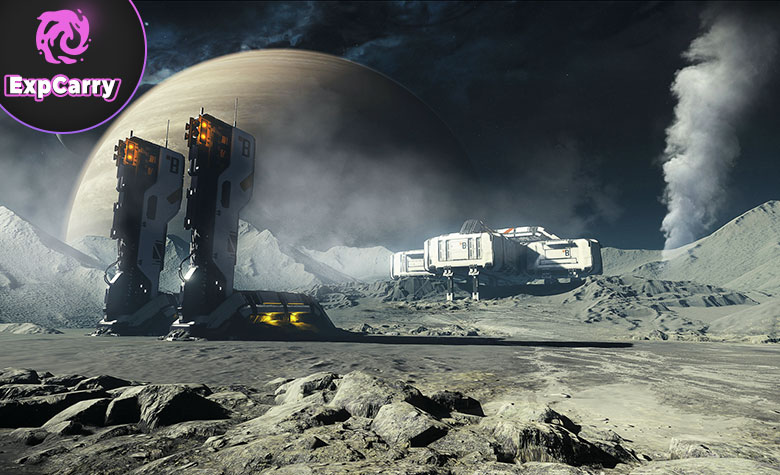
None of the above exists in a vacuum. Crafting and engineering come alive when they are anchored to physical locations: bases built on planets and moons, especially in frontier or unclaimed systems. Base building is planned as a major pillar of 1.0, and it is tightly coupled with resource extraction, refining, crafting, logistics, and defense.
From Land Claims To Full Industrial Complexes
The base building loop starts with land. In lawful UEE space you are expected to use formal land claims with some form of upkeep in exchange for security and relative safety; in lawless or unclaimed systems you simply find a spot and build, but must provide your own defense. Once you have a site, you can construct structures like:
- Habitation modules for players and org members.
- Hangars to store and service ships and vehicles.
- Refineries to process raw materials into refined resources.
- Construction buildings and fabrication hangars for crafting.
- Extractors that tap into underground resource deposits.
- Power plants and supporting infrastructure.
- Freight elevators to move cargo and link inventories across the base.
- Defensive structures like walls, turrets, and shields.
Building sizes follow a tiered system. Small structures can be built with modest vehicles and tools; medium and large structures require dedicated construction vehicles like the Construction Grav Cart, CSV variants, Starlancer construction ships, and eventually capital-scale construction hubs. Over time, orgs can grow small outposts into sprawling industrial complexes that serve dozens or hundreds of players.
Freight Elevators, Logistics, And Shared Inventories
Freight elevators are a critical piece of the puzzle. Bases can link multiple elevators into a local network that shares inventory within a certain radius. That means refined resources, components, and finished items can move logically around a base without being physically hauled by hand each time.
This has several effects:
- Industrial efficiency: extractors push ore to refineries, refineries push refined materials to fabricators, and fabricators push finished goods toward hangars or shops, all via shared freight inventories.
- Defense and risk: freight elevator nodes become natural choke points and raid targets in PvP or NPC attacks. Disrupting someone's elevator network can cripple their industrial output.
- Engineering gameplay hook: engineers in bases will need to maintain power, repair systems, and keep the freight network online under stress, much like engineers on ships.
On frontier systems like Pyro and Nyx, where base building in unclaimed regions does not have UEE planetary shield protection, this becomes even more interesting. Bases can be more profitable thanks to higher quality resources, but they are also more exposed, forcing orgs to invest in defenses, patrols, and alliances.
Cosmetics, Comfort, And Identity
Alongside the industrial side, base building also has a strong cosmetic and roleplay angle. Decorative AR modes let you place furniture and props that can be mag-locked in place. Building paints and text decals allow orgs to mark their territory, brand their facilities, and generally create unique-looking outposts.
While this might seem secondary to hardcore industrial players, the cosmetic side matters for player identity, recruitment, and trade. A well-designed base that looks good, feels coherent, and has clear navigation is more pleasant to live in, easier to defend, and more attractive to customers who come to buy crafted ships and gear.
Explore services related to this guide, selected from our Star Citizen catalog.
View All Star Citizen Services

How Engineering, Crafting, And Bases Fit Together
Looking at each system separately is useful, but the real strength of Star Citizen's design is how they interlock. A simple example loop for an industrial-focused organization might look like this:
- Exploration teams survey frontier systems like Pyro or Nyx to find high-quality resource deposits and wreck fields.
- Mining and salvage crews extract raw materials and structural salvage from those sites, braving pirates, Vanduul, or hostile players.
- Haulers move that material back to bases or trusted refineries for processing.
- Refined resources flow through freight elevator networks into fabrication facilities.
- Crafters use high-tier blueprints and quality resources to produce components, weapons, gear, vehicles, and ships.
- Engineers outfit fleet ships with those custom components, monitor their degradation, and keep them operating at peak performance during missions.
- Org fleets use those ships and gear to run profitable missions, raids, logistics operations, or defense of their territory, generating more income and influence.
- Profits, new blueprints, and improved infrastructure feed back into more research, better bases, and upgraded fleets.
For smaller groups or solo players, the loop is simpler but still benefits from these systems. A solo miner might focus on prospecting and selling high-quality ore to crafting hubs. A small group might build a modest base with extractors, a refinery, and a single fabrication hangar, producing a few lines of specialized components they sell to local orgs. A duo might run a large multi-crew ship where one player pilots and fights while the other engineers, turning a mid-size hauler or gunship into a surprisingly resilient platform.
What You Can Do Now To Prepare
Engineering and full crafting are still upcoming; they are not fully live at the time of writing in Alpha 4.4. But you can already start setting yourself up to take advantage of them when they arrive.
Learn Components And Resource Management
Even before the dedicated engineering UI drops, it is worth learning how current ship components work: power plants, coolers, shields, quantum drives, and weapon systems. Understanding how they interact, how current IR and EM signatures behave, and how power distribution affects performance will make the transition to full engineering much smoother.
If you tend to fly larger ships, practice running them with friends now. Get used to delegating scanning, turret operation, and basic damage control tasks. When engineering becomes a full role, you will already have crew habits built up.
Invest In Resource Careers
Mining and salvage are already strong money-makers and will only become more important when crafting lands. Build up ships, equipment, and knowledge in these roles now:
- Learn which rocks and regions are actually profitable.
- Practice safe salvage under fire and in crowded events.
- Experiment with refining options to see which outputs and locations yield the best returns.
The players who already know how to reliably supply high-quality resources will be the first to benefit from selling into crafting hubs or building their own industrial bases.
Follow Base Building And Frontier Updates
Keep an eye on how base-related features evolve: new freight elevator mechanics, refinery changes, Nyx and Pyro expansion, and construction vehicle releases. Even if you are not ready to run a full industrial complex yourself, knowing where major player bases are emerging and how they operate will help you decide where to live, trade, and work.
If you plan to be an industrial player at 1.0, start thinking about where you want to stake your claims: safer UEE systems with more structure and security, or lawless frontier systems with higher risks and higher potential profits.
A More Demanding, More Rewarding Universe
The future engineering and crafting mechanics in Star Citizen are not small side features. They are core pillars of what CIG wants the game to be at 1.0: a universe where ships are complex machines, where resources matter more than static vendor prices, and where player-made infrastructure and industry shape the map as much as NPC outposts.
Engineering will make large ships feel alive, fragile, and powerful in the hands of good crews. Crafting will turn miners and salvagers into suppliers and manufacturers, with long-term progression tied to blueprints, research, and resource quality. Base building will anchor all of it to physical locations that can be defended, expanded, and shown off as proof of what a group has built together.
If that sounds exciting, the best thing you can do now is simple: start playing the early versions of those roles, learn the current systems, and watch how each patch pushes them closer to the full picture. When engineering consoles light up and fabrication hangars spin up in earnest, the players who already understand the pieces will be the ones running the universe instead of just visiting it.