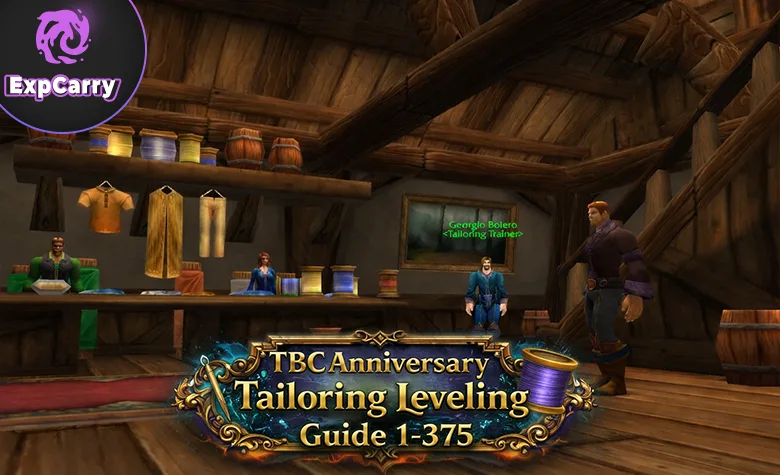
Tailoring is one of the cleanest professions to level on TBC Anniversary realms because it turns common cloth into reliable skill-ups with almost zero friction. You do not need a gathering profession to “unlock” progress, and you can keep moving forward even if your server economy is chaotic. The reason Tailoring sometimes feels expensive is not the profession itself, but player mistakes: crafting too deep into green recipes, panic-buying cloth at peak hours, and misunderstanding bolt steps that are meant to be both leveling and preparation.
This TBC Anniversary Tailoring leveling guide is written for the full TBC Anniversary launch period, once Outland is open. It uses an Ultra cheap AH route mindset: you craft in stable brackets, you use bolt conversions while they still give skill-ups, and you avoid “trust killer” steps by explaining when big bolt numbers are a stockpile, not a requirement for a tiny skill jump.
How Tailoring Leveling Works in TBC Anniversary
Tailoring leveling is basically a two-stage pipeline. First you convert cloth into bolts while the bolt recipe is still orange or yellow, then you spend those bolts on a small number of items that stay efficient for a full bracket. The gold-saving trick is that bolt crafting is rarely wasted. If you craft extra bolts early, you still spend them later, which means bolt skill-ups often function like “free progress” when compared to crafting random green gear that you vendor for scraps.
The second thing you must understand is that many routes list bolt counts that look insane at first glance. This is not because the guide is broken. It is because the guide is combining two goals into one step: reaching a skill checkpoint and stockpiling bolts needed for the next few brackets. If a guide says “make 201 Bolts of Silk” or “496 Bolts of Netherweave,” it is usually describing a cheap pipeline that wants you to have a bolt bank, not saying you must craft that many bolts just to gain 20-25 skill points.
Ultra Cheap AH Route Rules (What Makes This Guide Actually Cheap)
If you want Tailoring to stay low-cost, follow these rules while you level. They matter more than any “perfect recipe list” because they control your real expenses on a live server economy.
- Buy cloth in waves instead of panic-buying one giant stack at peak hours. Tailoring is forgiving, so you can pause, craft, and wait for better prices.
- Prioritize bolt recipes while they still give skill-ups. Bolts are used later, so you are not wasting progress.
- Do not brute-force green recipes “to finish a bracket.” Greens can eat huge extra materials for a few points.
- Vendor fast, keep your bags clean, and do not try to sell every random leveling item. Slow sales waste time and relisting fees.
- If you have Enchanting, disenchanting leveling greens often converts trash crafts into fast-moving dusts and essences.
With those habits, Tailoring 1-375 becomes a predictable checklist instead of a gold sink.
Tailoring 1-75 (Linen Bracket)
The Linen bracket exists to build a small bolt bank and get you past the first training gates without wasting money on dyes. The crafts here vendor easily, and your biggest cost is simply Linen Cloth. If Linen prices are high on your realm, you can farm it quickly from low-level humanoids, but most players will just buy it since this bracket is short.
1-45: Bolt of Linen Cloth (Leveling Core)
Bolt of Linen Cloth is the best early recipe because it is a pure conversion craft that stays efficient for a long time. It also builds the material you need immediately for belts and capes. Do not worry if you craft “too many” bolts. Linen bolts are a stable currency-farm currency of early Tailoring, and you will spend them right away.
45-67: Linen Belt (Bolt Sink That Stays Efficient)
Linen Belt is chosen because it turns bolts into skill points while using only Coarse Thread from a tailoring supplies vendor. It is also one of the easiest crafts to mass-produce and vendor, which keeps your leveling loop fast and simple.
67-75: Reinforced Linen Cape (Clean Finish)
Reinforced Linen Cape is a reliable finisher that gets you cleanly to 75 without a messy “random green spam” end. If you get unlucky on yellow skill-ups, craft one or two extra capes instead of swapping to a worse recipe.
| Skill range | Craft | Craft count | Materials needed | Why this step is used |
|---|---|---|---|---|
| 1-45 | Bolt of Linen Cloth | 104 | 208 Linen Cloth | Pure bolt conversion, fast skill-ups, bolts reused immediately |
| 45-67 | Linen Belt | 35 | 35 Bolt of Linen Cloth, 35 Coarse Thread | Stable bolt sink with cheap vendor thread |
| 67-75 | Reinforced Linen Cape | 8 | 16 Bolt of Linen Cloth, 24 Coarse Thread | Clean finish that stays consistent on yellow points |
Tailoring 75-125 (Wool Bracket)
Wool is where Tailoring starts feeling smooth because bolt conversion stays strong and the recipes remain vendor-friendly. You will use a bit of Linen again for Simple Kilt, which is why keeping a Linen bolt bank matters. If you vendored everything and kept zero bolts, you can still continue, but you may be forced to rebuy Linen at random prices.
75-100: Bolt of Woolen Cloth (Low Friction Skill-Ups)
Wool bolts cost only cloth, and bolt crafts are almost always the lowest friction way to gain skill. Make the bolts, then immediately turn them into shoulders to keep progression stable.
100-110: Simple Kilt (Controlled Bridge)
Simple Kilt is a cheap bridge that converts stored Linen bolts into skill points while using Fine Thread. If you get unlucky with yellow skill-ups, craft a couple extra before moving on.
110-125: Double-stitched Woolen Shoulders (Stable Finish)
These shoulders are reliable because they consume Wool bolts efficiently, craft fast, and vendor cleanly. The result is predictable progress without needing specialty reagents.
| Skill range | Craft | Craft count | Materials needed | Why this step is used |
|---|---|---|---|---|
| 75-100 | Bolt of Woolen Cloth | 45 | 135 Wool Cloth | Cheap bolt conversion, no extra reagents |
| 100-110 | Simple Kilt | 13 | 52 Bolt of Linen Cloth, 13 Fine Thread | Controlled bridge without dye costs |
| 110-125 | Double-stitched Woolen Shoulders | 15 | 45 Bolt of Woolen Cloth, 30 Fine Thread | Reliable bracket finish with stable materials |
Explore services related to this guide, selected from our Professions catalog.
View All Professions Services


Tailoring 125-220 (Silk and Mageweave Pipeline)
This is the first major “bulk cloth” section. It is also where readers often lose trust in guides because they see big bolt numbers like “201 Bolts of Silk” and assume the guide is wrong. Here is the honest explanation: this bolt step is both leveling and preparation. You are crafting a Silk bolt bank because you will spend Silk bolts repeatedly across multiple recipes through 215.
If Silk Cloth is expensive today, you can split the pipeline: craft enough bolts to keep gaining skill, spend them, then craft more later when the AH dips. The route below shows the full cheap pipeline version, because that is usually the most gold-efficient long-term on Anniversary economies.
125-145: Bolt of Silk Cloth (Full Cheap Pipeline Bolt Bank)
This step looks big, but it is the heart of the cheap route. You will spend these bolts across multiple Silk crafts, so you are not wasting anything. If you refuse to stockpile here, you will almost always be forced to craft Silk bolts later anyway, often at worse prices.
145-185: Spend Your Silk Bolts, Then Set Up Mageweave (Merged Table, No Short H3 Spam)
This part is merged on purpose so it reads cleanly. You take your stored Silk bolts, convert them into stable skill points using vendor-only extras (dye, bleach, thread), and then immediately craft your Mageweave bolt bank so Black Mageweave is smooth and cheap later.
| Skill range | Craft | Craft count | Materials needed | Why this step is used |
|---|---|---|---|---|
| 145-160 | Azure Silk Hood | 18 | 36 Bolt of Silk Cloth, 36 Blue Dye, 18 Fine Thread | Stable bolt sink with vendor dye, keeps this bracket predictable |
| 160-170 | Silk Headband | 10 | 30 Bolt of Silk Cloth, 20 Fine Thread | Fast bridge without dye, burns silk bolts cleanly |
| 170-175 | Formal White Shirt | 5 | 15 Bolt of Silk Cloth, 10 Bleach, 5 Fine Thread | Short alignment step that avoids wasting extra silk on weaker recipes |
| 175-185 | Bolt of Mageweave | 94 | 470 Mageweave Cloth | Full bolt bank for Black Mageweave later, cheap progress while bolts still give skill-ups |
185-220: Crimson Silk + Orange Mageweave Setup
Crimson Silk Vest and Pantaloons spend a meaningful amount of Silk bolts while staying stable. Then Orange Mageweave Shirt is a short alignment step so your Black Mageweave sequence stays smooth and efficient.
| Skill range | Craft | Craft count | Materials needed | Notes for trust and cost |
|---|---|---|---|---|
| 125-145 | Bolt of Silk Cloth | 201 | 804 Silk Cloth | Full bolt bank for the cheap pipeline, not “201 for 20 points” |
| 185-205 | Crimson Silk Vest | 20 | 80 Bolt of Silk Cloth, 40 Fine Thread, 40 Red Dye | Vendor dye, spends silk bank efficiently |
| 205-215 | Crimson Silk Pantaloons | 10 | 40 Bolt of Silk Cloth, 20 Red Dye, 20 Silken Thread | Vendor thread, stable finish |
| 215-220 | Orange Mageweave Shirt | 5 | 5 Bolt of Mageweave, 5 Orange Dye, 5 Heavy Silken Thread | Short setup step, do not overcraft |
Tailoring 220-300 (Black Mageweave to Runecloth Finish)
This section is predictable and cheap because it uses bulk cloth sinks with vendor thread. To keep the guide readable (and avoid short H3 spam), the entire 220-300 plan is shown as one table. If you get unlucky on yellow skill-ups near the end of a bracket, craft a few extra of the same item instead of switching recipes impulsively.
| Skill range | Craft | Craft count | Materials needed | Why this step is used |
|---|---|---|---|---|
| 220-230 | Black Mageweave Gloves | 10 | 20 Bolt of Mageweave, 20 Heavy Silken Thread | Efficient skill-ups with simple materials |
| 230-250 | Black Mageweave Headband | 23 | 69 Bolt of Mageweave, 46 Heavy Silken Thread | Stable bracket carry, no expensive side mats |
| 250-260 | Bolt of Runecloth | 188 | 940 Runecloth | Full bolt bank for belts and your finish craft |
| 260-280 | Runecloth Belt | 25 | 75 Bolt of Runecloth, 25 Rune Thread | Reliable belt sink with vendor thread |
| 280-300 | Choose one finish option | 25 | See finish table below | Pick based on cheapest side material today |
| 280-300 finish option | Materials needed for 25 crafts | When to choose it |
|---|---|---|
| Runecloth Gloves | 100 Bolt of Runecloth, 100 Rugged Leather, 25 Rune Thread | Rugged Leather is cheap or you already have stock |
| Brightcloth Cloak | 100 Bolt of Runecloth, 50 Gold Bar, 25 Rune Thread | Gold Bars are cheap and you want a simple finish |
| Wizardweave Leggings | 150 Bolt of Runecloth, 25 Dream Dust, 25 Rune Thread | Dream Dust is cheap and you can spare extra Runecloth bolts |
Tailoring 300-375 (Outland Netherweave Route for TBC Anniversary)
Once Outland is open, Netherweave Cloth becomes your core currency. Your costs can still swing hard on Anniversary economies, so the cheap strategy stays the same: bolt conversion first (while it still gives skill-ups), then stable bolt sinks that do not require rare mats.
300-325: Bolt of Netherweave (Bolt Bank) + Honest “Minimum” Option
This is the famous “496 bolts” step. It exists because you will use Netherweave bolts for almost every craft from 325 to 375, so getting them while the recipe gives skill-ups is cheap progress. If Netherweave is extremely overpriced on your realm today, you can stop once you hit 325 and craft more later as needed. The cheap pipeline version below shows the full bolt bank.
325-340: Bolt of Imbued Netherweave (Eiin in Shattrath + Mana Loom)
This conversion is the key Outland tailoring step. It turns Arcane Dust into long-term value because Imbued Bolts are used in several crafts and stay relevant for the rest of the route. The pattern is sold by Eiin in Shattrath City, and you craft it using the Mana Loom right next to him, so it is a very fast workflow.
If you have dungeon-drop Arcanoweave recipes, you can stop Imbued Bolts earlier (around 335-340). If you do not, staying on Imbued Bolts until the bracket ends is still efficient because you will use them later anyway.
340-345: Netherweave Boots (Short Bridge)
This is a controlled bridge that uses a small amount of Knothide Leather. It is intentionally short so you do not dump gold into side mats.
345-360: Netherweave Tunic (Stable Cloth Sink)
Netherweave Tunic is vendor-friendly and stable. It will be yellow for the last points in the bracket, so craft a few extra if you get unlucky instead of switching recipes impulsively.
360-375: Imbued Netherweave Tunic (Arrond, Scryers, Limited Supply) + Alternatives
The standard cheap finish is Imbued Netherweave Tunic. The pattern is sold by Arrond in Shadowmoon Valley and is limited supply. You need to be at least Neutral with The Scryers to buy directly, but the pattern is not Bind on Pickup, so you can buy it from the Auction House or ask a friend to purchase it for you.
The last points are usually yellow, so you might need a few extra crafts. The correct cheap way is to buy a baseline amount of Netherweb Spider Silk, craft toward 375, and only buy extra silk if you truly need it.
If Netherweb Spider Silk is overpriced, Arcanoweave Boots or Arcanoweave Robe can be strong alternatives because they shift more of the cost into Arcane Dust instead of spider silk. These patterns come from The Mechanar.
| Skill range | Craft | Craft count | Materials needed | Trust notes (bolt bank vs skill target) |
|---|---|---|---|---|
| 300-325 | Bolt of Netherweave | 496 | 2976 Netherweave Cloth | Bolt bank for the entire Outland route. If Netherweave is overpriced, you can craft fewer and make more later. |
| 325-340 | Bolt of Imbued Netherweave | 102 | 306 Bolt of Netherweave, 204 Arcane Dust | Pattern from Eiin in Shattrath, crafted at Mana Loom nearby |
| 340-345 | Netherweave Boots | 5 | 30 Bolt of Netherweave, 10 Knothide Leather, 5 Rune Thread | Short bridge, cheap side mats |
| 345-360 | Netherweave Tunic | 20 | 160 Bolt of Netherweave, 40 Rune Thread | Stable cloth sink, expect yellow points late |
| 360-375 | Imbued Netherweave Tunic | 17 | 102 Bolt of Imbued Netherweave, 34 Netherweb Spider Silk, 17 Rune Thread | Limited supply pattern, yellow finish may require a few extra |
| 360-375 alternative finish | Craft count | Materials needed | When it becomes cheaper |
|---|---|---|---|
| Arcanoweave Boots | 17 | 136 Bolt of Netherweave, 272 Arcane Dust, 34 Rune Thread | Spider silk inflated, Arcane Dust cheap and abundant |
| Arcanoweave Robe | 15 | 180 Bolt of Netherweave, 300 Arcane Dust, 30 Rune Thread | Spider silk inflated, Arcane Dust cheap and you prefer fewer crafts |
Total Materials Summary (Shopping List Mindset)
These totals are designed for the route above. Your exact final numbers can vary slightly due to yellow skill-ups. The safest Ultra cheap approach is to buy baseline amounts first and add more only if you truly need it.
Classic 1-300 Cloth Totals (Full Cheap Pipeline)
- Linen Cloth: 208
- Wool Cloth: 135
- Silk Cloth: 804
- Mageweave Cloth: 470
- Runecloth: 940
Classic 280-300 Finish Materials (Pick One)
- Runecloth Gloves route: 100 Rugged Leather
- Brightcloth Cloak route: 50 Gold Bar
- Wizardweave Leggings route: 25 Dream Dust (and extra Runecloth bolts)
Outland 300-375 Materials (Full Cheap Pipeline)
- Netherweave Cloth: 2976 (bolt bank route)
- Arcane Dust: 204
- Knothide Leather: 10
- Netherweb Spider Silk: 34 (default finish)
Ultra Cheap AH Route Checklist (Practical, Repeatable, No Waste)
Buy Timing: Avoid Peak Cloth Spikes
Cloth pricing on Anniversary progression economies swings hard. The cheapest sessions happen when you buy cloth during farm-heavy windows and craft during calmer hours. If cloth is inflated, craft what you can with what you already own and pause the rest. Tailoring is one of the easiest professions to level in multiple short sessions, and that flexibility is a real gold advantage.
Bolt Trust Rule: Bolts Are Progress and Preparation
Always read bolt counts correctly. Big bolt steps are not “required for a tiny skill jump.” They are the cheapest long-term pipeline because you will spend those bolts later anyway. If you want the lowest gold cost per point, craft bolts while the recipe still gives skill-ups, then spend them in stable sinks.
Vendor vs Disenchant vs Sell
Most leveling crafts are not worth listing. Do this instead:
- Vendor items that have decent vendor value and clear your bags fast.
- Disenchant greens if you have Enchanting or a reliable disenchant partner.
- Only sell items that consistently move on your realm, like bags or niche crafts you know have buyers.
Your goal is consistent leveling speed and controlled costs, not a messy Auction House minigame mid-session.
Conclusion
Tailoring 1-375 on TBC Anniversary realms is cheap and smooth when you level it as a cloth pipeline instead of a random list of crafts. The Ultra cheap AH route works because it treats bolt conversion as both skill progress and future material preparation, then spends those bolts on stable bracket crafts that avoid expensive side reagents.
In Classic brackets, Linen and Wool move quickly through belts and shoulders, Silk becomes efficient when you build a bolt bank early, and Mageweave and Runecloth carry you through the final stretch with black mageweave crafts and a flexible 280-300 finish you choose based on your realm’s cheapest side material. In Outland, Netherweave bolts set up your entire profession, Imbued Netherweave bolts convert Arcane Dust into long-term value, and vendor-friendly crafts like boots and tunics keep progress stable even when markets spike. If you craft bolts while they still reward skill-ups and you avoid panic-buying cloth at peak prices, Tailoring stays predictable, efficient, and genuinely low-cost from 1 all the way to 375.